Everyone blames burnout on long hours. Work too hard, burn the candle at both ends, push past your limits. The prescription is always the same: take a holiday. Go on a wellness retreat. Stick some fresh fruit in the office kitchen.
It's wrong. All of it.
I've been running engineering teams and studying leadership for over 25 years. The pattern I keep seeing isn't people who work too much. It's people who have no idea where they stand.

The Data Is Clear (And Uncomfortable)
Gallup's research into burnout identified five top causes:
- Unfair treatment at work
- Unmanageable workload
- Unclear communication from managers
- Lack of manager support
- Unreasonable time pressure
Notice something? Only ONE of those five is about workload. The other four are about the relationship between a person and their manager.
Gallup put it bluntly: "All five of these factors are significantly influenced by manager behavior." And here's the line most people miss: "How people experience their workload has a stronger influence on burnout than hours worked."
Read it again. It's not about how much you work. It's about how you experience the work. A team doing 50-hour weeks with a manager who communicates well and gives regular feedback will outlast a team doing 35-hour weeks under a silent, absent boss.
76% of Your Team Is Already There
The numbers are brutal. 76% of employees experience burnout at least sometimes. 28% say they feel burned out "often" or "always." 44% report outright burnout in 2024... up 25% from 2022.
And what's driving this?
According to Deloitte's 2024 research, 59% of employees say unclear manager expectations are a significant contributor to burnout. Poor manager communication increases burnout risk by 43%. And 86% of employees and executives cite lack of effective collaboration and communication as the primary cause of workplace failures.
But the most important stat: workers who receive regular manager communication are 5x less likely to burn out.
Five times. Not five percent. Five times less likely.

The Silence Tax
If feedback prevents burnout, where is it?
Gone. Missing. Nowhere to be found.
A recent Radical Candor report found alarming gaps: 70% of managers never learned to solicit or give feedback before stepping into the role. 54% of employees rarely or never receive feedback from their managers. And 60% of employees are afraid to speak up at work.
Think about what this means for your engineering team. Your developers are sitting in sprint retros, nodding along, saying nothing. Your tech leads are running 1:1s as status updates instead of growth conversations. Your senior engineers are silently drowning because nobody told them their approach was off track... or on track.
The cost isn't abstract. 63% of employees cite poor leadership communication as their primary reason for leaving. In my experience with the 99.5% of survey respondents who say they've had at least one type of bad boss, silence is the most common form of bad management. It's the boss who never says anything. Not cruel. Not abusive. Invisible.
What This Looks Like in Engineering
In software teams, everyone misdiagnoses burnout. A developer is exhausted after a release cycle and the conclusion is "they worked too hard." Rarely does anyone ask: did they know what success looked like? Did anyone tell them they were doing well? Did anyone flag problems early, or let confusion compound for weeks?
Here's what I see over and over:
Code reviews become the only feedback channel. When managers don't give direct feedback, developers receive all their performance signals through PR comments. Every nitpick on a code review becomes a referendum on their ability. No wonder it feels personal.
Sprint retros become theatre. The team goes through the motions. "What went well? What didn't?" Everyone says safe things. Nobody mentions the real friction because 60% are afraid to speak up. The retro ends. Nothing changes.
1:1s become status updates. "How's the ticket going? On track? Great." This is not a conversation. This is a checkbox. And the developer leaves the meeting with zero information about where they stand, what to improve, or whether their work matters.
The burnout isn't from the code. It's from the void.
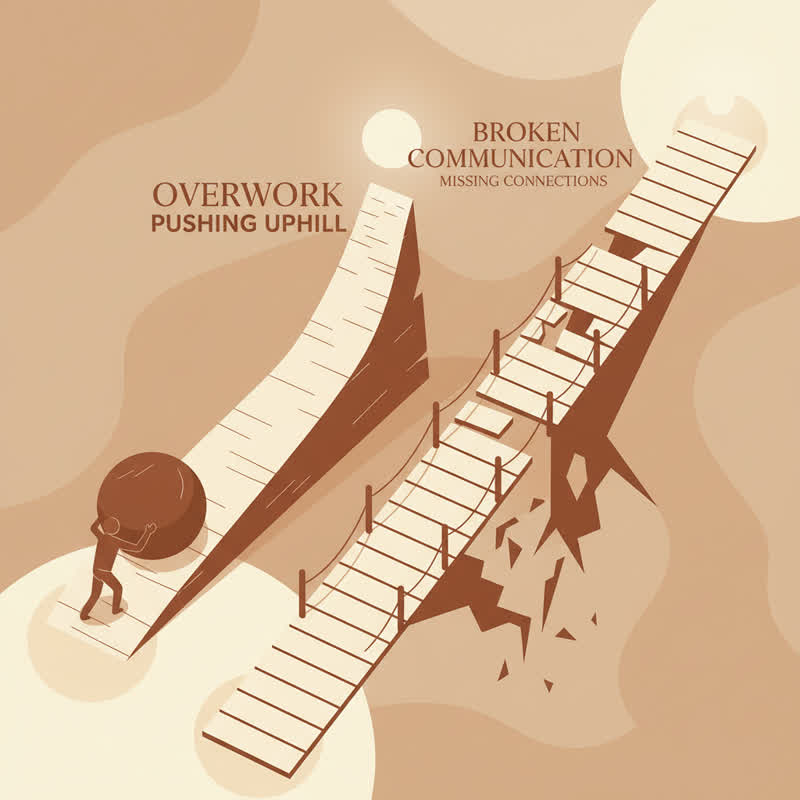
The Fix Is Cheap (And Uncomfortable)
Here's the good news: fixing this doesn't require a budget. No new tools. No wellness programs. No pizza parties.
It requires one thing: honest, regular communication between managers and their people.
Gallup's data shows workers who receive regular manager communication are 5x less likely to burn out. The Radical Candor report confirms this from the other direction: 46% of executives identify lack of honest feedback as their top concern. They know it's a problem. They're not fixing it.
Why? Because feedback is uncomfortable. Telling someone their architecture proposal has holes takes courage. Telling someone they're doing brilliant work... surprisingly, also takes courage. As Dan Greene puts it, "Managers don't lack empathy... they lack courage."
If you lead an engineering team, here's where to start:
Turn your 1:1s into real conversations. Stop asking "how's the ticket?" Start asking "what aren't you getting from me?" (I wrote about this question before... it's the single most useful phrase for a manager.)
Make retros honest, not safe. If nobody disagrees in your retro, your retro is broken. Silence isn't harmony. It's resignation.
Give feedback on the work AND the person. Not annual reviews. Not quarterly check-ins. Weekly. Direct. Specific. "Your API design on the payments service was clean and well-documented. Keep doing this." Or: "The test coverage on your last PR was thin. Let's talk about what blocked you."
Stop conflating output with wellbeing. Someone shipping code on time tells you nothing about whether they're burning out. The team member who's always "fine" is often the one closest to walking out the door.
This Isn't Soft. This Is Engineering.
I run a 360-degree feedback tool for a reason. Not because feedback is a nice-to-have. Because it's the single highest-leverage intervention for reducing turnover, improving performance, and preventing burnout.
Only 31% of U.S. employees are engaged at work... the lowest in a decade. 37% quit due to poor engagement or toxic culture. And burnout is up 25% since 2022.
Free fruit won't fix this. A shorter sprint won't fix this. Reducing hours won't fix this.
One honest conversation a week might.
Your team isn't burning out because they work too hard. They're burning out because nobody tells them where they stand. Fix the feedback. Fix the burnout.