Do You Want to Be Liked, or Do You Want to Matter?

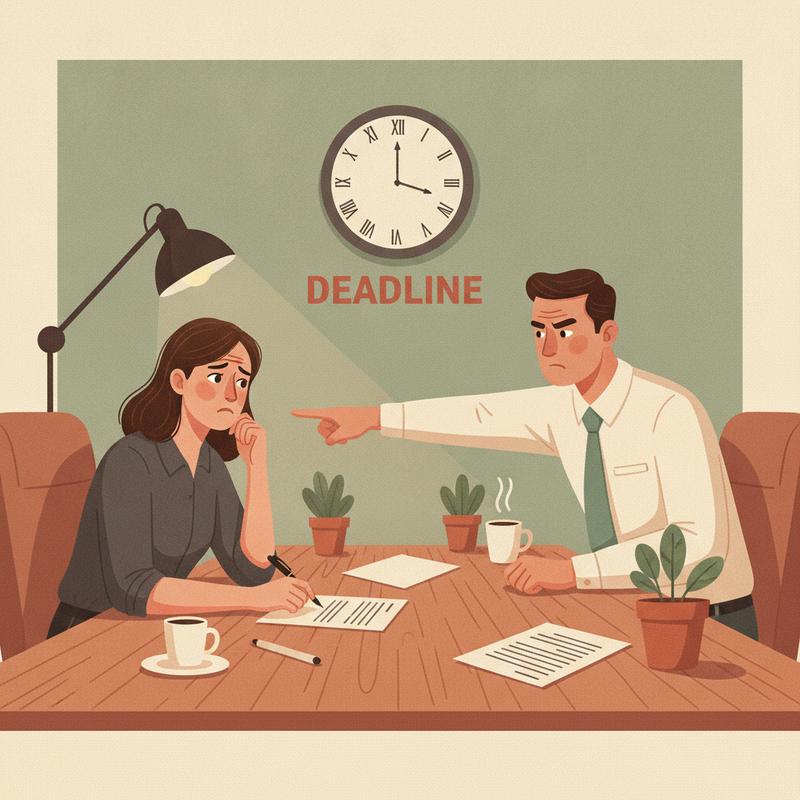
I remember the exact moment I learned this lesson. I was a few years into engineering management. One of my most experienced developers was shipping consistently buggy code and deflecting every code review with excuses. Other team members were frustrated. The situation was obvious to everyone in the room.

I knew what needed to happen. And I waited another month before doing it.

Not because I was gathering evidence. Not because I was waiting for the right moment. I was waiting because I didn't want the discomfort of being the bad guy. I wanted this person to like me. And I let the comfortable choice win.

In choosing approval over action, I let my team down.

The month cost us two production incidents. It cost me credibility with the people I was supposed to be leading.

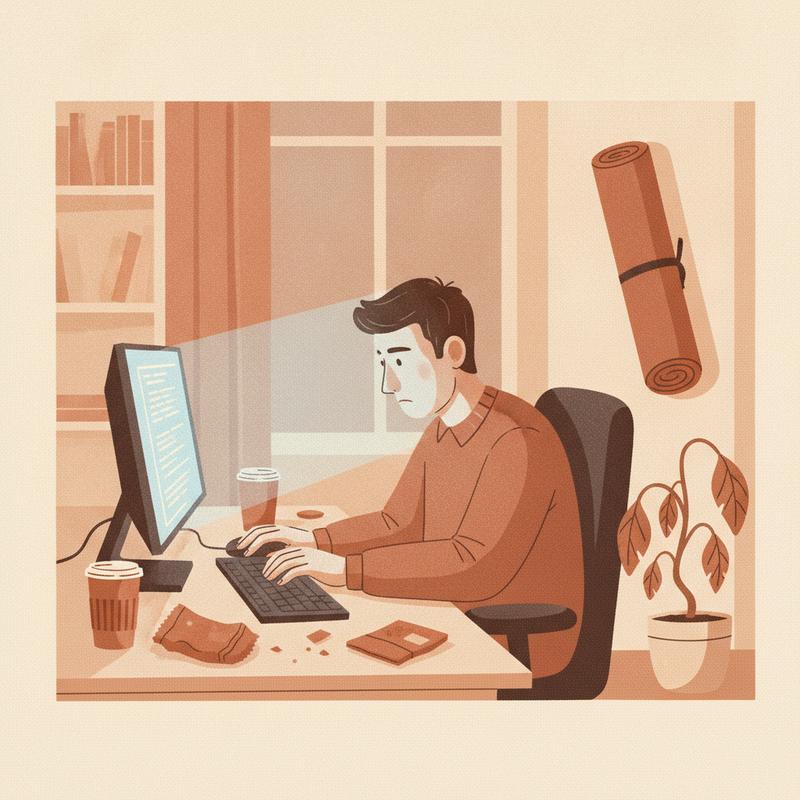
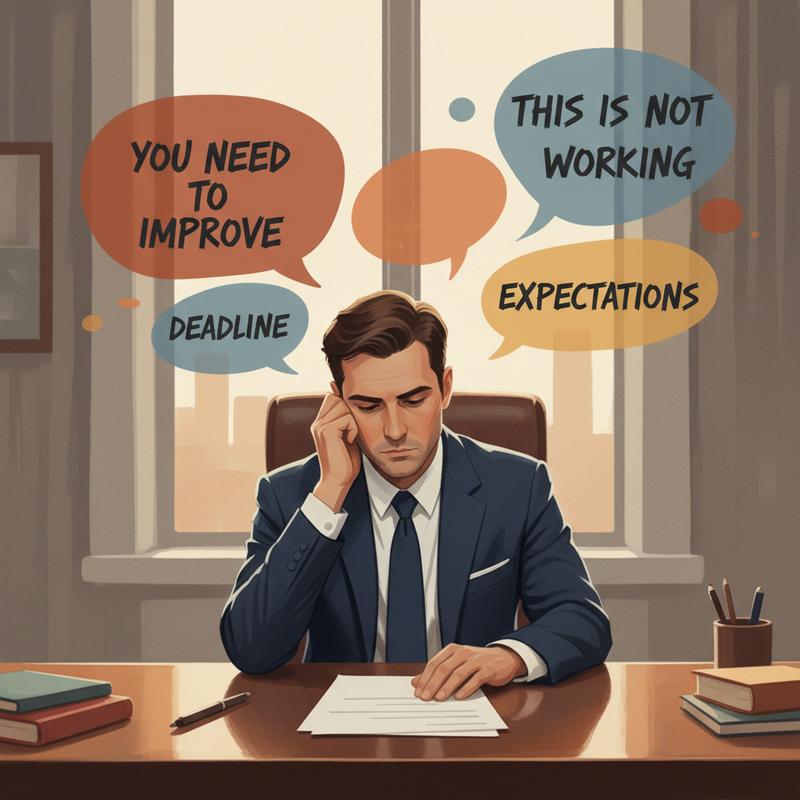
A person sitting alone at a desk, lost in quiet reflection

The Trap

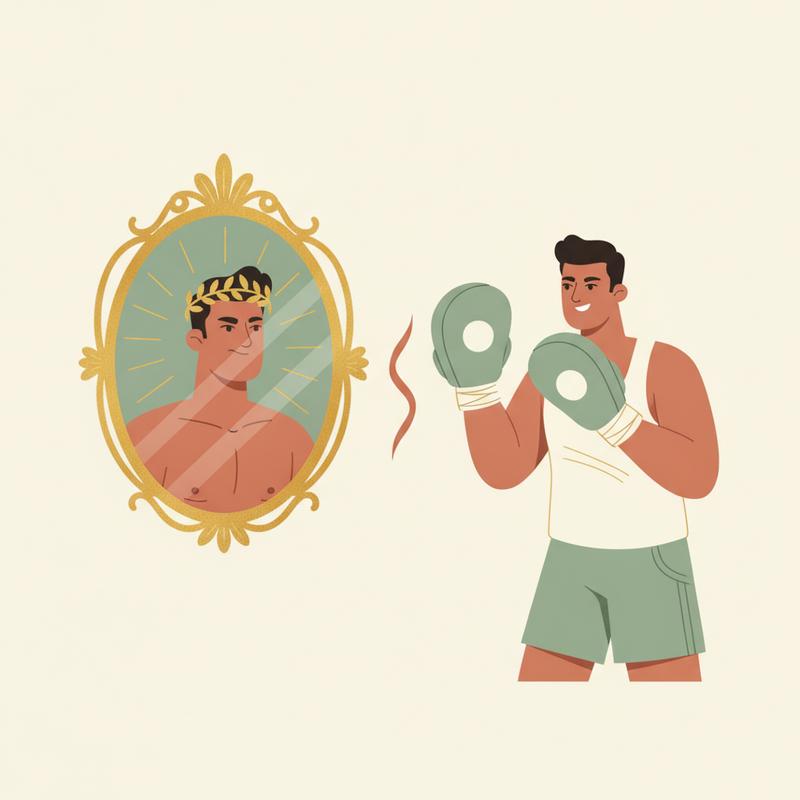
Being liked feels like success. Every time someone agrees with you or praises you, your brain logs it as working. You get included. People talk warmly about you in rooms you're not in. It feels productive.

The problem is being liked and being effective are not the same thing. The higher you climb in your career, the harder it becomes to ignore the gap between them.

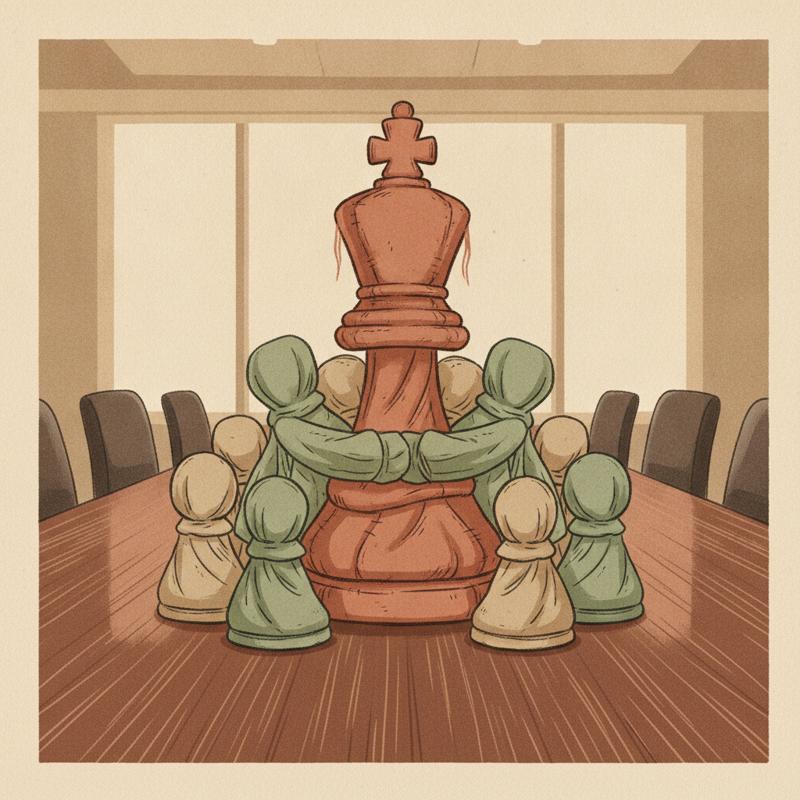
I've seen technical leads who never challenged anyone because they wanted to keep the peace. Managers who gave glowing performance reviews across the board to avoid the awkwardness of a real conversation. Leaders who approved bad ideas in planning sessions because they didn't want to be the person who slowed things down.

All of them were liked. I'm not sure any of them mattered.

Approval feels like trust. It isn't. Approval is what you get when you give people what they want. Trust is what you earn when you tell them what they need to hear.

What the Army Taught Me

I spent time in the US Army before my tech career. One thing the military gets right... mission comes before comfort. Not cruelty. Not indifference to people. But the mission is the mission, and individual popularity is beside the point.

In a civilian context, leaders often invert this. Comfort becomes the mission. Being easy to work with becomes the measure of success. And the actual work... suffers for it.

The leaders I respected most in the Army weren't the popular ones. They were the ones who were clear, honest, and consistent. Who told you when you were off course, without drama. Who would go to bat for you when it mattered, not because you'd earned their friendship, but because it was the right thing to do.

You trusted them because they said what they meant. Not because they made you feel good.

What Mattering Costs

Mattering means doing what needs doing, even when it's uncomfortable. It means telling someone their work isn't good enough. It means disagreeing with your manager in a room full of people when you know they're wrong. It means making the call upsetting half the team today because it's the right one for the next six months.

Mattering has a price. You will not always be the most popular person in the room. You will have conversations people don't thank you for immediately. You will make decisions which, in the short term, make things harder.

Early in my career I avoided paying it. I optimized for being easy to work with, agreeable, never a problem. I told myself I was being collaborative.

I was being cowardly.

The moment things shifted came at Curve. I was leading seven cross-functional engineering teams. One of my teams was struggling with delivery. I knew the root cause: one person's attitude was creating a culture of learned helplessness across the whole team. Nobody wanted to flag it because this person was technically skilled and widely liked.

So nobody did anything.

I had the conversation. It was not pleasant. There was a period of weeks where this person made it clear they weren't happy with me. Others on the team weren't sure what to make of it either.

Six months later, the team was shipping consistently. We hit our best delivery quarter on record. And the person I'd had the hard conversation with later told me it was the most useful feedback they'd received in their career.

This is what mattering looks like.

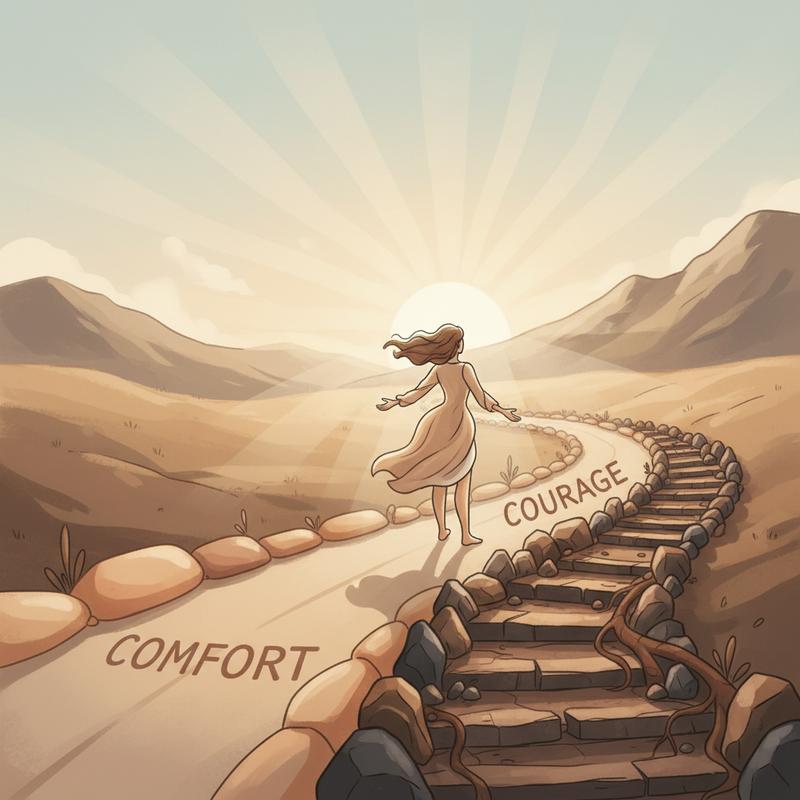
Two paths diverging through an autumn forest, one lit by gold, one disappearing into shadow

Engineering Culture Gets This Wrong

Engineering culture is particularly prone to this trap. We celebrate harmony. We pride ourselves on psychological safety, and worth celebrating... but we sometimes confuse it with conflict avoidance, which is not.

In tech, the need to be liked shows up as:

  • Endless consensus-building leading to no decision
  • Pull request reviews where everyone approves mediocre code to avoid friction
  • Roadmap planning where nobody pushes back on obviously unrealistic timelines
  • One-on-ones with no honest feedback in either direction

The result is teams feeling good but not performing. Cultures where honesty has been quietly replaced by politeness. Leaders with plenty of friends but not leading anything.

The approval-seeking leader doesn't look like a coward from the outside. They look collaborative, warm, and easy to work with. The damage shows up six months later in missed deadlines, disengaged teams, and the quiet departure of your best people who've figured out nothing is going to change.

How to Know Which Mode You're In

Ask yourself this. When you walk away from a difficult conversation, what are you thinking about?

If you're thinking "I hope they're okay with what I said," you're optimizing for being liked.

If you're thinking "I said what needed to be said," you're mattering.

Neither is a fixed state. I still catch myself hedging feedback. Still feel the pull toward the easier path. The difference is I notice it now, and I name it.

A check I've started using: before a difficult conversation, I ask "Will I be glad I did this in a year?" If yes, I have the conversation. If the answer is no, I reconsider whether I'm doing it for the right reasons.

What I've Seen on the Other Side

I've been on the receiving end of this too. The people who shaped my career weren't the ones who told me I was doing great. They were the ones who told me I wasn't... at exactly the moment I needed to hear it.

One conversation stands out. Early in my career, a senior colleague told me I was hiding from the leadership work. Not unkindly. Not at length. About three sentences, in passing. I didn't enjoy it at the time.

But he was right. And I changed.

He mattered to my career. I have no idea if he ever knew.

The leaders remembered fondly by their teams years later aren't the ones who made everything comfortable. They're the ones who made things better. Those are different jobs.

A lighthouse beam cutting through evening fog, standing firm on rocky cliffs

The Real Question

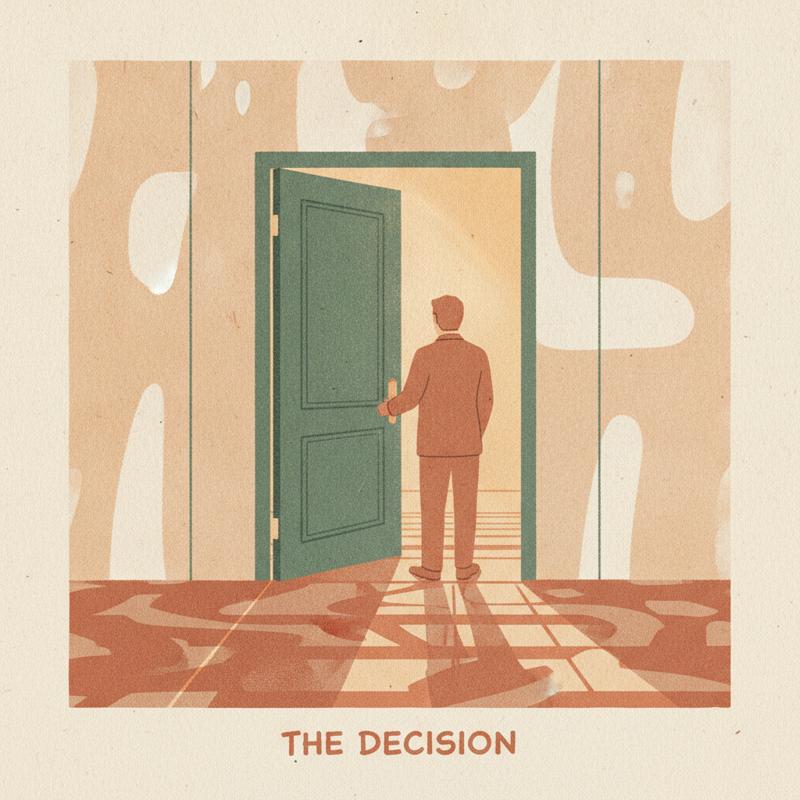
Think about one decision you've been putting off. One conversation you've been avoiding. One piece of feedback you've held onto for too long.

Why haven't you done it?

If the honest answer is some version of "because it'll be awkward" or "because they won't like it"... you're in the trap. You're choosing being liked over mattering.

You don't need to choose between being liked and being respected. But you do need to choose between being liked and being honest. And the choice shows up every day, in small ways, in every conversation you're part of.

When people look back at their time working with you, what will they remember? Being easy to be around? Or making things better?

Those are not the same thing.

Burnout Is a Choice. Until It Isn't.

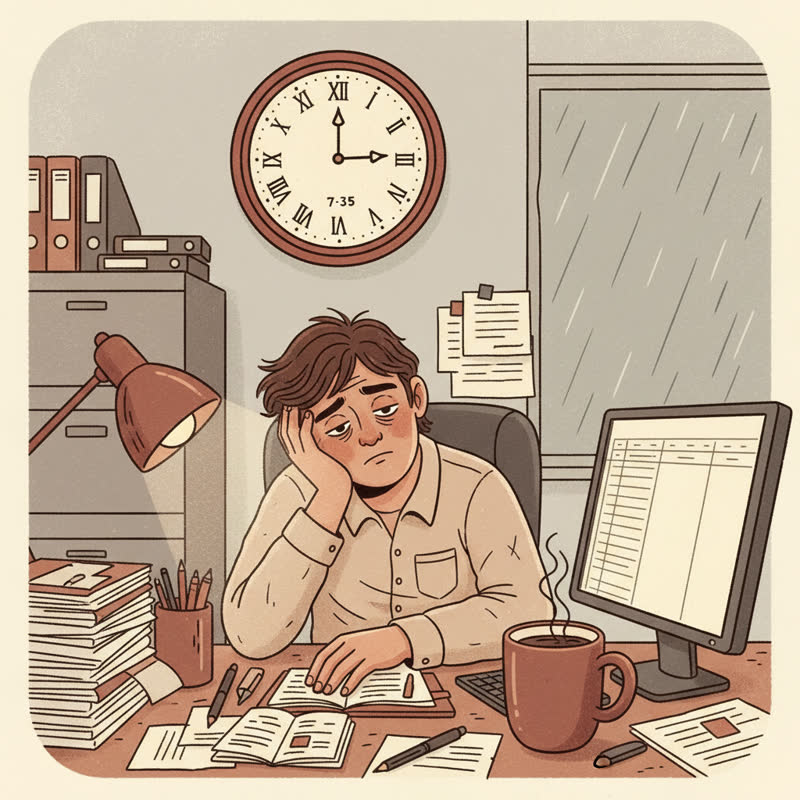
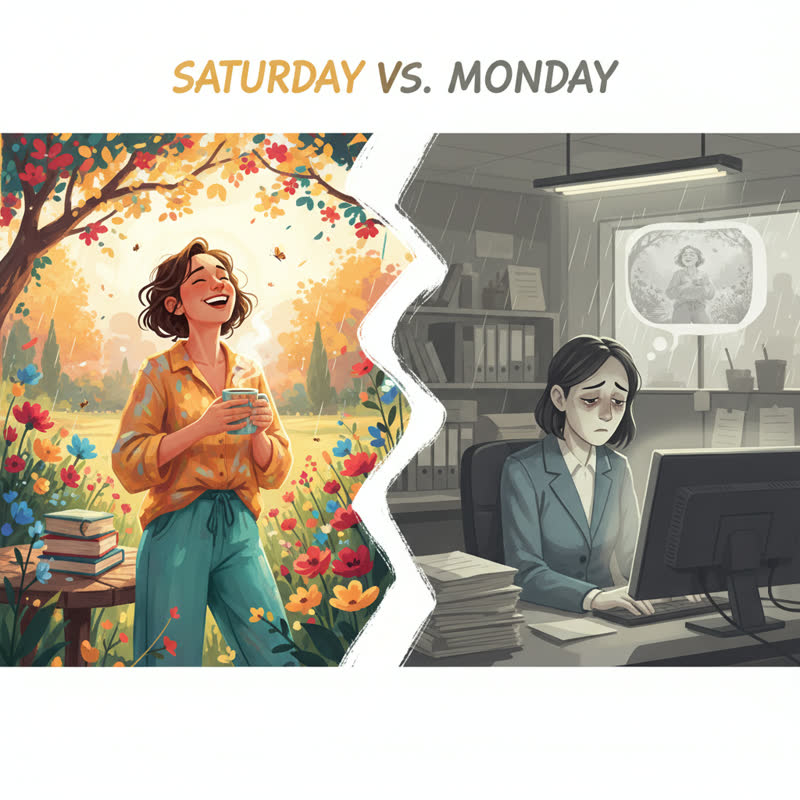
A tired professional standing at a fork in the road at dusk, one path leading toward warm rest, the other toward harsh office lights

Nobody burns out overnight. It's a series of small decisions compounding, week after week, until your body stops asking for your opinion.

I know because I've been there. The person who wears exhaustion as a badge of honor. The one who checks email before breakfast. The one who says "I'm fine" when asked, because admitting otherwise feels like weakness.

Here's what nobody wants to say out loud: at some point along the way, you made choices. So did I.

That's not the same as saying it's entirely your fault. But pretending you had no agency gets you nowhere.

The Numbers Are Uncomfortable

A 2025 study covered by Forbes reports job burnout at 66%... an all-time high. A separate report from The Interview Guys puts it at 82% of employees. Numbers like those tell you something is broken at a systems level.

And yes, workplaces share blame. Bad leadership. Unrealistic expectations. Poor culture. My research over at Step It Up HR found 99.5% of survey respondents had experienced one or more types of bad bosses in their career. Systems do real damage.

But inside those systems, people make choices every day. To stay late. To skip the gym. To say yes to one more thing. To ignore the ache in their chest. To stay silent.

Those are choices.

Uncomfortable to say. Worth saying.

When I look back at the stretches of my career where I was closest to the edge, I see a pattern. Nobody held a gun to my head. I made trade-offs. Every. Single. Time. And I told myself a story about why each one was necessary.

The Addiction Nobody Names

Hands gripping a cracking coffee mug over scattered papers, a laptop glowing in the background

Research from the International OCPD Foundation describes how workaholic behavior is socially acceptable and actively encouraged by employers. The "long hours culture" is real, it's documented, and it's hiding in plain sight.

We have a word for alcoholism. We have treatment programs for drug dependency. But working 70-hour weeks gets you promoted.

The person who leaves on time gets quiet looks. The one who answers email at midnight gets praised in Monday's standup. We've built cultures that reward the addict and shame the healthy.

Workaholism borrows its name from alcoholism for a reason. The compulsion is real. The denial is real. The social reinforcement is real. The difference is your boss hands you a bonus instead of an intervention.

I've led teams while modeling exactly this behavior. When you're the first email in someone's inbox on a Saturday morning, you send a message whether you intend to or not. You normalize it for them. They feel the pressure to match it. They pass it down. The addiction spreads through an org chart faster than any memo about wellbeing.

And the insidious part? It feels good. For a while. The productivity hit. The recognition. The sense of being needed. That's the trap. By the time it stops feeling good, you're already deep in it.

When Your Body Takes Over

At some point, if you ignore enough signals, your body stops waiting for your decision. It makes the decision for you.

A panic attack at your desk. A crying spell you won't explain. A doctor telling you your blood pressure is too high for someone your age. Or the quieter version: waking up and feeling nothing. Not tired, not stressed. Empty.

Your body sends warnings for months before it gets to that point. Little ones at first:

  • Trouble sleeping, even when you're exhausted
  • Short fuse with no obvious cause
  • The Sunday-night dread beginning Saturday afternoon
  • Losing interest in things you used to enjoy

Mental Health America lists frequent physical symptoms as key burnout indicators: headaches, digestive issues, muscle tension. Your body speaks before your mind admits anything is wrong.

When I ignored those signals, they stopped whispering and started shouting. And by the time they shout, you've run out of runway. Recovery at that point isn't a lifestyle adjustment. It's a forced stop.

The cruel irony: the more you ignore the warnings, the longer the recovery takes. What would have been a two-week course correction becomes a six-month rebuild.

The Mirror Moment

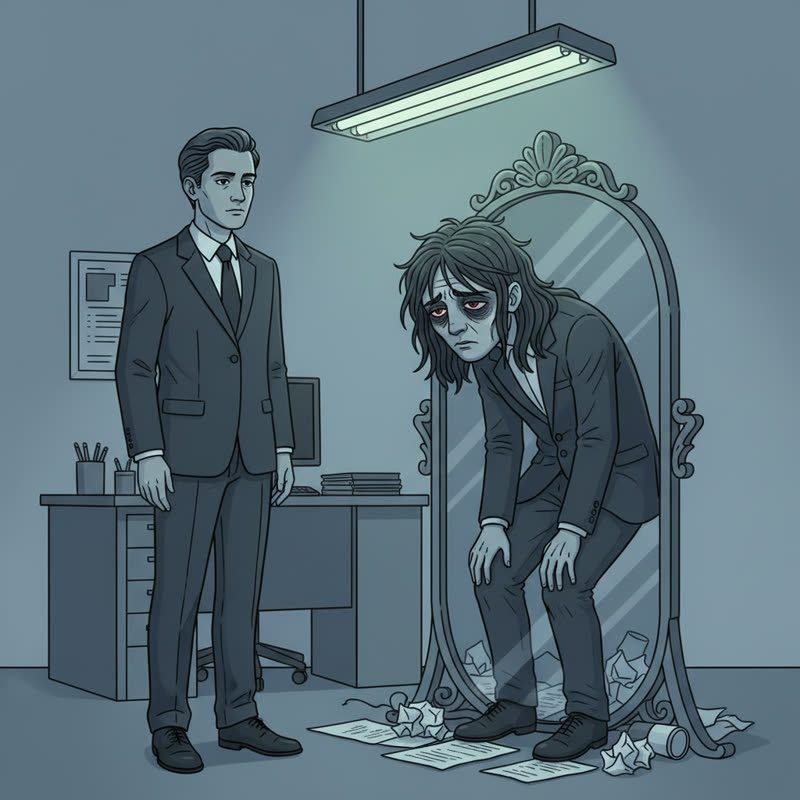
A composed professional in an office, their mirror reflection showing someone exhausted and dishevelled

There's a moment I call the mirror moment. When you stop and see yourself clearly for the first time in months.

For me it came after a stretch of relentless travel, back-to-back client work, and six months of poor sleep. I looked in the mirror one morning and didn't recognize the face looking back. The outside was holding together fine. The inside had been running on fumes.

The uncomfortable part wasn't the exhaustion. It was seeing how many small choices had led me there.

The late emails I didn't need to send. The projects I took on because disappointing someone felt worse than burning myself out. The weekends I worked through because it felt virtuous.

Virtue. That's the word we use to dress up self-destruction.

I wonder how many people around me were making the same small choices, stacking them up, telling themselves the same story. The data suggests a lot. Most of them, and most of you reading this, have been there or are there now.

What Doesn't Work

Let's be direct about what doesn't fix burnout: taking a week off and returning to exactly the same conditions.

Research published in ScienceDirect on burnout recovery found the best outcomes when personal agency was high and reinforced by a supportive environment. Translation: you need to change things, not only pause them.

A spa day treats the symptom. What treats the cause is harder and less Instagrammable.

It's saying no to things that don't deserve a yes. That's not a skill people teach you. You have to build it, and it feels wrong at first, every time.

It's building a schedule with actual white space in it... not aspirational white space that fills up by Tuesday. Real gaps. Time you protect.

It's sleeping. Not optimizing sleep. Sleeping.

It's an honest conversation with yourself about what you're running toward and what you're running away from. Those aren't always the same thing, and the answer surprises people.

And sometimes it's leaving. Not every environment is fixable. Some jobs, some cultures, some managers don't want you healthy. They want you productive. Those aren't the same thing, and knowing the difference matters more than you'd expect. If your workplace needs you exhausted to function, that's information.

The Choice, Right Now

A person sitting peacefully on a park bench in soft morning light, an empty briefcase open beside them

I'm not here to sell you a wellness routine. I don't believe candles fix systemic overwork.

What I believe: you have more agency than burnout culture tells you.

Not unlimited agency. Not blame-yourself-for-everything agency. But enough to notice the choices you're making before your body starts making them for you.

This week there's a wave of social media fatigue running through every platform. People are exhausted by being always-on, always-available, always-reachable. That's not nostalgia for simpler times. That's a collective signal. Burnout culture isn't limited to the office anymore. It's in your phone. It's in your notifications. It followed you home, and most of us let it in.

The question worth sitting with: what is one choice you're making right now that you know isn't sustainable?

Not a list. Not a life overhaul. One thing.

Because burnout doesn't ask permission. But before it gets there, you had a window to choose differently.

The question is whether you'll take it.

Hard Work Is Not Enough (And I Found Out the Hard Way)

Hard Work Is Not Enough (And I Found Out the Hard Way)

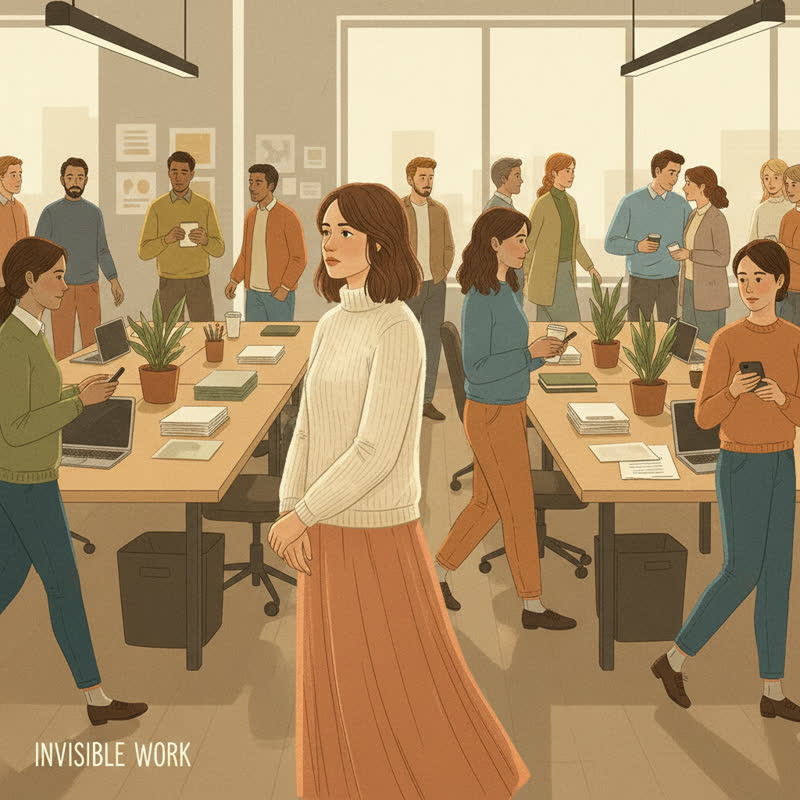
A worker buried at his desk while colleagues are recognized in the background

For years I was the engineer who stayed late.

The one who shipped on time. Who picked up the complex tickets nobody else wanted. Who delivered without asking for credit, because I believed credit would come on its own.

The deal seemed simple: do excellent work, and the rest follows. Promotions. Recognition. Opportunity. It felt like the honest path.

So I kept my head down.

And I kept getting passed over.

The Lie We Were All Told

"Work hard and you'll be rewarded."

Every parent says it. Every teacher reinforces it. By the time you walk into your first job, it feels like physics. Put in the effort, the reward comes out the other side.

Organizations are not physics experiments. They're made of people. People who promote who they know, trust, and remember.

If nobody knows your name, the equation breaks down.

I watched this play out more than once. A colleague who shipped less than I did, who spent what felt like half the day in the corridor with the senior leadership team... got promoted ahead of me. I burned about it. For weeks.

But it taught me something I should have understood years earlier.

He was not lucky. He was visible.

The Army Taught Me This and I Forgot It

Here is an embarrassing admission: I already knew this lesson before I started my tech career.

In the Army, you don't sit quietly waiting for your commanding officer to notice you. After every operation, every exercise, every training event, you debrief. You report up. You make your work visible through a structured process: the After Action Review. What happened, what you did, what it meant, what comes next.

The Army builds visibility into its culture by design. It is not bragging. It is professional communication.

Then I left and entered the tech world and somehow forgot all of it. I thought the code would speak. It does not speak. Code ships, gets merged, gets deployed, and nobody who matters talks about it in the executive meeting. Unless someone makes it happen.

The Corporate NPC Trap

There is a trend doing the rounds right now: the "Corporate NPC." The worker who clocks in, does what is asked, follows the script, and floats through the workday like a background character in someone else's story.

Reddit's r/antiwork and r/cscareerquestions are full of people living this. They are working hard. They are not slacking. And they are going nowhere.

The problem is not the work. The problem is the operating assumption underneath it: doing your job well is enough.

It is not. It never has been.

What is different about 2026 is people are starting to name this feeling. Years of remote work, return-to-office debates, and watching AI automate the "safe, reliable" tasks have left a lot of workers questioning whether keeping their heads down is a strategy at all. It is not. It is inertia dressed up as virtue.

What Gets You Ahead

Performance is necessary. You have to deliver. But delivery is the floor, not the ceiling.

What gets you promoted is what happens after the work is done.

Who knows you did it. Your manager seeing your output is fine. Your manager's manager hearing your name in a context worth remembering... there is a difference. Proximity to decisions matters. Being known by the right people matters.

What you said about it. Did you ship the feature and move on? Or did you show what it meant for the customer, for the business, for the team? The narrative around your work is part of your work.

Whether you spoke up at all. Most engineers I know are allergic to self-promotion. It feels boastful. But there is a gap between bragging and communicating. Telling people what you shipped and what it achieved is not arrogance. It is professionalism.

A confident professional speaking up at a team meeting

Research from MIT Sloan found women received higher average performance ratings than their male colleagues, yet received 8.3% lower ratings on "potential" and were 14% less likely to be promoted. The performance was there. The visibility was not translating into recognition. This is not a women-only problem. It is a workplace-wide one. How your work is perceived depends enormously on how it is communicated.

What Changed for Me

At some point I stopped waiting to be noticed and started making sure my work was noticed.

Not in an obnoxious way. I did not start sending "look at me" emails or dominating every meeting. But I changed a few things, and the difference was immediate.

I started talking about my work in terms of outcomes, not outputs. Instead of "I shipped the feature," it became "the feature went live and here is what we saw." Numbers. Impact. The story behind the work.

I started showing up in the rooms where decisions happen. Not to perform... to contribute. Contributing means you have something real to say and you say it. It means people start associating your name with ideas they find useful.

I started building relationships outside my immediate team. The senior leader who had no idea who I was... I made sure she knew who I was. Not by being annoying, by being useful. By finding the things she cared about and finding ways to contribute to them.

I started asking for feedback from people whose opinions shaped where I might go next, instead of waiting for a formal review to tell me whether I was on the right track.

Things changed. Doors opened. My name started coming up.

Self-Promotion Is Not a Dirty Word

Grace Judson has a phrase I keep coming back to: self-promotion is essential.

Not as a dirty trick. Not as a substitute for strong work. As a legitimate part of professional life.

The rule book most of us grew up with said the opposite. Keep your head down. Let the work speak. Don't be seen to want things too much.

Burn it.

Doing great work in silence is a choice. A choice with consequences.

Career advancement built on connections and relationships, not solitary effort

Around 85% of jobs are filled through networking, according to research aggregated by Forbes. Promotions follow the same pattern. The person who gets the role is often not the one who worked hardest in isolation. It is the person whose name came up when someone asked, "who should we consider?"

Is your name coming up in those conversations?

Three Things You Do Differently Starting Now

If you are sitting somewhere recognizing yourself in this post, here is where to start.

Report your wins. One short, factual message to your manager after something ships. What went out, what the outcome was, what it means. Not a performance. A status update with teeth.

Get into at least one room. Find a meeting, a working group, a cross-team initiative where people outside your immediate bubble are present. Show up prepared. Say something useful. Repeat until your name is familiar.

Build one relationship upward. Not networking in the hollow, forced sense. Find one person a level or two above you whose work you respect, and find a genuine way to be useful to them. Ask a thoughtful question. Share something relevant. It compounds over time.

This Is Not About Being Fake

I want to head off the obvious objection. This is not advice to become a politician. Not advice to perform confidence you do not feel, or to overstate what you have delivered.

This is about not hiding work you are proud of.

There is nothing wrong with wanting to grow. Nothing wrong with making sure the right people see what you are capable of. The professionals I respect most are not the ones who talked the loudest. They are the ones who built real relationships, communicated honestly about their work, and showed up with consistency.

Hard work is necessary. It is not sufficient.

If you are delivering great work right now and wondering why nothing is moving... the work is not the problem. The visibility is.

What would it take to make one thing visible this week?

Stop Aiming for Success. Start Aiming for Significance.

Stop Aiming for Success. Start Aiming for Significance.

A professional stands alone at the top of a mountain of golden trophies and briefcases, looking down with a hollow expression

I remember getting a promotion I'd worked toward for two years. The email came on a Wednesday afternoon. My manager called to congratulate me. I thanked him, hung up, and sat in silence for about three minutes.

Not savoring the moment. Not celebrating. Sitting with a quiet, unsettling question: what exactly did I do?

I'd moved up. I had a better title, more pay, more people reporting to me. By every measure I'd been taught to care about, I'd succeeded.

And it felt like nothing.

The Success Trap

Success is seductive because it's measurable.

Track your title against the org chart. Compare your salary to what you made five years ago. Count promotions. See where you rank on the team, in the company, against people you went to school with.

The measurability is what makes success such an effective carrot. And what makes it such a poor destination.

I spent years in the US Army before moving into tech leadership. In the Army, I always knew what I was there for. The mission was real. The people around me were real. When we got something right, it mattered in a way I felt.

When I moved into software and leadership roles, the metrics got better. The meaning got murkier.

Nobody sits in a leadership training telling you to ask: does this matter beyond my career? They hand you a framework. They show you the promotion criteria. They tell you to build your personal brand.

All fine. But it aims at success. It says nothing about significance.

The Salary Thread Problem

Right now, on Reddit, there are threads getting thousands of upvotes from people who've done everything "right." They stayed loyal to a company for five or six years. They delivered. They watched their pay stagnate. Then they job-hopped for a 30 or 40 percent bump.

And they're still posting the same question.

Not "how do I negotiate salary" or "what's the best tech stack to learn." More like: I got what I was chasing. Why doesn't this feel like anything?

The workplace and salary frustration posts on Reddit aren't about money. They're about people who optimized for success and found it hollow.

More pay doesn't fix a hollow feeling. A better title doesn't fix it either.

John Blakey, a leadership coach who has thought about this longer than most, puts it plainly: stop aiming for success. Aim for significance.

It sounds like something on a motivational poster. It isn't.

What Significance Is

Significance is not grand or dramatic. You don't have to write a book or start a charity or give a TED talk.

Significance is the difference you made that mattered to someone else.

Two people in genuine conversation over coffee, one leaning forward with real attention, warm afternoon light

I've been thinking about the moments in my career I remember most. Not the promotions. Not the salary milestones. The moments where something I did, or said, or didn't say, landed for another person.

The junior developer I stayed late with when she was stuck on a problem I'd solved years earlier. Not because it was my job. Because I remembered what stuck felt like, and I knew how much a calm voice in that moment was worth.

The honest conversation with a direct report heading toward a mistake visible from a mile away. Not a comfortable conversation. One where I told him the truth he didn't want, and he came back six months later to say it was the most useful thing a manager had ever done for him.

The writing I started doing here, and on Step It Up HR, not to build an audience or generate leads, but because I'd learned things the hard way and it seemed worth writing down in case someone else was walking the same road.

None of those are on my CV. All of them are things I'd point to if someone asked what I was proud of.

That's significance. And it's measurable too, in its own way. Not by a number. By whether you'd stand behind it when the metrics don't matter.

How Success and Significance Diverge

Here's where it gets uncomfortable.

Success asks: how am I doing relative to others? Significance asks: what have I done for others?

They're not opposites. You need both. But the more you pursue only the first, the less the second tends to happen.

When you're optimizing for the next promotion, you spend your energy on visibility, on being in the right meetings, on managing up. Nothing wrong with that. But it crowds out the things that build significance. The time investment that doesn't show up in a performance review. The honest conversation that doesn't make you look good in the short term. The support of someone who has nothing to offer you in return.

A person at a fork in a road, one path toward a city of glass towers, one path toward a small gathering of people around a fire at dusk

The best leaders I've known managed both. But they made a choice, sometimes daily, about which one they were optimizing for in a given moment.

That choice shapes everything.

The Shift Worth Making

I won't pretend I've finished making this shift. I haven't.

But a few things changed when I stopped treating success as the destination.

The questions I ask in one-on-ones changed. I stopped leading with "how are you tracking against your goals?" and started asking things like "what's making your work feel worth doing right now?" The conversations got real faster.

The writing changed. I stopped worrying about whether posts would perform and started asking whether they contained something true and useful. The posts that aimed at nothing in particular are the ones people share.

The way I measure a working week changed. I still notice the outputs. But I notice something else too: did I do anything this week that mattered to a person, not a metric?

That's a different question. And it leads to different behavior.

What Matters When Nobody's Watching

There's a version of a career where you optimize every move for maximum advancement, and you succeed. You reach seniority. You earn well. You get the recognition.

And there's a version where you mix advancement with purpose. Where you do the things that don't go on the CV alongside the things that do.

The second version takes longer to see clearly. It doesn't show up on a LinkedIn profile or a salary comparison. But it's what you have when the scorecard stops mattering.

The leaders I most respected across my career (not the most promoted, the most respected) were not the ones who'd maximized for success. They were the ones who'd built something worth pointing to. Who'd changed the arc of someone else's story. Who'd done work that meant something beyond their own progression.

That's what John Blakey is pointing at. Not: don't succeed. But: know what you're building.

Research on the psychology of meaning consistently shows the difference between extrinsic markers of success and the deeper satisfaction that comes from genuine contribution. The research is interesting. The real argument isn't academic, though. It's personal.

When you're 70, looking back at your working life, the promotions won't be the story. The people will be. The moments will be. The difference you made, or didn't make, will be.

So what are you building?

Be Curious, Not Judgmental

Man at desk staring at whiteboard with JUDGE and CURIOUS, CURIOUS circled

The Dart Scene I Keep Coming Back To

If you've watched Ted Lasso, you know the scene. Season 1, Episode 8. Rupert... Rebecca's smug ex-husband... challenges Ted to a game of darts. He mocks Ted the entire time, treating him like a bumbling American who wandered into English football by accident.

Ted misses his first throw. Badly. Rupert smirks.

Then Ted starts talking. He quotes "Walt Whitman"... who, as it turns out, never wrote those words. The quote is misattributed. Nobody knows who first said it. The Snopes piece on this is worth a read, if you're curious.

"Be curious, not judgemental," Ted says.

Then he wins the game. Decisively. Because Ted had been watching Rupert's technique the whole time. While Rupert was busy judging, Ted was busy learning.

I've returned to this scene more times than I'd care to admit.


The Default Mode

Your brain has a default mode. It isn't curiosity.

Under pressure, your brain defaults to threat assessment. It takes in new information and asks: is this safe or dangerous? Is this person with me or against me? Does this situation confirm what I already believe, or does it challenge me?

Judgment is fast. Efficient. It's your brain doing what brains evolved to do.

The problem is most situations at work... and in life... aren't life-or-death threats. They're complicated. Messy. Full of context you don't have yet.

When you judge first, you close off the information you needed to understand the situation properly.

As the team at BeHumanize put it in their piece From Judgment to Curiosity: "Most workplace conflict does not start with malice. It starts with interpretation." Your brain builds a story. The story feels like truth. Then you act on the story, not the facts.


My Own Rupert Moment

I'm not proud of this. But I've been Rupert more than once.

Early in my career, I managed a developer who was consistently late to meetings, gave short answers during updates, and never seemed engaged in standups. I'd made up my mind: he was coasting. Didn't care. Showing up for the paycheck and nothing else.

So I started managing him differently. Less trust, more oversight. I stopped including him in decisions. I told myself I was being "professional" about it. But the signal I was sending was clear enough.

Months later, during a one-on-one I almost cancelled, he told me his daughter had been seriously ill for most of the year. He'd been commuting to a specialist appointment every Tuesday... the day he was always late. He was exhausted and scared, and still showing up every single day.

He wasn't coasting. He was surviving.

I'd been judging him from a position of complete ignorance. And in doing so, I made his already hard year harder.


What Curiosity Looks Like in Practice

People talk about curiosity like it's a personality trait. Either you're wired for it or you're not. I don't buy this framing.

Curiosity, in the sense I'm describing, is a choice. A deliberate one. It's the choice to pause before you interpret. To ask before you conclude.

Here's what it looks like in practice:

Instead of: "He's always pushing back in meetings. He's a blocker." Try: "He pushes back a lot. What is he seeing?"

Instead of: "She's been quiet this week. She must be checked out." Try: "She's been quiet. I'll check in and ask."

Instead of: "This team doesn't care about quality." Try: "What would make it easy for this team to care about quality?"

The questions feel small. The shift in outcome is enormous.

As Tom Cutler writes at the Cutlefish Substack, the most capable leaders approach situations with "curiosity and a light touch... resisting the impulse to judge and act, while creating space to explore the thoughts and feelings." Not softness. Discipline.


Two colleagues in an open, engaged conversation


Why This Is Harder Than It Sounds

Choosing curiosity over judgment is a cognitive effort. Your brain wants resolution. It wants a clean story, a label to file away. Staying curious means keeping things open longer than feels comfortable.

There's also a status element to it. Asking genuine questions... the kind where you genuinely don't know the answer... makes you feel exposed. It signals you don't have everything figured out. In many workplace cultures, this feels risky.

But here's what I've noticed: leaders who ask the best questions get the best information. Leaders who rush to judgment get less information over time, as people learn not to bring them anything complicated or uncertain.

You train your team on what's safe to bring you.


The Pause Is the Practice

The BeHumanize piece has a line I keep returning to: "Culture is built in the pause."

Not in the big speeches. Not in the vision statements or the town halls. In the moment between something happening and your response to it. Your real values live there.

Do you ask or do you tell? Do you get curious or do you get certain?

The pause is a practice. You build it the same way you build any skill: intentionally, repeatedly, with full awareness you'll fail at it regularly.

I fail at it regularly. I still walk into conversations having already made up my mind sometimes. I still catch myself reading tone into an email. The difference now is I recognise the pattern. And recognising the pattern gives me a chance to interrupt it.


A person pausing thoughtfully on a path at golden hour


For Leaders, This Is Not Optional

If you lead people... any people at all... your default setting gets amplified. Your team watches how you respond to uncertainty. They watch what happens when someone brings you a problem you didn't expect. They're learning, in real time, whether this organisation rewards curiosity or punishes it.

Research on psychological safety shows teams perform better when members feel safe to speak up, to ask questions, to admit they don't know something. The leader sets the tone for all of it.

If you judge first, your team will stop bringing you things worth judging. They'll pre-filter. Pre-spin. They'll work out what you want to hear and give you the sanitised version.

You won't notice it happening. The information will quietly stop flowing.


It Comes Back to Ted

The thing about the dart scene isn't the win. It's the setup.

Rupert spent the whole evening being certain. Certain he understood Ted. Certain of the outcome. His certainty looked like confidence. Like strength.

But Ted was learning the whole time. Watching, listening, taking in what was in front of him without deciding what it meant.

Rupert was judging. Ted was curious.

Whoever originally wrote those words... they were describing something worth practicing. Something separating people who keep learning from people who stop. People who build trust from people who erode it. People who lead well from people who lead badly.

Be curious, not judgemental.

Easier said. Worth the attempt.


What's your default setting, and when did it last cost you something?

Why I Stopped Being an Expert

Why I Stopped Being an Expert

Fredrick Haren is a creativity researcher. He spends his time studying how humans generate ideas, interviewing creative people across 75 countries, writing books, giving keynote speeches.

His title, for years, was "Creativity Expert."

Then his eight-year-old son was explaining to a friend what his dad does for a living.

"My dad is a creativity explorer," the boy said.

Not expert. Explorer.

Fredrick stopped. He wrote it down. He thought about it for a long time. Then he changed his title.

One word. One child. One reframe I keep coming back to.

A person at a crossroads in a misty forest, one path labeled Expert pointing back, another labeled Explorer pointing forward into sunlight

The Trap Buried in the Label

Being called an expert feels like arriving. People pay for your answers. Conference organizers introduce you with a long list of credentials. Clients feel safe. The label feels earned.

But the label comes with something nobody warns you about.

When your identity wraps around "expert," you start protecting the status. You give answers when you don't have them. You downplay uncertainty because uncertainty feels like weakness. You dismiss ideas from people with less experience without considering them seriously. You stop asking questions in meetings because experts are supposed to know.

The invisible cost is curiosity. Experts have less of it over time. Not because they become less intelligent, but because curiosity requires a kind of not-knowing... and "not knowing" threatens the label.

John Hagel spent decades researching how large institutions evolve. He wrote about the expert trap directly. For over a century, the dominant organizational model rewarded experts above everything else. Credentials. Degrees. Experience records. Experts were hired to know things and repeat what they knew, faster and cheaper. In a stable world, this worked.

The world stopped being stable.

The rate of change in most fields means yesterday's expertise goes stale faster. The software engineer who stopped learning three years ago is behind. The HR leader working from the 2015 playbook is using an outdated map. The Army officer whose leadership model was built in a different era of warfare... well, I know something about this too.

When the environment changes and your identity doesn't, you've got a problem.

Three Times I Had to Kill the Label

I've been through this more than once, and I'll be honest, none of it was comfortable.

When I left the Army, I was a soldier. I knew how to operate inside structure, follow doctrine, lead under pressure. I was good at it. The problem was none of it transferred cleanly into a software engineering role. I had to start over as a beginner in something I'd never touched professionally.

Uncomfortable doesn't begin to describe it. I'd spent years being competent. Now I was the person asking basic questions and making beginner mistakes.

Then I became a software engineer. I built things. I got good. I started identifying as a technical person, the one in the room who understood how the code worked. People came to me with technical problems. I had answers. It felt good.

Then I moved into engineering management. Suddenly I wasn't writing code. I was listening, coaching, removing blockers, sitting in rooms talking about people instead of systems. The "technical expert" identity didn't fit. Clinging to it would have made me a worse manager, and I watched other people cling to it and become exactly this: brilliant individual contributors who were miserable and ineffective in leadership roles because they kept trying to be the smartest person in the room instead of the person who made the room smarter.

Now I'm in HR tech, speaking, and consulting. Work I genuinely love. Work I couldn't have predicted from my Army starting point. Work I wouldn't have found if I'd stayed attached to being an "engineering expert."

The thread across all of it? Each transition required me to stop being the expert and start being curious again.

There's something else worth naming here. The expert label isn't free. It carries a financial weight too. When you're known as the expert in X, stepping into Y means taking a pay cut or starting at the bottom of a new field. People see this as a reason not to change. I see it as evidence of how much the label controls us. We stay in roles no longer fitting us because the credential we've built feels too expensive to leave behind.

What Explorer Means

Explorer doesn't mean amateur. It doesn't mean pretending your experience doesn't exist. It's not a way of dressing up incompetence.

It means leading with curiosity instead of answers.

Jane Morgan, a leadership coach at IIL, wrote about a client who had built his entire career on being the person with the answers. Technically strong. His expert mode worked brilliantly for technical problems.

Then he moved into change management. The problems weren't technical anymore. They were human. His instinct to diagnose and prescribe fast made things worse. People felt steamrolled. Trust eroded.

The shift for him meant asking more questions. Sitting with ambiguity instead of rushing to resolve it. Treating his team as a source of answers, not a recipient of them.

When I started working on Step It Up HR and the BAT framework, I was not an HR expert. My career was in tech. But approaching it with genuine curiosity, about how feedback works, why bad bosses destroy teams, what behaviour change requires at its core, let me ask questions HR professionals with decades in the field had stopped asking. They already "knew" the answers.

Fresh eyes beat deep expertise more often than experts admit.

I see this pattern on Reddit right now too. There are endless threads from people who feel stuck because they've spent years building expertise in one area and the idea of starting over in another terrifies them. The label of "senior engineer" or "experienced manager" or "HR professional" has become something to protect rather than something to build from. The seniority becomes a prison.

Explorer gives you a way out of the prison. Not by pretending the expertise never happened, but by using it as a foundation instead of an identity.

A person at a desk covered with maps, notebooks, and sketches, looking out at an open terrain with mountains in the distance

How to Make the Shift

This isn't about deleting your credentials from LinkedIn. It's a quieter internal move. A decision about how you walk into a room.

Experts walk in with answers. Explorers walk in with questions.

Three things helped me make this shift:

Stop prefacing things with your credentials. You don't need to establish your status before every opinion. Let the idea stand on its own. If the idea is good, it doesn't need the authority prop. If it needs the prop, worth noticing.

Be honest about what you don't know. Not apologetically. Clearly and directly. "I haven't worked in this space before, so I'm curious about..." signals openness, not incompetence. People respond better to this than most experts expect, and it gives the room permission to do the same.

Get comfortable being a beginner again. Pick something you know nothing about and spend thirty days learning it seriously. Not to become an expert in it. To remember what genuine curiosity feels like. Most adults are so uncomfortable appearing unknowing and they stop doing this entirely. Their learning calcifies.

One Word

The eight-year-old son wasn't trying to give his father a reframe. Kids name things directly. They don't carry the same attachment to status labels we develop over careers.

Fredrick Haren swapped "expert" for "explorer." One word.

It shifted how he saw his work. How he introduced himself. What he went looking for. He's still the same person with the same knowledge and the same decades of research. But the lens changed.

I'm not an expert in any of the fields I work in. I'm a person who got intensely curious about how teams work, why leadership fails, what feedback does to human behaviour, and why the gap between knowing and doing is so much wider than most organizations admit.

Explorer. It fits better.

What would your work look like with the same swap?

If It's Comfortable, You're Doing It Wrong

Ted Lasso said it best: "It's a lot like riding a horse, if it's comfortable, you're doing it wrong."

I've been sitting with this for weeks. Not because it's clever TV writing. Because it's true, and I've spent thirty years proving it.

A person standing determined at a cliff edge at dawn, misty valley below

My first morning in US Army boot camp, I was exhausted before 6am. Wet, cold, and completely out of my depth. I'd thought I was reasonably fit. I was wrong. Everything hurt, nothing made sense, and the drill sergeants seemed designed to ensure I stayed confused.

The discomfort wasn't accidental. It was the point.

Something clicked for me in those early weeks. The Army wasn't trying to make me comfortable with hard things. It was building my ability to function when I was past my limit. To keep moving when everything in me said stop. To make decisions when I felt overwhelmed, rather than waiting for calm seas.

Comfort, I learned early, is the enemy of this. You don't build the muscle for hard things by doing easy things.

Boot Camp's Real Curriculum

Boot camp doesn't teach you to march or shoot. You learn those skills, of course. But the real curriculum is something else: you learn to operate when you are past your limit.

Sleep-deprived, physically stretched, and expected to perform anyway. The Army is systematically dismantling your assumption: readiness comes before action. It doesn't. Readiness is what you build by acting without it.

The first time I had to lead a patrol under pressure, I wasn't ready. The first time I spoke in front of a group of exhausted, skeptical soldiers, I wasn't ready either. I did it anyway.

The lesson isn't "get comfortable with discomfort." You never get comfortable with it. You get better at doing things while uncomfortable. Big difference.

This is the thing people miss when they talk about resilience. They frame it as toughening up, as if repeated exposure to difficulty makes difficulty feel easy. It doesn't. What changes is your relationship to the discomfort. You stop treating it as a reason to stop. You start treating it as information: you're in new territory, and new territory is where growth lives.

Military boots and polished dress shoes side by side on dusty ground

Every Career Step Scared Me

I left the Army and went into engineering. Writing code felt like the antidote to chaos. Quiet, logical, solvable. I loved it.

Then someone asked me to lead a small team.

I went from being the best individual contributor in the room to being the least experienced person in any management conversation. My first one-on-ones were painful. I over-explained, under-listened, and confused activity with progress. I thought managing people would be simpler than writing complex systems. I was completely wrong.

Uncomfortable? Completely. Worth it? Every bit.

The move from team lead to engineering manager opened another gap. At Curve, I led seven cross-functional teams and up to 43 people. I was managing managers. People I respected were reporting to me, and I was working out how to do it in real time. My job at this scale required things I'd never done before: delegate trust, not tasks. Keep morale across teams I rarely spoke to directly. Fight for people's careers in conversations where they weren't in the room.

The toolset I'd built as a team lead didn't cover any of this. I had to build new tools while using them.

Then came the move I least expected.

I wrote a book. Bad Bosses Ruin Lives. I put my name on it, my ideas in it, and my reputation behind it. Then I started speaking at HR and L&D conferences across Europe. Iceland. Croatia. The UK.

I'm an American tech engineer. I was telling HR professionals how leadership works.

The imposter syndrome was real. The discomfort was real. I showed up anyway. Seven keynotes later, I'm still showing up. And every time I walk onto a stage, I'm aware I'm still not fully comfortable doing it. I've made peace with the fact I might never be. I do it anyway.

The Science of the Sweet Spot

The Yerkes-Dodson Law, established in 1908, describes the relationship between arousal and performance as an inverted U-curve. Too little challenge and you're flat and disengaged. Too much and you're overwhelmed. The sweet spot sits between these two poles, at a level of challenge pushing you without breaking you.

A 2021 study published in Psychological Science found treating discomfort as a signal of growth, rather than a warning to back off, increased both engagement and perceived goal achievement. The effect only appeared in areas causing genuine discomfort, not easy tasks dressed up as challenges.

The feeling of discomfort isn't a warning sign. It's a green light.

Your brain is wired to resist this. It reads discomfort as danger and tells you to retreat. The good news is your brain is wrong about this more often than it's right. The danger of staying in your comfort zone is quieter and slower than the danger of leaving it, but it's more certain.

Comfort Is a Liar

Here's what nobody tells you: comfort feels like wisdom.

When you're in a role you know well, delivering results you're able to predict, working with people who respect you... it feels like you've earned this. Like you deserve the ease.

And you have. You earned it.

But you didn't earn the right to stop growing.

I've watched brilliant engineers stay in the same role for five years because they were brilliant at it. I've watched managers stay at mid-level because it felt safe there. I've watched leaders stop reading, stop asking hard questions, stop challenging themselves, and then wonder why their careers felt hollow.

Right now, a lot of people are being pushed out of comfort zones whether they want it or not. Companies are restructuring. Roles are changing. Automation is replacing things people spent years getting good at.

The people I've seen handle this best are the ones who'd been regularly uncomfortable for years. They'd built the muscle. Disruption wasn't a crisis for them. It was familiar territory.

The ones struggling most are the ones for whom comfort had become the goal.

The Horse Isn't Moving

The Ted Lasso quote works because riding a horse isn't passive. If you're sitting comfortably, the horse is doing all the work. You're not communicating, not steering, not growing as a rider. You're cargo.

Your career is the same.

If your current role is completely comfortable, you're not steering anymore. You're cargo. The work is carrying you, not the other way around.

This isn't a complaint about success or seniority. It's a question about trajectory. What is your next uncomfortable thing? What would you be doing right now if you stopped waiting to feel ready?

A professional speaker at a podium addressing a large conference audience

What Are You Avoiding?

There's something you know you should be doing. A conversation you've been putting off. A role you've been telling yourself you're not ready for. A project you've been waiting to feel confident enough about before you start.

You won't feel ready. Readiness doesn't work like this. You become ready by doing the thing.

The discomfort you feel when you look at what's next... the tightening in your chest, the "not yet" voice in your head... it's the signal. Not to stop. To go.

I didn't become a better engineer by staying comfortable with my existing skills. I didn't become a better leader by managing teams I already knew how to manage. I didn't become a speaker by waiting until I felt like one.

I became those things by showing up when I wasn't ready, being uncomfortable in public, and staying in the saddle.

If it's comfortable, you're doing it wrong.

What are you waiting to feel ready for? Go do it badly. Then do it better.

Let Naysayers Fuel You, Not Break You

Someone looked at me across a conference table and said, straight out, I was not leadership material.

Too technical. Too blunt. Not political enough to survive in a management role.

I left the meeting furious.

Then I went home and thought about it. And I came back the next morning with something burning in my chest I did not have a name for yet.

They were wrong. And I'm glad they said it.

A lone figure walking confidently toward golden light at dawn, storm clouds behind them

Most Naysayers Are Not Trying to Destroy You

The first thing to understand: most naysayers are not evil. They're filtering the world through their own limitations.

When someone says "you won't make it," what they're usually saying is "This is beyond me" or "I don't see how this works from where I'm standing." Their frame of reference is not yours. Their risk tolerance is not yours. Their ceiling is not your ceiling.

The damage happens when you absorb someone else's doubt and wear it like it belongs to you.

It doesn't.

A small number of naysayers are genuinely trying to hold you back. They see your ambition as a threat. But even those people are useful, if you handle them right.

The Army Taught Me Something About This

In the Army, you hear it constantly. Before a training course, before a promotion board, before any evaluation... someone will tell you why this isn't the right time, or why you're not the right person. Some of them mean well. Some are protecting territory. A few are testing you.

What I noticed is that the people who get through the course, make the board, pass the evaluation, are rarely the ones who were told they'd breeze it. They're the ones who showed up with something to prove. Not to anyone else. To themselves.

I watched people quit under the weight of skepticism and I watched people accelerate under it. The difference was not intelligence or even physical ability. It was how they held the doubt. Did they absorb it as truth, or did they use it as information?

The doubt clarified things. It stripped away ambiguity about whether they actually wanted it.

The Counterintuitive Power of Doubt

Roland Butcher, former England cricketer and someone who has thought carefully about how individuals grow under pressure, understood this: skeptics are sometimes your best coaches.

Not because they're right. Because they force you to get clear about why they're wrong.

When someone says you won't make it, you have two choices. You fold their doubt into your story and let it limit you. Or you use it to sharpen your sense of purpose.

The second option is the one worth choosing.

There's a reason some of the most successful people keep mental notes about the people who told them no. It's not spite. It's not bitterness. It's recognition of the kinetic energy in doubt. If you know how to channel it, it moves you forward.

Psychology Today covered this well, noting that naysayers become powerful motivation sources when you flip the script -- treating their skepticism not as evidence against you, but as evidence you're doing something worth doing.

Two people in a professional disagreement - one skeptical, one calm and confident

How to Turn Doubt Into Drive

Converting doubt into fuel doesn't happen automatically. It takes a few deliberate choices.

Write It Down

When someone expresses doubt about you, don't bury it. Write it down. "They think I'm too technical to lead." Seeing the words on paper strips some of the sting. It also forces you to engage with the actual claim instead of only reacting to the emotional impact.

Ask One Honest Question

Is there anything true in this?

Honest answer only. Not defensive, not reflexively dismissive.

If there's something real in the criticism, fix it. A naysayer who's accidentally right still deserves a hearing, even if their delivery was terrible.

If there's nothing true in it, good. Now you know what you're working against. Not the person who doubted you. The version of yourself they've projected onto you.

Make a Private Commitment

Write it somewhere personal. "They said I wouldn't. Here's what I'm going to do instead."

This is not a revenge plan. It's a commitment device. When the work gets hard, and it will, pulling out those words reminds you why you started. Not to prove something to someone else. To keep a promise you made to yourself.

Then Stop Thinking About Them

This is the step most people skip.

The fuel runs out. If you spend too long feeding on someone else's doubt, it curdles into obsession. You stop working toward something and start working against someone.

"Toward" is sustainable. "Against" drains you.

Use the doubt to get moving. Then let the naysayer fade into the background.

A person writing at a desk late at night, lamp lit, determined, storm outside the window

Where This Goes Wrong

There's a version of this story with a bad ending.

Some people become so defined by the naysayers in their past, they secretly aim every achievement at a ghost. They never get to enjoy the wins. They measure every milestone against someone who isn't even watching anymore.

I've seen this pattern in leaders who are technically brilliant but chronically unhappy. Their whole identity gets wrapped up in proving someone wrong, and they miss the point of the work itself. They become sharp but hollow. Accomplished but isolated.

If your career runs primarily on spite, you'll work hard. You'll achieve things. And you'll be exhausted and hollow at the finish line.

Use doubt as ignition, not as a permanent energy source. Once you're moving, once you've built momentum, find better reasons to keep going. The work itself. The people you're helping. The problems you're solving. Your own curiosity about what you're capable of.

Those sustain you. Spite doesn't.

Naysayers are useful for getting off the starting line. They're poor long-term travel companions.

When You Succeed

When you reach the place the naysayer said you'd never reach, you have a choice.

Some people go back and wave the achievement in their face. I understand the impulse. It's human. And occasionally, done quietly and without cruelty, it closes a loop.

But in most cases, the more powerful move is to simply move on. Not because they deserve your generosity. Because you do.

Carrying a grudge is weight you don't need. You've already extracted the value from their doubt. The account is settled.

If they show up again and they're open to it, you tell them the truth: "You pushed me harder than you intended. I'm not sure I'd be here without it." And you mean it.

Not weakness. A recognition by someone who has genuinely converted a negative into an asset.

The Bigger Picture

The people who've shaped my career most aren't only the ones who believed in me from day one. Some of them are the ones who looked me in the eye and said I'd fail.

They were wrong. And they were useful.

Your naysayers are not your enemies. They're not your allies either. They're a resource, and most people waste it by either collapsing under the doubt or burning themselves out fighting it.

The person who told you you'd fail... they're not your fuel forever. They're your ignition. There's a difference. A match lights the fire. The fire feeds itself after.

Use it well. Extract what you need. Then put the container down.

The direction you're heading matters more than who's watching you leave.

What's the most useful thing a naysayer ever said to you? Think about it seriously. Chances are, you owe them something.

The Leader Who Always Has the Answer Is Lying to You

I've worked for a few leaders like this. They sit across the conference table from you, and no matter what question you ask... no hesitation. No pause. A smooth, confident answer lands before you've even finished the sentence.

The first time you see it, you think: this person genuinely knows their stuff.

By the third time, something starts to feel wrong.

A leader pausing thoughtfully at a whiteboard while a small team listens attentively

The Performance of Certainty

There's a specific flavor of leadership I call answer theatre. The leader isn't answering your question. They're performing competence. Every answer arrives with the same cadence, the same tone of authority, the same invisible signal: I have this handled. I am in control. You don't need to worry.

The problem is, reality doesn't work like this. No leader, no matter how experienced, has every answer. Technology changes. Markets shift. People are complicated. Situations arise nobody predicted.

When someone pretends otherwise, they're not protecting you from uncertainty. They're hiding it from you.

And here's what I've found: teams know. They always know.

The Signal Overconfidence Sends

McKinsey's research on why bad leaders rise to the top is worth your time. They found we consistently mistake confidence for competence. Leaders who project certainty get promoted. Leaders who project nuance and honesty get passed over. It's one of the reasons so many organizations end up with people at the top who are good at looking decisive while being genuinely mediocre at the work of leadership.

Dr. Tomas Chamorro-Premuzic's research found the traits helping people reach leadership positions... narcissism, overconfidence, low emotional intelligence... are precisely the traits making them ineffective once they get there.

We are, collectively, terrible at selecting leaders. Part of the problem comes from confusing the performance of certainty with genuine capability. We keep rewarding how someone looks under pressure over whether they're making good decisions.

The leader who projects total confidence in an ambiguous situation isn't demonstrating strength. They're demonstrating they value their image more than your reality.

I've Done It Both Ways

A leader speaking candidly and openly in a small group setting

Early in my career, I thought my job as a leader was to have the answers. People asked questions, and my internal panic about not knowing would push me to say something... anything... sounding confident.

Sometimes I was right. Plenty of times I wasn't. And on the ones where I wasn't? My team quietly stopped bringing me the hard questions. Not because they stopped having them. Because they stopped trusting they'd get straight answers.

There's a particular kind of loneliness in being the leader who bluffs. You end up in a room full of people who are performing confidence back at you, because you've set the expectation. Nobody admits what they don't know. The whole organization starts running on false certainty, and the gap between what's said in meetings and what's true keeps growing.

The shift for me came during a particularly rough quarter. We had a problem I genuinely didn't understand. Instead of bluffing my way through it, I sat down with the team and said: "I don't know. I don't know what the answer is here, and I'd rather say so than give you something I'm not sure about."

The reaction surprised me. Relief. Visible relief. A couple of people said later it was the most honest thing a manager had said to them in years.

Afterward, the conversation was completely different. We were solving the problem together instead of waiting for me to decree a solution from on high.

Why "I Don't Know" Builds More Trust Than the Wrong Answer

Google spent years studying what makes teams effective. Their Project Aristotle research, looking at hundreds of teams across the company, found the single biggest factor in team performance was psychological safety... the belief you won't be punished for speaking honestly, admitting mistakes, or raising concerns.

Psychological safety doesn't come from leaders who have all the answers. It comes from leaders who make it safe to not have all the answers.

When you, as the person at the top of the room, model honesty about what you don't know... you give everyone else permission to do the same. Suddenly people stop covering up their gaps. They start asking for help earlier. They flag problems before those problems become catastrophes.

The leader who always knows everything creates a team full of people pretending to know everything.

The leader who says "I don't know, let's figure this out" creates a team with the habit of genuinely working toward the right answer.

A Forbes analysis of leadership honesty makes the same point: leaders who admit uncertainty constructively build more trust and make better decisions than those who fake certainty. It's not weakness. It's a deliberate choice to prioritize accuracy over image.

How to Say "I Don't Know" Without Losing the Room

There's a weak version and a strong version of this.

The weak version is vague and defeated: "I'm not sure... it's hard to say... I'll have to check..." This doesn't build trust. It creates anxiety. It reads as a leader who's adrift.

The strong version is direct and action-oriented:

"I don't know the answer right now. Here's how I'm going to find out, and here's when I'll get back to you."

Or: "I don't know yet, and it's an important question. Let's make sure we get the right answer before we move."

Or, the most effective version: "I don't know... what do you think?"

This last one is worth sitting with. When a leader says "I don't know, what do you think?" to the room, a few things happen. They signal genuine interest in other people's perspectives. They create space for the person who does know the answer... because often someone in the room knows exactly what's needed and has been waiting to be asked. And they model the kind of curiosity Ted Lasso captured when he said: "Be curious, not judgemental."

Your team will give you better answers than your ego will.

The Leaders Worth Trusting

A person at a desk by a window, reflecting thoughtfully with a notebook and coffee

Looking back across my career, the leaders I've trusted most share one quality. They weren't afraid to not know. They weren't afraid of the question. They were focused on getting to the right answer, not on performing the impression of already having it.

The ones I've trusted least? Some of them were impressive in meetings. Sharp answers, confident delivery, zero hesitation. But over time, the answers didn't always hold up. The confidence was the point, not the accuracy. Once I saw it, I couldn't unsee it.

My own research, working with thousands of people across industries, found 99.5% of respondents had experienced one or more types of genuinely bad boss in their career. I don't think the number is as surprising as it sounds, once you understand how we select leaders. We keep rewarding performance over substance. We keep promoting the answer-theatre specialists.

Here's what's worth remembering: your team is watching you the same way you've watched the leaders above you. They're noticing whether your answers hold up. They're tracking the gap between what you say in the meeting and what happens six weeks later. They know when you're performing.

The leaders people write about with respect... the ones people call decade later to say "you changed my career"... are almost never the ones with a perfect answer to every question. They're the ones who were honest enough to say when they didn't know, curious enough to ask, and secure enough not to need to pretend otherwise.

Try This in Your Next Meeting

Pick one meeting this week. One question you don't fully know the answer to. Instead of reaching for the confident-sounding approximation, stop. Say: "I don't know... let me think about this properly." Or: "I don't know. Who in this room has a stronger view?"

Watch what happens.

You won't look weaker. You'll look more trustworthy. Because people know the difference between a leader who's genuinely thinking and one who's performing.

If 99.5% of your team has already worked for a bad boss, they know what answer theatre looks like. Give them something different.

Dumbassery Is a Superpower

I was in a board-level strategy session about three months into a new CTO role. The CFO asked me a direct question about infrastructure costs for a product line I was still getting my head around.

Every instinct said: bluff. Say something plausible. Sound confident.

Instead, I said: "I don't know. I'll have the numbers to you by Tuesday."

The CFO nodded. The meeting moved on. Afterward, the CEO pulled me aside: "Good answer."

I felt exposed. He was telling me I had done something right.

What I got right wasn't the admission. It was stopping the performance and starting to be useful.

A leader openly acknowledging they don't know something during a meeting, while the team responds with engagement

Leaders Are Trained to Perform Certainty

Watch how most leaders respond when they don't know something. They speak in confident-sounding generalities. They redirect to adjacent topics they do understand. They say "good question" and then answer a different question entirely.

This isn't dishonesty. It's survival behavior from years of being evaluated on having answers.

The problem is your team sees through it. The people closest to the work see your knowledge gaps before you finish your sentence. What they're watching for isn't whether you know the answer. They're watching to see if you're honest about when you don't.

Bluffing doesn't fool anyone. It teaches your team to bluff too.

Garry Ridge Called It "Dumbassery"

Garry Ridge spent 25 years as CEO of WD-40. By the time he stepped down, the company had grown from $300 million to $3.5 billion in revenue. More than 90% of employees were actively engaged. And 98% said they loved telling people where they worked.

His philosophy wasn't about being the smartest person in the room. He gave himself the title Dean of Dumbassery. His point: awareness of what you don't know, plus the willingness to work on it, beats arrogance every time.

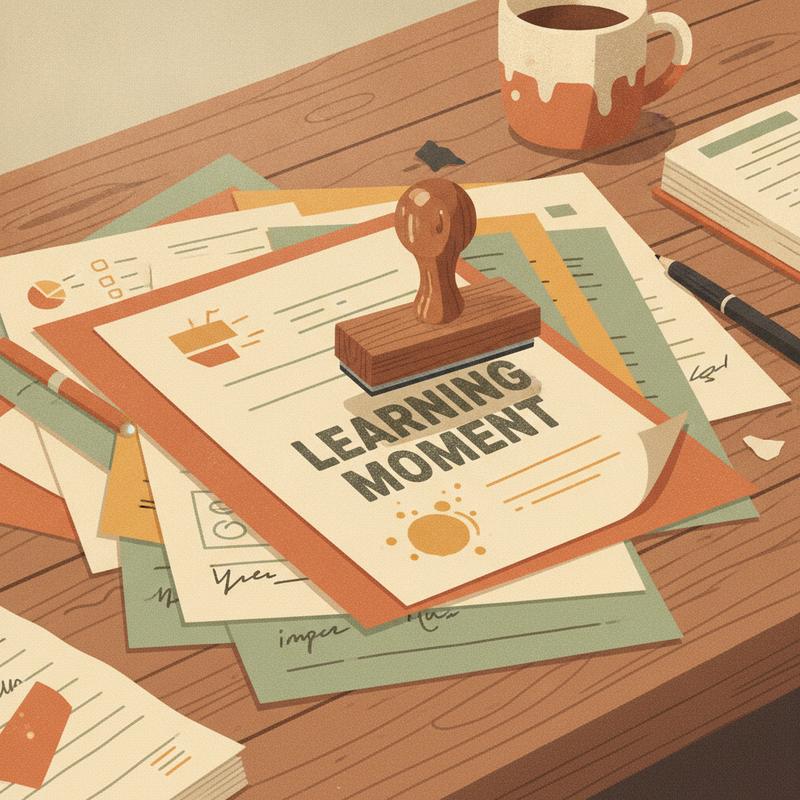
WD-40 replaced the word "failure" with "learning moments." Not as a motivational poster slogan. As a real operating principle. Mistakes weren't career-ending events. They were data. The culture rewarded people for naming what they got wrong and explaining what they'd do differently.

A culture like this doesn't come from a performance playbook. It comes from a leader who goes first. Who sits in a room full of executives and says: "I don't know. What do you think?"

What Bad Bosses Do

Research from Step It Up HR found 99.5% of people surveyed had experienced at least one type of bad boss. One of the most common patterns? The boss who was never wrong.

Not the boss who got things wrong. The boss who got things wrong and couldn't admit it. Who reinterpreted facts to fit conclusions already reached. Whose certainty was always highest precisely when the ground beneath it was shakiest.

People don't leave companies. They leave managers who make them feel stupid for knowing more than the person in charge. When you pretend to know something you don't, you signal two things: your ego matters more than accuracy, and admitting uncertainty is not safe here. Your team absorbs both lessons immediately.

The Army Taught Me the Other Side of This

In the military, "I don't know, but I'll find out" is a complete, correct answer to almost anything. There's no shame in it. You say it, you find out, you report back.

The Army also taught me what happens when people fake it.

When someone doesn't know a procedure but won't admit it, people get hurt. Equipment breaks. Missions fail. There's no softer way to say it. Pretending to know something in a high-stakes environment isn't bravado. It's negligence.

Corporate life rarely carries those stakes. But the dynamic is identical. When your team sees you bluff through ignorance, they learn bluffing is acceptable. Problems go unreported. Decisions get made on bad information. The costs compound quietly until they don't.

A person standing thoughtfully in front of a whiteboard with a question mark, at ease with uncertainty

Your Team Already Knows What You Don't Know

Most leaders miss something. Your team has usually already mapped your knowledge gaps. They've watched you long enough to know where your blind spots are. The question isn't whether they know. The question is whether they feel safe enough to fill the gap.

When you model intellectual humility, when you say "I'm not the expert on this, let's hear from Sarah," you do several things at once.

You tell your team their knowledge has value. You create safety for others to admit uncertainty. You get better information faster. And you build trust, the type which survives a crisis.

Henley Business School's research on senior leaders backs this up. Admitting uncertainty creates space for colleagues to develop and lead. It removes rigid thinking patterns. It opens the door to fresh perspectives on strategy and decisions.

The admission isn't weakness. It's an invitation.

The Practical Switch

Saying "I don't know" isn't enough on its own. What matters is what comes next.

There are three ways to handle not knowing:

1. Admit it and commit to finding out "I don't know. I'll research it and get back to you by [specific time]."

2. Admit it and bring in someone who does know "I'm not the right person for this. Let's get Lee on the call... this is his area."

3. Admit it and make it collaborative "I don't have a view on this. What do you see?"

All three are better than a bluff. All three build credibility faster than certainty theater.

The one thing to avoid: admitting you don't know without any follow-through. "I don't know" as a full stop signals indifference. What you're going for is intellectual honesty plus action.

When You Own Your Gaps, Your Team Fills Them

The unexpected benefit of dropping the performance? Your team starts showing up differently.

A teacher listening attentively while a student explains something, roles reversed in a learning moment

When the leader stops pretending to have all the answers, the people who do have answers finally speak. I've watched quieter engineers become the most valuable voices in a room once the senior leader stopped filling every silence with confident-sounding noise.

You don't have to have all the answers. You have to be the person willing to ask the right questions and act on what you hear.

Garry Ridge built a $3.5 billion business on this principle. He didn't do it by being the smartest person in the room. He did it by being the most honest one about what he didn't know, and by creating a culture where everyone around him felt safe enough to do the same.

There's a word for leaders who pretend to know everything: isolated. Cut off from real information, real problems, and the real capability of their teams.

There's a better word for the ones who don't: trusted.


So here's what's worth sitting with today. What is your team not telling you because they assume you already know?

Find out. Say "I don't know" and mean it. Then watch what opens up.

Stop Telling 21-Year-Olds to Follow Their Passion

At 21, I had no passion.

I had interests. I liked computers. I liked solving problems. I liked when things worked. A burning, all-consuming sense of purpose around a specific career? Not there. And every time someone told me to "follow my passion," I felt like I'd missed something. Like everyone else operated from a script I hadn't received.

The script was the problem, not me.

The Advice That Sounds Good and Isn't

"Find your passion and you'll never work a day in your life." Careers advisors say it. Commencement speakers love it. LinkedIn is stuffed with it.

It's terrible advice.

Stanford researchers published findings showing this kind of thinking leads to narrowmindedness. People who believe passions are fixed and waiting to be found give up faster when things get hard. They adapt less well. They're less likely to build work they genuinely love over time.

Mark Cuban put it differently: "Follow your effort. No one quits anything they're good at." What you put time into... what you keep doing when it's difficult... what you find yourself thinking about on a Sunday morning... those things are more useful data than a vague sense of what you're "meant" to do.

Cal Newport, in So Good They Can't Ignore You, makes the same point from the other direction. Passion follows competence. You get good at something and then you start to love it. The sequence runs opposite to what we tell people.

You don't find the work you love and then get good at it.

You get good at something, and then you love it.

What This Advice Does to Young People

When we tell young people to find their passion, we give them a task with no clear completion criteria. They look inside themselves, see a few interests and no obvious calling, and conclude something is wrong with them.

Nothing is wrong with them. They're 21. They haven't done enough things yet to know what they're good at.

And while they're waiting to feel called, they're not building skills. They're not trying things. They're not getting the experience which would give them real choices. With recession probability running at 30-45% right now according to major economic forecasters, sitting around waiting for passion to strike is a luxury most young people don't have. They need skills. They need adaptability. They need a track record of doing things.

My Career Was a Mess. That Was the Point.

I went through the Army. Then I studied Computer Science at the University of North Texas, graduating in 1993. Then I was a research engineer at Sun Laboratories. Then founder and partner across several tech ventures. Then Lead Mobile Engineer. Then Senior Engineering Manager at a fintech company in London, leading 43 people across 7 teams. Now I'm Chief Innovation Officer at Step It Up HR, writing, speaking, hosting a podcast.

No passion led me through any of it. Curiosity did. Interest did. Effort did.

The "passion" part... the part where I genuinely love what I do... came years in. When I was deep in it and good enough to see what was worth caring about.

The messy path gave me things a passion-first approach never would have produced: a wide skill set, resilience built from working across many different environments, and the confidence of someone who has done things rather than thought carefully about what to do.

A young person standing thoughtfully at a fork in paths through a forest, warm golden afternoon light, editorial photography

What "Getting Messy" Looks Like

Getting messy means trying things before you know whether you'll be good at them. It means taking the interesting job, not the safe-seeming one. It means building a skill set looking incoherent from the outside but making complete sense from the inside, because you went toward what interested you.

This doesn't mean being passive. Being messy about a career is not the same as drifting. You're still making choices. You're choosing based on curiosity and effort, not on a grand vision of your purpose.

Things worth trying:

Try the thing you're afraid of. Not because you'll love it. Because you'll find out. Every experience gives you information. A year doing something you hate is as valuable as a year doing something you love.

Build skills in adjacent areas. You're a developer? Learn to present. You're in marketing? Learn to read a spreadsheet properly. Every skill you add gives you more options and makes you more useful in more contexts.

Pay attention to what you stick with when it's hard. Not what you enjoy when it's easy. What you keep going back to when it's difficult and frustrating. Your competence builds there, and competence is where passion follows.

Stop waiting to feel ready. Mastery comes before love, not after. You have to do the work to care about the work.

A workbench covered in diverse tools including brushes, keyboard, books, and camera equipment, warm amber studio lighting, editorial photography

The Pressure to Have It Figured Out

There's something cruel about asking 21-year-olds what their passion is. They haven't had enough experiences to know what they're good at. They haven't failed enough to know what they care about. They haven't tried enough things to know what keeps them going at 11pm when they're tired.

We tell them the answer is inside them, waiting to be found. When they don't find it, they don't question whether the advice was wrong. They question themselves.

Research via 80,000 Hours shows four distinct ways "follow your passion" misleads people... and one of the most damaging is this: it encourages people to look inward for an answer built outward. Passion doesn't come from self-examination. It comes from work, from skill-building, from the experience of being good at something and seeing what becomes possible because of it.

Close-up of hands typing confidently at a keyboard surrounded by open books and notes, warm amber lighting, editorial photography

What to Say Instead

Instead of "follow your passion," try this:

"Get good at something. Then get better at it. Be curious. Try things. Pay attention to what makes you want to keep going. Build from there."

It doesn't work as a commencement speech. It won't fit on a motivational poster. But it's how careers work... including the careers of people who look like they followed their passion.

Steve Jobs didn't have a passion for typography. He took a calligraphy class at Reed College because it seemed interesting. He had no idea where it would lead. A decade later, it shaped the typography of the Macintosh. Passion wasn't leading the way. Curiosity was... along with a willingness to try something and time.

Fast Company put it well: following competence instead of passion takes the pressure off. If someone tells you to follow your passion and you don't have one, you sit there worrying for months. Following your competence gives you somewhere to start.

Your career doesn't have to be planned. It has to be pursued.

The Messy Career Is the Right Career

I've moved through engineering, management, HR, speaking, writing. People ask how I got from point A to point B. The honest answer: I didn't know where B was when I left A.

I knew what I was interested in. I worked hard at it. I moved toward whatever seemed worth doing next. The career. The whole thing.

If you know a 21-year-old panicking because they haven't found their passion, share this. If you're 40 and still waiting to feel called, this is for you too. The call isn't coming. The work is here.

Don't find your passion. Build your skills. Let the passion catch up.

A person walking confidently along a winding mountain path toward the sunset, warm golden light, editorial photography

Nobody Gets Promoted in the Dark

A professional working alone late at night, head down over stacks of documents in an empty office

I spent years believing a lie.

Not a malicious one. The person who told it to me meant well. Every manager I ever had, every career coach, every well-meaning mentor passed it along like a gift: keep your head down, do great work, and you'll be noticed.

It sounds noble. Virtuous, even. The idea of merit rising to the surface on its own. Of the universe rewarding effort. Of wins speaking for themselves.

Here's what nobody told me: wins don't speak. Wins are silent. Wins sit quietly in your completed projects folder while someone else gets promoted.

The Myth We Were All Handed

The "keep your head down and work hard" story has staying power for a reason. It feels fair. It implies a world where performance is tracked, noticed, and rewarded regardless of who's watching. It flatters our sense of justice.

The problem is it's not accurate.

Think about your own experience. Who got the last promotion in your team? Was it the person working with the most diligence in silence? Or was it the person talking about their projects in meetings, sharing updates with the right people, and making sure their name was attached to their successes?

In most organisations, it's the latter. Not because the latter is more talented. Often, they're not. They're more visible.

I know this because I watched it happen to me.

The Moment Things Changed

Early in my career, I watched someone with a fraction of my output walk into a senior role I'd been quietly working toward for two years.

He was good. Not exceptional. But he was present. He spoke in meetings. He sent weekly updates upwards. He made sure leadership understood what he was building and why it mattered.

I was shipping solid work and saying nothing. I assumed the quality would carry me.

It didn't.

You move on. No point being bitter about it. But it was the moment I started asking a different question. Not "what am I doing?" but "who knows what I'm doing?"

Those two questions lead you to completely different places.

The Data Backs This Up

This isn't wishful thinking or sour grapes. The research is consistent.

Remote workers are promoted 31% less frequently than office-based workers, according to an analysis by Live Data Technologies. Not because remote workers perform worse, often the opposite. But out of sight is out of mind for the people making promotion decisions.

A Pew Research survey found 63% of people who left jobs in 2021 cited a lack of advancement opportunities. Most of them were working hard. Hard work didn't make the organisation invest in keeping them.

The uncomfortable truth is your manager doesn't have perfect visibility into everything you do. They're managing their own workload, their own pressures, their own targets. They notice what's in front of them. If you're not putting your work in front of them, you're invisible.

This matters even more right now. When economic uncertainty looms, organisations tighten headcount. The people who survive the process are rarely the best workers. They're the workers whose value is most understood by the people making decisions. Invisible contributors get cut first. Not out of cruelty. Out of ignorance. The decision-makers simply don't know what they'd be losing.

Why We Resist Making Ourselves Visible

A spotlight shining down on a single figure on stage, with an audience watching from the darkness

Most people hate self-promotion. I did for years. It felt like bragging. Like neediness. Like the sort of thing done by people who dominate meetings and take credit for other people's ideas.

This instinct isn't entirely wrong... it's being applied too broadly.

There is a real difference between loudly claiming credit for things you didn't do, and consistently making your contributions legible to the right people. One is dishonest. The other is professional responsibility.

Think of it this way. You've been asked to deliver something. You deliver it. You leave the room without saying a word. The work sits on a shelf. Did you deliver?

Not if nobody knows about it.

Self-advocacy isn't about inflating your achievements. It's about making sure your achievements count at all. If you don't do it, most organisations fill the gap with whoever is loudest... not whoever is best.

I've seen brilliant engineers, sharp analysts, and exceptional operators get passed over because they treated visibility like someone else's problem. It isn't. It's yours.

What This Looks Like in Practice

A confident professional presenting to engaged colleagues around a conference table in a bright modern room

You don't need to become someone who talks constantly about themselves. The goal is making your work legible to people who need to know about it.

A few things worth trying, from my own experience and the teams I've built:

Document your wins in real time. Keep a running list of what you've shipped, what impact it had, and when. You'll need this in performance conversations, in 1:1s, in moments when someone asks "what have you been working on recently?" Don't rely on memory. Memory is generous to your failures and forgetful about your wins.

Share progress proactively. You don't need to wait for a scheduled meeting to tell your manager a project wrapped up well. A short message is not bragging. It's keeping the right people informed. They want to know.

Ask for the chance to present your work. If your team runs a demo, a show-and-tell, or an all-hands, get your work in front of people. Not to show off. To give others the chance to understand what you're doing and see its value. This builds credibility quietly and consistently over time.

Find a version of self-advocacy you're comfortable with. Some people are comfortable raising their voice in large meetings. Others do better in writing. Some build visibility through 1:1 conversations with senior leaders. There's no single formula. There's the version you'll stick to without wanting to hide under your desk.

The key is making it consistent. Visibility isn't a one-off move. It's a habit.

The Question Worth Sitting With

Here's something I've asked every person I've managed over the past decade. I first asked it of myself after missing out on a promotion I'd been working toward.

"If I left this organisation tomorrow, who would know what I'd contributed here?"

If you struggle to name three people who genuinely understand the scope and quality of your work... you have a visibility problem. Not a talent problem. Not a work ethic problem. A visibility problem. And unlike talent, visibility is something you choose to address.

The advice to keep your head down and work hard isn't wrong. Hard work matters enormously. But it's half the sentence. The full version is: do great work, and make sure the right people know about it.

Your work deserves to be seen. Making it visible is on you.


I write about leadership, engineering management, and building teams. Take a look at Bad Bosses Ruin Lives or explore more at Step It Up HR.

Stop Looking Up. Start Looking Around.

A person staring up a tall corporate ladder, completely oblivious to the vibrant world happening around them at ground level

I spent the better part of a decade with my neck craned upward.

Senior engineer. Team lead. Engineering manager. Manager of managers. Head of Engineering. Each title hung above me like the next rung on a ladder, and I was unable to stop counting them.

At Santander, I led the Android team building a banking app with 2.2 million monthly active users. It was good work. Meaningful work. But somewhere in the back of my mind, I was already eyeing the next level. At Curve, I managed seven cross-functional teams, forty-three people, including other managers. And still... I was looking up.

It took me a long time to notice what I was missing.

The Ladder Is a Trap

The promotion ladder is so deeply baked into how we think about careers, questioning it feels strange. You show up. You work hard. You get promoted. Repeat until retirement. The corporate ladder is not a structure you choose. It is one you inherit.

And it costs you.

When you are always focused on what is above you, you stop paying attention to what is right next to you. The colleague doing something fascinating. The problem no one has bothered to solve. The direction nobody else has thought to go. All of it slips by while you stare at the rung overhead.

According to a Randstad survey, 42% of US employees would decline a promotion if offered one. The number surprised me the first time I read it. It does not surprise me anymore.

People are not lazy. They are not disengaged. They have simply realised something: going up is not the same thing as going forward.

There is a particular kind of career anxiety baked into ladder-thinking. Every review cycle becomes a performance. Every one-on-one becomes an audition. You are no longer doing the work for the sake of the work. You are doing the work to be seen doing the work. And somewhere along the way, the work itself becomes a vehicle rather than a destination.

I know this because I lived it. I have sat in annual reviews with a list of accomplishments I had carefully curated for the express purpose of making the case for the next title. Not because it reflected what mattered to me. Because it was what I thought the system wanted.

The Work Worth Being Proud Of

A person absorbed in deep, purposeful work surrounded by books, notes, and creative materials

At Curve, I mentored seven engineers into leadership roles. Not because it was in my job description. Not because anyone asked me to. I did it because the work in front of me mattered and I saw what those people were capable of.

It was not a career move. It was not a stepping stone to anything. It was the work itself.

Looking back, those seven people are the part of my Curve chapter I am most proud of. Not the 25% delivery improvement. Not the £300k website migration saving. Those are fine numbers. But the people? The people are the thing.

I was not looking up when I did it. I was looking around. At who needed support. At what gaps existed. At what was happening in the room.

The strange thing is, none of it required a new title. None of it required permission. I did not need to be promoted to do the most meaningful work of my time there. I needed to stop obsessing over the ceiling long enough to see the floor.

The Sideways Step Everyone Underestimates

A branching crossroads map with paths going in all directions : creative arts, research, innovation, community and one lone arrow pointing straight up into empty sky

When I left Curve, I did not take the next rung. I took a hard left turn.

Chief Innovation Officer at Step It Up HR. Podcast host. Conference speaker across Europe, in Croatia, Iceland, the UK. Co-author of research used by thousands of employees. None of it was "up" by any traditional definition. It was sideways. Outward. Into territory I had never explored.

And it has been the most stretching, most interesting, most purposeful work of my career.

The conventional ladder would have had me hunting for a VP of Engineering role at a larger company. There is nothing wrong with this path. It is a fine path. But it was not the path with the interesting problems.

When I look at the work I do now... speaking at conferences about bad bosses and broken leadership culture, building tools and research used inside real organisations, hosting conversations on a podcast with people who have genuinely fascinating perspectives on the world of work... none of it sits neatly on a career ladder. You cannot easily compare "Chief Innovation Officer at a small HR consultancy" to "Senior Engineering Manager at a fintech." They live on different axes entirely.

The interesting problems were around me. Not above me.

What It Means to Look Around

Looking around is not settling. It is not giving up on ambition. It is a different kind of ambition... one measured by depth and breadth rather than height.

Looking around means:

Noticing the unmapped problems. The things in your organisation nobody has bothered to fix, because everyone is too busy climbing to pay attention to them. These are often the most interesting problems of all. They are invisible to people staring upward.

Learning from the people next to you. Not mentors above you. Not your manager's manager. The person two desks over who builds things differently, sees problems differently, comes from a different background. Lateral learning is underrated to a degree bordering on criminal.

Going deep instead of wide. Mastery is not glamorous. It does not photograph well on LinkedIn. But the engineer who understands a system five levels down is worth ten who skim the surface. Depth is a career asset most people trade away too quickly in pursuit of the next title.

Asking different questions. When you are constantly looking up, your questions are about advancement: How do I get to the next level? Who do I need to impress? What does the committee need to see? When you look around, the questions change: What is broken here? What have we stopped questioning? Who needs support and has not asked for it? Where is the work nobody else wants to do?

Following your own curiosity. I started writing about leadership and bad bosses not because it was strategically sound, but because I was obsessed by the topic. I had worked for terrible managers. I had watched talented people leave good companies because of mediocre bosses. I wanted to understand it and say something about it. The book, the podcast, the conference stages... all of it followed from paying attention to what genuinely interested me. Not from a career plan.

The Part Nobody Warns You About

When you stop optimising for the ladder, some things get harder.

LinkedIn performance metrics care about titles. Recruiters use seniority signals to filter CVs. Your parents will ask when you are going to get a "proper" promotion. These are real pressures. I am not dismissing them.

But the people I have met who do the most interesting, most impactful work... the ones who seem genuinely satisfied rather than perpetually stressed... almost universally tell the same story. At some point, they stopped looking up. They started looking at what was around them and went after it instead.

I spent years in rooms where the most interesting work was happening right beside me, and I was too busy staring at the ceiling to notice.

The career advice I wish someone had given me ten years ago is not complicated: the next rung is not the only direction.

What is happening around you right now, at your current level, in your current role? What problems are going unsolved? Who needs support? What is the most interesting work in the room?

Go after it.

You've Upskilled Everything Except Yourself

You've Upskilled Everything Except Yourself

A person surrounded by floating certificates and course notifications, looking exhausted at their desk

Everyone I know is upskilling. AWS certifications. Product management courses. Leadership workshops. Another book about habits. LinkedIn Learning notifications every other day.

And I get it. The job market moves fast. Skills go stale. Staying current matters.

But here's the thing nobody says: you'll upskill your way straight into burnout if you're not thoughtful. I've seen it happen. I've lived parts of it myself.

The missing piece isn't another certification. It's you.

The Upskilling Treadmill

We treat career development like a hardware problem. Add more RAM. Install the latest software. Upgrade the processor.

What we don't do is ask whether the whole system is pointed in the right direction.

I spent years adding skills. SQL. Python. Agile. Product frameworks. Each one felt productive. Each one looked good on a CV. Each one took me further from a question I wasn't asking:

What do I need from work?

Not a soft question. The hardest one in a career. Most people spend 20 years avoiding it.

What Happens Without Self-Knowledge

When your sense of self is weak or undefined, work fills the gap.

You say yes to things because you don't know what to say no to. You take on roles because they sound impressive, not because they fit you. You grind through exhaustion because you haven't developed the self-awareness to recognize your own warning signals.

Two paths diverge: one buried in laptops and certification stacks, the other clear and open with a compass at the start

Research on burnout and professional identity shows a weak or underdeveloped professional identity increases vulnerability to burnout by reducing coping resources and diminishing the meaning derived from work. In plain terms: when you don't know who you are at work, you have less to fall back on when things get hard.

And then there's the brain piece. Chronic burnout causes structural changes in the prefrontal cortex... the part responsible for decision-making and emotional regulation. By the time you're deeply burned out, the organ you'd use to assess whether you're burned out is already impaired.

I'm not sure about this part: The psychologicalscience.org page might have changed since the research was published... Ken's notes flagged it as potentially unavailable. The underlying science on burnout and prefrontal cortex impairment is well-documented, but verify the specific URL before citing it elsewhere.

You lose the ability to evaluate your own situation clearly. No amount of willpower fixes a damaged prefrontal cortex.

The Hiding Game

Forbes recently identified a pattern called "performative professionalism"... hiding who you are at work to stay employable. The research links it directly to burnout and inauthenticity.

When you spend eight or nine hours a day performing a version of yourself, exhaustion isn't a side effect. It's the guaranteed outcome.

People don't hide because they're weak. They hide because they don't have a clear enough sense of self to know what they stand for, or what's safe to show. So they show nothing real at all.

I've talked to enough people through my work at Step It Up HR to know how widespread this is. The performative professional is everywhere... head down, checking boxes, completing courses, adding LinkedIn badges, and drifting further from the question of who they are.

What Self-Knowledge Looks Like

Not a mindfulness lecture. I'm not going to tell you to meditate or journal your feelings.

Knowing yourself, in a career context, means being able to answer a few concrete questions:

What type of work energizes you vs. drains you? Not in theory. In practice. Think about specific projects from the last two years. When did you feel genuinely engaged? When did you feel hollow?

What are your real values... the ones you'd defend, not the ones on your LinkedIn bio? Most people list "integrity" or "collaboration." Most people haven't identified what they'd sacrifice for those values when something real is on the line.

What does your stress look like, early? Not the final-stage collapse. The early warning signals. Yours will differ from everyone else's. Most people learn them only after burnout has already hit.

What do you need from a leader? Autonomy? Clear direction? Frequent feedback? The absence of micromanagement? Where you'll thrive and where you'll deteriorate depends heavily on this... and most people never articulate it to themselves, let alone to hiring managers.

A person sitting quietly in self-reflection, looking peacefully out a window with soft morning light

One tool worth exploring is the personal user manual... a written document where you articulate how you work, what you need, and what burns you out. The act of writing it forces clarity. Most people have never written down what they need from work. They've written CVs, objectives, and performance reviews... but never a document about who they are as a working human.

The Vaccine Metaphor

Kelly Swingler frames it well: a strong sense of self is a burnout vaccine.

A vaccine doesn't stop the virus from existing. It builds your defenses so the virus doesn't take hold.

When you know yourself well... when you know your values, your limits, your early warning signals, and what you need to sustain... you spot burnout conditions before they become a crisis. You notice when a role is asking you to perform for too long. You feel the misalignment earlier. You have internal language to name what's happening and act on it.

Without self-knowledge, you're unvaccinated. Every toxic environment, every poorly-fitted role, every excessive demand lands on someone with no immune response.

The saddest version of this is the high performer... driven, skilled, highly upskilled... who burns out because they never developed enough self-awareness to know they were running on fumes six months earlier.

An Honest Career Question

Here's something worth sitting with: how much of your career path has been driven by intentional self-knowledge? How much has been adding skills, chasing titles, and hoping the right fit shows up by accident?

I've made enough of the latter kind of move to know the cost.

Start here. Write down your last three roles. For each one, list what gave you energy and what drained it. Not what you were good at... what you wanted to do more of, and what you were relieved was someone else's problem.

Look for patterns. They're there. They've always been there.

Then take stock of how much time you've spent on courses, certifications, and frameworks in the last two years. Compare it with how much time you've spent understanding your own warning signals, values, and work needs.

The gap is usually embarrassing.

The Investment You're Skipping

Upskilling is a tool. A good one. Staying current matters.

But tools are useless without direction. And direction requires knowing yourself.

Invest an afternoon in the most important document you'll never publish: a clear, honest account of who you are at work, what you need, and what drains you dry.

This knowledge won't show up in a LinkedIn badge. It'll show up in the career decisions you stop making by accident.

What would you write in your own personal user manual? Start there.

Stop Calling Yourself an Expert

There's a word I've been hiding behind for years: expert.

I used it on my LinkedIn. On my speaker bio. In conversations where I wanted someone to take me seriously. "I'm an expert in technology leadership." "I'm an expert in organizational change."

The word felt like armor. Like a door I'd earned the right to walk through.

Then I heard about Fredrick Haren. He's a creativity researcher who travels the world studying how people think up new ideas. His 8-year-old son once introduced him to an audience. Not as "a creativity expert." The boy called him "a creativity explorer."

Fredrick said it was better. He was right.

A lone figure standing at the edge of uncharted terrain, map in hand, looking forward with curiosity

Experts Have Answers. Explorers Have Questions.

Experts show up to meetings with conclusions ready. Explorers arrive wondering what they're about to find out. Experts defend territory. Explorers draw maps.

For most of my career, I thought expertise was the goal. Get enough experience, enough credentials, enough battle scars, and you'd finally earn the badge.

What nobody told me: the badge is also a cage.

When you're the expert in the room, you stop asking certain questions. You stop saying "I don't know." You stop following ideas down paths outside "your area." You start protecting the reputation instead of building on it.

I've watched it happen to people around me. Likely to me too.

The Best Learning Happens at the Start

Think about your own career for a moment. Were you better at learning when you knew nothing... or after ten years of doing it?

For most people, it's early on. When you have no expertise to protect, you're free. You ask the uncomfortable questions. You try approaches the experienced folks dismiss. You read outside your lane. You connect dots specialists miss because they're too focused on their own subject.

Explorer mode.

It doesn't last unless you fight to keep it.

I've changed fields twice. Moved from the Army to tech, then from tech to HR and leadership. Both times felt like starting over. Both times I learned faster than any other period in my career.

Not in spite of being new to the field. Because of it.

Worn hands holding an open notebook filled with curious questions and sketches

The Leadership Case for Staying Curious

The Training Associates wrote about this shift from expert to explorer in leadership. Their point: in a volatile, uncertain, complex, ambiguous world, the expert mindset isn't enough. Change moves too fast. Nobody has all the answers. Leaders who succeed stay curious.

My experience backs this up.

My best moments as a leader haven't been when I knew exactly what to do. They've been when I was genuinely figuring it out alongside my team.

The expert in the room shuts down conversation. The explorer opens it back up.

So Here's What I'm Trying

When someone asks what I do, I'm experimenting with "I work in leadership" rather than "I'm an expert in X." It feels less impressive. It's likely costing me something.

But it also keeps a door open. A door experts tend to close.

What would change about how you show up if you described yourself as an explorer rather than an expert?

The Meeting Your Body Tried to Cancel

I missed the memo. My body sent it months before I finally paid attention.

It started with headaches. Not dramatic migraines. The dull, persistent kind, setting in around 2pm and not leaving. I told myself it was dehydration. Or too much screen time. I bought a new monitor stand and adjusted my chair.

Then came the sleep changes. I'd drop off fine, wake at 3am, and lie there with my mind already running meetings. Not anxious thoughts. Actual work thoughts. My brain had decided sleep was optional.

The coffee stopped working. I don't mean it lost its kick. I mean I'd finish a second cup and feel... nothing. The same flat. The same tired.

My appetite went strange. Some days I forgot to eat until 3pm. Other days I ate without being hungry, almost compulsively, as if food were a comfort I hadn't consciously decided I needed.

None of this felt dramatic. I wasn't lying on the floor unable to move. I was functioning. I was shipping. I was in meetings, writing proposals, managing teams. I was doing the job.

What I was not doing was reading the signals my body had been sending for months.

Tech professional exhausted at desk late at night

The Body Starts Talking Early

The Cleveland Clinic describes burnout as progressing through five distinct stages. The earliest isn't obvious. Motivation is high, you're optimistic, you're overcommitted but you don't notice it yet.

By stage two, the body starts to send signals. Not loud ones. Subtle ones. Fatigue not lifting after a good night's sleep. Small changes in how food tastes or whether you want it at all. Tension in the shoulders. Recurring headaches.

Most people I know in tech are good at rationalizing these things away.

"I'm tired. It was a big quarter." "My back always does this when I sit too long." "I've always been a bad sleeper."

These aren't purely psychological rationalizations. They're physically plausible. Which is exactly why we get away with ignoring them for so long.

The signals keep arriving. We keep filing them away.

Why We Miss It

According to Forbes in 2025, 66% of workers are experiencing job burnout. Two thirds. And yet the dominant culture in most workplaces, especially in tech and leadership, still treats exhaustion as a credential.

We wear the late nights. We wear the skipped lunches. We compete, sometimes without realising it, on who is most sacrificed to the work.

In this environment, the physical warning signs get reframed. Headaches become "it's a tough week." Sleep disruption becomes "I've always been like this." Loss of appetite becomes "I've been too busy to think about eating," which somehow reads as dedication rather than a red flag.

I did this for years. I am not proud of it.

The American Psychological Association defines burnout as "physical, emotional or mental exhaustion, accompanied by decreased motivation, lowered performance and negative attitudes." Not existential crisis. Not dramatic collapse. Exhaustion. Decreased motivation. Negative attitudes.

These sneak up so slowly you don't notice the change.

Person overwhelmed at desk with sticky notes and planner

What the Body Says

Here are the physical signals I've learned to pay attention to, in myself and in people I manage.

Sleep changes. Not necessarily insomnia. It's sleep not restoring. You sleep eight hours and wake feeling like you slept four. Or you wake early with your mind already at full speed. The body has stopped recovering during sleep.

The afternoon headache. A persistent, low-grade pressure arriving in the early afternoon, reliably, day after day. Your body is reporting something about your cortisol levels and stress load. Not dehydration.

Appetite shifts. Forgetting to eat, or eating more than usual without hunger, or craving food purely for comfort. Stress disrupts the hormones regulating hunger. What reads as "I've been busy" or "I've been stress-eating" is worth taking seriously.

Frequent illness. Getting sick more often than usual. Colds taking longer to clear. A body under chronic stress has a compromised immune response. Three colds in six months is data.

Persistent tension. Shoulders staying raised. A jaw tight when you wake in the morning. A back aching for weeks. Chronic stress lives in the muscles.

None of these are one-off symptoms. The keyword is chronic. A single bad week doesn't mean burnout. The same headache for three weeks in a row means something.

Why the Mind Lies and the Body Doesn't

Here's the thing I've come to believe: my mental state will lie to me.

I'll convince myself I'm fine because I'm still performing. I'll tell myself the work is important and I'm needed and this is what the job requires. The psychological defence mechanisms are sophisticated. I've watched myself do this, and I've watched others do it, and it's genuinely hard to break through.

My body is less sophisticated. It doesn't have a narrative. It's not trying to protect my ego or keep me employed. It's reporting what's happening.

There's a reason the Cleveland Clinic model has physical symptoms showing up at stage two and three, while full conscious acknowledgement of burnout often doesn't arrive until stage four or five. The body is always ahead. The mind is catching up.

When I finally paid attention to those afternoon headaches, the sleep problems, the appetite changes, I went back and counted. They'd been present for about four months. I'd been explaining them away for four months.

What I Do Differently Now

I take physical symptoms seriously before I take my mental state seriously. Not instead of. Before.

When the afternoon headaches come back, I treat them as a signal, not a nuisance. When sleep goes wrong for more than a few days, I stop looking for external causes and start asking what's going on at work.

I also track it. I keep a note on my phone. When a physical symptom appears, I log it. Headache Monday. Poor sleep Tuesday through Thursday. Left shoulder tight all week. When I look back at the note after two weeks, patterns appear I would otherwise rationalise away in real time.

It's not glamorous. It doesn't scale to a leadership framework. It's paying attention to data your body is already generating, and taking it seriously.

I've also learned to ask the people around me. Not "are you okay?" which gets a reflexive "yes, fine." I ask "how's your sleep been?" or "are you getting proper lunch breaks?" Those questions get real answers.

Person sitting quietly on a park bench, resting outdoors

The Question Worth Sitting With

If you've had a headache three days this week... when did those start? And what was happening at work around then?

If your sleep has been off for a month, same question.

If you keep getting sick, same question.

You don't need a diagnosis. You need to take the question seriously rather than filing the symptoms away as normal.

Your body has been sending the memo. The question is whether you're reading it.


I write about leadership and what makes workplaces better or worse at Step It Up HR. If this topic connects with something you're seeing in your team, the conversation continues there.

The Thing You Said You'd Never Do

I used to have a list. Not written down, not formal. More of a running commentary in my head, built up over years of watching other people and deciding what I was... and wasn't.

"I'm an engineer. I don't do people stuff."

"I'm not a speaker. I leave speaking to extroverts."

"I'm not writing a book. Who am I to write a book?"

"I'm not going into HR. Engineers don't end up in HR."

You know the list. You have one too.

A hiker pausing at a fork in a mountain path at golden hour, weighing two routes

The Lines We Draw

Every career line I drew started with a reason I convinced myself made sense. I liked building things, not managing them. Speaking in front of audiences made me want to disappear. HR departments, in my experience as an engineer, felt like the enemy of getting things done.

These weren't arbitrary limits. They came from real observations. I'd seen engineers promoted into management and lose everything making them good at engineering. I'd watched speakers who seemed performative, hollow, in love with the sound of their own voice. I'd filed paperwork and waited for approvals and felt the friction of HR systems designed for compliance, not for people.

So I drew the lines. And I called them self-awareness.

The Uncomfortable Truth About Self-Awareness

Here's the uncomfortable truth about those lines. They're not always self-awareness. Much of the time, they're fear wearing a smart-sounding disguise.

"I'm not a manager" is sometimes "I'm afraid I won't be good at it."

"I'm not a speaker" is often "I'm terrified of being judged in public."

"I'm not an author" means "I don't believe my story is worth telling."

Roland Butcher, the first Black cricketer to play for Middlesex and England, spent his career on the pitch. When he moved into coaching, he said he hated the idea of it. Hated it. Until coaching became his next great chapter.

I've thought about his story often.

The List Started to Crack

A hand breaking through a wall, representing the moment you cross your own self-imposed limits

The first crack came when I stopped being a solo engineer and started leading a team. I didn't want to. My manager at the time didn't give me much choice. I resisted it as long as I managed, before realising I was... decent at it. Not because I'm naturally suited to people management. Because I'd been an engineer long enough to know what engineers needed, and I cared enough to try giving it to them.

The "I don't do people stuff" line cracked.

Then someone asked me to speak at an internal event. Twenty people. Not a conference, not a stage, a room with folding chairs and bad lighting. I said yes before I talked myself out of it. I spent two weeks wishing I hadn't. Then I did it, it went fine, and the world didn't end.

The "I'm not a speaker" line cracked.

The book took longer. I sat on the idea of writing for two years. I had material, notes, stories, a clear angle. I found every possible reason not to start. Too busy. Not a writer. Who reads books by people who aren't already famous?

I started anyway. Bad Bosses Ruin Lives came out the other side.

Then Step It Up HR came along. An HR and L&D company, and they needed someone to lead the technical and product side. An engineer in an HR company. Everything I'd told myself I wasn't. I said yes.

Now I deliver keynotes at HR and L&D conferences across Europe. Croatia. Iceland. The UK. Rooms full of people professionals, and there's a software engineer at the front talking about leadership, bad bosses, and what decent management looks like.

It's not what I expected my career to look like at all.

Why We Keep the List

People ask me whether standing on those stages feels strange. It doesn't anymore. What feels strange is remembering I once thought none of it was possible. I'd sorted myself into a box, labelled it "engineer," and treated anything outside it as not mine to touch.

We keep the list because the list keeps us safe. If you never try speaking, you never fail at speaking. If you never write the book, you never get rejected. If you never move into a different kind of work, you never find out whether you're good at it.

The list is protection. Against risk, against embarrassment, against discovering your limits.

It's also a prison.

Every item on your "never" list is a version of yourself you've decided in advance doesn't exist. And you made most of those decisions in your twenties, when you had limited information and a strong need to know who you were. Those decisions don't age as well as you think.

What Crossing the Lines Taught Me

A speaker addressing a large conference audience from a dramatic, spotlight-lit stage

I'm not telling you to do everything you're afraid of. Plenty of things are outside your wheelhouse for good reasons. Not every line is fear in disguise.

But some of them are. Those are worth looking at honestly.

Here's what I learned from crossing mine:

Skills transfer more than you think. Engineering gave me systems thinking. Systems thinking made me a better manager. It made me a cleaner speaker, because I build presentations the same way I write code. It made Bad Bosses Ruin Lives more readable, because I edit ruthlessly and cut what doesn't need to be there. Nothing from my earlier career was wasted. It all showed up somewhere else.

The thing you hate about it often isn't the thing itself. I hated management because I'd seen bad management. I hated the idea of HR because I'd experienced bad HR. When I did those things with intention and care, they were different from what I'd observed. The problem wasn't the role. It was poor examples of the role. I was rejecting bad implementations, not the work itself.

The discomfort is the point. Every time I've crossed one of my own lines, the discomfort was real and temporary. Every time I've stayed inside them to avoid discomfort, the regret was real and lasted much longer.

You find out who you are when you stop defining yourself by what you're not. This one surprised me most. I thought my identity was "engineer." It isn't. It's "someone who cares about people being treated well and builds things to make them happen." Engineering was one expression of it. Speaking is another. The book is another. The podcast is another. They're all the same thing, arriving in different forms, through different doors I was convinced weren't mine to open.

So What's On Your List?

You have lines too. Things you've decided aren't for you. Some of them are right. A lot of them are comfortable untruths you've told yourself for so long they feel like facts.

What did you decide you weren't?

What if you were wrong?

Roland Butcher hated the idea of coaching. It became his next great chapter. I hated the idea of speaking to rooms full of HR professionals about leadership. It became mine.

Your next great chapter is likely sitting right behind the line you drew in your head sometime in your twenties and never questioned since.

Go look at it. Seriously. Go look at it.

And if you're not sure where to start, I'd ask you this: What's the one thing people keep suggesting you do... the thing you keep dismissing because it's not you?

Start there.

Who Were You Before the World Told You Who to Be?

A child standing at the edge of a wide open field at golden hour, gazing at a vast horizon full of possibility

Charles Bukowski once asked a question I keep coming back to. The gist: do you remember who you were before the world shaped you into who it wanted?

I think about this one a lot.

Not in some wishy-washy, midlife-crisis way. More like... I'll be sitting in a meeting, listening to someone drone on about stakeholder alignment and cross-functional synergy, and a thought hits me: When did I start speaking like this? When did I become the person who nods along to phrases nobody would use with their friends?

The Slow Erasure

Here's what happens. You start your career with opinions, rough edges, and a personality. You like the things you like. You hate the things you hate. You have a sense of what matters.

Then, one small compromise at a time, the world sands you down.

You learn to say "challenging" instead of "terrible." You learn to nod when you disagree. You learn to dress a certain way, write emails a certain way, laugh at certain jokes. Each adjustment is tiny. Each one makes sense in context. And after twenty years, you look in the mirror and wonder: Who is this person?

According to Gallup, 55% of American workers get their sense of identity from their job. Pew Research landed on a similar figure... 51%. Think about what this means. More than half of us answer "who are you?" with a job title. Not "I'm someone who loves hiking and terrible puns and reads too many books about World War II." But "I'm a Senior Vice President of Whatever."

And when the job goes away... through layoff, retirement, burnout, or a career change... those people face a genuine identity crisis. Because the job wasn't something they did. It was who they were.

A person at a corporate desk staring at a window reflecting a younger, freer version of themselves

The Person Before the Title

I try to remember who I was before all this. Before the titles, the leadership books, the interviews, the conference stages.

I was a kid who loved computers. Not in a "future career in technology" way. In a "stay up until 2am writing BASIC programs on a Commodore 64 because it felt like magic" way. I built things because building things was fun. Nobody told me it would be useful. Nobody told me it would "open doors." I did it because my brain lit up.

I was someone who asked too many questions. Teachers found this annoying. Bosses would later find it annoying too. But asking questions was how I understood the world. It wasn't a "leadership skill." It was me.

I was someone who got angry about unfairness. Still am, honestly. The difference is I've learned to package the anger into polite language and constructive feedback. Sometimes I wonder if the unpackaged version was more honest.

The Nostalgia Trap

Now, I'm not saying we should all quit our jobs and go back to writing BASIC. Nostalgia is comfortable, but it's not a plan.

I noticed Pokemon's 30th anniversary trending across Reddit this week, with people sharing memories and fan art from their childhoods. Millions of adults reconnecting with something they loved as kids. There's something beautiful in it... but also something a bit sad. Because for many of them, those childhood passions became "something I used to be into" rather than a living part of who they are.

Real remembering isn't about going backwards. It's about asking: What parts of the original me did I abandon because someone told me they weren't useful?

The world doesn't erase you all at once. It does it through a thousand tiny edits. A manager who says "you're too direct." A company culture where enthusiasm is "unprofessional." A promotion path requiring you to become someone you're not.

Sense of Self as Armour

Kelly Swingler, who I've had the pleasure of working with on Step It Up HR, has this equation I keep coming back to:

Toxicity minus sense of self equals burnout.

Read it again. It's saying the damage a toxic workplace does to you is directly proportional to how little you know yourself.

If you know who you are... what you value, what you won't tolerate, where your boundaries sit... a bad boss is a problem to solve, not an existential threat. You deal with it or you leave. But if your entire identity is wrapped up in the job? You have no ground to stand on. The toxicity fills every space you should have reserved for yourself.

This is why I've seen brilliant people crumble in workplaces others would shrug off. It's not about toughness. It's about whether you have a "you" outside of the work. And in my research for "Bad Bosses Ruin Lives"... where 99.5% of survey respondents said they'd had one or more types of bad bosses... the people who survived toxic environments best were the ones with a strong sense of who they were beyond the office.

A person gently removing a corporate mask to reveal a calm, genuine face underneath

How to Remember

So how do you find the person you were before the world got its hands on you?

I don't have a five-step framework. But I do have three questions worth sitting with.

What made you lose track of time as a kid?

Not "what were you good at." Not "what got you praised." What made time disappear? For me, it was building things and figuring out how stuff worked. For you, it might have been drawing, or arguing with your siblings about who was right, or taking apart a radio to see what was inside.

The activity doesn't matter. The state does. You were most yourself when you were so absorbed you forgot to perform.

What opinions do you hold nobody gave you?

Strip away everything your industry believes, your company preaches, your LinkedIn feed reinforces. What do you think about leadership, about fairness, about how people should treat each other... based on your own experience, not from a book?

Those stubborn, hard-won opinions are you. The rest is borrowed furniture.

What would you do if the title disappeared tomorrow?

If someone took away your job title, your email signature, your LinkedIn profile... who are you at dinner? What do you talk about? What gets you animated?

If the answer is "I don't know," you've done what millions of us have done: you've outsourced your identity to an employer. And employers, to be blunt about it, don't return what they borrow.

The Question Worth Asking

I'm in my fifties now. I've held more titles than I care to count. I've run teams, built products, spoken on stages, written a book. And the most useful thing I've done in the last few years is reconnect with who I was before all of it started.

Not to go back. Going back isn't the point. But to check: is the person I'm being today connected to the person I've always been? Or did I wander so far from the original blueprint I forgot there was one?

Bukowski was a drunk and a cynic, but he asked the right question. Who were you before the world told you who to be?

If you don't know the answer, start looking. Not in your CV. Not in your performance reviews. Look in the parts of yourself you stopped feeding because nobody was measuring them.

Those parts aren't dead. They're waiting.

Stop Calling Everyone Toxic

Everyone has a "toxic" coworker. Scroll through LinkedIn for five minutes and you'll find dozens of posts about toxic people, toxic cultures, toxic energy. The word is everywhere.

But here's what bothers me. We've turned "toxic" into a label we slap on anyone who frustrates us. And once it sticks, it's over. No coming back from it.

I think we're getting this wrong. Badly wrong. And the cost isn't to us. It's to the people we're labelling.

A person fading into the background of a busy office while coworkers walk past without noticing

The Numbers Don't Add Up

Narcissistic Personality Disorder affects roughly 0.5% of the US population. One in two hundred people. Yet somehow, every office has three or four "toxic" colleagues.

Something doesn't add up.

Psychology Today published a piece arguing the "toxic" label is overused to the point of meaninglessness. Normal workplace friction gets repackaged as toxicity. Disagreement. Bluntness. A bad day. Loud communication. Even performance monitoring by a diligent manager.

These are unpleasant behaviours. They are not disorders. And there's an important difference between the two.

When we label someone toxic, we give ourselves permission to stop trying. We stop listening. We stop attempting to understand. We write them off entirely. As the article puts it, the label "sticks to the target like a nasty nickname does to a young child." Once you see someone as toxic, you'll keep finding evidence to confirm it. It becomes a lens you look through, and every interaction reinforces the story you already told yourself.

The label doesn't describe the person. It describes how we've decided to see them.

What "Difficult" People Are Telling You

Zach Mercurio is a researcher who studies something he calls "mattering" at work. His findings hit hard.

30% of workers feel invisible at work. 27% feel ignored. Nearly 50% feel undervalued. And 39% say they don't have a single person at work who cares about them as a human being.

Read those numbers again. We're talking about one in three workers feeling like a ghost in their own workplace.

Mercurio's research found something I wish more managers understood: "Many employees whom leaders have labeled 'difficult employees' are usually the most unseen, unheard, and under-recognized employees."

The complaining. The gossip. The withdrawal. The attitude. Nine times out of ten, these aren't signs of a toxic personality. They're the language of someone who feels invisible. Gossip, Mercurio explains, is "an attempt to develop secure relationships elsewhere in the organization, where you and what you say matters." People don't gossip because they're bad. They gossip because they feel unheard where it counts.

A toxic warning label being peeled back to reveal a warm human silhouette underneath

I've Seen This Play Out

In 30-plus years of leading teams, I've worked with my share of "difficult" people. Early in my career, I handled them the way most managers do. Avoid. Manage out. Label.

Then I started paying closer attention.

One developer on a team I led was universally described as "negative." Always pushing back. Always complaining about process. The team wanted him gone.

I sat down with him. Not to give feedback. Not to correct his behaviour. To ask questions and listen to the answers. Turns out he'd been raising valid concerns for months and nobody responded. His ideas got ignored in meetings. His contributions went unacknowledged. So he stopped trying to contribute constructively and started being "difficult" instead.

Within three months of being heard, he became one of the strongest contributors on the team.

Was he toxic? Or was he invisible?

I've seen this pattern repeat itself so many times now. The person everyone avoids is often the person nobody sees. The "problem employee" who turns around overnight once a new manager pays attention to them. The "troublemaker" whose complaints turn out to be the most accurate diagnosis of what's broken in the team.

My research into bad bosses found 99.5% of survey respondents said they've experienced one or more types of bad boss. When nearly everyone has had a terrible leader, the question shifts. Is the problem toxic employees? Or is it the environment those employees are trapped in?

Why We Love the Label

Here's the uncomfortable truth. Calling someone toxic is easy. Understanding them is hard.

The "toxic" label protects us. It means the problem is them, not us. It means we don't need to examine whether our leadership, our team culture, or our own behaviour contributed to the situation.

Approximately 23% of American adults experience mental health challenges. When someone is going through a rough time, their behaviour at work changes. They become short-tempered. Withdrawn. Defensive. And instead of asking what's wrong, we stick a label on them.

Meanwhile, Gallup's 2025 data shows global employee engagement sitting at 21%. Only one in five people feel engaged at work. The other four aren't all toxic. They're disengaged. And disengagement looks a lot like difficulty when you're not paying attention.

Three Things to Try Before You Label Anyone

Mercurio's framework breaks mattering into three elements. I've found them useful as a practical checklist before writing anyone off.

1. Notice Them

When was the last time you paid real attention to this person? Not their output. Them. Do you know what they're working on outside their task list? Do you know what they care about? Do you greet them by name when you walk in?

Mercurio's research shows the most meaningful moments at work aren't awards or bonuses. They're a supervisor remembering your name. Acknowledging your specific work in a meeting. Asking about something personal you mentioned last week.

How many of your one-on-ones are about tasks, and how many are about the person?

2. Affirm Them

Generic "good job" doesn't count. Tell people the specific difference they make and how they make it. Name their strengths. Show them the evidence of their impact.

There's a difference between appreciation ("thanks for your work"), recognition ("great job on the project"), and affirmation ("your attention to detail on the API design caught two bugs no one else would have found, and it saved us a week of rework"). Only the last one creates a real sense of mattering.

Most managers I've worked with think they're good at this. Most employees I've worked with disagree.

3. Need Them

People who feel replaceable act replaceable. Mercurio puts it bluntly: "When people feel replaceable, they act replaceable."

Make people feel relied upon. Give them ownership of something meaningful. Ask for their specific expertise in front of others. When someone knows their unique perspective is needed, they show up differently. Not out of obligation, but because they belong.

Two people in a genuine conversation, one leaning forward with attention, the other looking grateful to be heard

The Real Question

Before you label your next "difficult" person as toxic, ask yourself this: have I tried to see them?

Not manage them. Not fix them. See them.

Because most people aren't toxic. They're tired of being invisible. They've been raising their hand and nobody called on them. They've been doing good work and nobody noticed. They've been showing up and nobody cared whether they did or didn't.

And after enough of being unseen, they stopped trying to be pleasant about it.

The fix isn't to remove them. The fix is to see them.

If you lead people, this is your job. Not the easy part of the job. The whole point of it. And if you're not doing it, the "toxic" person in your team... might be you.

Deflate Some Balloons

A person in a windy field releasing colorful balloons into a warm golden sky, looking relieved

Someone once told me to "deflate some balloons."

I was at a point in my career where I had my fingers in everything. Running a dev team. Mentoring two junior engineers. Leading a cross-functional initiative. Volunteering for the company culture committee. Writing internal documentation nobody asked for. And somehow still trying to ship code myself.

I was proud of it, too. Look at all these balloons I'm holding. Look how high they float.

Then a colleague I respected pulled me aside and said something I didn't want to hear: "You're holding too many balloons, Ken. Some of them need to go."

I smiled, nodded, and completely ignored the advice. For about six months.

The Addiction to Yes

Here's the thing about saying yes to everything: it feels productive. Every new commitment is a rush. Another balloon in your hand. Another string wrapped around your wrist. You feel important. Needed. Indispensable.

But you're not building anything. You're collecting obligations.

I've watched leaders do this for decades. The ambitious ones are the worst offenders. They take on projects, committees, mentoring roles, speaking slots, and side initiatives until their calendar looks like a game of Tetris played by someone having a panic attack.

Hands gripping tightly to tangled balloon strings, knuckles white from the strain of holding too much

Research from Microsoft's Work Trend Index found more than 53% of managers report feeling burned out. Not employees in general. Managers. The people who are supposed to be holding it all together.

Gallup found 40% of managers feel their priorities compete with each other. And managers are 50% more likely than their employees to agree they have too much on their plate.

Those numbers don't surprise me. I lived them.

What Happens When You Hold Too Many

When you grip every balloon, you lose the ability to steer any of them.

I learned this the hard way. The cross-functional initiative I was leading? It delivered mediocre results because I split my attention across four other commitments. The mentoring I was doing? Surface-level at best, because I squeezed sessions into 15-minute gaps between meetings. The code I was still writing? Full of bugs because my brain was already in the next meeting before I finished the current function.

DDI's Global Leadership Forecast found nearly 60% of leaders reported feeling "used up" at the end of the workday. A Deloitte survey revealed approximately 70% of high-level executives have considered quitting to protect their emotional well-being.

The instinct is to blame workload. But workload is a symptom. The disease is the inability to choose.

The Art of Choosing Which Balloons to Release

Ruth Wooderson, a leader I admire, frames this beautifully: deflate some balloons. Not pop them. Not throw them at someone else. Deflate them. Gently. Intentionally.

The distinction matters. Popping a balloon is dramatic. It draws attention. People flinch. Deflating one is quiet. You let the air out slowly. The commitment shrinks. It lands softly.

Here's what deflating looks like in practice:

Say it out loud. London Business School researchers recommend being transparent about trade-offs. When you decline an invitation or step back from a commitment, say so openly. "I'm stepping away from this initiative because I need to give my full attention to the project where I'll have the most impact." No vague excuses. No ghosting the calendar invite.

Ask the kill question. Before approving any new initiative, force a gut check: "If we had to stop one thing to make room for this, what would it be?" If nobody has an answer, you're adding work, not strategy.

Model it visibly. When you leave at a reasonable hour, take your full holiday, or block time for rest, you give permission to everyone around you. This isn't weakness. It's leadership.

A single balloon floating peacefully upward into a warm clear sky

My Own Balloon-Deflating Moments

After those six months of ignoring my colleague's advice, my body made the decision for me. I got sick. Not dramatically sick. Persistently, annoyingly, won't-go-away sick. The kind of sick where your immune system sends you a memo: "We tried telling you nicely."

So I started deflating.

I stepped off the culture committee. Nobody noticed. The committee continued without a single hiccup. All those meetings I'd attended, all those contributions I'd made... the machine ran fine without me.

I stopped writing code myself and focused on unblocking the team. Our velocity went up. Turns out, a leader who removes obstacles is worth more than a leader who writes mediocre functions between meetings.

I trimmed my mentoring from five people to two. And the mentoring got dramatically better. I knew what those two people were working on. I remembered their goals between sessions. I gave them my full attention instead of a distracted version of it.

The hardest one: I said no to a high-profile project. A visible, resume-building, career-advancing opportunity. I said no because I knew I'd do a B-minus job on it. And B-minus work from an overcommitted leader helps nobody.

Fewer Balloons, Higher Flight

The counterintuitive truth about letting go is this: the remaining balloons float higher.

When you hold three commitments instead of twelve, each one gets your full energy. Your work improves. Your thinking sharpens. You show up to meetings prepared instead of winging it. You respond to messages within hours instead of days.

A person walking confidently along a sunlit path holding only a few balloons, with others drifting away into the sky behind them

My research into bad boss behaviours at Step It Up HR keeps confirming this pattern. Leaders who spread themselves too thin become the distracted, unavailable bosses their teams resent. The ones who focus... those are the bosses people remember fondly at the dinner table.

As Zach Mercurio puts it: your real KPI is what people say about you at their dinner table. They're not discussing your project portfolio or your committee memberships. They're talking about how you made them feel.

Nobody ever said, "My boss was amazing because they were on seven committees and always looked exhausted."

The Question Worth Sitting With

If you're reading this with a creeping sense of recognition... good. Sit with it.

Look at your calendar for the next month. Count the balloons. Now ask yourself: which three matter most? Not which three are most urgent. Not which three will make you look busiest. Which three will have the most meaningful impact on the people and work you care about?

The rest? Deflate them. Gently. Intentionally. And notice how much higher the remaining ones fly.

The Two-Sevenths Problem

Monday morning. The alarm goes off. A specific dread settles in: five more days until freedom.

If you measure your week in "days until Friday," you have the two-sevenths problem. You're living for 28% of your week and surviving the other 72%.

A professional sitting at a modern office desk, staring out a window at grey morning light

The Maths Is Brutal

Seven days in a week. Saturday and Sunday. Two out of seven - about 28.5%.

If you're only truly alive on those two days, you're spending more than 70% of your adult life in a holding pattern.

Most people treat this as normal. Go in, do the work, clock out, wait. Repeat until retirement.

It isn't normal. It's a design failure.

In the Army, There Was No "Living for Friday"

I spent time in the US Army before I moved into technology. In the military - especially deployed - there is no waiting for the weekend. The mission gives every day a weight and a reason. You're not counting down to Saturday. You're paying attention to what's in front of you, because it matters right now.

When I left the military and entered the corporate world, something shifted. Slowly at first. Conversations in lifts about holiday plans. Meetings where half the room was mentally elsewhere. Teams where the most animated discussion was about where to go for Christmas dinner.

I noticed the pattern. I didn't escape it.

77% of People Are Showing Up Without Showing Up

An open-plan office showing engaged and disengaged workers side by side

Only 31% of US employees are engaged at work, according to Gallup's 2024 data. A 10-year low. Globally, the number is bleaker: only 23% of workers feel engaged. The other 77% are showing up without showing up.

Three-quarters of the people around you are mentally elsewhere by Monday afternoon. Present in body. Absent everywhere else.

This isn't laziness. It's a signal. When people don't see how their work connects to something larger - when nobody notices whether they're fully there or not - they start treating work as something to survive rather than something to be in.

Researcher Zach Mercurio noticed this in his first job. Almost everyone around him talked exclusively about weekends. Their entire working week existed as a waiting room for the two days they actually wanted. He spent years studying what creates the opposite: work where people feel their presence matters.

The Moment I Stopped Drifting

My turning point wasn't dramatic. It was a one-on-one meeting.

Someone on my team told me, quietly, they hadn't cared about their work in a long time. Not burned out. Not unhappy in any obvious way. Technically good at their job. They simply didn't see the point anymore.

Present in body. Somewhere else in mind.

Sitting across from someone who'd mentally checked out while looking perfectly fine broke through whatever comfort I'd built up. I started thinking seriously about what makes people - what makes me - show up fully. Not in a performative sense. In a real one.

The answer wasn't perks. It wasn't culture initiatives or away days. It was simpler and harder: knowing why what you're doing today matters, and feeling like someone notices whether you're there.

In the military, both things are built into the structure. In corporate life, process and paperwork bury both things.

Seven-Sevenths Is Possible

Two professionals in a genuine, focused one-on-one conversation

At Step It Up HR, everything we do comes back to this. Leaders who want to genuinely improve their teams have to do the hard, human work of making people feel seen and needed. Not as a morale exercise - as a leadership act.

When someone knows why their specific contribution matters, they stop watching the clock. When a leader takes five minutes to say "here's what you did last week, and here's the difference it made," a person stops feeling like a replaceable unit in a machine.

The two-sevenths problem is a symptom, not a personality trait. Something in how work is designed, led, or structured has broken down.

The Question Worth Sitting With

When was the last time you were genuinely absorbed in something on a Wednesday afternoon? Not enduring it - fully in it?

If you struggle to remember, pay attention to it.

If you lead people, the question cuts deeper. How many on your team are living for the weekend? Do you know? Have you asked?

The maths doesn't have to stay at two-sevenths. It isn't destiny. It's a design problem. And design problems have solutions.

A Good Mentor Hopes You'll Move On. A Great One Knows You Will.

There's a line from Ted Lasso: "A good mentor hopes you'll move on. A great mentor knows you will."

The first time I heard it, I sat with it for a while. Because it's not a comfortable idea. If you're honest with yourself... deeply honest... most mentoring relationships have a quiet pull underneath them. The mentor wants to be useful. Wants to be needed. Wants to feel like their experience still matters.

There's nothing wrong with it. It's human. Zach Mercurio, who studies what he calls the mattering instinct, argues our deepest drive isn't food or shelter. It's finding someone to matter to. We want to feel irreplaceable.

Mentoring feeds that instinct perfectly. You have someone younger, less experienced, looking to you for direction. Of course it feels good. The danger arrives when you start... even without realising it... protecting your position at the centre of their world.

A mentor pointing ahead, their mentee ready to stride forward on their own

The Ego Trap

I mentored seven engineers into leadership roles during my time at Curve. Each one was different. Some were obvious candidates... natural communicators who needed confidence more than knowledge. Others surprised me. Quiet, technical people who turned out to have strong instincts for people when given space to use them.

And every single time, there came a moment where I had a choice.

The first option was to lean in. Stay central. Keep my hand on the steering wheel. Keep the relationship tied to my methods, my perspective, my approval.

The second was to step back.

The ego trap in mentoring is subtle. It doesn't look like sabotage. It looks like helpfulness. It's offering advice when none was asked for. It's steering conversations back to your way of doing things. It's being a little too available, so the other person never fully develops their own judgment.

I caught myself doing this. More than once. And if you've mentored anyone seriously, I suspect you have too.

The Moment You Know

When Marcus... one of my engineers at Curve... started presenting to senior stakeholders without asking me to review his slides first, I noticed something in myself. A flicker of something. Not quite hurt. Not quite pride. Something in between the two.

He didn't need to run things past me anymore. He'd built his own judgment. His own style. His read on the room was, if anything, sharper than mine. He was closer to the work.

That's the moment.

A good mentor, at this point, thinks: "I hope he stays in touch. I hope he comes back when things get hard."

A great mentor thinks: "He's ready. My job here is done."

The difference between those two reactions is everything.

A mentor watching proudly as their former mentee presents confidently to a group

Why Letting Go Is Hard

Research on this is blunt. A paper in a PMC journal on mentor-mentee relationships puts it plainly: "Sometimes the best thing you get out of a mentor is that they're not your mentor anymore."

Ending a mentoring relationship well requires the mentor to set aside ego and make the whole thing about the mentee's growth... not the mentor's sense of purpose.

Forbes contributors writing on what makes a great mentor name the same barrier: ego. Good mentors help people grow. Great mentors help people grow beyond them.

The uncomfortable part? Most people in mentoring roles don't realise they're holding on. They'd tell you, with full sincerity: "I want this person to thrive independently." And they mean it. They're not lying.

But meaning it and doing it are not the same thing.

Being on the Other End

I've been on the receiving side of this too. I had a manager early in my career... a rare one... who made a deliberate habit of sending me into rooms without him. Senior stakeholder meeting? He'd say "You've got this. Tell me how it goes." I thought he was too busy to come. Years later I realised: he was never too busy. He was building me.

When I eventually moved on to a bigger role, he didn't flinch. He wrote me a reference, introduced me to three people in his network, and told me: "Go. This is what I was preparing you for."

That's what it looks like when someone gets it right.

What Great Mentors Do Differently

I've thought a lot about what the best mentors in my life did differently. A few things stand out.

They asked questions more than they gave answers. The moment I expected a solution, they'd flip it back to me: "What do you think you should do?" Not dismissively. In a way that forced me to trust my own judgment. Over time, I stopped defaulting to them. That was the entire point.

They celebrated wins without inserting themselves. A mediocre mentor, when their mentee succeeds, says "I told you the approach would work." A great mentor says "You did it." Full stop. No co-authorship in the victory.

They were honest when the relationship had run its course. One of the most useful things a mentor ever said to me: "I've given you what I have. You need to find someone who's done what you're trying to do next. I haven't." It took real self-awareness. Real confidence, too.

They made themselves redundant on purpose. They weren't waiting for me to stop needing them. They were actively engineering that outcome from the beginning.

Two hands passing a compass, the transfer of direction and knowledge

What to Look For If You're Being Mentored

Not every mentoring relationship is what it appears to be. Here are signs your mentor genuinely wants your growth:

They push you toward challenges where they're not present. They introduce you to people beyond their own network. They tell you hard truths about yourself, not flattering ones. They say "you don't need my opinion on this anymore" and mean it warmly.

Signs they need you to need them: they're always available, almost eerily so. They subtly discourage you from taking risks they didn't sign off on. Your successes seem to pass through them before reaching the world.

The best mentors are building you toward independence from the first conversation. If you've had one of those people in your life, you'll know the specific feeling. At some point you stopped thinking "I should ask them about this" and started thinking "I know what to do here." And somewhere, without you knowing, they were quietly delighted.

If You're the Mentor

The question I ask myself now, when working with someone earlier in their career: am I doing this for them, or for me?

Most of the time it's both. And there's nothing wrong with it. The joy of watching someone grow is real. Don't suppress it.

Here's a test: if your mentee got a better opportunity tomorrow... one where your involvement wasn't part of the picture... would you feel pleased, or would you feel something else?

Be honest with yourself about the answer.

The moment your involvement becomes about keeping yourself in the picture... even slightly... you've stopped being their mentor. You've started being their ceiling.

The Ted Lasso line is worth sitting with longer: a great mentor doesn't hope you'll move on. They know you will. Because they've been building toward it from the beginning.

Make yourself redundant. Do it on purpose. Take quiet pride in it when it happens.

The Real Badge of Honor Is Leaving on Time

Person walking confidently out of the office at the end of the day

I used to brag about my hours.

Not in an obvious way. I didn't pin a note on my forehead. But I'd drop it into conversations. "Yeah, I was in until nine last night." The slight pause. The nod from whoever was listening. The unspoken agreement: this person is dedicated.

I wasn't being dishonest. I believed it. I thought long hours were proof of something. Commitment. Drive. The willingness to do what others wouldn't.

I was wrong.

The Story We Tell About Hard Work

There's a story baked into most tech workplaces, and plenty of others. It goes like this: the people who leave on time aren't as serious as the ones who stay. The person still at their desk at 8pm cares more. Works harder. Gets further.

It feels true. It looks like dedication. Your manager sees you there. Your colleagues see you grinding. You feel like you're contributing.

But look at what's happening on the other side of the ledger.

The work you produce at 8pm is worse than the work you produce at 2pm. Research from Stanford's John Pencavel showed productivity falls sharply after 50 hours a week. Work 55 hours or more and you get nothing extra for the time... the output disappears into fatigue. The World Health Organization found working 55 or more hours a week raises stroke risk by 35% and heart disease risk by 17%.

You're not working harder. You're working worse, for longer, and hurting yourself doing it.

The Tech Industry's Particular Problem

I spent years in software. The culture is relentless. Startups wear their all-nighters like medals. Hustle is embedded in the language... sprints, crunches, shipping at midnight.

Exhausted worker alone at desk late at night

I've seen teams burn themselves to ash and then be surprised when everything caught fire. Engineers making sloppy decisions at 11pm. Bugs introduced in the final push because someone refused to leave a ticket open overnight. Technical debt piling up because the team was too exhausted to write the tests.

The hours were high. The output was poor.

And the worst part? The people who stayed latest were the first out the door when layoffs came. Not because they weren't dedicated... they were, deeply. But dedication isn't what companies measure when the numbers go bad. Output is. Results are. Tired, burned-out people produce less of both.

I know this conversation. The one where you're sitting across from a manager telling someone the company is going in a different direction. And you're thinking: this person works so hard. They were here before me every morning and still here when I went home. And it didn't save them.

Long hours aren't a shield. They're not a store of credit you build up. When the moment of reckoning arrives, nobody counts them.

What Late Hours Tell You

Here's what most managers won't say out loud: when someone consistently works late, it's often a warning sign, not a green flag.

It signals poor prioritization. Work expanded to fill all available time... Parkinson's Law in action.

It signals no clear boundary between what matters and what doesn't. When everything feels urgent, nothing is.

It signals, in many cases, a mismatch between workload and capacity. A management problem, not a dedication problem.

The employee who leaves at 5:30, gets a full night's sleep, and arrives fresh at 9:00am is producing better work on average than the employee who pushed through until 8pm. Research cited by TimeCamp found employees working overtime showed 20% lower productivity compared to those who stopped at end of day.

Twenty percent. The push to prove dedication costs a fifth of your performance.

Most people I know who work the longest hours are the ones with the least clarity about their priorities. Their day is a series of reactions. A Slack message arrives and they respond. Someone drops a request and they take it. They're never quite done because they've never decided what done looks like.

The people I've worked with who leave on time consistently are the opposite. They arrive knowing what they're working on. They make decisions and move on. They protect their attention. They come back the next day with good ideas instead of the fog of exhaustion.

The Skill Nobody Talks About

Office clock showing 5pm, desk cleared, work finished for the day

Leaving on time takes real skill.

It means knowing what you were hired to do. And doing it. It means being able to tell someone no, or not today, or this doesn't belong on my plate. It means spending your working hours on work... not on busywork, not on lengthy meetings, not on the performance of productivity.

It also means having the confidence to be judged on output, not presence. And for a lot of people, it's the terrifying part. What if my manager doesn't see the value I add? What if leaving on time looks like I don't care?

Those are real fears. They speak to something about the culture you're in. If your organisation rewards presence over performance, the problem isn't your hours. The problem is the organisation.

But before blaming the culture, ask yourself honestly: do you stay late because you're expected to, or because you haven't figured out how to be done?

For most of us, it's a bit of both.

If You Manage People, This Is on You

Organisations make leaving on time feel wrong. Your boss sends Slack messages at 9pm. Someone on your team posts an update at 10. The unspoken message: are you still in?

I've been the manager sending those late messages. I'm not proud of it. Without intending to, I was signaling to everyone who worked for me: this is when I expect you to be available. The damage accumulates quietly.

If you want your team doing their best work, leave on time. Do it visibly. Announce it. Stop sending messages after hours. Set up delay-send for anything you write in the evening. Stop rewarding the person who stayed until midnight for hitting a self-imposed deadline. Reward the person who shipped early because they managed their time well.

The culture shift starts at the top. It always does. And leaders who model working reasonable hours don't build lazy teams... they build rested ones. Rested people make better decisions. Better decisions mean fewer crises. Fewer crises mean fewer late nights.

What I Do Now

I leave on time. Not every single day... genuine emergencies are real. But as the default, not the exception.

I plan my day the evening before so I arrive knowing what matters. I protect the first two hours of each morning for deep work, before messages arrive. I write down the three things I'm working on today, in order of importance. If I finish them, I'm done. If I don't finish them all, I know which one to carry forward.

I stop checking messages after 7pm. I close the laptop.

My work is better for it. I'm less irritable. I remember things. I care about the work more, not less, because I'm not running on empty.

I also stopped wearing my hours as a badge. If someone asks what I was up to yesterday, I talk about what I shipped. Not how long I was at my desk.

If you're using long hours as proof of your commitment, I want to ask you one question: what are you afraid people will think if you leave at 5:30?

Whatever the answer is... sit with it. Because the confidence to walk out the door when your work is done might be the most underrated professional skill there is.

What does your current default look like?

Quitting Isn't the Problem. Staying Too Long Is.

A figure walking toward a bright doorway, leaving a cluttered office behind

Nobody wants to be called a quitter.

From the time we're kids, we're told quitting is failure. Push through. Keep going. Winners don't quit. The people who succeed are the ones who stay the course, grind it out, weather the storm, and one day reap the rewards of their perseverance.

I believed this for a long time. And it cost me.

Because the flip side of "never quit" is: stay in situations long past the point where they serve you. Stay in roles where you're grinding your teeth on Sunday evenings. Stay in companies where your instincts are telling you something is badly wrong. Stay because you've been there two years already, and what would leaving say about you?

This is not strength. This is the sunk cost fallacy wearing a motivational poster.

The Trap Has a Name

Economists call it the sunk cost fallacy. It's the tendency to keep investing in something because of what you've already put in, not because of where it's taking you.

You've spent three years in a role going nowhere. So you stay for a fourth, because walking away would mean those three years were "wasted." You've built your identity around a company, around a team, around a particular version of your career. So you stay through two restructures and a values shift you didn't sign up for, because leaving feels like losing.

The logic sounds reasonable. It isn't. The time is already spent. Staying adds more cost, to your energy, your health, your career trajectory, without recovering what's gone. You're not protecting your investment. You're adding to the loss.

Research from the Association for Psychological Science shows chronic workplace stress from sustained difficult environments leads to measurable structural changes in the brain. The prefrontal cortex, the part responsible for clear thinking and decision-making, becomes impaired under prolonged stress. The longer you stay in a situation wrong for you, the less clearly you're able to think your way out of it. The trap gets harder to escape the longer you're in it.

Not a metaphor. Brain science.

What Staying Too Long Does

There's a specific feeling from staying somewhere too long. It's not dramatic. It starts as a dull dissatisfaction... a Sunday night tightness in the chest. A slight reluctance to open the laptop on Monday morning. A vague sense of going through the motions.

Then it becomes a kind of professional shrinking. You stop speaking up in meetings. You stop bringing ideas to the table. You start managing your enthusiasm downward so it matches what the environment will accept. You get good at performing fine.

At some point, you forget what it felt like to be good at your work. You forget what it felt like to be energised by it. What it felt like to wake up Monday morning with something to look forward to.

And all of this gets filed under "work is like this sometimes." So you stay.

The people around you stay too. Nobody talks about it directly, because talking about it would force a decision, and decisions are frightening. So you all keep showing up and performing fine, together.

I've been in rooms like this. You walk in and feel it before anyone says a word.

The Stories We Tell Ourselves

When we stay in situations wrong for us, we don't do it thoughtlessly. We have reasons. Good-sounding reasons.

"The market is tough right now." There will always be a restructure, a hiring freeze, an economic headwind, a mortgage renewal coming up. If you wait for perfect timing, you'll wait forever.

"Things are about to get better." The new CEO, the next quarter, the product pivot. Meanwhile the months pass and the "about to" never quite arrives. Hope is not a plan.

"I've invested too much to leave now." The sunk cost fallacy, speaking plainly. The investment is already made. Staying longer doesn't protect it.

"What will people think?" This is the one worth sitting with honestly. If the main thing keeping you somewhere is how leaving would look to other people, you're sacrificing your career for their comfort. A bad trade. And most of those people aren't thinking about your situation anywhere near as much as you think they are.

These stories are protective. They buy you time and insulate you from a scary decision. They also keep you stuck.

A person sitting on a bench, looking out at open countryside, calm and clear-eyed

Hard vs. Wrong

There's a difference between quitting because something is hard and quitting because something is wrong. This distinction matters enormously.

Hard is fine. Hard is where growth lives. If a role is stretching you, making you uncomfortable, forcing you to learn things you don't know yet... stay in it. The discomfort of growth is worth pushing through.

Wrong is different.

Wrong is when the values of the organisation don't match yours and never will. Wrong is when your health is suffering and nobody above you has noticed or cared. Wrong is when you've been asking for the same conversation for eighteen months and it keeps getting deferred. Wrong is when you've raised something important, directly and clearly, and nothing changed. Wrong is when you find yourself hoping, week after week, something will change, and it doesn't.

At this point, leaving is not quitting. It is a clear-eyed assessment of the situation and a decision to protect your time, your health, and your future.

This takes more courage than staying.

The people I've seen build long, satisfying careers are not the ones who stayed in everything. They're the ones who knew when to move. They left companies wrong for them. They left roles offering no growth. They left with their integrity intact, and moved toward something better.

The ones who stayed too long often ended up in one of two places: burned out and bitter, or so hollowed out they'd forgotten what they were capable of.

How to Know

Ask yourself these questions when you're weighing the decision:

Is this hard, or is this wrong? Difficulty is temporary. A cultural mismatch, a values problem, a leadership environment built on fear... these don't improve with time.

Am I staying because I'm growing, or because I'm scared? Fear of what leaving says about you is not a good enough reason to stay. Fear of the unknown isn't either.

Would I advise a friend to stay? Sometimes we hold ourselves to a standard we'd never apply to someone we care about. If a friend described your situation to you, what would you tell them?
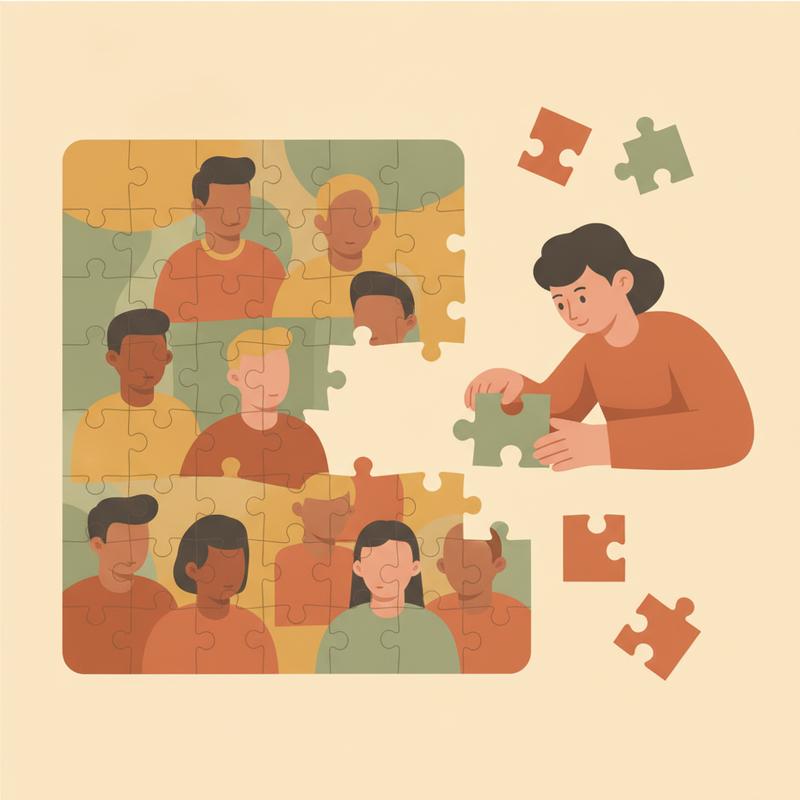
Have I spoken up clearly and directly? Leaving without raising the issue is sometimes running from something fixable. If you've spoken up clearly and nothing has changed, this is a different calculation. You've done the work. The environment hasn't met you.
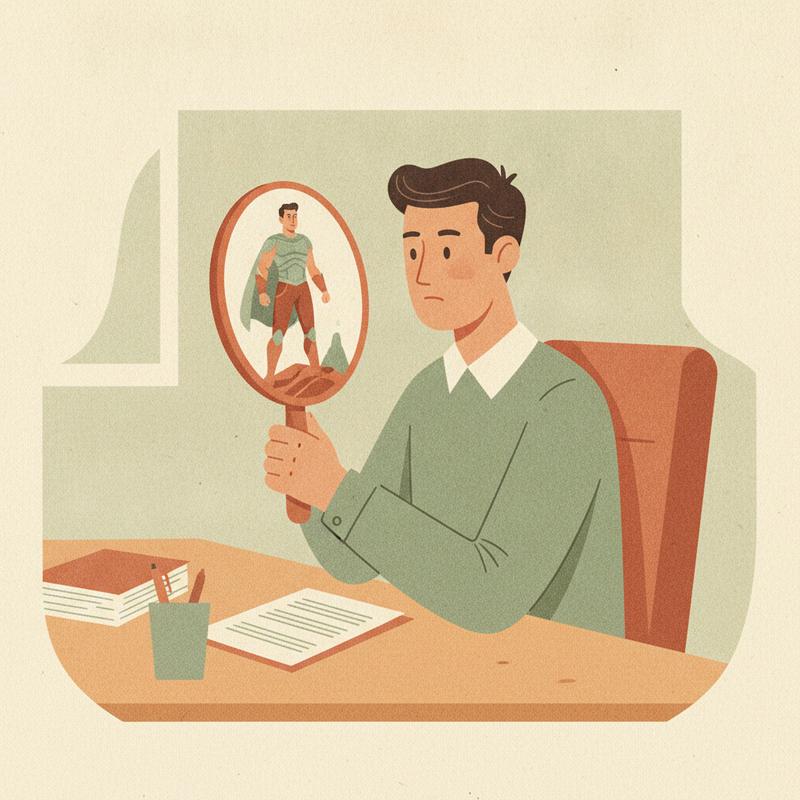
Am I staying out of genuine purpose, or out of habit? Habits keep people in situations long after the reasons for staying have gone. Momentum isn't the same as meaning.

Bolt cutters cutting through a heavy chain, backlit by bright warm light

After You Walk Out

Here's what nobody talks about when it comes to leaving something wrong for you: the relief is immediate, and it surprises you.

Not the relief of escaping... something deeper. The relief of being honest. Of no longer spending energy pretending things are fine. Of getting your Sunday evenings back. Of feeling like yourself again.

The world doesn't end. Your career doesn't end. In most cases, it moves forward faster, because you finally have room. You're no longer carrying the weight of a role or situation with an expiry date you missed.

I've talked to people years after they left roles or companies they stayed in too long. The consistent theme is the same: "I wish I'd gone sooner." Not "I wish I'd stayed." Not "I should have toughed it out." I've never heard anyone say quitting the wrong job was their biggest career mistake. I've heard plenty of people say staying was.

There's a version of your career where you stay in everything, grind through everything, endure everything. Some people wear this as a badge. But if you look closely, it often looks less like strength and more like a long series of things you were too frightened to leave.

Leaving a role, a company, or a situation you've outgrown is not weakness. It's the clearest signal you've given yourself in a long time: you know what you're worth, and you're not willing to keep settling for less.

The bravest thing isn't always pushing through.

Sometimes the bravest thing is walking out the door.

Two-Sevenths of a Life

The Monday Morning Test

Here's something I noticed early in my career, working with teams across tech companies and the US Army. Monday mornings told you everything.

Some people walked in with energy. They were picking up where they left off. They had something to work toward.

Most people looked like they were serving a sentence.

The conversations in those first hours of the week were about the weekend gone, or the one coming up. The work in between was the gap to endure.

I started calling it the two-sevenths problem. If you're only alive on Saturday and Sunday... if those are the only days you feel like yourself... you're running at two-sevenths capacity. Five days a week, you're getting through it.

A terrible way to live. And if you lead a team doing this, it's at least partly on you.

A tired office worker stares at the clock on a grey Monday morning

The Numbers Are Brutal

Gallup's 2024 workplace report found only 31% of US employees engaged at work. A 10-year low. We've spent decades and billions on engagement programs, perks, ping-pong tables, and mental health days. We're going backwards.

Think about what 31% means in practice. In a ten-person team, three people care about the work. The other seven are managing their time until they get somewhere they care about.

We keep treating this as an employee problem. A motivation problem. A generational problem. It's not. It's a leadership problem. And the data has been saying so for years.

In the Army, mission clarity was everything. You knew exactly why the work mattered. You traced your role directly to a larger outcome. Nobody talked about living for the weekend, because the work felt like it was for something real.

I don't expect every company to replicate the stakes of military service. But the underlying mechanism is the same. When people understand why their work matters, and when the person leading them reinforces it regularly, the relationship to Monday morning changes.

The Weekend Isn't the Problem

I want to be clear: weekends are great. I love them. Time with family, time to breathe, time to pursue the things I enjoy. I'm not arguing anyone should sacrifice weekends on the altar of hustle culture.

But when weekends are the only thing your people look forward to, the problem isn't work-life balance. It's a meaning gap.

Researcher Zach Mercurio has spent years studying what he calls "mattering": the experience of feeling seen, valued, and needed at work. His conclusion is uncomfortable for most organizations. The engagement crisis isn't about pay, benefits, or remote work policies. People don't feel they matter to the people around them.

Think about the teams you've led. When did someone last come to you excited about their work? When did you last ask what they needed, not to hit a deadline, but to grow?

If you're struggling to answer those questions, your people are likely living for the weekend.

The contrast between a bright, free Saturday and a grey, draining Monday

What "Living for the Weekend" Looks Like

It doesn't always show up as misery. This is what makes it easy to miss.

A person who answers emails on time but never volunteers an opinion. A developer who ships clean code and never suggests a better approach. A team hitting targets and feeling no particular satisfaction when they do.

Not burnout. Something quieter. People who've figured out exactly how much to give to get through the week without being fired, and nothing more.

When I was leading engineering teams, I had periods where this was happening right in front of me and I missed it. I was focused on delivery. The team was delivering. Seemed fine.

What I wasn't tracking was the quality of the conversations. Were people bringing problems early, or sitting on them? Were they excited about anything? Did they see this job as part of a bigger story for them, or were they renting out their skills until something better came along?

The answers weren't always what I wanted.

I've written about these patterns on Step It Up HR... the signals leaders miss when they're focused purely on metrics. The signals are there if you know what to look for.

The Dinner Table Test

Here's the most honest leadership feedback mechanism I know. Every person you lead goes home tonight and talks... with a partner, a parent, a friend. At some point, work comes up.

What do they say about you?

Not about the company. About you. Do they say "my manager listened to me today"? Or "my boss doesn't know I exist"? Or nothing at all, because work is the thing they're trying to forget?

Your real performance review isn't the one HR runs once a year. It's those dinner table conversations, repeated every weeknight, for as long as you're their manager.

If your people are living for the weekend, they're going home and counting down. You're the backdrop to five days of counting down.

Let it bother you.

A manager and employee having a genuine, energised one-on-one conversation

Small Shifts With Real Consequences

I'm not selling a framework here. There are some concrete things to shift the pattern.

Ask about more than the work. Once a week, in a one-on-one, ask someone about their career. Not the project. What do they want to get better at? What's frustrating them? What's working well and they want more of?

Most managers skip this because they're busy. Then they wonder why people leave for a 5% pay bump somewhere else.

Notice something specific. Don't say "good job this week." Say "the solution you came up with for the retry logic in the payment service was clever, and it saved us from a nasty production problem." Specific recognition tells someone you're paying attention. Generic praise tells them you're not.

Stop cancelling one-on-ones. Every time you cancel without rescheduling, you send a message: the task I'm running to is more important than you. People remember this. They adjust their expectations accordingly.

Ask the question directly. "What would make your work more meaningful?" Most managers never ask it. Most people have never been asked it. The answer tells you more than any survey.

The Business Case

Alex Edmans at the London Business School analysed 28 years of stock market data and found companies with genuinely high employee satisfaction outperformed peers by 89% to 184% cumulatively over the period.

Not marginally. By up to 184%.

If you want a number to put in a business case for treating people like people, there it is.

If you need a business case to care whether your people feel like they matter, you've got a bigger problem than engagement scores.

The Real Question

If most of your team is living for the weekend, what are you building?

Not what product. What kind of environment. What kind of culture. What kind of reputation as a leader.

The two-sevenths problem isn't unsolvable. Most people start their jobs wanting meaning in the work. Something happens... a series of small signals from the people above them... and they pull back. The message lands: your work doesn't matter, you're a resource not a person.

You don't need a transformation program. You need to start paying attention.

What would your team say at the dinner table tonight?

Not Every Day Is a Catching Day

A lone fisherman sitting in a small wooden boat at dawn on a misty lake

Roland Butcher, the first Black cricketer to play for England, stopped me cold with one line: "Every day is a fishing day. But not every day is a catching day."

He wasn't talking about sport. He was talking about leadership. About the pressure we put on ourselves and our teams to perform at peak capacity every single day.

He's right. And most of us have forgotten it.

We Only Talk About the Catches

When someone asks how your week went, you talk about the wins. The deal you closed. The meeting where you nailed the presentation. The code review where everything clicked. The conversation with a difficult stakeholder ending well.

Nobody says "Tuesday was flat. I sat there, did the work, and nothing much happened."

But Tuesday happens. Every week. To everyone.

We talk about the catches because those are the days we're proud of. The off-days get filed under "must try harder" and we pretend they didn't happen. Worse, we spiral. We question whether we've lost our edge. Whether something is wrong.

Nothing is wrong. You're fishing.

The High Performer Trap

High performers are the worst at this. I know because I've been one, and I've led plenty.

When you're used to performing, an off-day feels like a betrayal. You got here by being consistently excellent. Now you're sitting at your desk, the ideas aren't flowing, the energy isn't there, and the work feels like wading through treacle. So you do what high performers do: you push harder.

Wrong move. Almost every time.

Research from Psychology Today puts it clearly: normalizing recovery is part of high performance... not a break from it. The people who sustain performance over years treat rest and slow days as part of the process, not as problems to be solved.

Forbes reports a specific reason high performers burn out faster than average: they treat rest as unproductive. Every slow day becomes evidence of slipping. So they press harder. And they burn out.

The fish aren't biting. Pressing harder doesn't change anything. It exhausts you before the fish show up.

A professional sitting at a desk by a rainy window, thoughtful and calm

What an Off-Day Is

I've started thinking about off-days differently.

Your brain is not a machine. It doesn't run at constant output. It processes, it consolidates, it repairs. Sleep scientists point to the glymphatic system... your brain's self-cleaning mechanism... which runs during downtime. Slow days at work do something similar. They're processing the input from the fast days.

My best creative breakthroughs don't come on the grinding days. They come the day after a quiet one. In the shower. On a walk when I stepped away from the screen.

An off-day is not wasted time. It's part of the cycle.

The Resilience Training Institute is direct about it: "No matter how high a performer you think you are, we are all vulnerable to the same human factors causing a drop-off."

Worth sitting with. No one is immune. The variable isn't whether you have off-days. It's whether you handle them well.

How Leaders Make This Worse

Here's where it gets uncomfortable.

Most leaders handle this badly. Not because they're bad people, but because they spent their whole careers pushing through difficulty and getting rewarded for it. So when they see a team member having an off-day, they apply the same pressure.

"Is everything okay? Your output has been a bit slow this week."

The team member hears: "You're failing. I've noticed. Fix it."

Anxious on top of tired. You've taken someone having a quiet Wednesday and turned it into a spiral.

The leaders I've seen build genuinely high-performing teams do something different. They normalize the slow days openly. They talk about their own off-days. They don't perform peak performance for their team. They're honest: "Today was flat for me, and it's fine."

This kind of honesty gives people permission to be human.

An empty stadium under overcast skies, scoreboard at zeros, quiet and still

The Productivity Obsession

We have a cultural problem here, not a leadership one alone.

Online content is full of productivity advice. Morning routines. Output tracking. "How I get 14 hours of deep work done every day." The whole ecosystem rests on one assumption: every day should be a catching day. An off-day means something is broken in your system.

This is nonsense, and most of us know it. We feel guilty admitting it.

Consistency over time matters far more than peak output on any given day. A fisherman who shows up every morning, even on the days when nothing bites, catches more fish across a season than one who only shows up when conditions are perfect.

Showing up matters. The catches will come.

What to Do With an Off-Day

When you recognize you're in a quiet stretch, a few things help:

Don't spiral. The analysis loop... "why am I so unproductive, what's wrong with me, am I losing my edge"... is a trap. It burns energy without producing anything.

Do the necessary, not the ambitious. Off-days are for the low-stakes work. Clear the inbox. Update the docs. Handle the admin. Save the creative, high-stakes work for when you're sharper.

Step away when you're able. A walk, a lunch away from the screen, an hour where you're not pretending to produce. You'll often come back better.

Tell someone. If you lead people, say out loud today is slow for you. Watch what it does for the room. People breathe easier when their leader admits to being human.

Trust the pattern. If you've performed before, you'll perform again. Today is not a verdict on your career.

Normalize the Quiet Days

Roland Butcher went on to coach cricket long after his playing career ended. He's seen thousands of players, thousands of match days. He knows the difference between someone who's done and someone who's fishing.

The players who last... the ones who sustain performance over years... aren't the ones who never have off-days. They're the ones who make peace with them.

Your off-days are not the enemy. They're part of the same pattern as your best days.

Go fishing. The catches will come.

You Don't Need a Mentor. You Need a Mirror.

A person standing thoughtfully before a large mirror in a warm, book-lined study

Everyone gives you the same advice when you're stuck in your career: find a mentor.

Get yourself a wise, experienced person who has walked the path ahead of you. Buy them coffee. Pick their brain. Let them guide you. Your career will flourish.

I believed it for years. I sought mentors. I had some decent conversations. I took notes. And then... not much changed. Not because the people were bad. They weren't. But because I was asking the wrong question.

The question I kept asking was: "What should I do?"

The question I should have been asking was: "Why do I keep making the same mistakes?"

The Mentor Myth

Here's something nobody mentions about mentoring. According to Harvard Business Review, 71% of executives who mentor tend to choose people who look like them, think like them, or share their background. The advice you receive is filtered through someone else's experience, which might have little to do with yours.

Your mentor climbed a ladder in a different decade, a different industry, a different set of circumstances. Their map is not your map.

A winding, non-linear career path viewed from above like a hand-drawn map

Careers aren't linear. We all know this. And yet we keep seeking advice from people who drew their route in a straight line and happened to be in the right place at the right time. When you follow their path instead of building your own, you end up confused when the terrain doesn't match the map they handed you.

I'm not dismissing mentors entirely. I'll come back to them. But first: we've turned mentorship into a substitute for something harder and more necessary, which is honest self-examination.

The Mirror Problem

Tasha Eurich is a psychologist who spent years researching self-awareness. What she found is worth sitting with. 95% of people believe they are self-aware. The real number? Between 10 and 15 percent.

Nearly everyone thinks they know themselves. Barely anyone does.

This is the real gap in your development. Not the absence of a mentor. The absence of honest reflection about who you are, what you're doing, and why you keep repeating the same patterns.

I spent the first decade of my career blaming circumstances. Bad companies. Bad bosses. Bad timing. It took sitting still long enough to look in the mirror to see the common thread in every situation where things went sideways: me.

Uncomfortable to write. More uncomfortable to admit in the moment. But it's the one thing producing lasting change.

A person journaling at a desk in quiet morning light

What a Mentor Cannot Do For You

A mentor tells you what worked for them. They cannot tell you what is blocking you.

A mentor opens doors. They cannot tell you why you keep walking through the wrong ones.

A mentor shares perspective. They cannot show you the blind spots you are actively defending.

Only you are able to do this work. And it requires something foreign in a culture rewarding constant action: sitting down and asking yourself hard questions.

Here are the ones worth asking:

"What patterns keep repeating in my career?"

Not "what bad luck have I had"... patterns. If you've had three difficult managers in a row, what role did you play in choosing those roles, or in staying in them?

"What feedback do I keep dismissing?"

We all have feedback we've heard more than once and haven't acted on. The truth tends to live there.

"What am I avoiding?"

The conversation I'm not having. The skill I'm not building. The decision I keep putting off. These are often the answers to why I'm not where I want to be.

"Would the version of me from five years ago be proud of how I'm showing up?"

This one lands differently than you expect.

The Problem With Always Looking Outward

A formal mentoring session, one person pointing at documents while the other looks slightly disconnected

When you're always seeking someone else's perspective, you outsource your self-knowledge. You get good at absorbing other people's frameworks and terrible at building your own.

I've seen this with engineers and leaders I've worked with over the years. Smart people. No shortage of advice, books, or courses. And yet they stay stuck. Because they keep adding information without doing the harder work of examining their own assumptions and behaviors.

Self-reflection isn't navel-gazing. It's diagnostic work. You're trying to understand the system you're operating in, and you are part of the system.

Research published in PMC shows self-reflection directly improves career adaptability: your ability to respond to new challenges and changing circumstances. Not a soft outcome. The factor determining whether your career bends without breaking.

The paradox is this: the more you look inward, the better your outward decisions become. You stop reacting. You start choosing.

When a Mentor Is Worth It

I'm not throwing mentors overboard. There are situations where they're genuinely valuable.

When you need access you don't have. A mentor who knows people in a field you're trying to enter saves you years of cold outreach. Worth it.

When you're new to a context. Moving into a new industry, a new country, a new type of role... a guide who knows the terrain saves real time.

When you've done the inner work and you're ready to act. A mentor is most useful when you already know what you're building and you need tactical help executing it.

Where mentors fail is when you're using them to avoid the uncomfortable work of looking at yourself clearly. The mentor becomes a place to hide. A way to feel like you're doing something without confronting the real issue.

How to Look In the Mirror

A cracked mirror showing fragments of different life stages, symbolizing honest self-examination over time

This doesn't require anything elaborate. I do a version of this weekly, and it takes about 20 minutes.

Write down what went well. Not what you produced. What you did where things felt right, aligned, like you were showing up as your best self.

Write down what felt off. Where you avoided something. Where you reacted in a way you weren't proud of. Where you settled when you shouldn't have.

Ask: what is the pattern? Don't look at one week. Look at the month. The year. You start to see things. You start to see yourself. And there's where real change begins.

Not from a wise person across a coffee table telling you what worked for them in a different decade. From you, finally willing to be honest with yourself about what's going on.

The mirror is always available. Most people prefer not to look.


I write about leadership, career growth, and building better teams at Step It Up HR. If any of this resonated, come have a look.

What patterns have you been avoiding examining? Sit with it for a few minutes before you move on to the next thing.

Are You Living for Two-Sevenths of Your Life?

A tired office worker staring at a clock on a Friday afternoon

I've watched it play out in every office I've ever worked in.

Monday arrives and the countdown starts. By Wednesday, colleagues are already saying "hump day." By Thursday it's "nearly Friday." By Friday afternoon, the room comes alive in a way it never does on Tuesday morning.

The weekend is the goal. The rest is time to get through.

I spent years in the US Army. I led teams in tech. I've started my own company. I've worked in environments where the mission consumed everything, and I've worked in environments where people were clearly putting in hours and nothing more. The difference between those two kinds of workplaces is not pay. It's not the free fruit in the breakroom. It's whether people feel like what they're doing means something.

If your team is only alive at 5pm on Friday, this is not a wellness problem. It's a leadership problem.

The Numbers Are Worse Than You Think

Gallup's State of the Global Workplace 2025 report found only 21% of employees globally are engaged at work. 62% are not engaged. 17% are actively disengaged... not checking out quietly, but pulling others down with them.

Put it another way: four out of five people at work right now are going through the motions.

Those 62% who are "not engaged" are not bad people. They're not lazy. They've learned showing up is enough. Nobody gave them a reason to care more.

A weekly planner with weekdays crossed out and Saturday circled in red

The cost of disengagement runs to $438 billion in lost productivity globally every year. Those are the numbers Gallup measures. The real cost, in relationships not built, ideas not shared, decisions made without full commitment, doesn't show up in any spreadsheet.

I've Been on Both Sides of This

In the Army, I never once watched the clock. Not because the Army was easy... it wasn't. Not because every day carried some grand sense of purpose. But the work mattered. The people around me mattered. There was a clarity to what we were doing and why.

When you're responsible for soldiers, there's no room for coasting. There's no mentally checking out. You're either present or you're failing them.

Later in my tech career, I hit patches where I was absolutely living for the weekend. There were stretches where Sunday evenings brought a specific kind of dread. Where I'd spend Friday afternoon finally breathing again, and Monday morning counting hours until the next Friday.

I remember one job where a colleague kept a weekly countdown on his desk. A little whiteboard. Days till Friday. He thought it was funny. Looking back, it wasn't.

I don't look back on those years with nostalgia.

What I remember from the engaged periods is different. I remember being genuinely curious about what the next day would bring. I remember conversations with colleagues continuing past the workday because we were interested in the problem. I remember being tired at the end of the week... the good kind of tired. Earned, not wasted.

This is the version of work I want for myself. It's the version I try to build for the people I lead.

The Two-Sevenths Problem Is a Leadership Failure

Here's what I see leaders get wrong about this.

They treat disengagement as an individual problem. They send the disengaged person to a training course. They add a recognition programme. They survey the team and then file the results.

None of it touches the real issue.

The real issue is whether the work is worth doing. Whether the person doing it feels seen and useful. Whether they have enough autonomy to care about the outcome. Whether their manager knows their name and what they're good at.

Zach Mercurio's research on meaningfulness and mattering at work found something worth sitting with. When researchers asked thousands of people across 22 industries when they most felt they mattered, the answer was not the pay reviews or the team away days. It was a supervisor remembering their name. Naming what they did well in a meeting. Checking in on something personal.

Small things. Consistently done.

This is what separates the workplaces where people are engaged from the ones where everyone's waiting for Friday.

A person fully engaged and energized at work, leaning forward with focus

What Real Engagement Looks Like

I want to push back on one thing.

Engagement doesn't mean loving every task. It doesn't mean skipping into work. It doesn't mean the job has to be your identity.

Engagement means you have enough investment in what you're doing to bring your real self to it. You notice when something's not working and say something. You help a colleague without being asked. You think about the problem when you're in the shower.

You're not mentally clocking out at 3pm.

I've seen people deeply engaged in work I'd personally find tedious. The work itself isn't the variable. The conditions are.

Do they trust the people around them? Do they feel like their contribution is visible? Do they have some say in how the work gets done?

Where those three things are in place, engagement tends to follow.

Perks Won't Fix This. Purpose Might.

Every year, companies spend enormous sums on benefits, retreats, team lunches, and recognition platforms. Most of it is noise.

A good salary matters. Flexibility matters. But these things stop people from being unhappy. They don't make people care.

What makes people care is feeling like their work connects to something real. Like their efforts are visible to someone who has paid attention. Like they have a genuine say in how things get done.

You don't get there by adding a ping pong table to the break room.

You get there by building real relationships with the people on your team. By asking questions and listening to the answers. By noticing what someone did well and telling them, specifically, not in a newsletter.

What To Do If You're Managing a Two-Sevenths Team

First: don't take it personally. A disengaged team reflects patterns built up over time, often under multiple managers. You inherited part of this.

But you own it now.

Start small. Learn something real about each person on your team. Not what they do, but what they're trying to get better at. What kind of work energises them. What frustrates them.

Then look at the work itself. Is it clear why it matters? Not to the company. To the person doing it. Do they see the connection between what they do on a Tuesday morning and what they care about?

If the answer is no, this is where the engagement problem lives.

And stop treating recognition as a quarterly event. The research is clear. Small, specific, timely acknowledgement matters more than the annual awards ceremony. "You handled the client call yesterday with skill. The way you reframed the problem was sharp" is worth more than a plaque.

Two-Sevenths Is Not Enough

I've spent most of my career thinking about what it takes to build teams where people show up fully. Not in body only. In mind too. Where Friday afternoon isn't the goal... where there's something about Monday morning worth showing up for.

This is not naive. It's not asking people to love their jobs.

It's asking leaders to create conditions where work is worth doing. Where people are seen. Where the contribution connects to something real.

Five-sevenths of your life passes at work. Too much time to spend waiting for the other two days.

If your team is running a two-sevenths existence right now... what are you going to do about it?

Leaders Get Lonely. Especially the Good Ones.

Nobody told me. Not once in all the books I read, the courses I attended, or the mentors I worked with. Nobody said: "By the way, when you get there, you're going to feel completely alone."

I led seven teams at Curve. Forty-three people. Engineers, designers, product managers. On paper, I was never alone. In practice? Some of the loneliest days of my career happened inside those open-plan offices.

A lone executive gazes across a city at dusk

The Dirty Secret of Senior Leadership

More than 70% of new CEOs report feelings of loneliness, according to Harvard Business Impact. Seventy percent. And this isn't a phenomenon limited to the C-suite. It ripples down through every layer of management.

Here's why it happens. You get promoted. Everything changes overnight. The people you used to gripe about your boss with are now your direct reports. The complaints flowing freely between colleagues dry up the second you walk into the room. You stop being one of them. You're management now.

The shift is seismic. It happens fast. And almost nobody prepares you for it.

Good Leaders Feel It More

Here's the part which surprised me most. The better you are at leading, the lonelier you get.

Bad bosses don't feel this. They surround themselves with yes-people, mistake compliance for loyalty, and call it a team. They don't notice the silence because they never stopped to listen.

Good leaders notice. They hear what's not being said. They understand their team won't be fully honest with them. They feel the invisible wall rising the moment they walk into a room.

When you care about psychological safety, you're acutely aware when you personally threaten it. The team needs space to vent about leadership decisions. You are leadership. You don't get to be in those conversations.

When you invest in growing your people, you're constantly thinking about what they need. Your own needs slip to the bottom of the list. Who's thinking about what you need?

When you take accountability seriously, you carry weight others don't see. A project failing doesn't land the same on a developer as it does on the person responsible for the whole team's direction.

A leader in a meeting room, surrounded yet separate

What It Feels Like

Let me give you a concrete picture.

You have a decision to make. It affects twelve people. You've turned it over in your head for days. You need to think out loud... but who do you call?

Not your team. You're responsible for them. You don't dump uncertainty on the people you're meant to lead with confidence.

Not your manager. You want to bring them solutions, not problems. You're already anxious about looking like you don't have your house in order.

Not your partner at home. They've heard enough about work. And honestly, they don't know enough about the context to help.

So you sit with it. You turn it over alone. You make the call. You move on. Nobody sees how much it cost you.

I did this more times than I remember. At Curve, at Santander, consulting for clients across Europe. The loneliness of leadership isn't dramatic. It doesn't look like a crisis. It looks like a manager who seems fine... because they've had to learn how to seem fine.

The year I was running seven teams at Curve, I was making daily decisions about people's careers, the company's direction, technical architecture, hiring. I knew everyone's goals, their frustrations, their blockers. I knew who was struggling and why. My 1-1s were built for honest reflection. I invested real effort into creating psychological safety for each person I led.

And I had... nobody doing any of it for me.

My manager was excellent. But they had their own pressures. Our 1-1s were for updates and strategy, not for the kind of honest reckoning I was trying to create for my own team. There was a gap there. I felt it.

Why Nobody Talks About It

There's a myth in leadership culture: the person at the top must project certainty at all times. Vulnerability gets filed under "weakness." Saying "I'm struggling" triggers alarm in organisations not ready for honesty from the people they depend on.

So leaders learn to compartmentalise. They wear the mask. And the longer they wear it, the more natural it feels... and the more isolated they become behind it.

My book, Bad Bosses Ruin Lives, came from years of watching what happens when leaders don't have the support they need. People don't lead badly only because they're selfish or incompetent. Some lead badly because they're exhausted, overwhelmed, and have nobody to talk to. Loneliness corrodes judgement. It narrows perspective. It makes leaders defensive when they should be curious.

I've seen it. A leader who starts to see challenges as threats, feedback as attacks, and their team's silence as contentment... because they've been isolated long enough to lose their calibration.

What the Army Taught Me

I served in the US Army. Something I took from my time there was the concept of After Action Reviews. You sit with your team, you go over what happened, and you talk honestly about what went wrong and what went right. No rank protects you. Honest reflection is expected.

The discipline of honest de-brief is something I've carried through my civilian career. Not always successfully. But when I've had access to a real peer group... people who lead like I do, who face the same fog... those conversations were my AAR. They recalibrated me. They reminded me I wasn't imagining things. Other leaders were moving through the same terrain, making the same kinds of lonely calls.

That matters more than most leadership advice I've received.

The Cure Isn't Promotion

Getting to a higher level doesn't fix the loneliness. If anything, it compounds it.

The thing which helps is peers. Not subordinates, not direct managers... peers. Other people at the same altitude, carrying the same weight, moving through the same fog.

The best support I've ever had came from other leaders being honest about their own struggles. Not in a therapy-group way. In a "here's what I screwed up last quarter and here's what I learned" way. Direct. Honest. No performance required.

Two leaders having an honest peer conversation over coffee

If you lead people and you're reading this thinking "yes, this is me"... find those people. Join a leadership peer group. Get a coach. Be honest with someone operating at your level about what it's like.

And if you're in HR or you run an organisation? Build support in. Don't wait for your leaders to ask for it. They won't. Asking for help feels like admitting weakness. And good leaders are terrible at asking for help.

Before You Go

Leadership doesn't have to be this lonely. Making it less lonely requires two uncomfortable things: honesty about the experience, and the willingness to seek connection before you desperately need it.

The adage "it's lonely at the top" gets thrown around like a badge of honour. It's not. It's a warning. And most of the people who need to hear it are too busy leading to stop and listen.

If you lead, who do you have in your corner? Not someone who works for you. Not someone who manages you. Someone who gets it because they're in it too.

If the answer is nobody... start there.

Stop Trying to Be a Trailblazer

A lone figure standing at the start of an overgrown forest path, warm golden light filtering through the trees

Roland Butcher was the first Black cricketer to play for England. In 1980, he walked onto a Test pitch at Bridgetown, Barbados, and made history.

He didn't go out there to make history. He went out there to play cricket.

The distinction matters more than most career advice admits.

I've been thinking about this a lot lately. The professional world worships trailblazers. Every LinkedIn feed tells you to be bold, be first, forge your own path. TED stages are stuffed with people who "saw what nobody else saw" and "built what didn't exist." Every conference keynote promises the secrets of the innovators, the disruptors, the ones who changed the game.

And if you're not building something new, arriving somewhere first, or reshaping your industry... what are you even doing?

It's a trap. A well-marketed, aspirational trap.

What the Army Taught Me About Excellence

I spent time in the US Army before moving into tech. The Army has no patience for people trying to blaze trails. You're not hired for your vision. You're hired to do your job, and to do it so well the people around you never have to worry about whether you've got it handled.

Competence. Reliability. Being someone people trust with important things.

Nobody in the Army stood around asking "how do we reimagine the logistics chain?" They asked: is the equipment ready, is the plan solid, and do we trust the people executing it?

There's no room in the Army for the person who's big on ideas and unreliable on execution. Those people get people killed. The culture filters them out fast.

I carried the same mindset into tech. Not because anyone told me to. Because it worked.

My best years as an engineer weren't when I was pitching the most visionary ideas. They were when I was the person in the room who understood the system, who had read the code, who knew where the problems were buried and why. People brought me their hard problems. I solved them. The reputation built itself. No conference talks required.

A craftsperson at a workbench, hands focused on detailed precise work, wood shavings and tools visible

The Problem with "Be a Trailblazer"

There's nothing wrong with being first. Being first is fine. Making "being first" your goal is something else entirely.

When you chase the trailblazer identity, you start optimising for novelty over depth. You move between new technologies before mastering any. You pivot with every new trend. You spend your energy on the performance of innovation rather than the substance of it.

I've watched this wreck careers. Brilliant people who moved so fast chasing the next new thing they never built the deep expertise making them irreplaceable. They were always interesting to talk to at conferences. They were terrible at the actual work.

The pattern is familiar. A person arrives at a company with strong opinions and a good story. They get visible fast. They're put in front of customers, put on panels, given a platform. And then... the work starts. And there isn't enough substance underneath the story to hold it up.

Meanwhile, the people who went deep, who became genuinely good at one domain, then two. They understood systems at a level most people never bother with. Those people had options. Real options. Not only invitations to speak at things, but offers of meaningful work, lasting influence, and income matching their ability.

There's a reason senior engineering roles and VP-level leadership positions almost never go to people who've spent their career being loud. They go to people who've spent their career being right.

Roland Butcher's Approach

Roland Butcher didn't set out to be the first Black England cricketer. He set out to be good enough to get selected for England. He succeeded at the second goal so completely the first became inevitable.

His framing has stayed with me: don't try to be a trailblazer. Be so damn good they have no choice.

The trail gets blazed by people who are excellent at the work, not by people who want to blaze trails. The distinction sounds fine on paper, but in practice it shapes everything about how you approach your day.

Do you spend your time getting better at the thing itself? Or do you spend it building the story of yourself as someone getting better?

One of those compounds. The other inflates for a while, then deflates publicly.

Excellence Alone Isn't Always Sufficient

I want to be fair here. Excellence alone is not universally sufficient.

If you're from a background where the door stays shut regardless of how good you are, no amount of competence forces it open. Systems excluding people based on who they are, not what they do, are real. I'm not pretending otherwise.

Butcher himself had to be better than his peers to get half the credit. He knew the game was harder for him than for white players with similar records. He played anyway, and he played brilliantly.

But even within systems stacked against people, the ones who broke through were experts at their work. Not a comfortable truth, but a real one. The answer to a broken system is to fight the system. The answer is not to decide excellence doesn't matter.

Excellence is the floor. The fight for fairness sits on top of it.

What This Means Day to Day

If you're building a career, here's how this translates into something practical:

Pick something and go deep. Stop treating your skills portfolio like a collection of hobby projects. Find the thing you want to be best at, and commit to it. Not for a month. For years. The person who has spent five years going deep on one thing is more valuable than the person who has spent five years dabbling in ten things.

Be reliable before you're visionary. The leaders given the big problems to solve are almost always the people who first proved they handle the small ones without drama. Trust is earned in small transactions before it's extended to large ones. Spend there first.

Let the recognition follow the work. Visibility feels like currency, and it is... to a point. People who've built genuine skill find visibility follows, eventually, without having to perform it. People who chase visibility first and substance later build a story outpacing their ability. The gap between story and substance has a way of announcing itself at the worst moment.

Don't chase being the first. Chase being the best. Or at minimum, be so good at what you do the "first" becomes a side effect. Butcher didn't need to campaign for his place in the record books. His batting average did it for him.

A lone athlete running on an empty track at dawn, seen from behind, mid-stride

The Trail Gets Made by Walking

I'm not anti-ambition. I'm anti-performance-of-ambition.

The best people I've worked with, in the Army and in tech, were not the ones arriving at a new role talking about how they'd change everything. They were the ones who looked at the problem, understood it more thoroughly than anyone else in the room, and then worked on it with a focus bordering on uncomfortable.

Those people changed things. Not because they set out to be historical. Because they were so good at what they did the result was change, whether they wanted the label or not.

Roland Butcher walked onto the Bridgetown pitch in 1980 and played cricket. He scored 32 runs in his first Test innings. He took his catches. He did his job.

History got made in the process.

Do your job. Do it so well it speaks for itself.

The trail follows.

My Career Looks Like a Plate of Spaghetti (And I Wouldn't Change a Thing)

Someone once asked me to describe my career path.

I said: "Picture a plate of spaghetti."

They laughed. I wasn't joking.

I went from the US Army to software research at Sun Laboratories. From building e-commerce platforms in the early 2000s to leading the Android team at one of Europe's biggest banks. From managing 43 engineers at a UK fintech company to keynoting at HR conferences in Iceland and Croatia. I wrote a book. I launched a podcast. I now run a company.

No 10-year plan came close to predicting it.

Warm bowl of spaghetti noodles with career milestone icons, editorial style on cream background

The Ladder We Were Sold

Every careers advisor, every well-meaning parent, every LinkedIn thought leader tells you the same thing: plan your career. Set goals. Pick a direction. Climb.

The image they sell you is a ladder. Start at the bottom, work your way up, step by step, rung by rung. Neat. Orderly. Safe.

For most people? Complete fiction.

Research cited by Together Platform, drawing on Bureau of Labor Statistics data, puts the average number of jobs held across a career at 12 for baby boomers. Twelve. Not a ladder. A scribble on a napkin.

A tall corporate ladder leaning against a wall, slightly tilted and unstable, minimalist style

And yet the ladder myth persists. Schools still teach it. HR departments still plan around it. Managers still frown at people who don't follow a tidy, logical upward progression.

I'm done with the ladder.

My Actual Path

Let me walk you through the spaghetti.

I served in the US Army. After leaving service, I studied Computer Science at the University of North Texas. From there, I worked as a research engineer at Sun Laboratories. It was the organisation responsible for Java and much of the infrastructure modern enterprise software runs on.

Then years of building things. E-commerce platforms. High-availability leaderboards in C. No-code tooling in Tcl/Tk. A VAX/VMS networked database. Founder and partner in several tech ventures. Every project was a masterclass in something school wouldn't have taught me.

Then mobile. I led the Android team at Santander's personal banking app. 2.2 million monthly active users. Cut incident rates by 30 percent. Launched an Android Academy to accelerate new engineer onboarding. Hired 56 engineers over four years.

Then I joined Curve, a UK fintech company, as Senior Engineering Manager. Seven cross-functional teams. Up to 43 people. Manager of managers. Building engineering culture inside a fast-moving startup.

And then I turned again. Now I'm Chief Innovation Officer at Step It Up HR. I keynote at conferences across Europe. I host a podcast. I co-authored Bad Bosses Ruin Lives, a book on what makes leadership work and what makes it catastrophic. I speak to HR professionals, L&D practitioners, and senior leaders about the one thing organisations consistently get wrong: management.

My CV reads like someone who kept changing their mind. I read it as someone who followed the interesting problems wherever they led.

Why the Ladder Fails You

The ladder model rests on a few assumptions.

First, it assumes you know what you want at 22. Second, it assumes your industry stays stable long enough for a multi-year plan to survive contact with reality. Third, it assumes your value to an organisation sits neatly on a single vertical track.

None of those hold.

I had no idea I'd end up in HR technology when I was writing C code at a Sun workstation. The prospect of keynoting in Reykjavik about bad bosses would have seemed like someone else's life to the engineer I was at Santander.

And yet every strand of my career fed the next one.

The military gave me accountability, standards, and the habit of following through under pressure. Research gave me intellectual rigour. Mobile development taught me how to build products people love at enormous scale. Managing large engineering teams showed me how organisations work... and how they fail. All of it travels with me every time I step on a stage.

Sarah Ellis and Helen Tupper coined the term "squiggly career" in their book of the same name. Their argument: the most effective professionals today move laterally, build broad skill sets, and treat careers as sequences of experiments rather than a predetermined climb. They're right.

Person standing at a crossroads sign with multiple directions, warm golden hour light, terracotta tones

What You Get From Spaghetti

A ladder takes you up one wall. Spaghetti takes you across the whole room.

Here is what broad, winding experience gives you.

Pattern recognition across domains. When you have worked in defence, research, fintech, and HR technology, you see patterns others miss entirely. Problems in one industry often have solutions sitting in a completely different one. Someone who has spent 20 years in a single vertical develops one lens for seeing the world. Someone who has crossed domains develops several. In a room of specialists, being a generalist is an advantage, not a weakness.

Resilience. If your entire career sits on one rung of one ladder and the rung disappears... because companies downsize, industries shift, or AI changes what the job requires... you face a much harder rebuild. People who have reinvented themselves before know how to do it again. They have already proved to themselves it is possible.

Better stories. Nobody wants to hear about 30 years on the same ladder. A former soldier who ended up keynoting at HR conferences in Iceland? People lean in. They want to know how it happened. Your breadth is a credibility engine, not a liability to apologise for.

Stronger networks. Staying in one lane means your professional contacts narrow over time. Crossing industries means knowing people everywhere. Doors open differently when you have built relationships across a wide range of fields. And when you bring a perspective most people in the room don't have, those relationships open in ways they wouldn't otherwise.

The Part Nobody Mentions

Spaghetti careers are uncomfortable.

Every significant change I made meant starting again lower on the knowledge curve. I was the Android lead who didn't know the banking domain. I was the engineering manager who didn't know HR. Each time, there was a period of feeling out of depth. The imposter feeling is real. The people around you raise their eyebrows. Some say it to your face.

And then you figure it out, faster than you expected, because everything you have done before is still in the room with you. Your prior experience doesn't vanish when you change direction. It recontextualises. It becomes the lens letting you see the new environment more clearly than the people who have never left it.

The discomfort is the price. The breadth is the reward.

Stop Planning, Start Moving

I'm not saying abandon goals. Goals matter. A direction matters.

But a rigid 10-year career plan is mostly a story you tell yourself to feel in control of things you don't control. Markets change. Companies fold. Whole industries get rebuilt from scratch. Your interests evolve. You do too.

Worth having instead: a clear sense of your values and what kind of work gives you energy. A willingness to say yes to things which scare you a little. A habit of learning relentlessly, regardless of where you sit on the org chart.

The best career move I ever made looked, at the time, like chaos. So did the next one. And the one after.

Twelve jobs in a career is the average. Your path is far from straight. Stop apologising for the detours. They are the education.

My career looks like a plate of spaghetti. Every strand is there for a reason.

What does yours look like?

The Day I Was Wrong in Front of My Boss's Boss

The Boardroom Goes Quiet

There is a particular kind of silence in a boardroom when someone says the wrong thing.

Not an argumentative silence. Not the polite kind. The kind where people glance sideways at each other, papers shuffle unnecessarily, and the air thickens.

I sat in it once. I was the one who had said the wrong thing.

This was several years into my career as a technology leader. I was presenting a case for a technical decision to a room of senior executives... my boss, his boss, a handful of peers I respected. I had done my homework. I was confident. I walked in with numbers and a clear recommendation.

Halfway through, my boss's boss asked a sharp question. It poked at an assumption I had built the whole argument around.

I answered. Confidently. Perhaps too confidently.

He pushed back. I pushed back harder. Then one of my peers pulled up data on a laptop and slid it across the table.

I was wrong. Plainly, provably, publicly wrong.

The Fork in the Road

Every leader faces moments like these. And every one of them presents two options.

Option one: you wriggle. You reframe. You say "what I meant was..." or "the data doesn't quite capture the full picture..." or you find a way to make it sound like you weren't entirely wrong, only misunderstood. Most leaders go this route. I have watched senior people spend ten painful minutes defending a position they already knew they had lost.

Option two: you own it.

I put down my pen. I looked at my boss's boss. I said: "You're right. I got this wrong. I built the argument on an assumption I shouldn't have made, and I should have caught it before I walked in here. Let me redo this analysis with the correct figures and come back."

Full stop. Nothing else.

A professional in a boardroom meeting, pausing mid-presentation with a moment of honest realization

What Happened Next

The silence shifted. Not gone, but different.

My boss's boss nodded. "Appreciated. Let's move on." He was on to the next agenda item before the awkwardness had time to settle. No lecture. No pile-on from others in the room. No lingering tension in the days after.

After the meeting, one of my peers caught up with me in the corridor. "Good move," he said. "Most people dig in."

I hadn't thought of it as a move. The data was right there on the table. There was no point pretending otherwise.

What struck me later was how quickly the room moved on once I owned it cleanly. No caveats, no hedging, no softening of the admission. I was wrong, I said so, I said what I would do about it. People let it go.

When you fight a losing position, people remember the fight. When you own a mistake cleanly, people register the honesty and move on.

Why Leaders Refuse to Admit They're Wrong

Here is what I have observed across two decades of leading technology teams: most leaders treat being wrong as a threat to their authority.

They have absorbed the idea... from somewhere, possibly business school, possibly too many leadership books written by people with a lot to sell... leaders are supposed to have answers. Confidence equals competence. Admitting a mistake signals weakness and invites others to question your judgment across the board.

My research into bad bosses found 99.5% of people report having had one or more bad bosses in their career. One of the most consistent themes running through those experiences? A boss who refused to admit being wrong. Who doubled down when cornered. Who blamed the team when a decision backfired. Who would rather watch a project go sideways than reverse course and acknowledge the initial call was off.

This makes a kind of broken internal logic. Leaders who never admit mistakes appear decisive, certain, in control. Their teams learn the lesson fast: don't bring bad news. Don't challenge the boss's read on things. Keep your head down and your honest opinions to yourself.

The boss's ego becomes a bigger operational risk than any single bad decision.

What the Research Shows

Leaders who admit mistakes are rated as more effective by their teams... not less. Research from Entrepreneur and multiple leadership studies consistently finds leaders who acknowledge being wrong score higher for effectiveness with their teams... not lower. Admitting a mistake signals humility, and humility is consistently associated with better leadership outcomes.

The practical argument is even stronger. When a leader admits a mistake openly, they signal to the whole team: it is safe to do the same. People start raising issues earlier. They flag problems when something is still fixable. They offer honest analysis rather than telling you what they think you want to hear.

When a leader treats every challenge as a threat, the team's instinct is self-protection. Information flows upward slowly, selectively, cleaned up before it arrives. By the time you hear about a problem, it has often grown past the point of easy repair.

One honest moment in a boardroom, one clean admission in front of your boss's boss, sets a different tone entirely. It is worth far more than any trust-building exercise your HR team has ever booked a venue for.

The Skills No One Teaches

Nobody prepares you for this in leadership development programmes. The focus tends to be on decision frameworks, communication styles, how to give feedback. All useful. None of it covers the specific skill of being wrong gracefully, in public, without it becoming a spectacle or a wound you carry forward.

The mechanics are simple. You say: I was wrong. You say what you got wrong. You say what you will do differently. You move on.

No qualifying. No softening. No "to be fair, the information I had at the time suggested..." You were wrong. Own it. Done.

The harder part is internal. Most people feel genuine shame or anxiety when caught being wrong in front of people whose opinions matter to them. The instinct is to protect yourself. The more senior you are, the more you feel you have to protect.

A reframe helped me, and I have tried to pass it on to the people I have managed since. Being wrong is a data point. It tells you where your assumptions drifted, where you needed more information, where you rushed a judgment. It is useful. Fighting it is what makes it damaging.

A leader sitting alone after a meeting, thoughtfully reflecting with a notebook

Doing It in Front of Your Team

If you want your team to surface problems early, be wrong in front of them.

Correct yourself in a meeting when new information comes in. Say "I had this backwards" without apology and without drama. Watch what happens. People relax. They start doing the same. The willingness to speak up increases... not because of any initiative you launched, but because of what you modelled.

You do not earn trust by being right. You earn it by being real.

I have written more about the relationship between managers and their teams, and about what separates the leaders people want to work for from the ones they endure, at Step It Up HR. The patterns are consistent across industries.

The Longer View

The day I admitted I was wrong in front of my boss's boss was not the worst meeting of my career. It turned out to be one of the more instructive ones.

My boss's boss saw someone who wouldn't waste the room's time defending a dead position. My peers saw someone they would feel comfortable disagreeing with later. And I reminded myself of something worth carrying forward: the leaders people follow are not the ones who are always right.

They are the ones who treat being wrong as part of the process. Who take the correction, update their thinking, and get back to work.

The boardroom tests a lot of things. How you handle being wrong in it tells the people watching you more about your leadership than most decisions you will ever make in it.

Nobody's Coming

Trump wanted NATO allies to join his war with Iran. They said no.

According to reporting from Time, he called their refusal foolish and warned allies who stay out of a "bad future." He announced, as he often does, America "no longer needs" them.

Here's the problem. He burned those bridges years ago. Now he's standing at the river wondering why no one is helping him cross.

A lone figure on a crumbling stage, fist raised, facing rows of empty chairs the allies who are no longer there

This Is What Burning Bridges Looks Like

Since taking office, Trump has torn up trade agreements and punished allies with tariffs. He threatened to annex Canada. Canada stopped taking his calls. He's pardoned convicted criminals who went on to harm more people. He's systematically dismantled the diplomatic infrastructure the US built over eighty years.

And now he needs those allies. And they've looked at what helping him costs, and walked away.

Europe told him clearly: this is not NATO's war. They want to know the goals, the exit plan, what they're signing up for. Trump has no answers to those questions. His approach doesn't include answers. It includes demands.

His Version of Negotiation

Trump's version of negotiation is simple: you give, he takes. He calls it winning. Everyone else calls it getting mugged.

Canada saw it coming. When he floated his annexation "offer," Canada didn't sit down at the table. Not out of weakness. Because they understood what showing up means when Trump is in the room. He had nothing to offer and everything to demand. Walking away was the only sensible response.

The same is playing out with NATO now. Allies are asking reasonable questions about war aims and accountability. Trump responds with fury and threats. He is not a partner. He is a bully who ran out of people willing to absorb the punishment.

What the World Sees

I served in the US Army. I fought for this country, and I say this with no pleasure at all: while Trump is the President, the world looks at the United States and sees him.

Every bad-faith demand. Every pardoned criminal. Every treaty ripped up. Every ordinary American working three jobs to fund his foreign adventures is invisible to us. What we see is the man at the top and what he does in America's name.

America was not built to stand alone. The alliances and institutions took generations to construct. They exist because being part of a network of strong democracies is what kept the peace and built the prosperity. Trump either doesn't understand this or doesn't care. Either way the outcome is the same.

He wrote cheques with his mouth for years. Big promises. Easy wins. Dominance without effort. The bill is arriving now, and the people who were supposed to help pay it have left the building.

Where This Ends

I don't know how this ends well for America. The Iran war drags on. The allies won't join. The economy is absorbing damage from his trade wars. The rest of the world is quietly making plans without Washington at the table.

The man who promised to make America great again is making it isolated, mistrusted, and weak. Ordinary Americans are paying the price.

If you're American and you're angry about this: good. Get louder. The rest of us are watching and we're waiting for America to remember who it is supposed to be.

I Put on Rocket Boosters

I tried them all. ChatGPT first, obviously. Then Cursor, because the developer community were going on about it. Then Codex. Then I upgraded my Google account to get access to their AI tooling. I gave each of them a proper go. Not a few minutes... weeks.

None of them clicked.

A developer surrounded by multiple AI tool interfaces on different screens, looking tired and unconvinced

The Problem With Most AI Tools

The issue wasn't raw capability. ChatGPT is impressive. Gemini genuinely surprised me. Cursor is clever. But in every case I kept hitting the same wall: these tools work for you, not with you.

You type a question. You get an answer. You copy it somewhere. You ask another question. The AI has no idea what you did with the last answer. It doesn't know your project. It doesn't remember what you decided three conversations ago. Every session starts from scratch, and you spend half your time re-explaining context the tool should already have.

It felt like hiring a brilliant contractor who shows up every morning having forgotten everything from the day before.

What Changed With Claude Code

I switched to Claude Code a few weeks ago. The difference wasn't subtle.

The Claude Code ecosystem isn't a chatbot bolted onto an IDE. It's an agent running inside your actual working environment, with access to your files, your git history, your project structure, your terminals. It reads your CLAUDE.md and knows your conventions. It builds up memory across sessions. It runs commands, writes tests, deploys code, searches the web, generates images, sends Telegram messages.

I'm not describing theoretical capability. I'm describing what it did for me this week.

It wrote three blog posts, deployed them with images to my live website, set up a daily cron job to keep doing it, and sent me a Telegram confirmation each time. I described what I wanted. It did it. I reviewed the result.

A partner. Not an autocomplete.

A developer in focused flow state, one clean setup, everything working

The Ecosystem Is the Point

What makes Claude Code different isn't any single feature. It's the ecosystem.

Skills. Custom slash commands for repeating workflows. Hooks. Memory files. MCP servers for external tools. Agents you dispatch to run tasks in parallel. It all hangs together in a way the other tools don't.

With ChatGPT or Cursor, I was always fighting the tool to fit my workflow. With Claude Code, I described my workflow once and the tool adapted to it. My codebase. My deployment process. My writing style. My banned words list. My Telegram bot.

After years of trying to force AI tools to be useful, I've found one where being useful is the default.

The Honest Caveat

It's not magic. You need to put in the work to set it up properly. The CLAUDE.md file needs writing. The skills need building. The memory needs accumulating. In the first day or two it feels like any other tool.

But by the end of the first week, something shifts. The tool knows you. It knows your project. And instead of fighting context and re-explaining yourself, you're moving at a pace you didn't think was possible.

Rocket boosters is the right metaphor. Same person. Same brain. Same hours in the day. But the distance you cover is completely different.

If you've tried AI coding tools and come away thinking "nice party trick," do yourself a favour: try Claude Code properly, with a real project, for a real week. Set it up right. Let the memory build. Give it actual tasks, not toy examples.

You might find, like I did, what AI should have been doing all along.

Something Terrifying...

I find my self in agreement with trump.  No, not with the absolute tripe that he's saying, but the actions he's pussy-footing his way towards.

The virus is horrible.  Far more vicious that anyone wants to believe.  Yet...

There's 20% of the workforce out of work right now.  The longer we stay in lockdown, the bigger that number gets. People that can't feed children, take care of themselves, or do anything constructive.

However, the alternative, going back to work, will vastly increase the number of deaths, even with caution.

How many? At time of writing we have something like 2 million Covid cases in the US, with 75K deaths.  There are 330M people in the US.  Multiply it out, and you get something on the order of 12.5M deaths.

Instead of framing things in those terms, trump the coward is telling children's stories where nothing bad ever happens.  Of course, we all *know* better, right?  "only 15 people have the virus", "it's going to go to zero", "the heat will get rid of it", "inject bleach".

Okay, maybe that last wasn't a children's story so much as pure stupidity, but you get my point.

Assuming that the virus doesn't change it's mortality rate, that's what we're really facing.  12.5M deaths from virus, or who knows how many by starvation and unrest.

I pretty much stand against everything trump represents: silver spoon, cowardice, hate, corruption, nepotism, bigotry and misogyny.

Still, the terrifying thing is that we have no choice, we really have to take this like a battle.  Accept there will be casualties.  Pull together as a society, and make sensible decisions.

It's time for hard truths, and courage in the face of adversity.  This next year or two will flat out suck.  It's going to be bad, but we have no choice but to carry on.

I wish the best for all Americans (yes, even trump despite all the deaths he owns).  I don't want anyone to have to die from the virus...but the only way is to move forward, despite the losses, and keep moving forward.  

We cannot be deer in the headlights of this mess.

We need testing.  We need PPE.  We need honesty.  We need to stop covering up, and actually open up to the truth.  Admit it when we've made mistakes, and see if we can't do just a bit better every day.

When it comes to it, we need a leader.  Not a fool. Not a coward.  Not someone who will keep throwing villains to his base until he finds someone to blame things on.

At this point, I'd rather my Chocolate Labrador were president than trump.

Don't do the bleach.  Don't do the hate, or any of trump's other specialties.

I've said it before, but it's never been so true: don't believe what he says, watch what he's doing.

Still, above all, we need to love each other.  Even trump, just so long as he's not in my government ruining people's lives.

Shower Moments, and the Joy of Boredom

It's become a joke in my workplace.  I'll turn to my boss and say "I had a shower moment this morning.  I was thinking about the way that we've built the new code...."

A "shower moment" is when I'm not really paying attention to where my mind is wandering.  I'm doing something that occupies my mind enough (but not too much) so that my subconscious can daydream.

These moments are gold.  

In the office during the day I'm rushing here, rushing there, trying to beat a deadline, prepare for that next meeting, answer an email, etc.  Who's got time to breathe, much less /think/?  That nagging little voice that's trying to tell me something never gets a chance.

As an Engineer, I specialise in focusing deeply on a single facet of an application at a time.  I build huge architectures of imagination when programming (which is why a single 15 second interruption can be fatal). By necessity, I do my best to make sure my mind doesn't wander off the path to the next challenge.  This not only enables me to laser focus on a very small detail, but it also very effectively blocks any 'A-HA' moments.  The path is set in stone (until we've conquered the next challenge).

So when I can daydream my subconscious takes the wheel and takes me to places that I wouldn't have gone during the work day.  I don't get bogged down in what's known to be possible, what I have to do next, or what anyone else thinks.

It's not strictly tied to when I'm taking a shower...the key is to be bored enough for my mind to wander.  I could call this the "doing the dishes" moment or the "walking to the train" moment or even the "boring" moment, but it doesn't have quite the same ring.

Next time you find yourself standing in a queue at a Starbucks, waiting for a meeting to begin, sitting in a waiting room for your next dental exam or even in a shower, don't pull out a phone or a tablet (especially in a shower). 

Just relax and let your subconscious take you where it may.  Bring a way to take notes, and see what that little voice is telling you.

Playing around

Hope you guys are doing well.  Thought you’d get a kick out of this.

It was a bit of a week last week.  Lots of "he said, he said" going on.  Nobody paying attention to the other person’s viewpoint.  I wanted to make a point about perspective.

I had come across ‘anamorphic text’, and then the 3D version…. Since I have an Creality Ender 3 Pro 3D printer, that seemed well within my reach.

Unfortunately I couldn’t find a good tool to do it.  One method didn’t work, another required installing Fusion 360, with about 15 licenses.  Ugh!

After a bit of snooping around, I found TinkerCAD, and then had to teach myself how to do anamorphic modelling…I enjoyed that enough, I made a video to upload to Youtube (I haven’t done that part yet).

https://drive.google.com/file/d/1z4jlByGzKwWtSiE8pWESHlcOS9HXKqxX/view?usp=sharing

Great, now to print the anamorphic text.  Because it’s got overhangs (the tops of C, S, O, Q, T and so on as well as the serifs), I have to print supports, which then have to be removed to view the final product.  That’s why such prints on a simple 3D print look a little “fuzzy”.  It’s *hard* to get them to be clean.


Fine, so I have a printed couple of words “Curve Rocks”.  Both a shameless plug for brownie points, but also something I can make a point about perspective in calls.  Great!

Then, I thought “Hey, why not make a post on LinkedIn about this?” 

Well, I /could/ have posted the picture above, but that seemed a little boring…so I figured I’d shoot a movie. I set up a lazy susan and taped a few sheets of white paper together …

The idea was to focus on the text…and ended up with this:

https://drive.google.com/file/d/1jOp58wRK9sKUP5jmwaHwZgL2JFg_EWxb/view?usp=sharing

Gets the point across, but there’s no fading, you can see the lazy Susan moving, and there’s the shadow on the wall behind.  Clearly, that’s not good enough.

I found a software package called OBS (Open Broadcasting Software) or some such.  Long story short, it’s very powerful software.  Some people do actually use it to broadcast TV shows and such.

My needs were much simpler, so that ended with this post on Linked in: 
https://www.linkedin.com/feed/update/urn:li:activity:6837843593449766912/

Deb liked it so much, she asked me to create one for her company.  Her company is about being a rebel in HR practices.  Question everything.  So, she’s taken to saying she’s in a ‘rebelution’. 10 letters, that’s suspiciously suitable for this process…but because both faces had pronounced serifs it was a right pain to try to clean off...

So, now I get to make her a movie too.

In the end, my mind (mostly) off my work. Mission accomplished, more or less.

Fun way to spend a couple days of a 3 day weekend.

Anyway, off to walk the dogs now. Give each other hugs for me!

-me


Part II: Ack! I've just been made redundant! Now What!?!

In 2017 the company I'd worked at for 2 years decided to "go in a new direction".  It was a 12 person company, so it wasn't like I'd expected to retire from there or anything...still.

I was really sad about it. We'd been working so hard, had accomplished so much, yet the company was putting all that (and me) to one side.

However, it wasn't my first rodeo.  Business is hard.  We're expensive.  The junior devs who were on their first or second job out of university saw it as an apocalypse.

I wrote this article to help them:
https://www.kencorey.com/personal-blog/ack-ive-just-been-made-redundant-now-what

I wanted to emphasise the first point in that article.  Respect the feelings.  Process them, do not deny them.  Give yourself some time.

When the company you work for has to take the drastic step of making a large number of people redundant, there's rule that means the company *must* try to make decisions in as impersonal a way as possible.

That means, even though the redundancy or layoff feels personal to you (of course it does), to the company and the managers making the decisions it is a tool to try to keep the company going.

It does *not* mean anything bad about you.

Points to hold on to for today:
1. You are a valuable employee.
2. You were doing great work.
3. Believe in yourself.
4. Something else is out there waiting for you to find it.

Process your feelings so you can get through them.  Once processed, let them go, let the anger, hurt, recriminations or even guilt go.  Don't wear it as a badge, or use it to beat yourself.  Release it.

You had some good lessons, had some rough edges knocked off, made some great connections, and have a better idea of what you don't want which means you know more about what you really do.

You'll then be free to chase the next big dream!

For tomorrow ask yourself a few important questions:
+) What do I want to do?  (same career?  New career? Manage? Stay technical?)
+) What do I want to be known for?
+) What do I want my career to accomplish in the long term?
+) Do I want to work for a paycheque, or work for a cause?
+) What does 'happy' or 'satisfied' look like to me?

Ask yourself these questions.  Think about them.  Don't just dash off a 5 minute answer.  Think about them in the shower tomorrow, next week, next month.  Give your best answer for today.

Once you have answers, you have clues to what's going to make you a better you.

Come back in 6 months and reassess.  If your answers to those questions have changed (Got married? Had a child? Discovered a passion for the environment/social work/animal rights, etc) maybe it's time to adjust course.

Most importantly through all this: believe in yourself.  Show that to other people.


More? No! Less.

I like coffee.

Just coffee, with milk.

Not decaf, espresso, latte, chai, semi, dry, no-foam, cappu with a chocolate dusting, a shot of vanilla...no, hazelnut...no! cinnamon!...pumpkin-spiced blah, blah, blah...

There seems to be a frenzy of getting that little bit extra each time, trying to experience more.  Rampant Consumerism.

It just kinda fades into the noise now.  Sounds a bit like the parents in old Charlie Brown tv specials: "Wah, wah-wah, wah-wah, wah."

Fer crying out loud.  Why not just /coffee/?

Even software is like this...and has been for a long time.  Assembly, macros, structured programming, Object Oriented programming, actors, message-passing, functional. The number of languages is phenomenal. Even inside a single language...take a look at the incredible number of frameworks, libraries, modules and assorted clumps of javascript code you could add/use on your next project.  Just try to find one out of the 8 different cocoapods to implement hamburger menus on iOS alone. Android even has different versions of the Google-provided java frameworks.  How many ways are there to handle push notifications?  Graphics?  Networking?

This is turning us all into people who cannot stand not being over-stimulated all the time.  

It has a name: Fear Of Missing Out.

You gotta be chasing the next big thing or you might miss it!  No chance to appreciate or explore where you are and what you're going...bang, bang, and on to the next commercial...

Next time you're at a restaurant, take a look around, and see how many groups of folks are sitting at a dinner table madly typing while looking at their phone and not speaking to anyone else.

Next time you're a few minutes early to a business meeting, watch as the other folks arrive and instantly pull out their phone.

It feels to me as if we're losing the ability to just love something. To wallow around a bit. To sink into it deep enough that we sorta forget where we end and the other thing begins.

Whatever happened to exploration and appreciation?

What has this got to do with business?  In business, this has another name: Indecision.  

Indecision is expensive.  Rarely do you operate in a bubble.  There's always someone waiting on the thing you're going to deliver or decision you're going to make.  Your slowing down to smell the roses can force others to slow down too...sometimes to the point of missing a deadline or losing a customer.

Making a decision, even a bad one, can sometimes be better than waiting and considering every single option in depth and making a "perfect" decision.

We can't write in all languages, try all frameworks, or even sample all the different styles of coffee.

There's no possible way to afford to buy everything that's out there as a person, much less as a business, no matter how much we might like to do so.

Treasure what you have, whether it's health, family, friends, a pet, a good decision, or just a really good cup of coffee.

Yum!

"I'm in love with my car..."

When I was 13, Jenny introduced me to Queen, A Night at the Opera.  Of course, Bohemian Rhapsody, The Year of '39, and so on...but there was one song I didn't really seem to have time for.

I loved all the songs on that album...but recently it has occurred to me what that song is all about.

I really do love my Outlander.  If only the battery life could be improved (I usually get 21-23 miles to the charge, and then I'm on petrol).

My commute from Rugby to Leicester just fits into this range, as I park at the Park-n-Ride, and charge it for free there.

If I need to run my heater, that will knock 3-4 miles off the range.  Air conditioning, strangely, only takes 1-2.

There is a trick that really impresses me.  In the winter (roughly 8 months of the year here), I can , while safely and warmly in my house, connect my iPad or mobile phone via wifi, and tell the car to warm itself up using mains energy.

By the time I'm ready to go 15 minutes later, the car cabin is warm, the windscreen defrosted, and it's ready to go.

In fact, the only area where I'd say the car lets me down is the software side of things.  
There doesn't seem to be a coaching program worth bothering with.
I'd love the ability to set the maximum effort the engines can put out to increase efficiency.
Selecting the addresses is very much a pain.  The navigation system needs to be made much friendlier (just look at Tomtom, Google maps, or Apple maps, fer cryin' out loud).

Since my commute to Leicester fits within the battery, the car actually saves me more than the monthly car payment!  A car that pays for itself: a no-brainer.

Getting VLC to be a DVD and Blu-ray player!

I've been using VLC forever as a very capable media player for movies on my PC, Mac or mobile devices.  It's just brilliant.  Can't recommend it enough.

But that's not all.  It has superpowers I never expected: it is a quite capable blue-ray player in its own right, even up to 4K, if you drive and computer can handle it.

Of course, nothing free is really all that easy.

First, vlc needs a couple of files to be able to handle the encryption.  Fine, here are the instructions for that:

https://www.easefab.com/resource/play-blu-ray-with-vlc.html

Next, you need to make sure you've got the right versions of everything. Not going to be long winded here:

I'm using Windows 11 22H2, VLC 3.0.20 Vetinari, and JDK jdk-17_windows-x64_bin.exe.

I'd already installed the keys and dll to be able to read a bluray disk, and installed the jdk at D:\Program Files (x86)\Java\jdk-17. Adjust JAVA_HOME below if you post elsewhere.

In Explorer, right click on 'This PC', select 'Properties'.
In the search box, type 'env', select 'Edit the System Variables'.
I created three new environment variables: 
    BD_DEBUG_FILE=c:\users\<myaccount>\vlc_debug.txt
    BD_DEBUG_MASK=0x02000
    JAVA_HOME=D:\Program Files (x86)\Java\jdk-17

Then, I prepended the bin directory of the jdk to BOTH my personal PATH, and the system PATH:
    PATH=D:\Program Files (x86)\Java\jdk-17\bin;C:\<blah,blah,blah>

Terminate VLC, and start it again.

Ensure there's a Bluray disc in the drive.
From the menu select: Media->Open Disc...
Click on Blu-ray radio button
Click Play.

The Blu-ray menu should come up after a little while like it was always meant to do.  If not, you have that vlc_debug.txt file that hopefully is explaining why.

Hope that helps someone.


Clickteam considered harmful? (Updated)

After posting my original email, Chris Carson (of Clickteam USA) reached out to me with this:
Ken,

I appreciate your frustration and apologize that your initial experience with us has been way below your expectations. I would like to offer myself up to be available to you should you choose to give it another go to help you through some of "getting started" questions. 

To begin I have unlocked your forum account and reset the password to "<removed>". Please let me know what specfic questions you may have that I can help with. Again I apologize for the poor initial experience. We believe it or not pride ourselves on our community and will work double hard to show you why that is should you give us another shot. 

Best regards,

Chris
Can't really say much fairer than that.  I am going to give it another shot.

Thanks, Chris.

======================    Earlier blog post​:

So, I was playing around with development environments the other day.  

I'd bought a bundle on HumbleBundle that contained ClickTeam.  An app that aims to let you build games (both desktop and mobile) without programming.  Sounded good...but you may want to think twice.

I was walking through their Breakout tutorial, when I noticed something odd...the paddle didn't bounce the ball way I was used to from other versions.  Instead of reflecting the ball directly up, you want it to bounce as if you had an upside down bowl on the paddle.  It's a little more complex.

The documentation didn't give me any clues.  Not surprising really, kind of a niche thing, and documentation is hard.

So, as is usual these days, I went to the forums. I posted a question, providing all the detail I could think of that was pertinent, and trying to explain my question clearly. The next day, I tried to go back and see the answer...and that's when the troubles began.

I couldn't log in, and had various troubles over the next hour or so.  If you don't type in your password correctly for 5 times, it blocks you for 15 minutes.  Since I use the 'lastpass' password manager my password was clearly being entered correctly, I was surprised when their forum software didn't recognise my password.

So, fine.  I reset my password, and waited 15 minutes.  When I went back to their web site, I tried to log in with the new password they sent me, but that didn't work either.  I reset my password again.  

This time it worked.  I could login, see the answer, and from there I was able to fix the problem. I posted a detailed answer to my original question with all the nitty gritty about how to fix it.

Rather frustrated by this time, I sent the first email to technical support:
Technical support: Clickteam Fusion 2.5


From: Ken Corey
Product / Subject: Clickteam Fusion 2.5
Place : UK / Ireland


Enquiry:
Trying to log into your forums. The password mechanism is broken. A
password set up previously didn't work. I went over the quota and was
told that I couldn't login for 15 minutes. After the wait, I reset it,
logged in, and now I'm being told that I've gone over my quota and have


to wait 15 more minutes before I can log in. AGAIN. WTF!?!


I have to say, a 3 minute wait period would be just as effective and
not
waste my time.


I'm trying to post an answer. I'd asked a question, someone had 
answered, and I was going to make clear the steps required to do what
I'd wanted to do…but I can't because your forums are arbitrarily
asinine.


Additionnal Informations:
OS: Windows 7
Version: 2.5
Build: R287.9
Serial Number: ??
I got this email back:
Mr Corey,

I am always happy to look at ways to improve user experience, and will look again at the lockout period.  This was set in part to eliminate spammers from the forum (which it has done).  I do not however appreciate your aggressive tone - it wasn't warranted and if it happens again, your right to use the forums (which we offer as a free courtesy to our users) will be revoked.

Regards,

Simon.
I was a bit taken aback.  They provide the forums "as a courtesy"?  Anyone in their right mind knows that for a dev environment to succeed it needs a community.  A dev tool without a community is a footnote in history...not a viable product.

Understanding that Mr. Pittock is fairly precious about his software, I answered:
Uh…let me get this straight…

I spent 30 minutes of my time on a weekend trying to post my experience, with the clear intention of helping other folks on your forums.  I’d like to point out that this helps your company.  Admittedly, one post doesn’t make any big difference, but I was trying to contribute in a positive and constructive way.  It’s reasonable to assume that would have carried on.

However, due to settings in the forums that seemed excessive to me, I got frustrated when trying to help out.  Instead of just letting your team have it between the eyes, I aimed for constructive despite my frustration.

So, now you’re going to threaten me with expulsion, because I was frustrated at settings on your server that I still feel were excessive?

Fair enough. You’re king of your ever-so-small castle.  You won’t have to worry about any more posts from me.  Wouldn’t want to hurt anyone else’s feeling.

Best of luck to you all.

-Ken
A few minutes later, I got this email:
Your account has now been suspended.
In case you're considering building a mobile game, I can suggest an environment best to avoid.

​(If you're here, do scroll to the top and read the update...)

Can we just move on, please?

I've learned a new party trick (during the times when we could speak to people in the street)...

People here in the UK were naturally curious about the fragile state of US politics.  They'd ask about the previous president.

I'd say "Oh god, there's Ken.  Whatever you do, don't mention him.  We don't want Ken to go on a rant."

It was a sad, bad, losing chapter of American history.  

​Can we just move on, please?

Are you a thingie?

Communication is hard.  It just is.

Language is a *lousy* way of communicating the amazingly grand and graceful thoughts going through the vaulting caverns of my mind.  (Another way of saying I've got little beyond air in my head.)

Be that as it may, it's not just language that's doing us a dis-service these days.

How many times have you heard: "Would you pass me that thingie?"

ARGH!  The /bane/ of my existence, yet another person who cares so little about whatever it is they're saying that they simply cannot be bothered to think of the work.

Whatchamagig at work!
Gimme the doodah.
It connects to the thingamabob.
You know...the /thingie/!
That!!!!!

I blame the FOMO crowd.  So much in a hurry, they simply cannot be bothered taking the extra 1/2 a second it would take to think of the word.

Seriously.  My poor meagre air-head can only think 6 original thoughts every day. Why do you expect /me/ to spend one of them trying to figure out what the hell you're talking about here?  If you don't care, why should I?

(I have long felt that we can all only have 6 original thoughts each day.  The rest of the day you're going on ingrained habits and instinct.  It's why I have 32 pairs of the same socks.  They're not my favourites, but then again I don't want to waste an original thought on what socks match the rest of my ensemble.  Hrm...maybe discussing my dressing habits is fodder for another article.)

At any rate...if you want to spare the folks you deal with, and let them use one of their 6-a-day(tm), then please, Please, PLEASE spare a moment and try to come up with the word you're searching for.

I don't expect people to become William Shakespeare and invent words out of whole-cloth, but on the other hand how hard is it to think of words like 'dresser', 'pencil', 'dog lead', 'whiteboard' or 'email'?

Ack! I've just been made redundant! Now What!?!


My company is going through a vast restructuring, including the division that employs me. They've been faced with some fairly stark budgetary constraints, and have decided a number of jobs need to be trimmed, including mine.

Though less than perfect, this is not, I repeat, is not, in fact, the end of the world. There will be some change certainly, but it's not all doom and gloom! 

Why am I telling you this? Many in our organisation are going through this for the first time, and it can be quite challenging. I've been there before. Both in being made redundant, and in making people redundant. In talking with my colleagues to help them deal with it, I realised this might help others who are going or will go through this at some point in their lives. 

So here are my ten pointers on what to keep in mind if you too are made redundant . . . I hope it helps!

1 - This is not targeted at you.

Don't panic!

It's normal, when a relationship ends, to feel sad, hurt, angry, etc. It's the 7 stages of grief, and it applies to broken relationships of all kinds: bereavement, break-ups, divorces, and, of course, redundancies.

When a restructuring is happening across the organisation, it is not targeted at you. It doesn't mean that anyone thinks you're less of a person, or that you've been doing a bad job, simply that the role you've been performing is going away.

2 - It's a small world.


Most people go through a normal emotional journey to be shocked, hurt, angry, and so on, (again, google the 7 stages).

That is a completely separate journey than the journey you're making in your career. As a professional, you signed on with this company to do good work. Carry on doing it. Get on with the business of doing your job to the best of your ability until the terms of your contract have been met and you're free to work elsewhere.

Most industries are really small worlds in and of themselves. You entered the industry with no reputation and few connections. In most roles, you'll make more connections and create another chapter of your reputation. Over time, you'll see the same faces over and over again. Person A hired you this time. In another life, you might be their colleague. Heck, you might even hire them!

It's a small world. Don't waste time throwing a temper tantrum. Do an honest good job, uphold the terms of your contract, and get on with life.

3 - The company only owes you what's on the contract.


Okay, you're managing your emotional journey, and you're still giving good value to the company...they should see that and give me more money/holiday/equipment/opportunities, right?

Sadly, no.

The company made a deal with you, with the Ts & Cs outlined in the contract you signed when you started.

Change is coming, but not to that contract. Obey it to the letter. 

If the worst happens and the company doesn't, you'll want to know that you kept your side of the deal, so when you go for legal help, you stand the best chance of winning the case.

4 - The company reps are dealing with emotions as well.


Yes, you're on your emotional trajectory...of course you are, you've got a redundancy to deal with.

However, no matter how much you are feeling, can you imagine being on the other side of the table? You have to deal with one redundancy. 

The company reps have to deal with *all* of them. 

They may still have a job, but trust me, they're going through their own emotional trajectory. 

5 - There's always the possibility of future work.


I've seen this happen often...a company grows too big, gets in financial trouble, has a wave of layoffs, then realises they cut too deeply, and brings some back as contractors to handle servicing their current customers.

Contracting can provide a solid income. Lots of people do it. It's a slightly different mindset than a permanent employee, but it's a valid way to work.

Let's say the company has let two people go: James and John. 

James was a model employee, always worked hard, and when told of the redundancies, kept doing his job as long as the contract stipulated, helping the business.

John, though a genius and very good at his job, was "high-maintenance". There was always something that needed work, effort, support from the business for John. When the redundancies were announced, he threw a temper tantrum and didn't do any work up to the day he left.

If you were told to bring one of these employees back on a contract basis to help manage the workload, which would you call first?

6 - What happens now?


The employment contract you signed when you started working at the organisation should detail your rights, work load, payouts, and terms. Print it out, make sure you have completely upheld your side of things.

If there are any disputes, the contract may have terms dealing with how those are solved.

7 - What if it's an awful contract?


It happens. When we first start working, we don't know what to watch out for in a contract. You can be sure that the business knows *exactly* what it's doing when the contract is written, and that the contract is all about protecting the business.

Do the best you can with the contract you have. Take it as a learning experience and move on. 

The time to negotiate a contract is before you sign it...not afterwards. When you're offered your next contract, modify it so that it's no longer a horrible contract BEFORE YOU SIGN IT.

For most, this won't be the last contract you sign. Learn from this experience and do a better job of negotiation next time.

If the company hiring you won't negotiate the contract at all, then think twice about whether or not you want to be working there at all. The prospect of a paycheque looks good...but not if the company is going to treat you unfairly in the end.

8 - Be flexible.


The last job you left was a particular type of job...permanent, contract, part time, full time, etc.

That doesn't mean that the next job you have will be the same type of job. You might become a contractor after having been permanent. You might switch to working full-time rather than part-time. You might find a job working from home. 

When looking for the next role, be flexible. When new opportunities arise, don't say "no", say "it would work if only this, that, and the other thing were different...can we meet in the middle?"
Maybe there's only two days of work. This might be just the opportunity to start up your own business on the side, find a second part-time job, or branch out inside the organisation and take on other roles. You won't get, if you don't ask.
9 - Always flirt with potential jobs.
Over time, as your reputation increases, recruiters will occasionally call you. Always speak to them politely, in a friendly voice. If you're not interested at the moment, say so, but do it politely.
You never know when you'll have to rely on their services to provide you with a new opportunity.
10 - Don't be too serious. 
This is all a part of the game of life. Stuff happens. Roll with it. Laugh at it. Learn from it. Be a better you for the challenges you'll face tomorrow.
Somewhere in this current mess, there's always a silver lining, no matter how thin, you can benefit from and do better when you meet your next challenges.
Remember: You rock! Even in the middle of a redundancy you can show the world just how much. 
If, through a remarkable coincidence, any of you might know of a position for a crazy resourceful Mobile Lead, please feel free to drop me a line at
[email protected]!

¯\_(ツ)_/¯ I don't know

"Dad, why's the sky blue?" 

I confidently told my son: "I don't know." And that's okay, because most people - and even most dads - don't know why the sky is blue.

In IT, though, there seems to be a nagging feeling that we're supposed to know everything under the sky. Problem is, we don't know everything. We can't. It's impossible.

If I'd have told him a made-up reason, he would have eventually caught me out. Far better to admit you don't know something...for now...but that you'll find out.

When you're first studying computers you learn how to write loops, branching instructions, read from and write to files, maybe throw some graphics on screen and do basic maths. This is pretty much where you are fresh out of university. At this level, it's safe to say that you don't know most things. Mistakes are quickly forgiven, as you're usually following the directions of a senior staff member. Your mistakes usually don't have a large footprint on the business.

After a while you've done that for a few different roles and started to see some underlying patterns. Your experience starts to play a role, letting you model new features in your head a little bit better. You start designing for both the current task and maintenance. Meta-programming, if you will. It's more about architecture and procedure than about the individual loops and branches. You know more things, your decisions are more fundamental and affect a larger portion of the codebase. When you make a mistake here in the architecting of the software, your decisions can have wide-ranging implications.

Eventually it dawns on you that Software Engineering is *not* a profit center. That means that we have a pretty sharp responsibility to the business that pays us to deliver software both on time and within budget. We need to use every trick we can find to make this possible (while not compromising the meta-programming above). Of course, your decisions at this point have the widest-ranging impact. Go down the wrong path and the company could spend lots of money trying to change course at a later date.

I haven't even mentioned the specifics of programming...which language, which OS, which targets, etc. All of those need to be learned independently too.

You see, there's a *lot* to learn...no matter where you are in your career. This can lead to imposter syndrome, where you feel you'll never learn enough to be considered truly knowledgeable.

It is terrifying at most companies for an engineer to say those little words: "I don't know". It can take incredible courage. Perhaps the person you're talking to will find out you don't know everything. Perhaps YOU will finally have to admit you don't know everything.

The thing is...how can you ever learn if you can't admit that you don't know?

If you're an engineer and you don't know something, admit it. Out loud. People are going to figure you out pretty quickly if you claim to know something but then show them you do not.

Every single person you're going to speak with today has something to teach you. Your role (whether you know it or not) is to figure out what that thing is. And then work like hell trying to learn it.

I would go so far as to say it is *critical* for the environment of a healthy organisation to accept or even celebrate when an engineer has the intelligence to know when he doesn't know and the courage to admit it in public.

So, for those of you dying to know why the sky is blue (because we all want to know everything), here's the answer: https://spaceplace.nasa.gov/blue-sky/en/

When your son or daughter asks, you can now tell them. They will be as astounded as my son was when I finally was able to tell him.