I have a question I like to ask new managers when I meet them for the first time. It sounds simple. They almost always get it wrong.
"What is your job now?"
The answers come back fast. Hit the quarterly numbers. Ship the roadmap. Keep my boss off my back. Make sure my team doesn't miss a deadline. Be the technical authority in the room.
None of those answers describe the job they were hired to do. They describe the job they used to have... and the panic of trying to do it from a chair where it doesn't belong.
Ben Morton put it bluntly: most leaders were promoted for doing, not for leading, so most never learned the people side. He's right. And the data backing him up is brutal.

The promotion problem nobody wants to fix
Here's a number I want you to sit with. Gallup looked at frontline supervisors and found 65% of them got the job because of their performance or years in the previous role. Only 30% were placed there because someone thought they had supervisory skill. (Gallup)
Read it again. Two out of every three new bosses were chosen for being good at the work the team was doing... not for being good at leading the team doing the work.
Then ask yourself why your last skip-level was awkward.
The pattern shows up in the research too. Benson, Li and Shue studied sales workers across 131 firms and found firms promote on current sales performance even when it predicts a worse manager. The teams under those new managers showed roughly a 7.5% drop in subordinate sales performance after the promotion. (NBER) The best closer became the worst boss the team ever had, and the company paid for it twice... once in the lost individual contributor, once in the dragged-down team.
This is the Peter Principle, alive and humming in 2026. We promote people to a level where they stop being competent, then we wonder why engagement is in the toilet.
The switch nobody tells you about
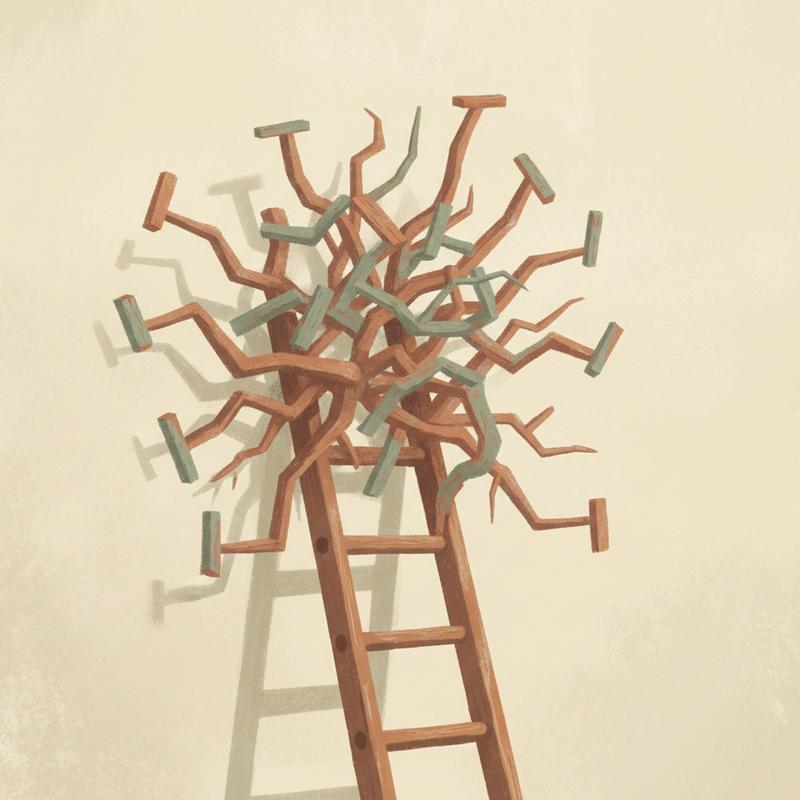
The thing nobody tells you when you accept the title is the job changed. Not expanded. Not added to. Changed.
You used to be paid for output. Code shipped. Deals closed. Articles filed. Patients seen. Whatever your trade, you were paid for the doing.
The day you take a leadership role, the doing stops being your job. The doing becomes their job. Your job is to make their doing better, faster, smarter, more sustainable.
There's the gig, in one sentence.
If your team ships great work, you did your job. If your team is on fire and you're heroically writing the production hotfix at 11pm, you missed your job. You went back to the old one because it felt safer.
I've done this. Every leader I respect has done this. The pull is real... the old job is the one you know how to be brilliant at. The new job is the one where you don't know what good looks like for at least a year, sometimes three.
The 99.5% receipt
Years ago I ran a piece of research where I asked people whether they'd had a bad boss. Not in their entire career... in their working life so far.
99.5% said yes. One or more. Often several.
Half a percent of working adults made it to the survey without a bad-boss story. The other 99.5% had collected at least one... and most had collected a portfolio of them.
The number is not a "people problem." A people problem would scatter randomly across teams, industries and decades. 99.5% is a system problem. It's what happens when you spend 65% of your promotion energy choosing for the wrong skill, then give the new boss no training, no peer group, and no honest feedback for the first 18 months.
If you're reading this thinking "well, I'm definitely the 0.5%"... mate, you're 200 times more likely to be in the 99.5%. The maths doesn't care about your self-assessment.
What the actual job looks like, in five jobs
When I sit a new manager down, I tell them the role splits into about five jobs. None of them involve being the smartest person in the room.
One: hire and fire well. Most people wildly underestimate the importance of this one. The team you build is the team you lead. If you keep tolerating one underperformer, you teach the rest of the team the bar sits wherever the worst person sits. Hiring is your highest leverage activity. Firing kindly and fairly is your most important act of respect to the people who stayed.
Two: set direction so clear it survives you. Your team should know what to do when you go on holiday for two weeks. If they need you to make every decision, you're not a leader, you're a single point of failure with a fancy title. Clarity is your real product.
Three: remove obstacles. Your team will tell you what's broken if you let them. Their list is almost never the list you'd write yourself. The job is to fix the things on their list, not yours. Most managers I see are buried in their own list... and ignoring the one which would unblock five people on Monday.
Four: develop the people. This is the bit nobody trained you for. It's also the bit where your real legacy lives. Your direct reports five years from now will remember whether you grew them or used them. Nothing else.
Five: tell the truth, kindly. Dan Greene calls this "feedback as a daily habit, not an annual event." If feedback feels awkward, you waited too long. If silence feels safer than honesty, you're not protecting anyone... you're protecting yourself.
Notice what's not on the list. Being the best technically. Having the most output. Being the smartest. Knowing every answer. Charisma. Confidence. The whole bag of "leader vibes" Tomas Chamorro-Premuzic spends a whole book dismantling.
The McKinsey podcast where he discussed the research has a line I wrote on a sticky note above my desk: most leaders are promoted for style, not substance. We pick the bombastic, confident person... and then we're surprised when their team is scared and their numbers slowly tank.

What you do about it
If you're a leader reading this, three things worth trying tomorrow.
Ask the question. Pick one direct report. Ask them: "What's the most useful thing I do for you, and what's the most useless?" Then shut up. Don't defend. Write it down. Do something with it inside two weeks. If you've never done this, the first answer will be polite. The second will be honest. The third is where the gold is.
Audit your calendar. Open last week. How many hours did you spend on the old job (the doing) versus the new job (the people, the direction, the obstacles)? If the ratio is more than 30/70 in favour of doing, you have a job-confusion problem. The calendar is the only honest record of what you believe your job is.
Pick your training. Not the corporate-mandated stuff. Pick one book, one peer group, one coach. The Gallup data was clear: supervisors trained in the past year were 79% more likely to be engaged and 19% less likely to be burned out. (Gallup) Training works. The problem is 23% of supervisors have never had any.
If you're an organisation reading this, one thing only.
Stop promoting purely on output. Build a separate technical track for your best individual contributors so they don't have to take a management role to get paid more. Promote into management based on whether the person has shown they make others around them better. Without those data, start collecting it... ask the team, not the boss.
The job nobody warned you about
I noticed quiet-quitting culture trending again on Reddit this week, in the AskReddit work-life threads. The pattern keeps repeating: people aren't leaving jobs, they're leaving managers. The same finding shows up in every workplace study I've read for 20 years.
The hard part is the 99.5% number isn't going anywhere until we change how we pick the 65%. And we won't change how we pick them until enough of us... bosses, ex-bosses, future bosses... admit out loud the day you took the title was the day the job changed.
So here's the question I'd leave you with. Forget what's on your business card. Forget what your boss thinks your job is.
If you asked the five people who report to you what your job is... not the title, the job... what would they say? And does it look anything like what you've been spending your week on?
If those two answers don't match, you already know what to do.
I'd love to hear what you find. The honest version, not the polished one.