I almost quit a job over an email.
It was a Tuesday afternoon. The email was three lines long. A senior manager had taken credit for something my team had spent six months building. My pulse went up. My jaw locked. I opened a new message and started typing my resignation.
I didn't send it. I shut the laptop. I went for a walk. By the time I came back, I had a different plan, and the plan turned into a much better outcome than burning the bridge would have done.
Roland Butcher said something on a recent podcast with my wife Debra: don't make big decisions when you're emotional. Wait. Roland played international cricket in the 1980s, then spent decades coaching. He knows what high-pressure decisions look like. He also knows what bad ones cost.
Most of the worst calls I've ever made in my career came in the heat of the moment. Most of the best ones came after a night of sleep, a long walk, or a hard conversation with someone who wasn't in the fight with me.

Your brain is wired against you
Here is what science says about your brain in a hot moment.
When you feel threatened, your amygdala fires before your thinking brain catches up. Healthline explains it bluntly: the amygdala disables the frontal lobes, activates fight-or-flight, and shuts down reasoned response. You go from a person who weighs options to a person who reacts. Cortisol and adrenaline flood in. Your body gets ready to run, fight, or freeze. None of those states are good for choosing whether to send the resignation email, fire the employee, or sign the contract.
This isn't weakness. This is biology. You were not built to make calm strategic decisions while your heart is pounding. Our ancestors needed to react fast to lions and rivals. You're using the same hardware to decide whether to reply-all.
Knowing this doesn't make the feeling go away. What it does do is give you permission to delay. The strong move is not to push through. The strong move is to step out of the loop.
The hot-cold empathy gap
There is a concept from behavioural economist George Loewenstein called the hot-cold empathy gap. The Decision Lab describes it well: when you're in a "hot" state (anger, fear, hunger, exhaustion), you cannot accurately predict what a calm version of you will want. And when you're in a "cold" state, you cannot understand why the heated version of you was so worked up.
This is why post-argument you looks at this morning's text thread and winces. This is why the version of you at 2am writes a furious LinkedIn post the version of you at 8am wishes it had deleted before sending. The two versions of you are not the same person. They don't have the same priorities. They don't even have the same memory.
If a decision matters, you owe it to your future self to let the cold version weigh in.
Speed isn't strength
Leaders get this wrong all the time. We celebrate decisiveness. We say things like "she's a doer" and "he doesn't sit on things." We treat the gap between problem and action as a measure of competence.
It isn't.
A good decision holds up six months later. A bad decision is one you would not have made if you had slept on it. Speed only matters if the outcome is right. If the outcome is wrong, the speed is the problem, not the solution.
I have hired the wrong person in a hot rush to fill a seat. I have fired someone in anger and spent weeks unpicking the legal mess. I have shipped product on a Friday because I was tired of waiting and watched it break production by Monday. Each of those was a hot-state decision. Each of those was reactive dressed up as decisive.
The leaders I respect most aren't the fastest. They are the ones who say "let me come back to you on this" and mean it.
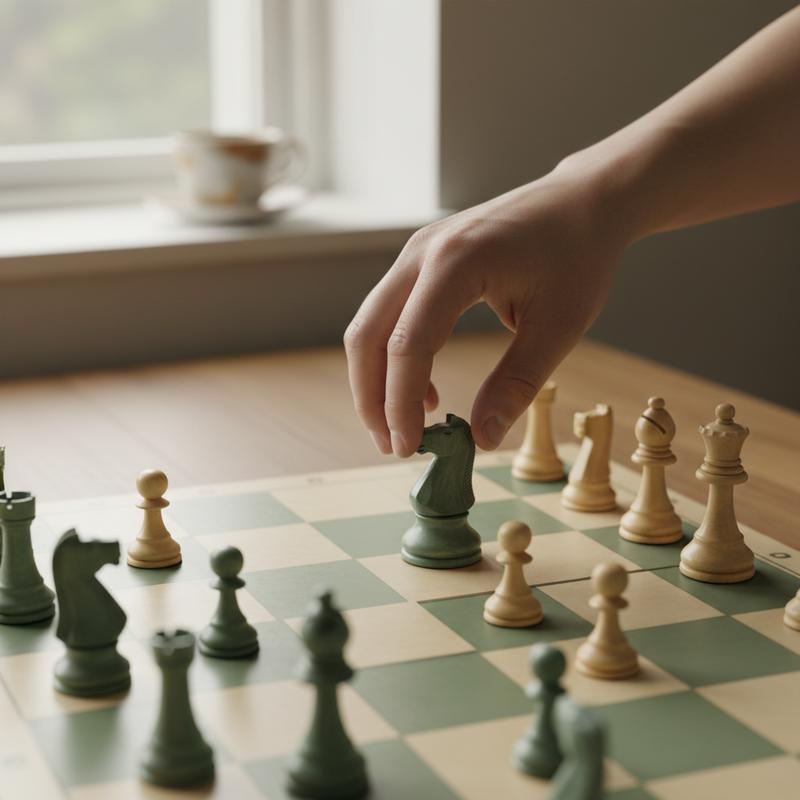
What waiting looks like
Waiting is a practice, not a vibe. Here is how it works for me.
Write the email. Don't send it. Get the words out. Read them back tomorrow. If you still think they're right after a night of sleep, send them. Most of the time you won't.
Move your body. Walk. Run. Do the dishes. Mow the lawn. Your nervous system needs to come down off the spike before your brain comes back online. The University of Ottawa found even 24 hours of sleep deprivation dampens the neural signals tied to good decision-making. If exhaustion alone wrecks your judgement, picture what anger plus exhaustion does.
I'm not sure about this part: the Ottawa study quantified an effect on risky decisions specifically, but I haven't pinned down the exact percentage. Direction is clear, magnitude I haven't verified from the public summary.
Talk to someone who isn't in the fight. Not your spouse if it's a work issue. Not your colleague if it's a marriage issue. You want a witness, not an accomplice. Someone who will ask you "is this the decision you'd make if you weren't furious?"
Name the emotion. Out loud or on paper. "I am furious. I feel humiliated. I feel scared." Labelling the feeling moves it from the limbic system into the cortex. The hijack starts to lose grip the moment you describe it.
Set a delay rule. Twenty-four hours for medium things. A week for big things. A month for anything affecting relationships, careers, or money in serious amounts. The bigger the decision, the longer the runway.
None of these are magic. All of them are boring. Boring is the point. Boring is what gets you out of the hot state and into the cold one.
The exception nobody mentions
Now, the honest counter.
Sometimes waiting is the wrong move. Sometimes "let me sleep on it" is what cowards say to avoid having a hard conversation. Sometimes you already know the answer and the delay is theatre.
If your boss has been bullying you for two years and you keep "sleeping on it" before saying anything, you're not deliberating. You're avoiding. If someone you love is in crisis right now, you don't get to wait twenty-four hours to act. If the building is on fire, sleep on it later.
The discipline is this: wait when waiting changes the answer. Don't wait when the only thing waiting does is delay a truth you already know.
You will get this wrong sometimes. So will I. The point is the question. "Am I waiting because I need to be cold, or am I waiting because I don't want to do the hard thing?" Ask it honestly. Then act.

The morning after
The Tuesday-afternoon resignation email I almost sent? I rewrote it on a Friday morning. By then it wasn't a resignation. It was a meeting request with the senior manager's boss. We had a hard, calm conversation. He didn't take credit for anyone else's work again on my watch. I kept my job. I kept the relationships I would have torched. I kept the team I had built.
I was not wise. I gave the wiser version of me a chance to show up.
You will have your own version of this Tuesday. Perhaps a contract you're about to sign. A person you're about to fire. A relationship you're about to end. A boundary you're about to set in fury.
Before you do it, put the laptop down.
Go for a walk.
Sleep on it.
What does the morning version of you want? Ask her. Ask him. Then go.