The Monday Morning Test
Here's something I noticed early in my career, working with teams across tech companies and the US Army. Monday mornings told you everything.
Some people walked in with energy. They were picking up where they left off. They had something to work toward.
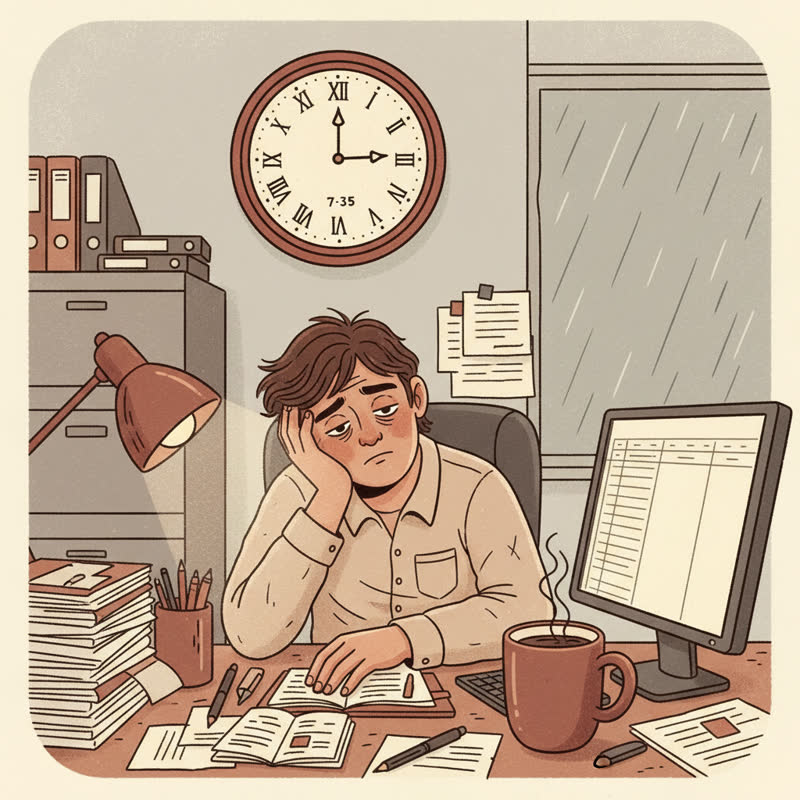
Most people looked like they were serving a sentence.
The conversations in those first hours of the week were about the weekend gone, or the one coming up. The work in between was the gap to endure.
I started calling it the two-sevenths problem. If you're only alive on Saturday and Sunday... if those are the only days you feel like yourself... you're running at two-sevenths capacity. Five days a week, you're getting through it.
A terrible way to live. And if you lead a team doing this, it's at least partly on you.
The Numbers Are Brutal
Gallup's 2024 workplace report found only 31% of US employees engaged at work. A 10-year low. We've spent decades and billions on engagement programs, perks, ping-pong tables, and mental health days. We're going backwards.
Think about what 31% means in practice. In a ten-person team, three people care about the work. The other seven are managing their time until they get somewhere they care about.
We keep treating this as an employee problem. A motivation problem. A generational problem. It's not. It's a leadership problem. And the data has been saying so for years.
In the Army, mission clarity was everything. You knew exactly why the work mattered. You traced your role directly to a larger outcome. Nobody talked about living for the weekend, because the work felt like it was for something real.
I don't expect every company to replicate the stakes of military service. But the underlying mechanism is the same. When people understand why their work matters, and when the person leading them reinforces it regularly, the relationship to Monday morning changes.
The Weekend Isn't the Problem
I want to be clear: weekends are great. I love them. Time with family, time to breathe, time to pursue the things I enjoy. I'm not arguing anyone should sacrifice weekends on the altar of hustle culture.
But when weekends are the only thing your people look forward to, the problem isn't work-life balance. It's a meaning gap.
Researcher Zach Mercurio has spent years studying what he calls "mattering": the experience of feeling seen, valued, and needed at work. His conclusion is uncomfortable for most organizations. The engagement crisis isn't about pay, benefits, or remote work policies. People don't feel they matter to the people around them.
Think about the teams you've led. When did someone last come to you excited about their work? When did you last ask what they needed, not to hit a deadline, but to grow?
If you're struggling to answer those questions, your people are likely living for the weekend.

What "Living for the Weekend" Looks Like
It doesn't always show up as misery. This is what makes it easy to miss.
A person who answers emails on time but never volunteers an opinion. A developer who ships clean code and never suggests a better approach. A team hitting targets and feeling no particular satisfaction when they do.
Not burnout. Something quieter. People who've figured out exactly how much to give to get through the week without being fired, and nothing more.
When I was leading engineering teams, I had periods where this was happening right in front of me and I missed it. I was focused on delivery. The team was delivering. Seemed fine.
What I wasn't tracking was the quality of the conversations. Were people bringing problems early, or sitting on them? Were they excited about anything? Did they see this job as part of a bigger story for them, or were they renting out their skills until something better came along?
The answers weren't always what I wanted.
I've written about these patterns on Step It Up HR... the signals leaders miss when they're focused purely on metrics. The signals are there if you know what to look for.
The Dinner Table Test
Here's the most honest leadership feedback mechanism I know. Every person you lead goes home tonight and talks... with a partner, a parent, a friend. At some point, work comes up.
What do they say about you?
Not about the company. About you. Do they say "my manager listened to me today"? Or "my boss doesn't know I exist"? Or nothing at all, because work is the thing they're trying to forget?
Your real performance review isn't the one HR runs once a year. It's those dinner table conversations, repeated every weeknight, for as long as you're their manager.
If your people are living for the weekend, they're going home and counting down. You're the backdrop to five days of counting down.
Let it bother you.

Small Shifts With Real Consequences
I'm not selling a framework here. There are some concrete things to shift the pattern.
Ask about more than the work. Once a week, in a one-on-one, ask someone about their career. Not the project. What do they want to get better at? What's frustrating them? What's working well and they want more of?
Most managers skip this because they're busy. Then they wonder why people leave for a 5% pay bump somewhere else.
Notice something specific. Don't say "good job this week." Say "the solution you came up with for the retry logic in the payment service was clever, and it saved us from a nasty production problem." Specific recognition tells someone you're paying attention. Generic praise tells them you're not.
Stop cancelling one-on-ones. Every time you cancel without rescheduling, you send a message: the task I'm running to is more important than you. People remember this. They adjust their expectations accordingly.
Ask the question directly. "What would make your work more meaningful?" Most managers never ask it. Most people have never been asked it. The answer tells you more than any survey.
The Business Case
Alex Edmans at the London Business School analysed 28 years of stock market data and found companies with genuinely high employee satisfaction outperformed peers by 89% to 184% cumulatively over the period.
Not marginally. By up to 184%.
If you want a number to put in a business case for treating people like people, there it is.
If you need a business case to care whether your people feel like they matter, you've got a bigger problem than engagement scores.
The Real Question
If most of your team is living for the weekend, what are you building?
Not what product. What kind of environment. What kind of culture. What kind of reputation as a leader.
The two-sevenths problem isn't unsolvable. Most people start their jobs wanting meaning in the work. Something happens... a series of small signals from the people above them... and they pull back. The message lands: your work doesn't matter, you're a resource not a person.
You don't need a transformation program. You need to start paying attention.
What would your team say at the dinner table tonight?