The Check Needed Three Signatures
On February 27, 2026, OpenAI announced a $110 billion funding round. Amazon put in $50 billion. Nvidia put in $30 billion. SoftBank put in $30 billion. The deal pushed OpenAI's valuation to $730 billion pre-money, more than double the size of its previous record round from a year earlier (TechCrunch).
Read past the headline number and the real story shows up. The most advanced AI company on the planet, the one every founder wants to be, did not raise this money alone. It needed a retail-and-cloud giant, a chip maker, and a Japanese conglomerate to co-sign. Three separate companies, three separate boards, three separate risk committees, all agreeing to write a check at the same time. On top of the raise, OpenAI expanded its existing Amazon Web Services agreement by another $100 billion over the next eight years.
If OpenAI needs a coalition to build the next stage of its business, what does it say about the rest of us who still think we should be doing this solo?
The Solo Genius Was Always a Marketing Story
I spent years believing the founder myth. One person, one vision, one relentless will, dragging a company into existence through sheer force. It's a great story. Steve Jobs in a garage. A hoodie and a dorm room. It also isn't how anything real gets built.
Apple didn't ship the iPhone alone. It needed Corning to reinvent glass. It needed a chip supply chain years in the making. It needed carriers willing to break their own business model. The garage story is real, the solo part is not.
OpenAI's $110 billion round is the same pattern at a scale nobody ignores. Sam Altman isn't short on confidence, and he still needed Amazon's balance sheet, Nvidia's chips, and SoftBank's willingness to bet on infrastructure. No individual, no matter how brilliant, writes their own $110 billion check.
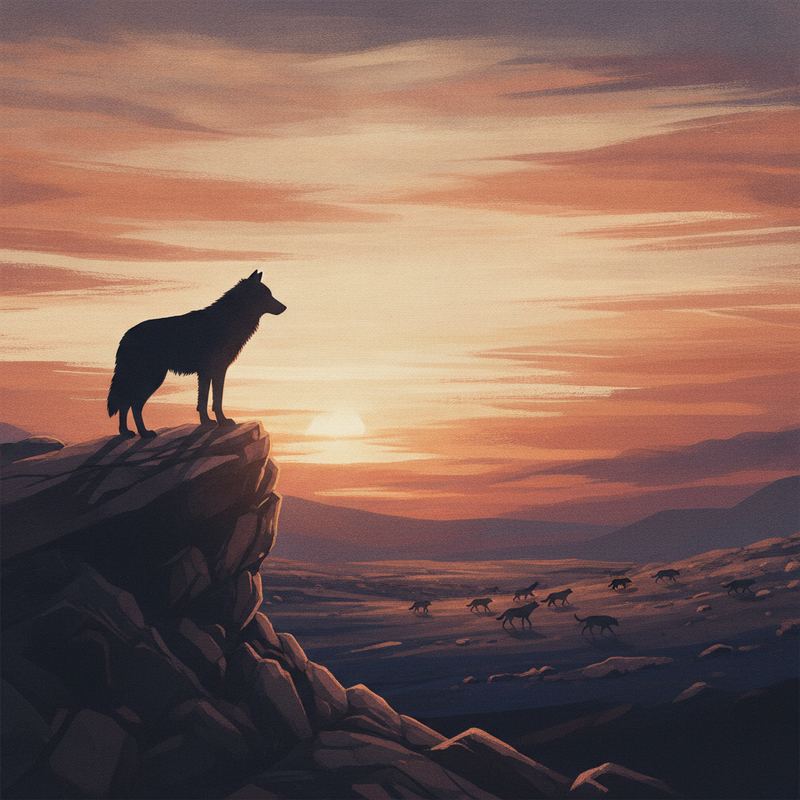
The lone wolf was never surviving out there. He was starving, and we told the story as if he was thriving because it made a better poster.
Not Big Tech Alone
Here's where leaders get this wrong. They read a headline like OpenAI's raise and think: this is a Silicon Valley problem, not mine. My team is five people. My budget doesn't have a comma in it.
Wrong lesson. The size of the number isn't the point. The structure is.
Every team I've worked with hoarding decisions in one person's head is running the lone wolf model at a smaller scale, and it fails for the same reason. One person becomes the bottleneck. One person becomes the single point of failure. One person's blind spots become the whole team's blind spots, because nobody else is in the room to catch them.
I've watched engineering leads insist on reviewing every pull request themselves because they didn't trust anyone else's judgment. I've watched managers refuse to document decisions because holding the information was how they stayed relevant. Both are lone wolf behavior. Both look like control. Both are fragility wearing a confident face.
My research on workplace culture found 99.5% of people have worked for a boss who showed at least one toxic behavior. Hoarding decisions and information is one of the quiet ones. It doesn't look like yelling. It looks like "I'll handle it myself," repeated for five years straight, until the team forgets how to function without the one person in the room.

The Coalition Model Beats the Hero Model
The teams moving fastest are not the ones with a single hero absorbing every decision. They're the ones where feedback flows in every direction, where a junior engineer flags a senior engineer's mistake without it becoming a career risk, and where the person with the best answer gets heard regardless of title.
This is psychological safety, and it isn't a soft perk you add once the real work is done. It's the operational infrastructure letting a coalition function instead of collapsing into three companies pointing fingers at each other when the deal goes wrong.
OpenAI's deal with Amazon, Nvidia, and SoftBank works because each party brings something the others need and trusts the arrangement enough to commit real capital to it. Trust is the mechanism. Without it, you don't get a coalition. You get three companies suing each other in eighteen months.
Your team runs on the identical mechanism, only with smaller numbers. Someone flags a risky architecture decision before it ships. Someone else says the roadmap is wrong before three sprints get burned building the wrong thing. None of this happens if one person is the only voice in the room.
I wrote about building this kind of feedback culture in detail on Step It Up HR, because the pattern shows up everywhere I look: teams letting one person carry everything are optimizing for a single point of failure and calling it leadership.

How to Build the Pack Instead of the Wolf
Coalitions don't form by accident. OpenAI's investors didn't wire $110 billion on a handshake. They did diligence, they negotiated terms, and they built structures letting three companies trust each other with real money. Your team needs the same deliberate work, at a smaller scale.
Write it down. Every decision living only in one person's head is a decision your team won't survive losing. Decision logs aren't bureaucracy. They're the difference between a team and a hostage situation.
Rotate the gate. If one person reviews every pull request, approves every hire, or signs off on every architecture choice, you haven't built a team. You've built a bottleneck with a job title. Spread the authority, even when it's slower at first.
Reward the correction, not only the answer. When a junior person catches a senior person's mistake, the moment either builds trust or destroys it, depending on how the senior person reacts. Praise the catch publicly. Punish it once, quietly, and you've taught the whole team to stay silent from now on.
Make silence expensive. Lone wolf cultures survive because staying quiet feels safer than speaking up. Flip it. Ask directly in meetings: who disagrees with this plan? Wait through the uncomfortable pause. Someone will answer.
None of this requires $110 billion or three co-signing conglomerates. It requires admitting the lone wolf was never the strongest animal in the story. The pack was.
Three Questions to Ask This Week
Stop asking whether your company is "AI-ready." Ask whether it's built like a pack or a lone wolf.
Who is the single point of failure on your team right now? Name the person. If the honest answer is you, sit with it.
When was the last time someone junior changed a senior person's mind in a meeting? If you're struggling to remember, your team isn't giving feedback. It's giving deference.
What decision gets made only because one person is in the room? Write it down. Then figure out how to make the same decision without them.
What's the one decision at your company still standing only because a single person hasn't left yet?