Picture the best hire you ever made. Sharp. Fast. Reads everything you hand them. Writes cleaner code than half your team.
Now picture them walking in every morning with no idea who you are.
No memory of yesterday's design review. No memory of the bug they fixed on Tuesday or why you rejected the first approach. You spend the first twenty minutes of every day explaining your product, your stack, your customers, and the three things you tried last quarter which blew up in production.
You would fire this person inside a month. Or you'd start leaving sticky notes on every surface of their desk.
This is how most of us work with AI right now. And most of us blame the model.
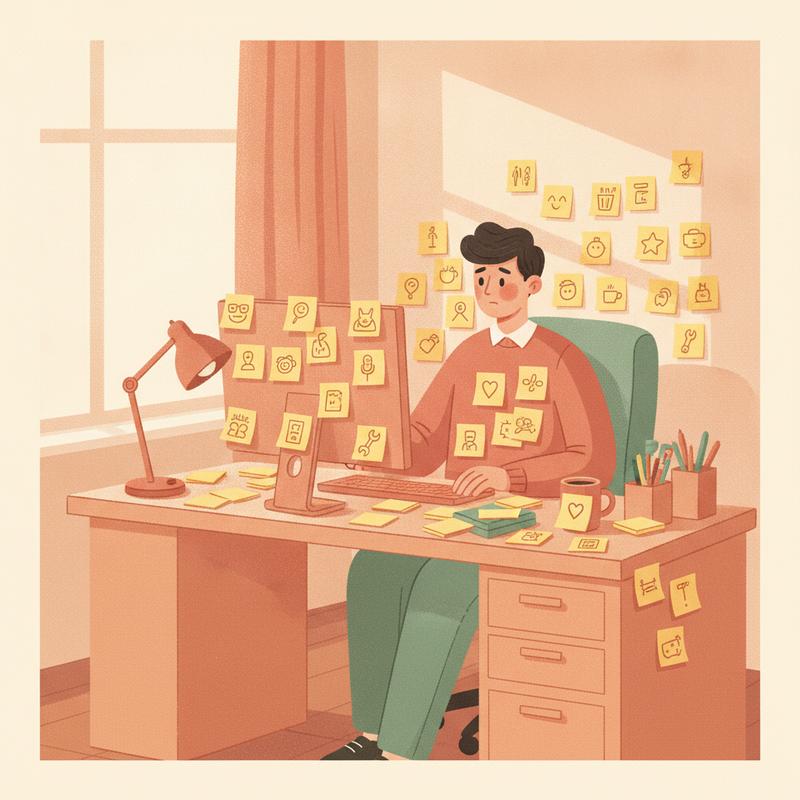
The Model Isn't the Problem. The Morning Is.
Large language models are stateless by design. Each conversation starts from zero. Whatever the model "knows" about you and your work lives in one place... the context window you hand it for this session. Close the tab and it's gone.
The vendors know this hurts. OpenAI shipped an update in April 2025 letting ChatGPT reference your past conversations, so users "won't need to repeat information they've previously shared." Every serious AI tool now has some version of memory on its roadmap, because users keep hitting the same wall.
Here's where I part ways with the usual take. The common answer is "wait for better memory features." I think it's the wrong answer. Memory is not a feature you buy. Memory is a practice you build. And the teams getting real value from AI today are the ones who figured this out for their humans first.
Bigger Context Windows Won't Save You
The lazy fix for a forgetful assistant is to dump everything on it. Paste the whole wiki. Attach every spec. Feed it the full Slack export.
It doesn't work, and the research says why.
In 2023, a Stanford-led team published Lost in the Middle, a study of how language models use long inputs. Their finding: "Performance is often highest when relevant information occurs at the beginning or end of the input context, and significantly degrades when models must access relevant information in the middle of long contexts, even for explicitly long-context models."
Read the last part again. Even the models built for long context lose the plot in the middle.
Anthropic's engineering team says the same thing in its guide to context engineering for AI agents. They describe "context rot"... performance drops as the token count climbs. Their conclusion: "Context, therefore, must be treated as a finite resource with diminishing marginal returns." The goal is "the smallest possible set of high-signal tokens" for the job in front of you.
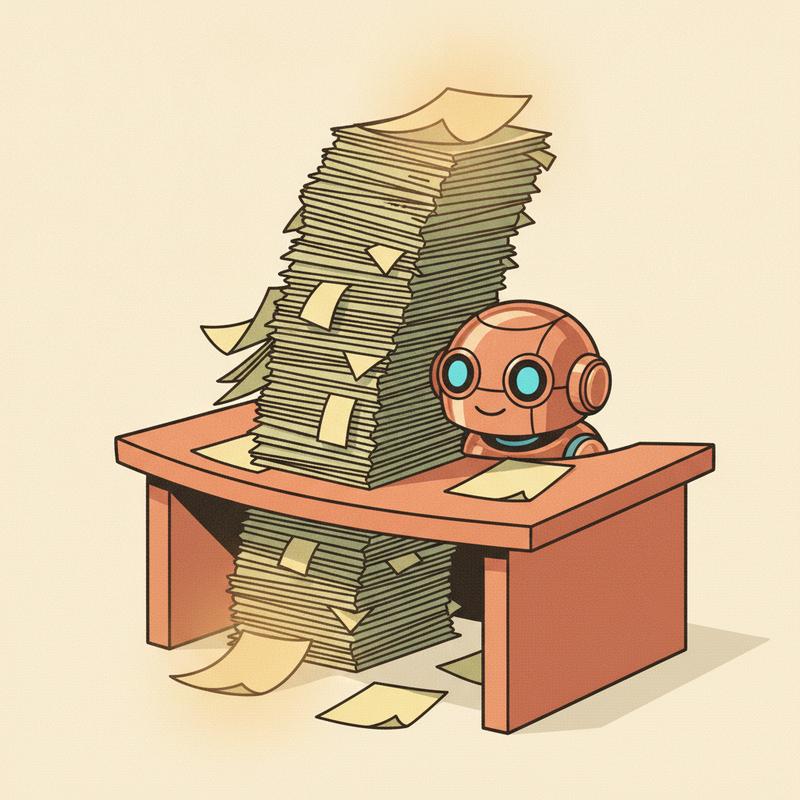
So a bigger pile of paper on the new hire's desk won't help them. A good briefing will.
Memory Is Structure, Not Storage
The research on AI memory keeps landing in the same spot. A July 2026 paper, From Passive Retrieval to Active Memory Navigation, organizes a user's history into a "multi-granularity memory pyramid"... raw conversations at the bottom, then typed records, then topic tracks, then a profile at the top. The model learns to move between levels depending on the question. The authors conclude long-term memory "benefits from coupling structured storage with a learned policy for using memory at the appropriate granularity."
Strip away the jargon and you get something every good engineering manager already knows.
- Keep the raw record. Meeting notes, tickets, commit history.
- Summarize it into decisions. What we chose and why.
- Roll the decisions into themes. What we're working toward this quarter.
- Keep a short profile on top. Who we are, how we work, what we care about.
Then teach people to reach for the right level. The new hire doesn't need the raw Slack thread. They need the decision and the reason behind it. They go to the thread only when the decision stops making sense.
Anthropic's guide describes the agent version of this habit: the agent "regularly writes notes persisted to memory outside of the context window." Your best engineers have done this for years. They call it a decision log.
Your Company Is Stateless Too
This is the part which should make leaders uncomfortable.
We complain about AI forgetting everything between sessions. Meanwhile our own organizations forget everything between people.
Panopto and YouGov surveyed 1,001 US workers in 2018 and found the average employee spends 5.3 hours a week waiting for help or insight from coworkers. The same report found 42 percent of institutional knowledge is unique to the individual. When the person leaves, their knowledge walks out the door with them.
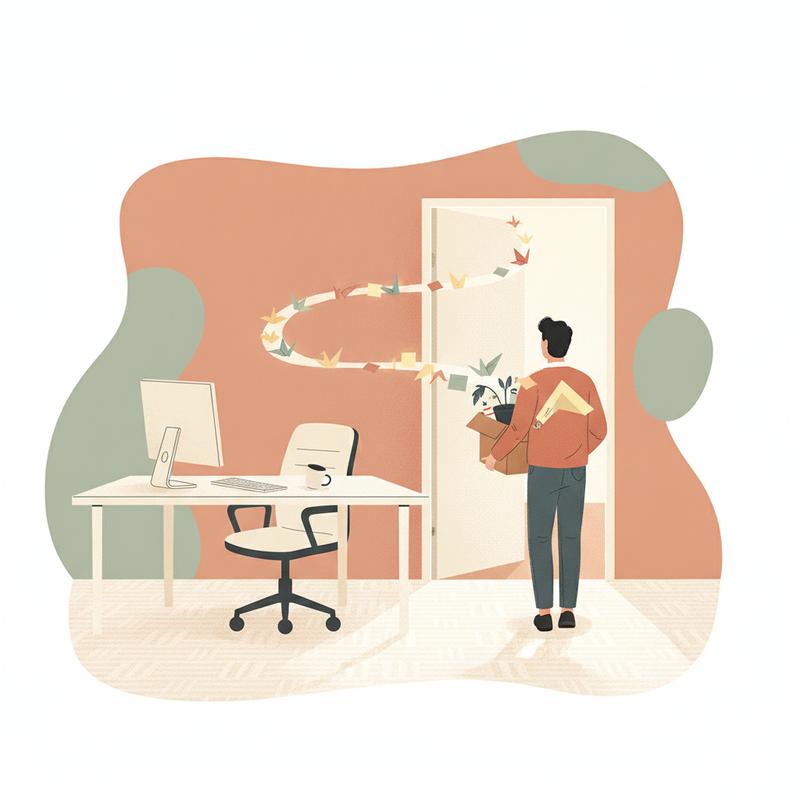
And the people coming in the other door? Gallup finds only 12% of employees strongly agree their organization does a great job onboarding new employees.
Twelve percent. We hand new humans the same experience we hand a fresh AI session. Here's a laptop, here's a login, good luck, ask around.
I don't find this surprising. Across my career the teams with the worst onboarding also had the worst documentation, the most repeated arguments, and the most "why did we build it this way?" conversations nobody answered. They had no memory. Every quarter started from zero.
The Same Fix Works for Both
Here's the good news. Whatever you build to give your AI tools a memory also gives your team one. You don't need two projects.
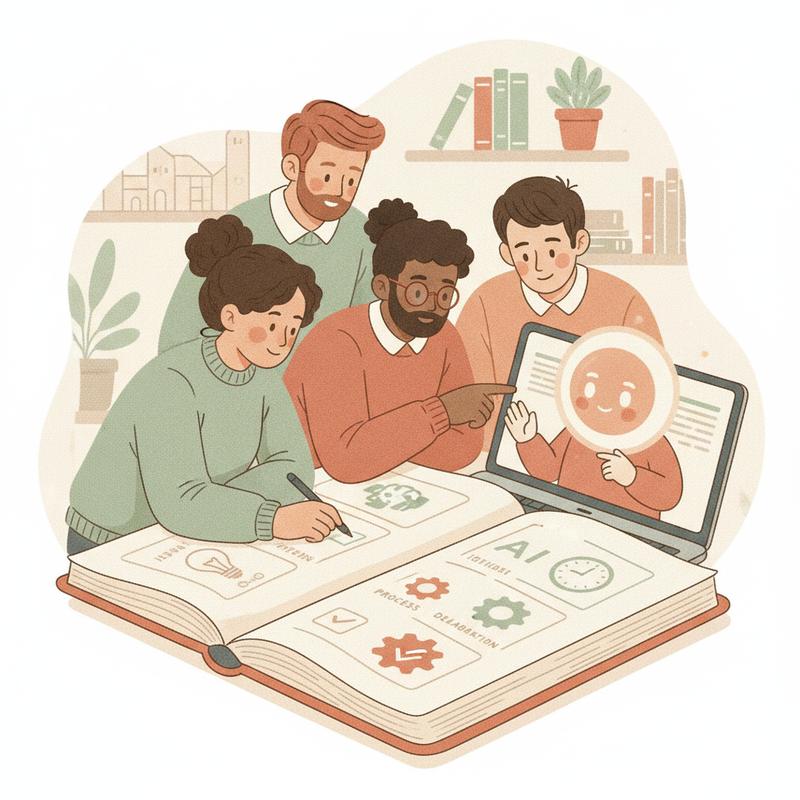
1. Write a one-page team profile
Who you serve. What you build. Your stack. Your non-negotiables. The words you use and what they mean. Keep it to a page. Paste it at the top of every AI session. Hand it to every new hire on day one. If it takes more than five minutes to read, it's too long.
2. Keep a decision log
One entry per real decision. Date, the choice, the options you rejected, and the reason. Three to five sentences each. This is the layer both humans and models need most, and the one almost nobody keeps.
3. Summarize before you close
At the end of a long AI session, ask the tool to summarize what you decided and what's still open. Save it. At the end of a long meeting, do the same with your team. Anthropic calls the AI version "compaction." Your grandmother called it writing things down.
4. Curate, don't hoard
Delete stale docs. Archive dead projects. Every outdated page is noise in somebody's context window, whether the reader is a person or a model. More is not better. Relevant is better.
5. Give people control over what gets remembered
AI memory raises a fair question: who decides what the system keeps? OpenAI's controls let users turn memory off, manage saved memories, or use a Temporary Chat which won't get stored. The launch also skipped the UK and EU at first, citing extra regulatory review. Your team memory deserves the same care. Decisions and reasons belong in the log. Private conversations and performance issues do not.
I'm not sure about this part: whether OpenAI's memory features have since reached every European market. The April 2025 coverage said the rollout excluded the UK, EU, and several other countries, and I haven't confirmed the current status.
Trust Comes From Being Remembered
Think about the colleagues you trust most. I'd bet they share one trait. They remember. They remember what you said last month, what you're worried about, what you tried and why it failed. You don't have to re-explain yourself to them.
Continuity turns a tool into a teammate. Not raw intelligence.
Your AI tools will get better at memory. The vendors are pouring money into it. But the model only remembers what somebody took the time to record, structure, and keep clean. If your team never wrote it down, no memory feature on earth will find it.
So here's my challenge for this week. Open a blank document. Write your team's one-page profile and your last five real decisions with the reasons. Give it to your AI tool tomorrow morning. Give it to your next new hire on their first day.
Then ask yourself the uncomfortable question. Is your AI forgetful... or is your company?