Nine percent
Gallup asked workers where their most memorable recognition came from. Managers took 28 percent. A senior leader or CEO took 24 percent. The manager's manager, 12 percent. Customers, 10 percent.
Peers came in at nine percent, according to Gallup's research on employee recognition.
Read the number again. Nine.
Your engineers sit beside each other all week. They review each other's pull requests. They pair on the horrible bug at 4pm on a Friday. They know who carried the release and who went quiet. They have better information about each other's work than you will ever have.
And almost none of the recognition people remember comes from them.
This is no accident. You built it.

The approval queue nobody questions
Trace how praise moves through your organisation.
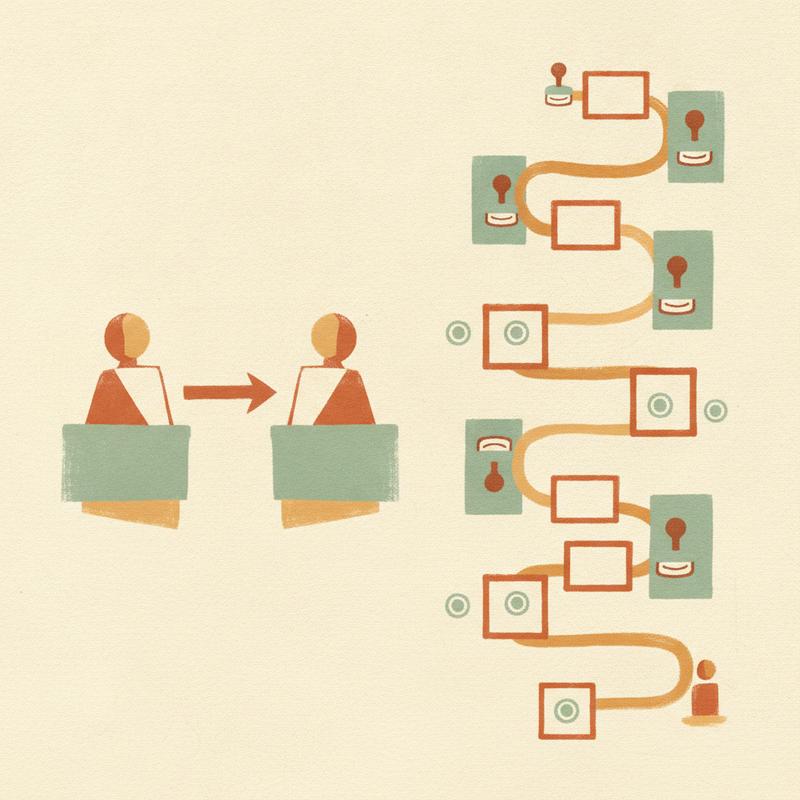
Someone does good work. A colleague notices. To turn noticing into recognition, the colleague has to find the nomination form, write a justification, send it to a manager, wait for the manager to endorse it, wait for HR or a committee to review the batch, wait for the quarterly awards meeting, and hope the budget survived the last round of cuts.
Six steps. Three approvers. One quarter of latency.
Now trace how criticism moves. Someone spots a problem in a pull request. They leave a comment. Done. No form, no approver, no committee, no quarter.
You have built an organisation where negative feedback ships continuously and positive feedback goes through change control.
Nobody designed this on purpose. It accreted. Somebody wanted an audit trail. Somebody else wanted fairness. Finance wanted a cap on spend. Legal wanted consistency. Each guardrail made sense on its own, and the sum of them turned a thank-you into a ticket.
You already trust peers with bigger decisions
Here is the part I find hard to defend.
You let a mid-level engineer block a principal engineer's merge. No manager sign-off required. You trust peer judgement with production code, with security review, with architecture calls worth real money. A twenty-four-year-old three months into the job holds a veto over what ships to your customers.
Then you decide the same people lack the judgement to say "Priya untangled the caching bug nobody else would touch, and she deserves credit for it."
Explain the gap to me. I have asked a lot of leaders and I have never got a straight answer.
The honest answer is not about judgement. It is about control. Recognition is one of the few levers a manager still holds outright. Budget is set elsewhere. Headcount is set elsewhere. Promotion goes through a committee. Praise is the last thing on the desk with your name on it. Handing it over feels like shrinking.
The tax you pay for holding on
The cost of keeping the gate shows up in the numbers.
Gallup found only one in three US workers strongly agree they got recognition or praise for good work in the past seven days. Workers without adequate recognition are twice as likely to say they will quit within the year.
Quantum Workplace found only 5% of employees receive recognition weekly or more often. Of employees recognised monthly or more, 80% are highly engaged. Organisations with a formal recognition programme see 31% less voluntary turnover than organisations with no programme at all.
The Gallup and Workhuman research puts it plainly: well-recognised employees are 45% less likely to have turned over two years later.
Now multiply. Replacing a senior engineer costs you months of salary in recruitment fees, interview loops, ramp time, and the productivity dip across the team while they backfill. Your recognition bottleneck is a retention line item. It sits in your budget under a different name.
What giving up control looks like in practice
I am not asking you to buy a platform. Most of the expensive ones rebuild the approval queue in a nicer font.
Delete the approval step. Anyone recognises anyone, publicly, with no sign-off. If a peer wants to thank a peer, no manager needs to bless it first.
Put it where the work happens. A Slack channel. A bot. A standing two-minute slot at the top of your team sync. Not a portal behind SSO with a 400-character justification field.
Kill the scarcity. Employee of the Month manufactures one winner and everybody else. Recognition is not a zero-sum resource. There is no shortage of gratitude to ration.
Demand specificity, not volume. "Great job team" is noise. "You spotted the race condition in the payment retry before it hit production, and you wrote the test so it stays caught" is signal. Name the behaviour and name the effect.
Let it run upward. Engineers recognising their manager. Teams recognising the platform group nobody thanks. Anyone recognising the CEO. Recognition flowing in one direction is a status ritual wearing a friendly hat.
Measure participation, not spend. How many distinct people gave recognition last month? How many distinct people received it? Those two numbers tell you more about your culture than any engagement survey question.
The objections, and why they are thin
"People will game it." Reciprocity rings show up in the data within weeks. Two people trading thanks back and forth is trivially visible. And compare the risk against your current baseline of near silence.
"It becomes meaningless if everyone does it." Specificity is the guard against meaninglessness, not scarcity. A vague award handed out once a quarter is more hollow than a precise thank-you handed out on a Tuesday.
"It is unfair. Loud people get more." Already true. Under manager-only recognition, one person with limited visibility decides for everyone. Widening the pool of recognisers increases the odds someone notices the quiet contributor working two time zones away.
"HR needs governance." Governance of a thank-you. Read the sentence out loud and hear how it lands with your engineers.
The ego is the only real cost
Zero budget. No procurement cycle. No vendor demo. The whole change is you deciding your approval adds nothing to a colleague's gratitude.
My own research into bad bosses found 99.5% of survey respondents had experienced one or more types of bad boss. The headline cases are the shouters and the credit thieves. The quieter version is the manager who sits between good work and the people who saw it, adding delay and taking a cut of the attention. I wrote more about the patterns over at Step It Up HR.
Rebellion in leadership is rarely loud. Most often it looks like handing away something you were told to protect.
Try this on Monday
Count the approvals between "I noticed something good" and "they heard about it." If the number is greater than zero, you are the bottleneck.
Remove yourself for one month. Tell your team recognition needs no permission. Then watch who gets thanked, and by whom, and for what.
I suspect you will learn things about your team no performance review ever told you.