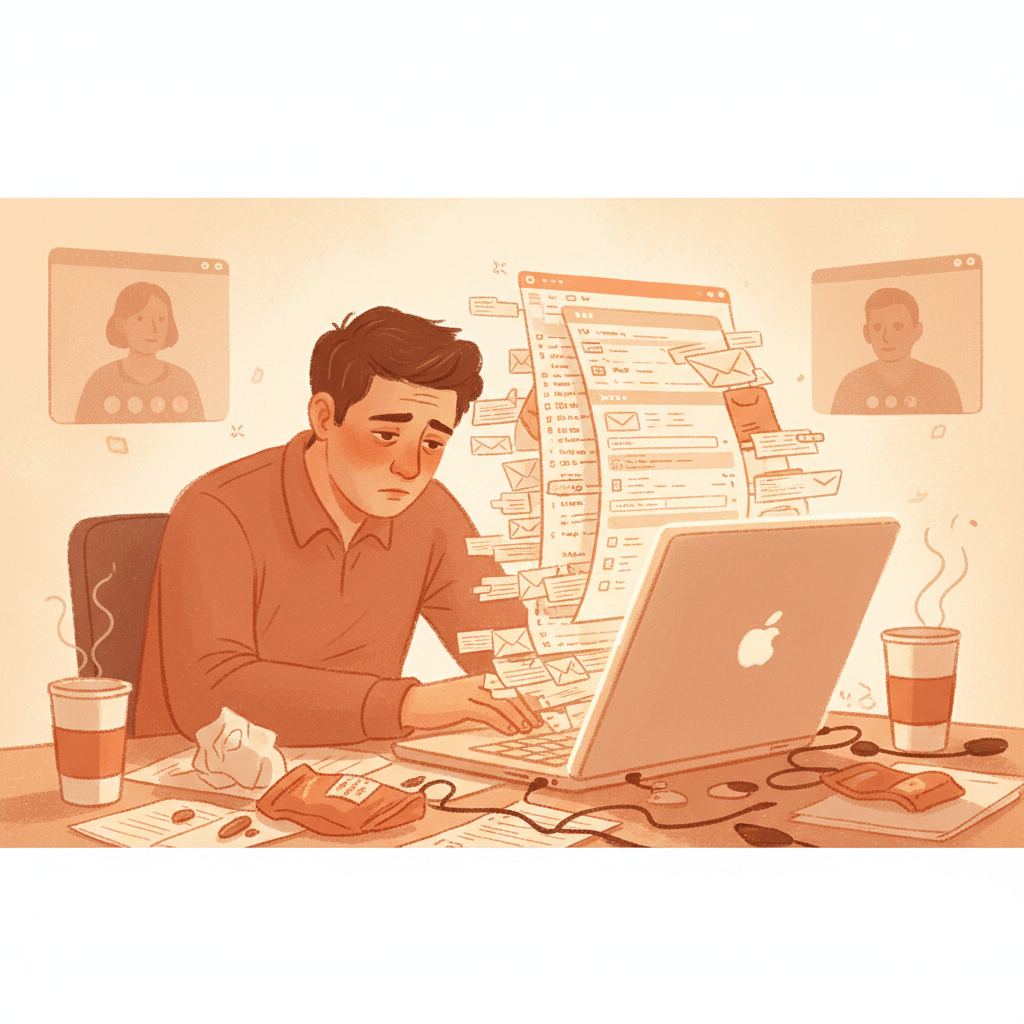
A friend of mine runs engineering at a fast-growing fintech. He told me last week he made seventeen decisions in a single hour. Architecture call. Hiring call. Vendor pick. Approve a refund. Sign off on a deploy. Pick a meeting room. Reply to a board email. He told me this like it was a flex. I told him it sounded like a slow-motion car crash.
This is what Ben Morton means when he says leaders are making decisions at the speed of email. Open inbox. Scan. Reply. Send. Next. Slack and Teams haven't fixed it. They've made it faster, sharper, more reactive. The medium changed. The mistake didn't.
If your default loop is "see message, type response, hit send," you're not leading. You're triaging. And triage at scale is how good people end up steering ships into rocks.
Speed is a culture, not a tool problem
Let me get something out of the way. The problem isn't email. It isn't Slack either. It's the belief in speed for its own sake. Somewhere along the line, leaders started measuring themselves by inbox velocity. Reply within five minutes and you're "responsive." Take a day and you're "out of touch." We've trained an entire generation of managers to confuse being available with being effective.
I worked at a place once where the CTO bragged about clearing his inbox before lunch. Every day. He took pride in it. The engineering org meanwhile was a graveyard of half-finished migrations, mystery outages, and architectural decisions nobody remembered making. Those were the calls he was clearing before lunch. Each one took ninety seconds. Each one cost months downstream.
You don't fix this with a new tool. You fix it by changing what gets rewarded.
What the research says about decision quality
The numbers are ugly when you line them up.
Harvard Business Review puts the average adult at 33,000 to 35,000 conscious decisions every day. A CEO makes around fifty high-stakes ones on top. Most happen on autopilot, which is fine for picking a sandwich. It's not fine for picking a database.
The American Psychological Association has been clear for years about task switching destroying productive thinking. Their summary of David Meyer's research found even brief mental blocks from switching between tasks cost as much as 40 percent of someone's productive time. Forty percent. Not a rounding error. Nearly half your brain throwing itself out the window every time a notification pings.
Then there's the famous UC Irvine finding: after an interruption, a worker takes 23 minutes and 15 seconds to fully refocus on the original task. Most managers I know don't get 23 minutes of uninterrupted time between getting up and going to bed.
Knowledge workers spend around 28 percent of their workweek on email. Over eleven hours. Executives clock fifteen or more. A third of employees cite email overload as a factor in deciding to leave their job.
Pile those numbers together and the picture is brutal. You're making thousands of decisions a day. Each interruption costs forty percent of your edge. You're losing 23 minutes per ping. Then we wonder why our architecture diagrams look like a toddler designed them.
The real cost is compounding shallowness
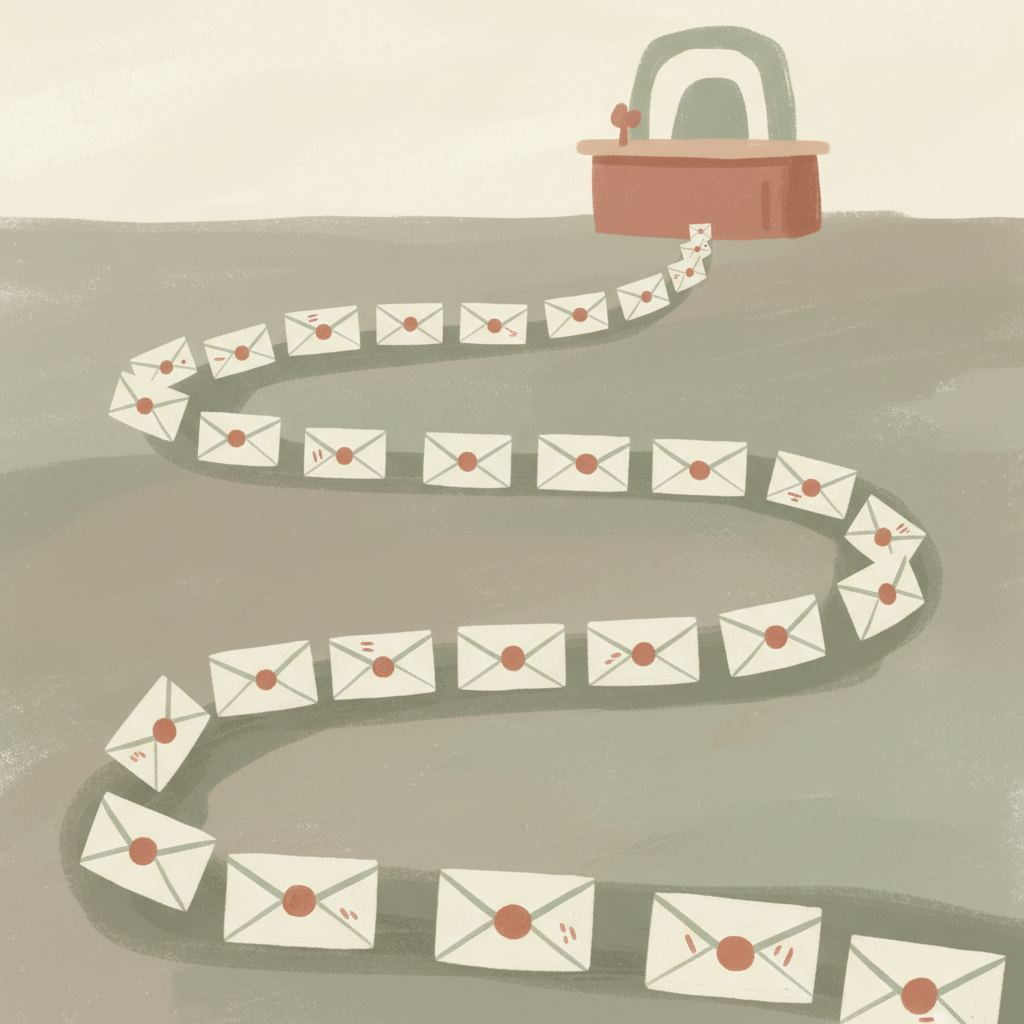
Here's where engineering leaders get hit harder than most. The work is technical. The decisions have long tails. A choice you make in ninety seconds about a queue, a database, an auth model, a deployment pipeline... your choice is going to outlive most of the people who'll have to live with it.
Fast decisions on shallow problems are fine. "Are we doing the standup at 9 or 10?" Take five seconds. Move on.
Fast decisions on deep problems are where the compounding starts. You pick the wrong message queue in a hurry, and three years later you've got six teams duct-taping around its limits. You hire someone on a gut read between meetings, and you spend the next eighteen months managing them out. You approve a refund policy via Slack thumbs-up, and the finance team finds out at quarter close how it cost you a six-figure hole.
None of these were caused by lack of intelligence. They were caused by lack of time. The leader had the knowledge. The leader didn't have the room to use it.
There's the trap. You aren't getting worse at decisions. You're getting worse at giving each one its proper weight.
Why managers fall for this
Look, I get it. I've fallen for it too. The pull of the inbox is real.
Part of it is identity. If you came up technical and got promoted to lead, the inbox feels like proof you still matter. Look at me, I'm responsive. Look at me, I'm needed. Every reply is a small dopamine hit your old code-review-merged feeling used to give you.
Part of it is fear. If you don't respond fast, someone else makes the call. Or worse, no call gets made at all and you find out at the retro your team waited two days for you. So you over-correct. You answer everything. You become a router with no filter.
Part of it is the system you sit inside. You've got a calendar packed to 95 percent, your manager pings you for status three times a week, the CEO drops Slack messages at 10pm. The whole structure is designed to keep you reactive. Slowing down feels like a career risk.
Here's the thing. My survey research found 99.5 percent of people have had one or more types of bad bosses. One of the most common patterns? Bosses who confuse motion with progress. They reply fast, decide fast, move fast. Their teams feel busy and lost at the same time. Don't be the boss.

What to do instead
I'm not here to tell you to delete email. I'm here to tell you to stop using it as a decision queue. There's a difference.
Triage what's mine. Half the messages in your inbox shouldn't have come to you. Push them back. "Why are you asking me?" is a fair question. If the team's bouncing decisions to you they should own, they need to own them. Your job is to coach those, not to absorb them.
Two windows, not always-on. Pick two slots in your day. Morning. Late afternoon. Email and Slack get those slots. The rest of the time, you're either thinking, building, or in a real conversation. The world will not end. If something is genuinely urgent, someone will call you. They have your number.
Match the decision to the medium. Quick "yes or no" decisions go in chat. Anything with second-order effects gets a real conversation. Architecture, hiring, vendor selection, policy. None of those belong in a thread. If you're typing a 400-word Slack message to defend a decision, you should have walked over to someone's desk an hour ago. Or scheduled a call. Or written a doc.
The walk-away test. When a decision feels heavy, walk away from the laptop. Get water. Stand at a window. The decision will still be there in ten minutes. If it won't wait ten minutes, it's a fire, and you should treat it like a fire. Almost nothing is a fire.
Async by default, sync for debate. Document the call. Write the rationale down. Let people respond on their own time. Save synchronous meetings for the things needing real-time disagreement. This is the inverse of what most companies do, and it works better.

A small Reddit detour
I was poking through this week's Reddit trends and one post stood out. Someone used an AI agent to automate their entire job search... thousands of applications, all written by Claude. The thread blew up on r/cscareerquestions. Plenty of people called it cheating. Plenty cheered.
What struck me wasn't the AI angle. It was the framing. The poster said the system was about volume and speed. Get more out faster. Same trap, different platform. Speed is the easy thing to measure, so we measure it. Quality is harder, so we hand-wave it. Then we wonder why the signal-to-noise ratio in our work, in our hiring, in our decisions, is getting worse every year.
The fix is the same whether you're an engineering leader or a job seeker. Slow down where it matters. Speed up where it doesn't. Know which is which.
The real question
I'll leave you with this. Pull up the last hard decision you made. The one going to outlast you in the codebase, or the team, or the policy doc. How long did you think about it? Where were you when you decided? Was your laptop open? Was someone else's notification dot pulsing in the corner of your screen?
If the answer is "I made it between two meetings while typing a Slack reply," you've got your answer about why so many of your decisions feel wrong six months later.
The inbox isn't going anywhere. The pings aren't slowing down. The only thing you control is whether you let them set the pace of your thinking.
Stop making decisions at the speed of email. Start making them at the speed of the problem.