Organizations in 75 countries have invited Fredrik Haren to speak. When he came on my podcast, Corey-osity Unleashed, he dropped an example I haven't been able to shake.
Sweden, his home country, ranks 2nd out of 139 economies in the Global Innovation Index 2025. Mongolia ranks 78th. Yet in Fredrik's telling, Swedes still stand in a queue at passport control while Mongolia has solved the problem.
One of the most inventive nations on the planet. Beaten on a solved problem by a country 76 places below it.
Fredrik's point wasn't about airports. His point was this: we fail to copy good ideas, even when they sit in plain sight.
I'm not sure about this part: I couldn't find an independent source comparing border queues at Swedish and Mongolian airports today. Treat the airport detail as Fredrik's observation from his travels, not a measured fact.

Your engineering team has a passport queue
Every software team I've ever worked with has one. A process everyone hates. A tool everyone works around. A problem somebody else solved years ago, in public, with documentation.
The homegrown deployment script with 900 lines of bash and one person who understands it. The in-house auth layer written in a weekend in 2019. The custom logging framework nobody wants to touch. The approval workflow which lives in a spreadsheet.
Nobody chose to keep these things. They survived because replacing them felt like admitting something.
We have a name for this. Not Invented Here.
The research on Not Invented Here is old, and still right
In 1982, Ralph Katz and Thomas Allen published a study of 50 R&D project groups inside a large research lab. They tracked how long each team had worked together and how well each team performed.
The pattern was clear. Performance climbed in the early years of a team's life. Then, after about five years, it dropped. The researchers pinned the decline on insularity... long-standing teams talked less with each other and far less with key sources of information outside the group.
Read it again. The teams didn't get dumber. They stopped listening to the outside world.
This is what Not Invented Here looks like in practice. It rarely shows up as a loud refusal. Nobody stands up in a meeting and says "I reject your idea because a stranger thought of it." It shows up as silence. The team stops reading. Stops asking. Stops looking over the fence.
Your five-year-old platform team fits the profile. So does your leadership team.
Why we overvalue what we build
There's a second force at work, and it's harder to spot because it feels like pride in your work.
Michael Norton, Daniel Mochon and Dan Ariely ran four studies where people assembled IKEA boxes, folded origami and built Lego sets. People valued their own amateur creations close to the level of work made by experts. They also expected other people to agree with them.
The researchers called it the IKEA effect. One detail matters for engineering leaders. The effect only showed up when people finished the job. When they built something and then destroyed it, or failed to complete it, the extra love disappeared.
Think about what this means for a team. The shipped, working, homegrown system is the one you'll defend hardest. The half-finished prototype is easy to throw away. The thing in production for six years is sacred.
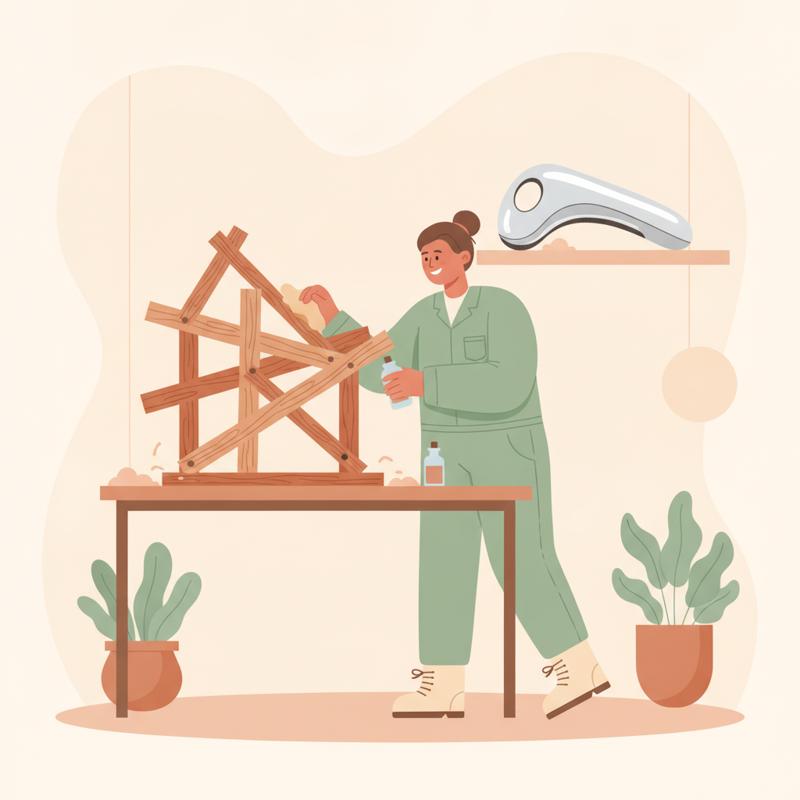
So you get a team who built a wobbly contraption, loves it, and assumes everyone else sees it the same way. Meanwhile the polished tool sits on the shelf.
Copying isn't cargo culting
I've written before about how "best practice" is where engineering goes to die. Copying rituals from companies a hundred times your size, without understanding why they exist, wrecks teams.
So am I contradicting myself? No.
Cargo culting copies the ritual and ignores the problem. Not Invented Here sees the problem, sees the fix, and ignores the fix.
Both come from the same failure. Neither team is thinking about the problem in front of them. One team outsources its thinking to someone else's slide deck. The other refuses to let anyone else's thinking in.
Here's the test I use. Ask two questions about any outside idea:
- Do we have the same problem this idea solves? If not, walk away, no matter how famous the company.
- If yes, what's our reason for not using it? If the honest answer is "we didn't build it," you have your answer.
The passport gate passes both tests. Every country has travelers. Every country has queues. The fix exists. The only thing missing is the willingness to borrow it.
What happens when you drop the ego
Procter & Gamble is the famous example. In 2000 the company ditched its "invent it ourselves" habit and started hunting for ideas outside its own walls. By 2006, Larry Huston and Nabil Sakkab wrote in Harvard Business Review this open approach produced more than 35% of the company's innovations and billions of dollars in revenue.
Their example was Pringles Prints, potato chips with trivia and jokes printed on each one. P&G took the product from concept to launch in less than a year, at a fraction of the cost of building the printing technology themselves.
P&G didn't lose its identity by borrowing. It got faster.
Your team won't lose its identity by adopting a well-supported open-source library, a standard deploy pipeline, or a feedback process another team already tested. You get your time back. You spend it on the problems nobody else has solved... the ones unique to your customers.

How to open the blinds on your team
The Katz and Allen finding gives you the fix. Insularity drives the decline, so fight insularity on purpose.
Run a "stolen ideas" slot. Once a month, every person brings one idea from outside the team. Another team, another company, a conference talk, a blog post. The only rule... it has to solve a problem you have today.
Audit your homegrown systems. List everything your team built which also exists as a product or open-source project. For each one, write down why you still run your own. Be honest. "It works fine" is a fair answer. "We built it" isn't.
Rotate people. Long-standing teams go quiet. Swap people between teams, bring in guests, pair with other departments. New people ask the naive questions your team stopped asking years ago.
Reward the borrower. Most organizations celebrate the person who builds. Few celebrate the person who finds a free, proven fix and saves three months. Change who gets the applause and you change the behavior.
Watch your own reaction. When someone suggests an outside solution, notice your first thought. If it starts with "but ours is different," stop and check. Sometimes it is different. Often it isn't.
The obvious fix is still waiting
Sweden has some of the best engineers, designers and researchers in the world. None of it helps a traveler standing in a queue.
Talent doesn't protect you from Not Invented Here. Success makes it worse. The better your team has done, the more likely they believe they already know best.
So here's my challenge for this week. Walk the floor, or the Slack channels, and find your passport queue. The process everyone complains about. The system someone else solved years ago.
Then ask yourself one question. What's stopping you from copying the fix?