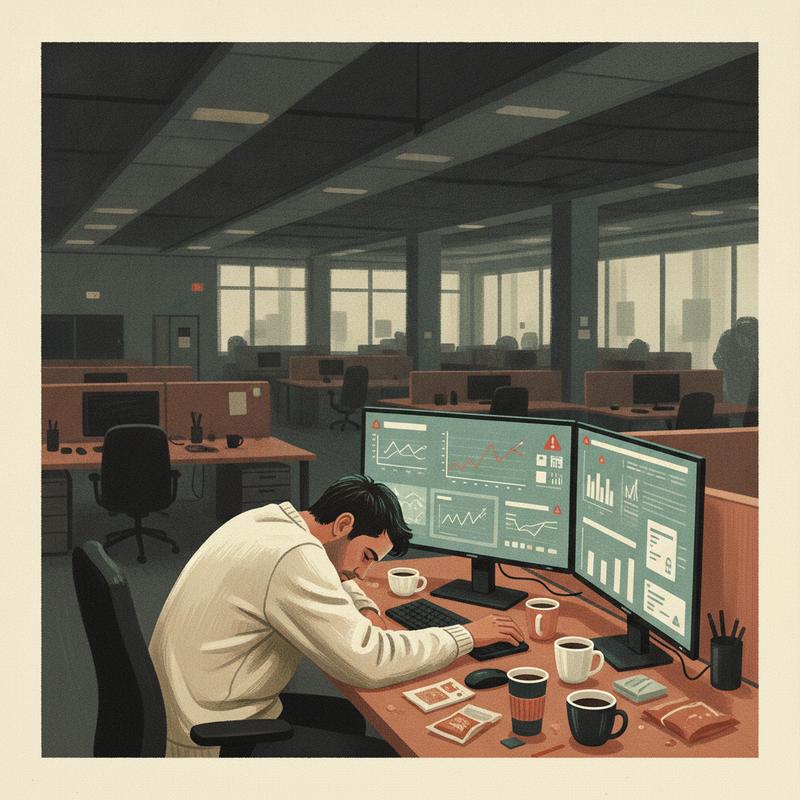
The resilience webinar problem
You know the pattern. A team ships through three quarters of shifting deadlines. Two people quit. The rest pick up the on-call slack. Someone notices morale dropped, and the fix arrives as a calendar invite: a 45-minute webinar on resilience, mindfulness optional, lunch not provided.
The message underneath is ugly, and everyone hears it. You broke. Get better at not breaking.
I have watched leaders do this with a straight face. They treat burnout as a property of the person, like grip strength. Some engineers have it, some do not, and the ones who fall short need coaching. It is a comfortable story because it puts the problem in someone else's body.
It is also wrong.
The numbers say it is the norm, not the exception
Jellyfish surveyed 604 engineering professionals for its 2024 State of Engineering Management report. 65% experienced burnout in the past year. At companies with 500 or more engineers, 85% of managers and 92% of executives reported it.
Sit with the 92% for a second. If burnout were a weakness of the individual, you would expect it clustered in the least capable people. Instead it peaks in the group you promoted.
LeadDev asked 617 engineering leaders in March 2025 and got a similar shape, reported by InfoWorld: 22% at critical burnout levels, close to a quarter moderately burned out, and only 21% classed as healthy.
One in five of your leaders is fine. Four in five are somewhere on the way down.
When four out of five people fail the same test, you stop questioning the people. You question the test.
The WHO settled this argument in 2019
The World Health Organization put burnout into ICD-11 as an occupational phenomenon, not a medical condition. Their words: "a syndrome conceptualized as resulting from chronic workplace stress which has not been successfully managed."
Read the last five words again. Not "which the employee failed to manage." Not managed. The phrasing is passive on purpose, because the managing was somebody's job and it did not happen.
Three dimensions: energy depletion, mental distance from the work, reduced professional efficacy. Every one of those is a downstream symptom. Upstream sits a workload, a rota, a priority list, a staffing plan. Those are your artifacts. You wrote them.
Burnout is an architecture problem
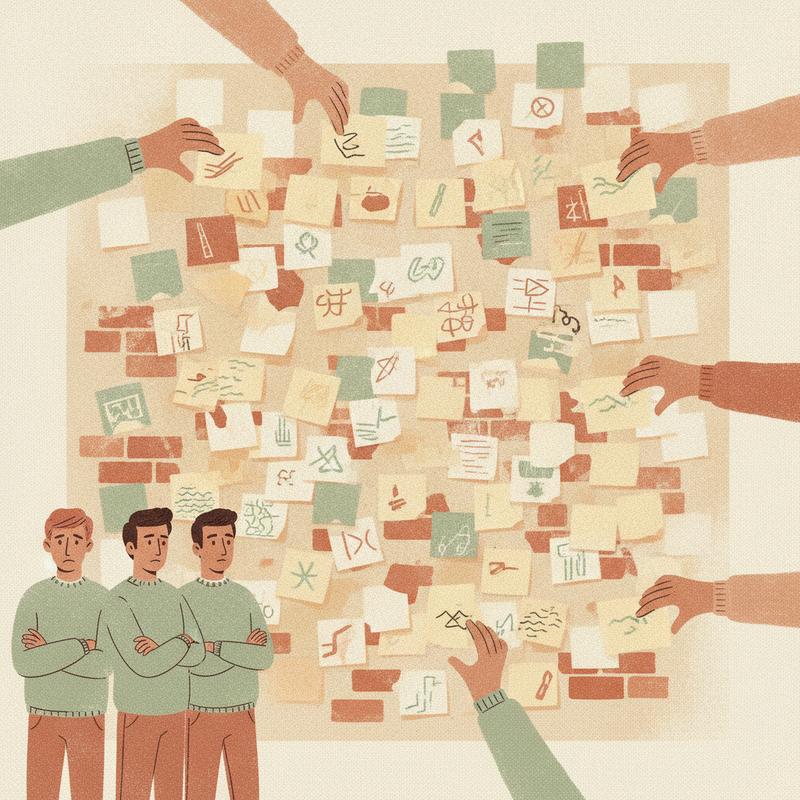
Engineers accept hard. Hard is why a lot of us took the job. What breaks people is effort with no relationship to outcome.
Unstable priorities
DORA's 2024 Accelerate State of DevOps report found unstable organizational priorities cause meaningful drops in productivity and substantial rises in burnout. The finding worth painting on a wall: the damage "is highly resistant to mitigation and persists even in environments with strong leaders and high-quality documentation."
Your good manager does not save the team from your bad roadmap. Neither does your wiki.
Every reprioritization carries a cost you never book. Half-built work gets abandoned. Context gets dumped. The engineer who spent six weeks on a service nobody ships learns the lesson you taught: their effort is disposable. Do it three times and you have manufactured cynicism, which is dimension two on the WHO's list.
On-call written by people who never carry the pager
A rotation of six is a job. A rotation of three is a lifestyle. A rotation of two is a resignation with a notice period nobody has told you about yet.
Alert volume is a budget nobody sets. Noisy alerts get tolerated because silencing them takes engineering time, and engineering time gets allocated to features. So the team absorbs it in sleep. Sleep sits off the books, so the cost stays invisible in your planning and shows up in your attrition.
Ask the plain question at your next review: how many times did someone get woken up last month, and how many of those pages needed a human? If the second number is small and the first is large, you do not have an on-call problem. You have a leadership problem wearing an on-call costume.
Short staffing sold as focus
Jellyfish found burnout hit short-staffed engineers hardest. No shock there. What interests me is the language leaders use for it. We are being scrappy. We are staying lean. We are focused.
The team hears something plainer: two people are doing three people's work, and nobody with authority is fixing it.
The interruption tax
InfoWorld's piece quotes Patrice Williams-Lindo, CEO of Career Nomad, on three big drivers. Constant interruption with no protection for deep work. Work with no definition of done. New tools layered on with no training or input, creating hidden friction which drains cognitive energy.
All three are choices. Somebody set the meeting load. Somebody accepted the vague ticket. Somebody bought the platform and rolled it out on a Tuesday with a Slack post.
The tells sit in data you already own
You do not need a wellbeing survey to spot this. You have the evidence.
- Pages per person per week. Creeping up quietly over a year is the tell.
- Work started and abandoned. Count tickets closed as done against tickets closed as no longer needed. Your abandonment rate is the priority-churn number your roadmap deck will never show you.
- Time between last commit and merge. Long queues mean people are waiting, and waiting during a crunch corrodes.
- Leave taken against leave accrued. Unused holiday often means the team believes the place falls over without them.
- Who answers at 2am. If it is always the same two names, you have a hero pattern, and heroes leave.
None of this needs a new tool. It needs someone senior enough to look and honest enough to own the answer.
Four changes worth more than a mindfulness app
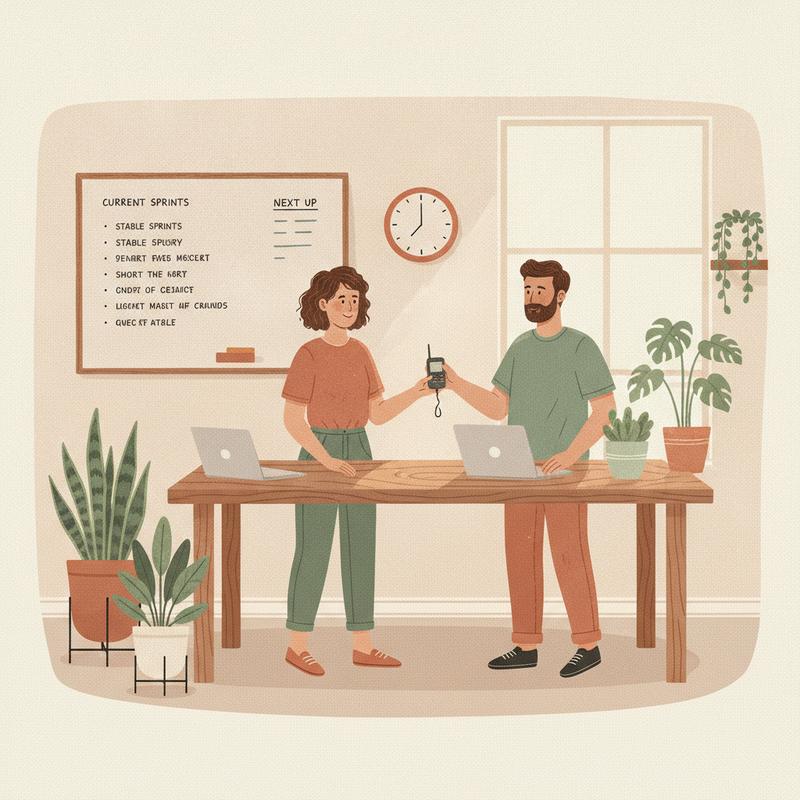
Freeze the top three for a quarter. Not the whole roadmap. Three things. Write them down, publish them, and make yourself the person who says no to the fourth. DORA's evidence says stability at the top beats almost anything you would do downstream.
Fund the noise reduction. Put alert cleanup in the sprint as real work with a real owner. An alert waking a human at 3am with no action required is a defect. Treat it like one.
Rotate the pager upward. Directors and VPs take a shift. Nothing tightens an alerting strategy faster than the person who controls the budget getting woken at 4am by a disk-space warning on a staging box.
Reward rest as loudly as you reward heroics. Look at what your promotion packets celebrate. If every one contains a weekend save, you are paying for the fire, and the fire will keep arriving. DORA links transformational leaders, the ones who support and stimulate their teams, with lower burnout. Support means changing the conditions, not sending an encouraging Slack message at 11pm.
The uncomfortable mirror
My own research found 99.5% of survey respondents said they have had one or more types of bad boss. Not 60%. Not 80%. Effectively everyone.
Run those figures against the burnout numbers and the picture resolves. Bad management is close to universal. Burnout is close to universal. And we keep treating the second one as a mystery.
Most of those bad bosses are not villains. They are overloaded people passing pressure downward because nobody taught them another move. I work on this problem over at Step It Up HR, and the fix is rarely a new perk. It is a leader deciding to absorb pressure instead of transmitting it.
Where this leaves you
If your best engineer burns out, the story you tell yourself decides what happens next. Say they lacked resilience, and you will replace them and run the same loop again. Say the system did it, and you have to look at your own decisions... rota size, priority churn, headcount, and what you celebrate.
One of those stories is more comfortable. The other one is the job.
So go look at your last four quarters. How many times did the top priority change? And who paid for it?