I have been on both sides of the cut.
I have sat in a room while someone explained, kindly enough, why my role was going away. Years later I sat on the other side of the table, holding the list, knowing whose names were on it. If you have done both, you know the second chair is the heavier one.
So when a leadership team announces a percentage cut and calls it discipline, I get twitchy. Not because businesses never need to shrink. Sometimes they do. I get twitchy because of the way it usually happens. A number arrives from above. A spreadsheet gets built. A deadline gets set. And nobody in the room asks what leaves the building along with the salaries.
Kul Mahay calls the cut-and-slash budget corporate self-harm. He is right, and the research backs him up.
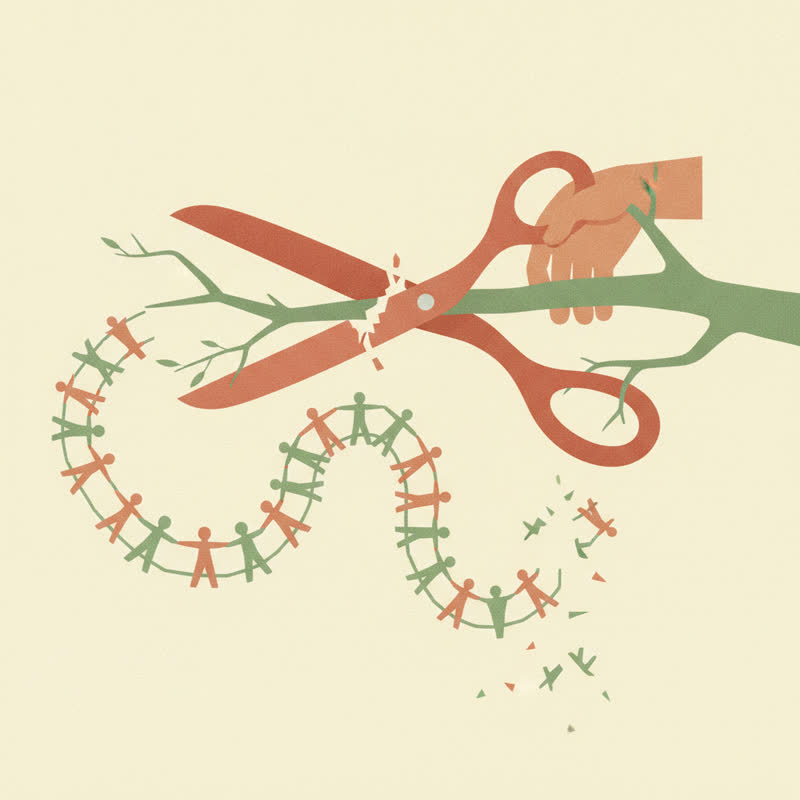
A cut looks like leadership. It seldom is.
Cutting is the fastest way to look decisive. It is measurable. It shows up in this quarter. You stand in front of the board, point at a line going down, and everyone nods.
Building something is slower. Fixing a broken process is slower. Working out why your delivery cycle takes eleven weeks when it should take four is much slower, and none of it fits neatly on one slide before the quarter closes.
So leaders reach for the scissors, then tell themselves a story about courage.
I have told myself the same story. In one restructure I signed off on a headcount reduction because the number came down from above and I had two weeks to make it work. I did not have time to ask what the department did with the eight percent of its capacity I was about to remove. I found out over the following six months. So did everyone else.
The research is not kind to the scissors
Peter Cappelli at Wharton puts it bluntly. The research evidence gives no support to the idea of layoffs improving firm performance. He said so in Knowledge at Wharton's look at what layoffs cost companies, and he has been saying it for years.
Wayne Cascio spent decades on the same question, tracking S&P 500 firms through downsizing cycles. His conclusion, recognised with a major research award, is blunt in a different way: firms with big layoffs generally fail to beat the firms who found another route. Their share prices tend to lag afterwards, not lead.
My favourite finding in the Wharton piece comes from Zeynep Ton at MIT. She studied retail stores cutting staff to protect payroll targets. Those stores were cutting their own profits. Fewer people on the floor meant shelves went unstocked, queues got longer, and customers spent less. The savings were real. The lost revenue was bigger. The stores kept doing it anyway, because payroll sits in a monthly report and lost sales hide.
Here is the pattern. The saving is visible and immediate. The damage is invisible and delayed. Anyone reviewing the decision at the ninety day mark sees only the good half.
The bill goes to the people who stay
Here is the part leaders skip.
Leadership IQ surveyed 4,172 people who kept their jobs through a layoff, across 318 companies who had cut within the previous six months. The survivors' answers are ugly:
- 74% said their own productivity had gone down
- 77% saw more errors and mistakes at work
- 81% said the service customers received had got worse
- 87% said they were less likely to recommend the place to anyone
Read the first one again. Three quarters of the people you kept, the ones you decided the business needed most, tell you they are producing less than before. You removed a slice of your cost base and degraded the rest.

Nobody is surprised by this once they hear it. Everyone is surprised by it while planning the cut.
The survivors are not sulking. They are doing three jobs, watching the door, and updating their CVs in the evening. Step It Up HR points at Gallup's finding of 21% employee engagement worldwide as a baseline problem. Now picture what happens to the number in an office where half the desks emptied in March.
There is one bright spot in the Leadership IQ data, and it is worth taking seriously. People who rated their manager highly on visibility, approachability and candour were 72% less likely to report a productivity drop. The cut hurts. A manager who stays in the room, tells the truth, and takes the questions absorbs a lot of the damage. A manager who goes quiet after the announcement doubles it.
Then you hire them back
Years ago I wrote ten things worth knowing when you get made redundant. One of the points was about staying professional on the way out, because companies frequently cut too deep, work out what they broke, and come looking for the same people again... this time as contractors.
I have watched it happen more than once. Cut in Q1. Panic in Q3. Rehire the same skills at contractor rates, with none of the institutional memory, on a six month ramp. The finance team books a saving in one year and an overspend in the next, and the two numbers never meet on the same page.

Add the pieces up. Severance. Notice pay. Recruitment fees when you rehire. Ramp-up time on the new people. The projects stalled while everyone processed the news. The quiet resignations of your best engineers, who read the announcement as a signal and went looking. The knowledge walking out with a twelve year veteran, none of which was ever written down.
Not one of those lands in the business case.
Cutting with a thesis, not a percentage
I want to be fair here, because I have run budgets and I know what a genuine cash crunch feels like. Sometimes an organisation is too big for the work in front of it. Sometimes a product line has ended. Cutting is then the honest answer.
The difference is between a cut with a thesis and a cut with a percentage.
A cut with a thesis sounds like this: we are leaving this market, so the twenty people serving it need new roles or an exit. Here is the evidence. Here is what we stop doing. Here is who owns the decision.
A cut with a percentage sounds like this: every department finds eight percent by Friday.
The first one is strategy. The second one is arithmetic dressed up as strategy, and it guarantees the same outcome every time. Every leader protects their favourites, gives up their most junior and least political people, and quietly reduces nothing about the workload. The work does not shrink by eight percent. Only the hands do.
Cascio's alternative, what he calls responsible restructuring, starts from a different question. Instead of asking who to remove, ask what to stop doing. Kill a product. Kill a report nobody reads. Kill the two week approval chain. Reduce hours across a team who would rather share the pain than lose colleagues. Move people sideways into the roles you are trying to fill anyway.
Some of those options are harder than a layoff. All of them leave you with a business still holding its knowledge in June.
Questions worth asking before you sign
If someone hands you a number and a deadline, ask these before you sign anything:
What work stops? If the answer is "nothing, we will absorb it", you are planning a burnout, not a saving.
What did we try first? Contract spend, travel, tooling, the office nobody uses, the project everyone knows will fail. If people are the first lever, people were the lazy lever.
What does this cost in twelve months? Rehire fees, contractor rates, lost revenue, voluntary turnover. Put a number on it, even a rough one. Make somebody defend it.
Who is telling the survivors the truth? Name the person. Give them the real reasons. The 72% finding above lives or dies on this one.
Would I do this to my own team? If your division carries the least pain in a company-wide cut, everyone notices. You pay for it in trust, and trust is the budget line you rebuild slowest.
The scissors are not the strategy
Reaching for the scissors when things get tight is a reflex, not a plan. Every business hits a hard quarter. The leaders I respect treat a cut as the last option after a list of harder ones, not the first option because it fits on a slide.
If you are staring at a spreadsheet right now with a percentage written at the top, do one thing before you start moving names around. Work out what your company will lose along with the salaries, write it down, and show it to the person who gave you the number.
If nobody wants to see the page... you have learned something about your leadership, and it has nothing to do with the budget.