
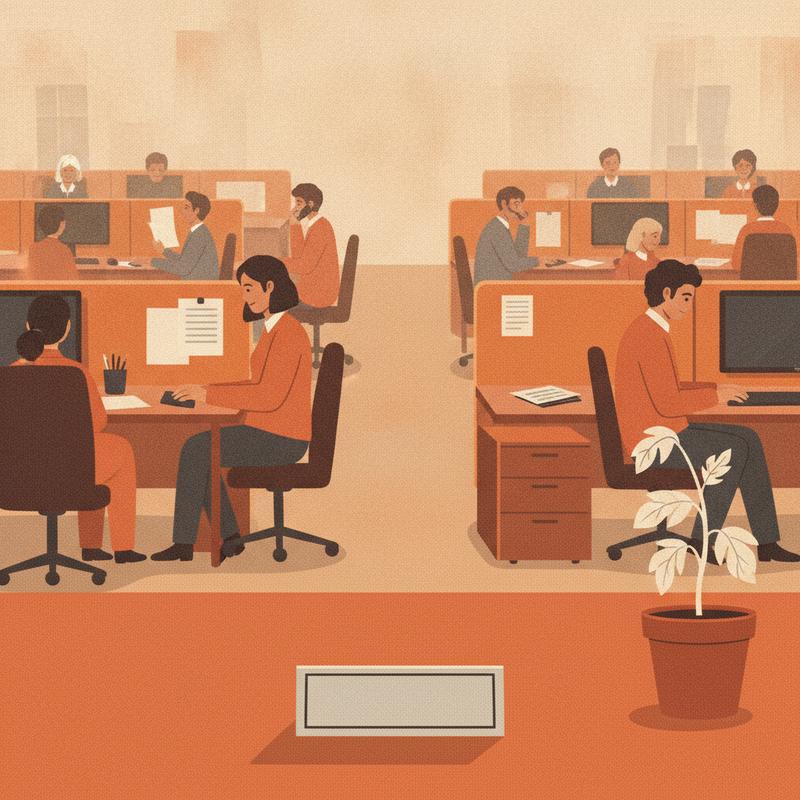
There was a woman in my department once. Sharp. Driven. Always first in, often last out. Eight years of her life poured into one company. Then the cracks started showing.
Within three months of her first absence, she was gone. HR sent an email. "We'd like to wish Sarah all the best in her future endeavours." Two days later, someone else sat at her desk. A week later her name came up in a meeting and the manager changed the subject so fast you would have missed it if you blinked.
She burned out. Completely. And we all pretended she never existed.
I call this the Harry Potter Effect.
He Who Must Not Be Named
In J.K. Rowling's world, nobody says Voldemort's name. Not because they don't know it. Because naming him makes it real. It forces an acknowledgement that something terrible happened, that there are victims, that the wizarding world is not as safe as everyone pretends.
Burnout victims get the same treatment at work.
The colleague who disappears after six months of visible deterioration? Nobody talks about them. The HR director who takes "indefinite leave" and never returns? We nod politely and move on. The team lead who sends one last frantic email before going dark for three weeks? We forward their responsibilities and pretend the whole thing isn't a flashing warning sign about our culture.
This silence isn't accidental. It's systematic.
Three Reasons Companies Banish Their Burnout Victims
Guilt. If we acknowledge what happened to Sarah, we have to acknowledge why it happened. Who gave her three projects at once. Who ignored her when she said she was struggling. Who measured her output and called it culture. Uncomfortable territory. Better to clear her desk and move on.
Liability. Legal teams advise against discussing departures in anything approaching honest terms. "We wish them well" says nothing and commits to nothing. It makes the person look like they chose to leave. Which they didn't. Not voluntarily.
Fear. The most honest reason of the three. If burnout happened to Sarah, it will happen to you. Better not to draw parallels. Better to frame it as her problem, her weakness, her inability to cope. Not a systemic failure. Not a leadership failure. Hers.
I've watched this pattern play out in tech company after tech company across my career. The names change. The dynamic doesn't.
The Numbers Are Not Ambiguous
According to Gallup's 2024 data, 48% of employees worldwide report feeling burned out at work. Not occasionally stressed. Burned out. The global productivity cost of this is $438 billion every year.
Research compiled by Meditopia found 76% of employees experience burnout at some point. Sixty-three percent of burned-out employees are significantly more likely to take sick days. Fifty-two percent are actively job hunting.
And yet only 21% of employees believe their employer genuinely cares about their mental health.
There's a reason for this disconnect. We are losing people at industrial scale and then making them invisible. The two things are connected.
A study published in the National Library of Medicine found every single study participant experiencing burnout avoided seeking formal help due to stigma. One hundred percent. They knew they needed support. They didn't ask for it, because the message from the organisation was clear: struggling means weakness.
Where do people learn this? From watching what happens to the Sarahs.
The Hidden Cost Nobody Accounts For
When you banish a burnout victim, you lose them twice.
First, the practical loss. Their institutional knowledge, their relationships, their skills. The productivity gap. Replacement costs. These get buried in HR dashboards and recruitment line items, rarely linked back to the culture decision to run people until they break.
Second, the invisible loss: every person watching.
When a colleague disappears after burning out, everyone in the building gets a message. The message is: if this happens to you, you're on your own. You'll be quietly disappeared. Your years of service won't protect you. Your team will not speak your name.
So people hide. They push through when they should stop. They don't mention the three AM anxiety spirals or the Sunday evening dread. They cover for each other because everyone is terrified of becoming the next cautionary tale.
This is how burnout spreads. Not because people are fragile. Because the culture made it more dangerous to admit struggling than to quietly deteriorate.
You've built a system where the rational choice for a burned-out person is to hide it. Then leadership acts surprised the numbers are so high.
I've Been Guilty of This
I'm not writing from some clean moral position.
I've sat in meetings where someone's name came up and let the subject change without pushing back. I've approved "we wish them well" emails. I've chosen not to dig too hard into why someone left, partly because I didn't want to hear what it would tell me about the culture I helped create.
The Harry Potter Effect works because it removes discomfort immediately. Today's problem goes away. The desk gets cleared. Life moves on.
What I didn't account for at the time was the long-term cost compounding quietly in the background. Teams watching colleagues disappear without explanation don't grow more loyal. They grow more paranoid. They start wondering: what won't I be told? What will they say about me if I crack?
The silence doesn't protect the organisation. It erodes it.
The Asymmetry That Tells You Everything
When someone leaves a company for a great new opportunity, we celebrate them. LinkedIn posts. Farewell lunches. "We're so proud of you." The departure gets acknowledged because it reflects well on the place.
When someone burns out, none of this happens. The departure is treated as a failure to be quietly buried. Even though, in most cases, the circumstances surrounding the burnout reflect far more on the organisation than on the individual.
This asymmetry tells you what a company values.
How to Break the Pattern

You don't need to overhaul everything. Three things.
Name it honestly. When someone leaves because of burnout, say so. Not in a way exposing them or causing harm. In a way acknowledging: this person worked hard, the pressure exceeded what any person was built to sustain, and we owe it to ourselves to understand what happened here. With the person's permission, be honest internally about what led to the departure.
Debrief like you mean it. Every burnout is data. Who was the manager? What did the workload pattern look like over the six months before the departure? Were warning signs raised and ignored? The post-mortem you'd do for a failed product launch... do it for a failed people situation too. Then act on what you find.
Don't erase them. Check in on people who leave burned out. Six weeks later. Three months later. Let them know the door isn't permanently closed. Treat their departure with basic human dignity. Sometimes the person who burned out in your company heals and comes back stronger, in a better role, with more clarity about what they need. This only happens if you didn't treat them like a liability to be managed on the way out.
None of this requires a revolution. It requires choosing discomfort over denial. It requires being the kind of leader who names the thing everyone else is pretending not to see.
The Question Worth Sitting With
If Sarah's burnout happened on your watch, and you're honest with yourself about the role the organisation played... what would you do differently?
If your answer is nothing... the Harry Potter Effect is alive and well in your culture.
You don't have to say Voldemort's name. But you do have to stop pretending he isn't there.