Gillian Jones-Williams said four words to me I keep turning over. "Women's intuition is data."
Gillian is a leadership coach. She joined me on Corey-osity Unleashed and I wrote before about her ORACLE coaching model. This line stuck with me longer than the model did.
Her point goes like this. Your gut tells you something. Then you talk yourself out of it. You want a spreadsheet, a second opinion, a reason you're able to defend in a meeting. So you override the signal. Later you find out the signal was right.
I'm not sure about this part: Gillian's notes put intuition at right "95% of the time". I found no study behind the 95% figure, so treat it as her experience, not a measured number.
I agree with her. I also think the sentence needs a second half. Your gut is data. Data has a source. Check where your gut learned what it knows.
The Hunch Has a Mechanism
People hear "intuition" and picture something mystical. It isn't.
In 1997, Antoine Bechara and Antonio Damasio ran a card-game experiment published in Science. Players drew from decks. Some decks paid well early and cost a lot later. Healthy players started picking the better decks before they were able to say which decks were better. Their skin conductance spiked when they reached for a risky deck, before they knew the deck was risky.
Your body keeps score before your brain writes the report. I've written about this in the Sunday night test, where the dread in your stomach knows things about your job you haven't admitted yet.
And the "women's intuition" part? It has research behind it too. Judith Hall pulled together 75 studies on decoding nonverbal cues back in 1978. More of them showed a female advantage than chance would explain. The average effect was moderate. It grew larger when people saw and heard the person at the same time.
So when a woman on your team says "something's off with this client," she's reading cues. Faces. Tone. Pauses. Things you missed. Dismissing it as "only a feeling" throws away information.
When Your Gut Earns Its Keep
The best work on this question came from two people who spent their careers disagreeing.
Daniel Kahneman studied how intuition fools us. Gary Klein studied how experts use intuition to save lives. In 2009 they wrote a joint paper, Conditions for Intuitive Expertise: A Failure to Disagree. The title tells you how it went.
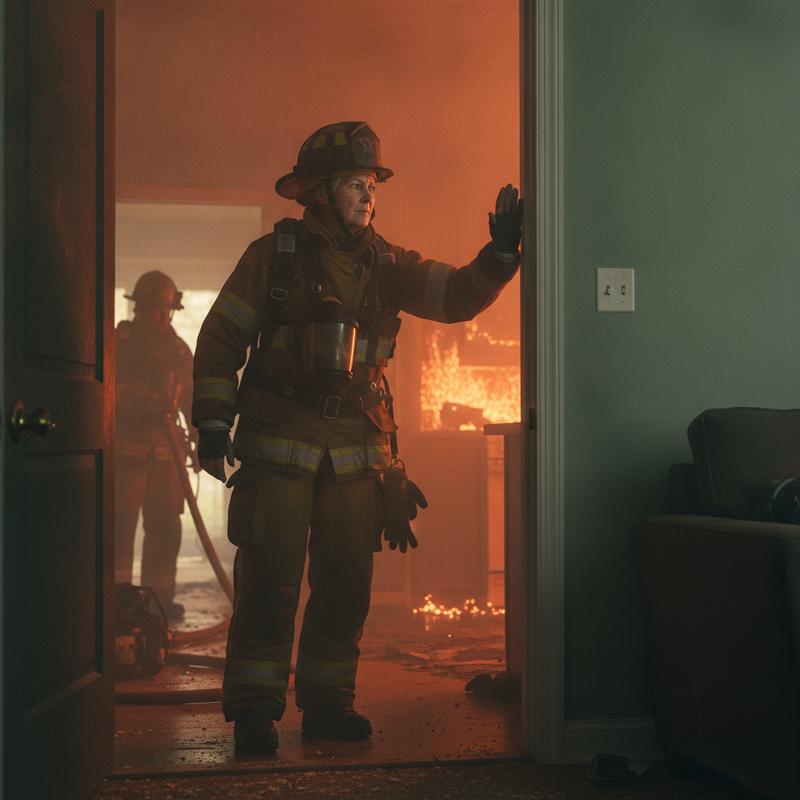
Klein's early research looked at fire commanders. He expected them to compare two options under pressure. They didn't. They usually generated one option, ran it forward in their heads, and acted. If it didn't fit, they tweaked it. They drew on more than a decade of patterns. They noticed signs a house was about to collapse before anyone else saw a crack.
Kahneman and Klein agreed on two conditions for intuition worth trusting:
- The environment gives off valid cues. A collapsing building shows early signs. A sick infant shows early signs. There's a real pattern to read.
- You've had the chance to learn those cues. Lots of reps, with feedback on whether you got it right.
Miss either one, and your gut is guessing with a confident face.
When Your Gut Is Guessing
The same paper names the places where intuition fails. Picking individual stocks. Long-range political forecasts. They call these zero-validity environments. No stable pattern exists to learn, so no amount of experience builds a reliable instinct.
Then there's the bit about baseball scouts. Kahneman and Klein describe scouts and managers with years of experience who still leaned on how a player looked. Appearance over performance.
Read this as a hiring manager and wince.
I've sat in plenty of interview debriefs in my career. "Great culture fit." "I liked him." "Something about her didn't sit right." Some of those calls were sharp. Some were me, or the person next to me, reacting to an accent, a handshake, a school name, a face. Same feeling in the gut. Different source.
The trap is both feel identical from the inside.

Confidence Is Not Evidence
Here's the line from the paper I'd tattoo on every leader if I were allowed.
Kahneman and Klein write: "Subjective confidence is therefore an unreliable indication of the validity of intuitive judgments and decisions."
Your certainty tells you nothing. The firefighter feels sure. The stock picker feels sure. One of them has earned it.
So the question is never "how strong is the feeling?" The question is "has this feeling been trained on real patterns, with real feedback?"
How I Treat My Gut Now
I spent twenty-odd years in tech leadership, and before those years I served in the US Army. Both places taught me to respect a hunch and to check it. Here's my working method.
Name the cue
When my gut says no, I ask myself one question. What did I notice? Not what do I feel. What did I see or hear?
If I name it ("he dodged the question about the last project twice"), I've turned a feeling into evidence. I bring the evidence to the table.
If I come up empty, I get suspicious of myself.
Check the training set
Have I seen this situation fifty times, with feedback each time? Reading a team's mood in a standup, yes. I've had thousands of reps. Predicting which startup idea takes off? No. I've had a handful of reps and the outcomes arrived years late.
Trust the first. Hold the second loosely.
Borrow a better-trained gut
Sometimes my gut has no training on the problem in front of me. Someone else's does. The support engineer who has fielded a thousand angry calls knows which customer is about to walk. The nurse on your wellbeing team knows when a colleague is running on empty. The office manager knows which new hire is drifting.
Their instincts were trained on the exact patterns I lack. When my own signal is weak, I go find the person with the strong one and ask what they see. Rank has nothing to do with it. Reps do.
Run a premortem
Klein's own tool fits here. Before you commit to a big plan, tell the team: picture it failed. Give everyone two minutes to write down why. Go around the table and start with the leader.
This pulls the quiet doubts into the open. Those doubts are often gut signals from people who didn't feel safe raising them.
Write it down and keep score
Jot down your gut call before the outcome lands. Check back later. After a year you'll know where your instincts have earned trust and where they haven't. Most leaders never do this, so they never learn which half of their gut to believe.

Stop Overriding the Good Signal
Back to Gillian's four words.
She's pointing at a pattern I've watched for decades. A woman in the room raises a concern based on a read of the people involved. Someone asks for "the data." She doesn't have a slide. The concern gets parked. Three months later, it turns out she called it.
The research says her read is data. It comes from a skill with a measurable track record. Reading people is a high-validity environment. Faces and voices give real cues, and most of us practice every day.
So here's my ask. Next time someone on your team says "I've got a bad feeling about this," don't ask for proof. Ask what they noticed. Then listen.
And next time your own gut fires, ask the harder question. Where did it learn this?