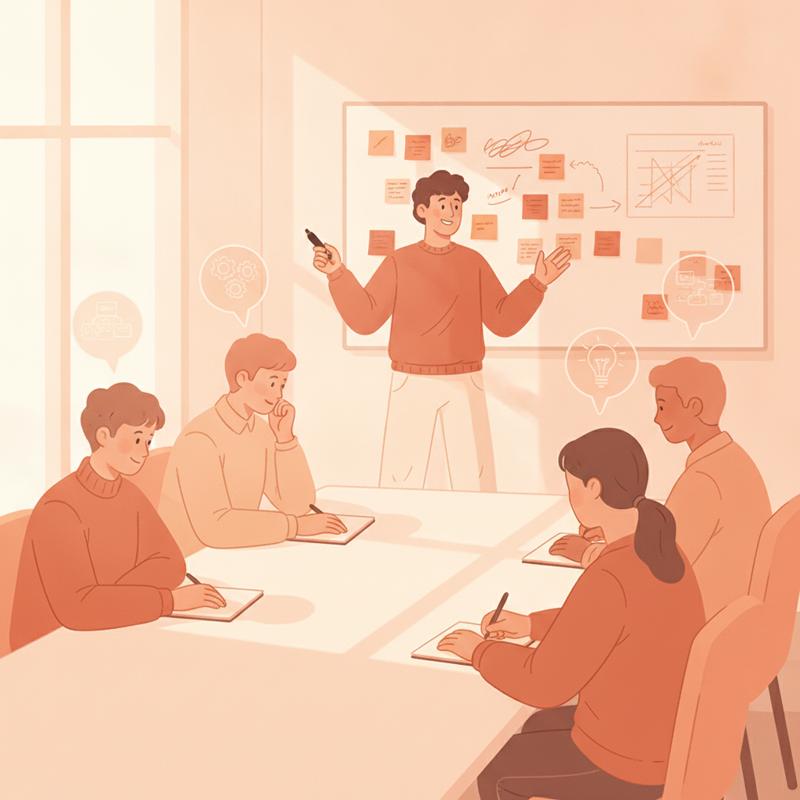
You know the scene. Someone books a room, grabs a marker, and says, "Let's throw some ideas around. No bad ideas!"
Ten minutes later, three people have filled the whiteboard. Two have said nothing. One is staring at the table, holding an idea they'll never say out loud.
We call this collaboration. We tell ourselves the open floor is fair because everyone is allowed to speak. Allowed isn't the same as able.
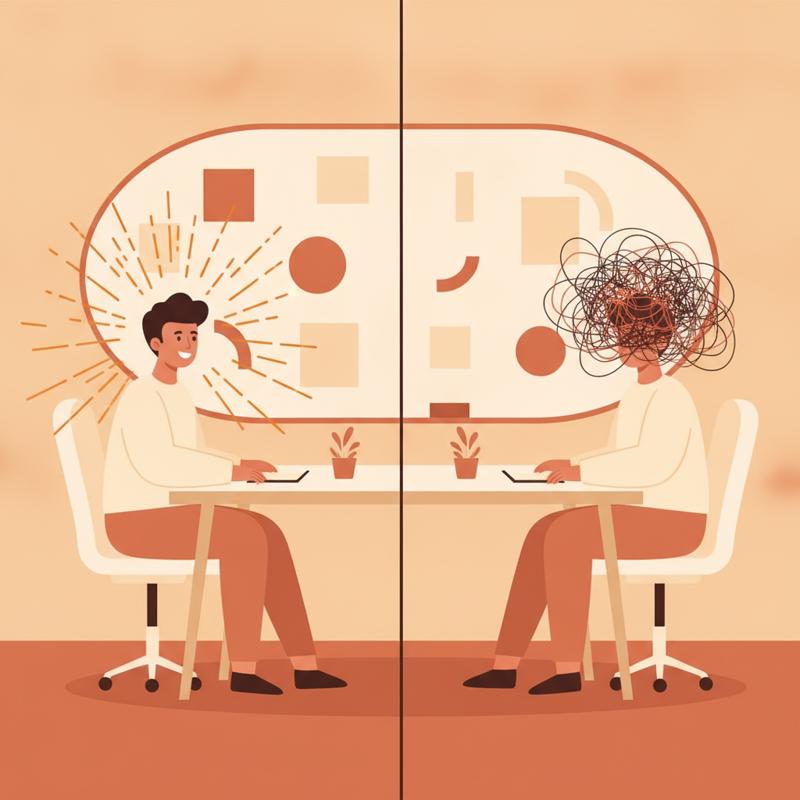
Gillian Jones-Williams, founder of Emerge Development Consultancy, made a point on my podcast which has stuck with me since. For some people, a room full of ideas is energizing. For others, it's a source of sleepless dread the night before. Same meeting. Same agenda. Two completely different experiences.
Brainstorming isn't neutral. It picks winners before anyone opens their mouth.
The Research Has Been Clear for Decades
Brainstorming as a group exercise comes from Alex Osborn, an advertising executive. In 1957 he claimed the average person would produce twice as many ideas in a group as alone.
Researchers tested the claim almost at once. It didn't hold up.
In a classic 1987 paper, Michael Diehl and Wolfgang Stroebe summarized the first test, by Taylor, Berry and Block in 1958. Four people working alone, with their ideas pooled afterward, produced nearly twice as many different ideas as four people brainstorming together. Osborn had it backwards.
Diehl and Stroebe then went looking for the cause. Was it free riders? Fear of judgment? Or something more mechanical?
Their answer was mechanical. They called it production blocking. Only one person talks at a time. Everyone else waits, forgets, or decides their idea no longer fits. When the researchers let people speak ideas the moment they had them, those people produced roughly twice as many ideas as people forced to wait their turn.
A few years later, Mullen, Johnson and Salas pulled the research together in a meta-analysis. Brainstorming groups came out less productive than people working alone, in both quantity and quality. The losses grew worse in larger groups, and worse when people spoke ideas aloud instead of writing them down.
Read the last part again. Bigger groups, spoken out loud. Sound like your last planning session?
Who Pays the Price
Production blocking hurts everyone. It doesn't hurt everyone equally.
The open floor rewards a specific set of traits. Fast verbal processing. Comfort interrupting. Confidence in half-formed thoughts. Tolerance for noise and cross-talk. Some people have all of those. Many don't.
Think about who struggles in the room:
- The engineer who thinks best by writing and needs ten minutes of quiet before a good idea arrives.
- The colleague with ADHD who has five ideas at once and loses four while waiting for a gap.
- The autistic team member who finds overlapping voices and fluorescent lights draining before the meeting even starts.
- The person working in their second language, translating in their head while the conversation moves on.
- The new hire who doesn't yet know which ideas are "allowed."
None of these people lack ideas. The format filters them out.
The CIPD's 2024 Neuroinclusion at Work report puts it plainly. Workplace norms were rarely designed with neurodiversity in mind, so they suit some people and not others. The report estimates up to 20% of people identify as neurodivergent in some way. On a team of ten, the figure points to as many as two people in your brainstorm.
You Won't Know Who They Are
Here's the part most managers miss.
The CIPD surveyed 790 neurodivergent employees. Around three in ten (31%) hadn't told their line manager or HR about their neurodivergence. The top reasons? It's private (44%), worry about stereotypes (37%), and stigma (34%).
So you won't fix this by waiting for someone to ask for an adjustment. Plenty of people never will. The person struggling in your brainstorm will not raise a hand. They'll go quiet, and you'll read their silence as a lack of ideas.
Most of us have held the marker in this meeting. We fill the board with ideas from the three fastest talkers and walk out thinking we had a great session. We didn't. We had a great session for three people.
The fix isn't a special process for "those people." The fix is a better default for everyone.
Loud Rooms Make Dumber Teams
If fairness doesn't move you, performance should.
In 2010, Anita Woolley and colleagues published a study in Science on what makes groups smart. They put 699 people into groups of two to five and gave them a wide range of tasks.
The group's collective intelligence didn't track the average IQ of its members. It didn't track the smartest person in the room either. It tracked how socially sensitive the members were, and how evenly they took turns talking.
The researchers measured speaking turns with sensor badges. Groups where a few people dominated the conversation were less collectively intelligent than groups with a more even spread.
Read this as an engineering leader. Your best people don't guarantee your best outcomes. The shape of the conversation matters more. An open-floor brainstorm, by design, lets a few people dominate.
Redesign the Ritual
I'm not arguing for banning group idea sessions. Teams need to build on each other's thinking. The problem is the format, not the goal. Here's what I'd change.
Send the question early
Put the problem in writing a day ahead. People who think fast lose nothing. People who think deep get the time they need. The dread Gillian described often comes from not knowing what's coming. Remove the surprise and you remove a lot of the dread.
Write first, talk second
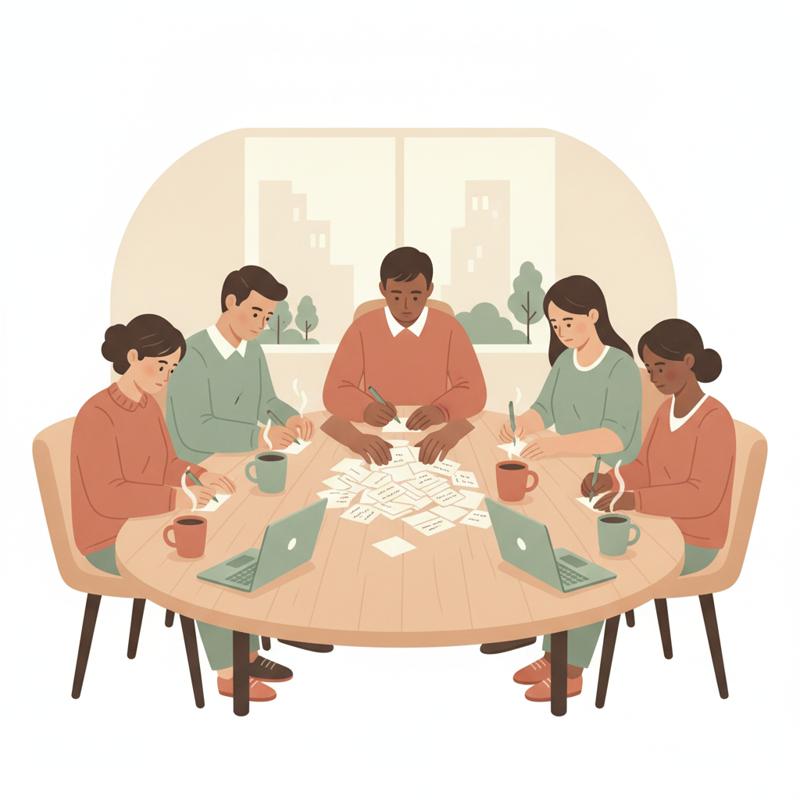
Start with five to ten minutes of silent writing. Everyone puts ideas on cards or in a shared doc before anyone speaks. This is often called brainwriting. It kills production blocking because nobody waits for a turn. It also stops the first loud idea from anchoring everyone else.
Keep groups small
The meta-analysis found bigger groups lose more. If you have twelve people, split them into groups of three or four, then compare notes.
Give people more than one channel
Some ideas arrive in the room. Some arrive in the shower the next morning. Leave the doc open for 24 hours after the session and treat late ideas as equal to early ones.
Manage the airtime
Whoever facilitates owns the turn-taking. Go around the room. Invite the quiet ones by name only if you know they're comfortable with it. Otherwise, read out written ideas without attribution, so ideas compete on merit instead of volume.
Ask about the format, privately
Once a quarter, ask each person in your one-on-ones how the team's rituals work for them. Not "are you neurodivergent?" Ask "what helps you do your best thinking?" You'll learn more from the answer than from any policy.
The Bigger Point
Brainstorming is one ritual. Your team runs dozens. Stand-ups. Retros. Design reviews. Whiteboard interviews. Pairing sessions. Hackathons. Someone designed each one, usually with a certain kind of brain in mind, and each one quietly filters who contributes.
Call it "inclusive" all you like. If the format only works for the fastest talkers, it isn't.
So pick one team ritual this week. Watch who speaks and who doesn't. Then ask yourself: is the quiet person out of ideas, or is my meeting blocking them?