Every engineering org I've worked in has a favourite slogan. The most popular one fits on a sticker.
Hope is not a strategy.
It sits at the top of the introduction to Google's Site Reliability Engineering book, credited as a "Traditional SRE saying." I've heard it in incident reviews, planning meetings and one memorable all-hands. People say it with a little smirk. It sounds tough. It sounds grown-up.
I think it's wrong. Or at least, I think we've been reading it wrong for a decade.
The Daffodil Question
On our podcast, John Blakey told Debra and me about a hospital CEO he coached in the autumn of 2021. The second pandemic winter was coming. His staff were, in John's words, "at their wits end" and "on their knees."
The CEO did what leaders do. He tried to sell them the vision. A three-year plan. A new hospital. New technology.
The staff told him they didn't care about three years from now. They didn't know how they'd get through the week.
So John asked about a one-year plan. Too far away, the CEO said.
Then John asked a different question. Do your people believe the daffodils will come up next spring?
Yes, the CEO said. They'll believe it.
"Well, there's the hope," John told him.
The CEO went on to launch Project Daffodil inside the trust. John described it as "building hope through immediate daily weekly examples" for staff to relate to, in the middle of a pandemic.

I'm not sure about this part: I don't know what Project Daffodil looked like week to week, or how it measured success. John's telling is the only source I have.
I wrote about the first half of this story before, in Your Vision Versus Their Monday. The point there was sequencing. The point here is different. Look at what John did. He didn't tell the CEO to hope harder. He shrank the goal until people believed in it, then built a route to it out of small, weekly, visible wins.
Hope with a plan attached. Which is the thing the sticker says doesn't exist.
What Hope Means to the People Who Study It
The late psychologist C.R. Snyder spent his career on this. His 2002 paper, Hope Theory: Rainbows in the Mind, defines hope as "the perceived capability to derive pathways to desired goals, and motivate oneself via agency thinking to use those pathways."
Strip out the academic phrasing and you get three parts:
- A goal. Something specific you want.
- Pathways. Routes to get there, plus backup routes for when the first one fails.
- Agency. The belief you'll walk the route, and the energy to start.
Notice what's missing. Wishing. Crossed fingers. Waiting for the universe.
Snyder's paper goes further. Using his definition, he found no evidence for "false" hope. Higher hope linked to better outcomes in academics, athletics, health and psychotherapy.
And it shows up at work. A 2013 meta-analysis by Reichard, Avey, Lopez and Dollwet, Having the will and finding the way, pooled 133 effect sizes from 45 studies covering 11,139 employees. Hope correlated positively with both work performance and employee wellbeing.
So when an engineer says "hope is not a strategy," they mean wishful thinking is not a strategy. Fair. But wishful thinking isn't hope. It's hope with two of its three parts missing.
Your SRE Team Already Practises Hope
Here's the part I enjoy. Read the rest of Ben Treynor Sloss's introduction and you find Snyder's model hiding in plain sight.
The goal is the error budget
The SRE book says 100% is the wrong reliability target for almost every system, with pacemakers and anti-lock brakes as the exceptions. The business picks a realistic availability target instead. Say 99.99%. The remaining 0.01% becomes the error budget.
A target the team believes in. Not perfection. Not zero outages. A number people think they'll hit. It's the daffodil, in YAML.
The pathways are the playbook
This is my favourite line in the whole introduction. Google found "thinking through and recording the best practices ahead of time in a 'playbook' produces roughly a 3x improvement in MTTR as compared to the strategy of 'winging it.'"
Read it again with Snyder's definition in mind. A playbook is a list of pathways, written in daylight, for use at 3am. Route A. If Route A fails, Route B. Then who to call.

The agency is the practised on-call engineer
The book contrasts the "hero jack-of-all-trades on-call engineer" with "the practiced on-call engineer armed with a playbook." The second one works much better.
Practice builds agency. Each drill and each game day teaches the person holding the pager one thing... I know what to do next. No one walks into a 3am incident feeling calm because someone told them to stay positive. They feel calm because they've done this before, or they've rehearsed it.
Goal. Pathways. Agency. The SRE world banned the word hope and then built the most complete hope machine in our industry.
I'm not sure about this part: I haven't found any study linking SRE practices to Snyder's hope scale. The mapping is mine.
Where Engineering Leaders Get This Wrong
We apply hope science to our servers with real discipline. Then we walk into a team meeting and forget all of it.
The roadmap without pathways
A leader stands up and says "we'll ship v3 by Q2." Goal, yes. Pathway? Nobody has worked out the route. Agency? The team has watched the last three dates slip.
The research on this has a name. Buehler, Griffin and Ross, in their 1994 study Exploring the "planning fallacy", found people's predictions of their own completion times ran too optimistic across a range of tasks. People focused on future scenarios and ignored relevant past experience.
In their fourth study, the optimistic bias disappeared when participants were told to connect past experience with their prediction.
Sound familiar? Velocity data. Postmortems. Last quarter's slipped dates, sitting in the tracker. Your SRE team uses history to set the error budget. Use it to set the roadmap too.
The vision without a daffodil
The hospital CEO's three-year plan wasn't wrong. It was out of reach for people running on empty. When a team stops believing in the goal, agency collapses, and the pathways stop mattering.
If your engineers roll their eyes at the roadmap, don't repeat it louder. Shrink it. Find the daffodil... the next milestone they believe in. Then show weekly evidence of progress.
Banning hope from the conversation
Here's my real problem with the sticker. When "hope is not a strategy" becomes a reflex, leaders stop talking about hope at all. They talk about risk, dependencies, and mitigation. All useful. None of it tells a tired team why next quarter will feel better than this one.
People want to hear it from you. Gallup studied 10,000 people in follower roles between 2005 and 2008. Hope made the list of four things followers need from their leaders, alongside trust, compassion and stability. In Gallup's words, "hopefulness deals with the future."
Your team doesn't need you to stop hoping. They need you to hope like an SRE.
How to Make Hope Actionable on Monday
Here's what I'd try with any engineering team running low on belief.
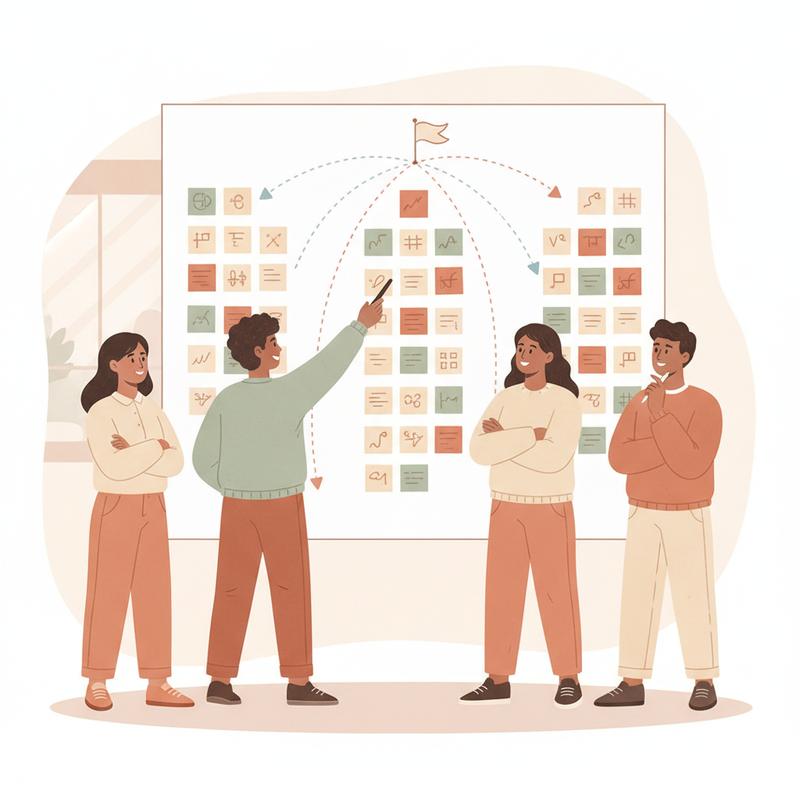
Write the goal as a budget, not a promise. "We ship v3 by Q2" is a promise. "We'll get the checkout flow migrated, and we accept two weeks of slip before we cut scope" is a budget. People believe budgets.
Write at least two pathways for every goal. If the first route fails, what's the second? Put it in the plan before you need it. This is a playbook for delivery, not only for outages.
Use your history. Pull up the last three estimates and compare them with reality. Buehler's study says this one step removes much of the optimism bias.
Build agency with small wins. John's CEO went daily and weekly. Ship something visible this week. Fix one papercut your team complains about. Each small win is evidence. Evidence beats pep talks.
Say the word. Tell your team what you're hopeful about and why. Then show them the route.
I've written about the difference between hope and optimism on the personal side in I Confused Hope With Optimism for Years, and about where hope research started in The Science of Hope Started With a Study of Excuses. And if you want more of John's thinking on turning purpose into daily habits, see Purpose Isn't a Feeling. It's a Practice. or visit johnblakey.co.uk.
Change the Sticker
I'd like to retire the old slogan. Here's my replacement.
Wishing is not a strategy. Hope is... once you write down the goal, the routes, and who's walking them.
Your on-call team already lives by it. They wrote the playbook before the pager went off.
So what's your team's daffodil this quarter? And have you written down the route to it yet?