Your senior engineer comes to your one-to-one with a request. "We need to rewrite the billing service. It's a mess. Nobody wants to touch it."
You have two moves, and most managers pick one of them on autopilot.
Move one: you say no. Rewrites are a trap, everyone knows it, and the roadmap is full.
Move two: you say yes. You want your people happy, you've read the retention numbers, and you'd rather fund a rewrite than lose a good engineer.
Both moves have the same flaw. You took the request at face value. You never found out what your engineer wants.

The Request Is a Symptom
Grace Judson, an executive coach who joined me on Corey-osity Unleashed, has an idea I keep coming back to. Stop guessing what your team wants. Ask. And then accept one awkward truth... people don't always want what they say they want.
Grace means this about careers. The person who asks for a promotion sometimes wants recognition, or a bigger problem to chew on, or a way out from under a bad boss. The title is the only thing they know how to ask for.
Engineering teams do the same thing with technical requests. "Rewrite it" is the only lever an engineer has a name for. Underneath, you'll often find something smaller and more specific:
- The build takes forty minutes, so every change costs half a morning.
- The tests fail at random, so nobody trusts a green run.
- The on-call rota wakes the same two people every week.
- Nobody owns the service, so every fix turns into a negotiation.
None of those needs a rewrite. All of them sound like "rewrite it" when you're tired and fed up.
Even Joel Spolsky Saw This Coming
In April 2000, Joel Spolsky wrote Things You Should Never Do, Part I. He called Netscape's decision to rewrite its browser from scratch "the single worst strategic mistake" in the software business. Netscape 6.0 was going into its first public beta almost three years after version 4.0. There never was a version 5.0.
Joel's explanation of why programmers want rewrites is the part I want you to read twice. Programmers, he wrote, are "in their hearts, architects, and the first thing they want to do when they get to a site is to bulldoze the place flat and build something grand."
And then the key line: "It's harder to read code than to write it."
So when an engineer says the old code is a mess, part of what they're telling you is how hard it is to read. It's information about the team's experience of the code. It's not a design decision. Your job is to dig into the experience, not to rubber-stamp the solution.
People Don't Know Why They Want Things
Here's the bit most managers miss. Your engineer isn't being evasive when they ask for a rewrite. They're giving you their honest best guess at the cause. And humans are bad at this.
In 1977, Richard Nisbett and Timothy Wilson published a classic paper on how people explain their own choices in Psychological Review. One of the studies in it sticks with me.
They set up a table in a shop, under the guise of a consumer survey. Shoppers looked at four pairs of nylon stockings and picked the best quality one. The four pairs were identical.
People still picked. And they favoured the pair on the far right by a factor of almost four to one over the pair on the far left. When asked why they'd chosen it, they gave reasons about the stockings. No one mentioned position. When the researchers asked about position directly, almost everyone denied it, some with a worried look at the interviewer.
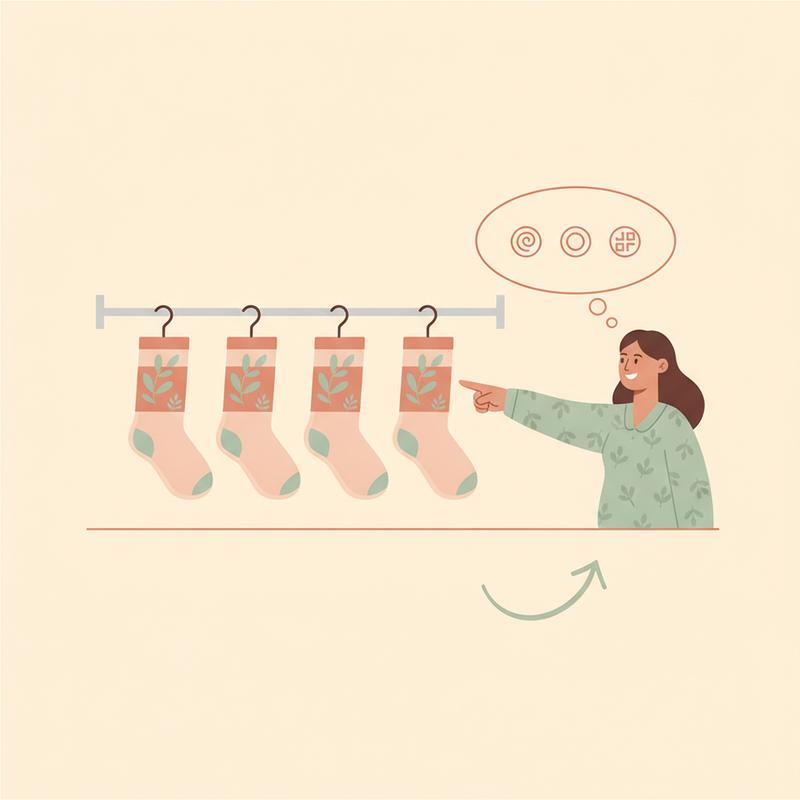
Those shoppers weren't lying. They believed their reasons. They had no access to the real cause, so they built a plausible story.
Your team does this too. "The framework is outdated" is a plausible story. "I lose two hours a day waiting on CI" is the cause. The first one is easier to say out loud, and it sounds more like engineering.
What the Data Says Engineers Struggle With
When you ask engineers about frustrations in a structured way, the answers get more concrete. In the 2024 Stack Overflow Developer Survey, 62.4% of professional developers named the amount of technical debt as a frustration at work. It topped the list for individual contributors and for people managers.
Look at the rest of the list, though. Complexity of the tech stack for building (32.9%). Complexity of the tech stack for deployment (32.3%). Reliability of tools and systems (31.5%). Those are the specifics hiding inside "tech debt."
"Technical debt" is a bucket word. Ask ten engineers what it means on their team and you'll get ten answers. Some mean slow builds. Some mean a missing test suite. Some mean the one module only Dave understands, and Dave is on holiday.
The researchers behind the DevEx framework (Abi Noda, Margaret-Anne Storey, Nicole Forsgren and Michaela Greiler) boiled developer experience down to three dimensions: feedback loops, cognitive load and flow state. I find those three words more useful than "tech debt" in a one-to-one. They point at what the engineer lives through every day:
- Feedback loops: How long until I know if my change works?
- Cognitive load: How much do I have to hold in my head to make a safe change?
- Flow state: How often do I get a clear stretch of time to think?
A rewrite might fix one of those. A faster pipeline, a better runbook or a protected focus afternoon might fix it sooner and cheaper.
Ask the Second Question
So don't guess. Don't say yes on reflex, and don't say no on reflex either. Ask the second question.

Borrow from product people here. Rob Fitzpatrick's book The Mom Test teaches founders to talk about the customer's life rather than the founder's idea, and to ask about specific things in the past instead of opinions about the future. Your engineers are your customers for every internal decision you make. Treat their requests the same way.
Here are the questions I'd use:
- "Tell me about the last time you worked in the billing service. What happened?" Get a real story, with a date, not a general complaint.
- "Where did the time go?" Waiting on builds? Reading code? Chasing the person who owns it?
- "If the rewrite shipped tomorrow, what would be different about your Tuesday?" This one separates the problem from the proposed fix.
- "What's the smallest change which would make next week better?" You're looking for the cheap win hidden under the expensive request.
- "Who else feels this?" One engineer's pain is a data point. Four engineers describing the same pain is a pattern.
Then write down what you heard and play it back. "So the real cost is the forty-minute build and the flaky payment tests. Have I got it right?" If they nod, you've found the actual problem. If they correct you, you've learnt something you'd never have guessed.
When the Answer Is Still "Rewrite"
Sometimes you'll ask all five questions and the answer still comes back "rewrite." The code is beyond saving. The platform is end-of-life. Fine. Now you have a rewrite proposal grounded in specific, repeated pain, with a clear picture of what success looks like on a normal Tuesday. It's a far better pitch to take upstairs than "it's a mess."
And if the conversation reveals something else entirely... a person who's bored, or burnt out, or stuck under an on-call rota nobody fixed... you've found a people problem disguised as a technical one. No rewrite would have solved it. You'd have spent six months of engineering time and still lost the engineer.
Stop Guessing
Engineering leaders love to say they make decisions based on data. Then they make staffing and roadmap calls based on a single sentence from a one-to-one, taken at face value.
Your team's requests are data. They're not the whole data. Treat every "we need X" as the start of a conversation, not the end of one.
I'm not sure about this part: I haven't found a study which measures how often engineering rewrite requests trace back to tooling, process or people issues rather than the code itself. My view comes from experience and from the research on self-reporting above, not from a direct measurement.
So here's your test for this week. Pick the last big request someone on your team made. A rewrite, a new tool, a reorg, a pay rise. Ask yourself honestly... do you know what they want, or do you only know what they asked for?