I spent years proud of something I should have been ashamed of.
Every design review came through me. Every hire. Every deploy of any consequence. I told myself this was diligence. Care. Standards. The team had a different name for it, and I heard it years later: "waiting on Ken."
Then I took two weeks off.
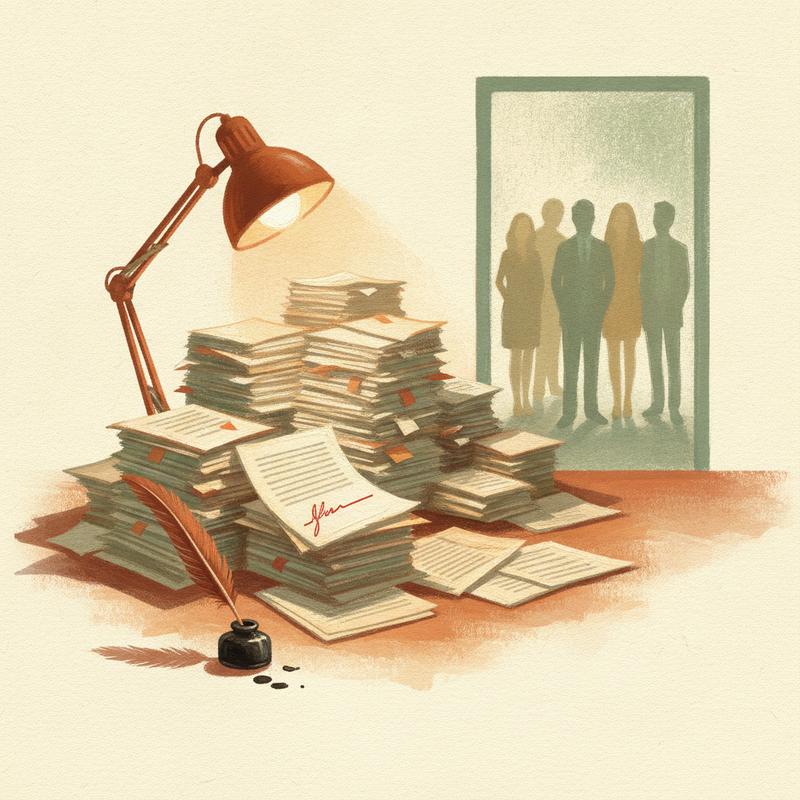
Nothing shipped. Not one thing. Two engineers spent a week polishing work nobody needed while a customer sat waiting on a decision only I was allowed to make. I came back to a hero's welcome and a queue of paper, and I felt useful. Needed. It took me an embarrassing amount of time to see the obvious thing... I had built a machine with one moving part, and the part was me.
Control wears a good disguise
Nobody wakes up and decides to strangle their own team. Control arrives dressed as virtue.
It shows up as quality. "I review everything because our standards matter." It shows up as speed. "It's faster if I do it." It shows up as protection. "I don't want to put this pressure on them." Every one of those sentences is true on any given Tuesday. Strung together across two years, they build a team of people who have stopped bringing you their thinking, because you always replace it with your own.
Here is the part nobody warns you about. The more of a bottleneck you become, the better it feels. Your calendar fills. Your inbox burns. People need you constantly. The sensation, the hot rush of being essential, is a drug. I chased it for years and called the chase leadership.
My own survey work keeps rubbing my nose in this. When I asked people about their working lives, 99.5% said they'd had one or more types of bad boss. Not 60%. Not 80%. Nearly all of us. Those bosses did not arrive from another planet. They were people like me, doing what felt responsible at the time.
The numbers say I was not special
I hoped my situation was unusual. It was not.
DDI's Global Leadership Forecast 2025 assessed rising leaders and found only 19% showed strong delegation ability. Eight in ten people heading into management lack the one skill their new job depends on. In the same research, 71% of leaders reported significantly higher stress since stepping into their role, and close to one in six reported burnout. Stressed and burnt-out leaders were 3.5 times more likely to leave.
Read those together and the story writes itself. We promote people for personal output, hand them a team, teach them nothing about letting go, and then act surprised when they grind themselves down doing three jobs at once.
The upside is measurable too. Gallup studied 143 Inc. 500 CEOs and found the ones with high Delegator talent posted an average three-year growth rate of 1,751%, some 112 percentage points ahead of CEOs with low delegation talent. They generated $8 million in revenue against $6 million, and created 21 jobs in three years against 17. Only one in four of the entrepreneurs Gallup studied had high delegation talent in the first place.
So the rare skill is also the profitable one. We are all sitting on the same lever and refusing to pull it.
Eleven captains
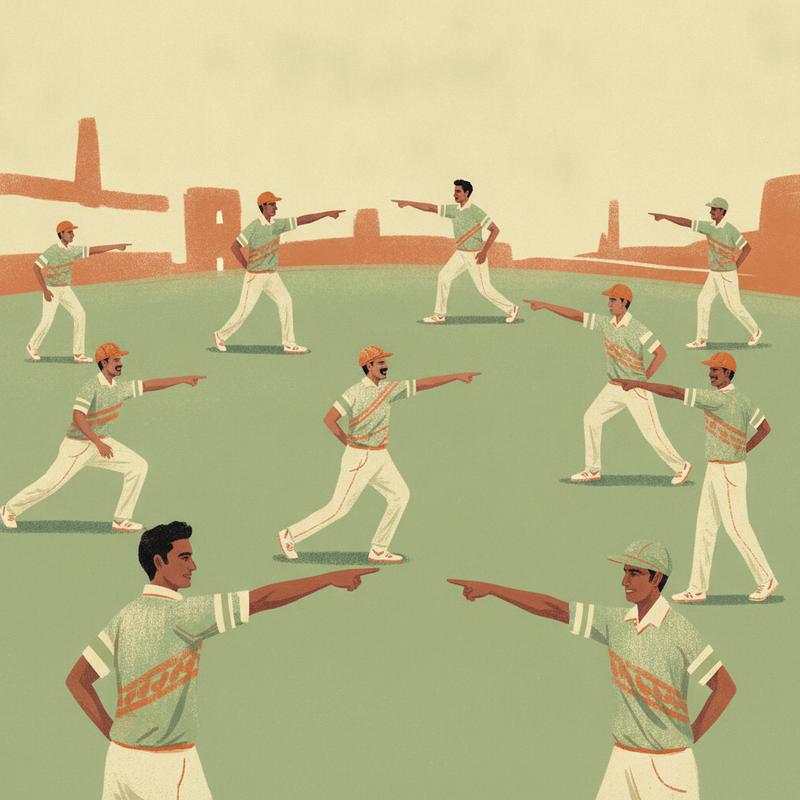
Roland Butcher became England's first Black Test cricketer in 1981, a Barbadian kid who moved to Britain at thirteen and ended up opening a door nobody had opened before. He has a question I keep stealing: how many captains does your team have?
The traditional answer is one. One captain, ten followers, orders flowing downhill. Roland's answer is eleven. On a cricket field the ball arrives faster than instruction travels. If the fielder waits to be told, the moment is gone. A side of eleven decision-makers beats a side of one decision-maker and ten people looking over their shoulder, every single time.
Software is the same, and so is every other job with any pace in it. The decision needs making at the point of contact, by the person with the freshest information. Every time you route a choice back through yourself, you swap fresh information for stale information and add a queue on top.
I ran my teams with one captain for years. I was proud of my grip on the detail. What I had built was ten people trained to wait.
Six signs you are the bottleneck
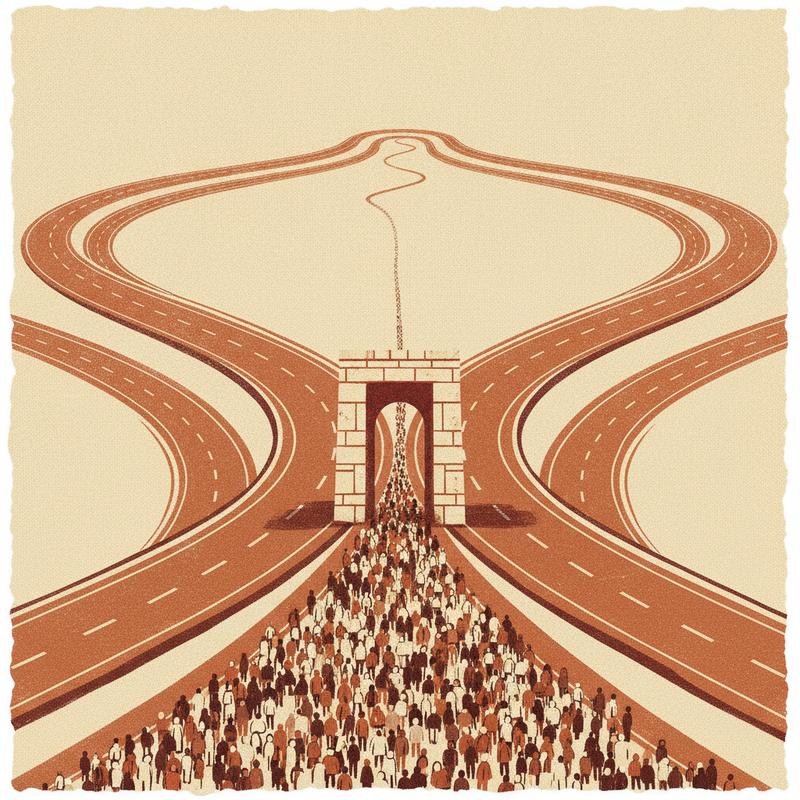
None of this shows up on a dashboard. It shows up in small, deniable ways.
Work waits for your calendar. If your diary is the critical path for a project, you are the constraint, whatever your job title says.
Your team asks permission for things they know how to do. They know the answer. They ask anyway, because the last three times they moved without you, you rewrote it.
You are the only one who knows the whole picture. You call it context. It is a single point of failure with a pension plan.
Holidays feel dangerous. A healthy team runs fine for two weeks without you. If yours cannot, you have documented the problem yourself.
Your best people go quiet. Strong people do not fight a bottleneck. They stop suggesting things, do their narrow slice well, and start reading job adverts on the train home.
You are exhausted and the team is bored. Two symptoms, one disease. You hold all the interesting work, and interesting work is how people grow.
I ticked every box on this list, and told myself I was working hard for my team.
What changed for me
Nothing about this is complicated. It is uncomfortable, which is a different problem, and the discomfort is the whole cost.
I named the decisions and gave them away in writing. Not "you're empowered", which means nothing. A real list: hiring calls, architecture within a service, spending under a number, customer commitments. Each one got a name next to it. Mine got shorter every quarter.
I answered questions with questions. "What do you think we should do?" It felt evasive at first. It is the opposite. People arrived with a problem and left with a decision they owned.
I let people be wrong in ways I would not have chosen. This is the hard one. Someone picks the approach you rejected in your head, and you let it run, because the cost of the detour is smaller than the cost of a team who never learns to choose. About half those detours turned out better than my plan. The other half taught them more than my correction would have.
I stopped rewriting other people's work in silence. Nothing kills initiative faster than finding your work quietly replaced overnight.
I measured how long people wait for me. One number, tracked honestly. Blocked days per week. Watching it drop was the first time I felt good about leadership without feeling essential.
The strange part is what happened to my own week. The work I had no time for, strategy, hiring, teaching, the slow relationship-building with people outside my function, turned out to be the work I was hired to do. I had been too busy doing everyone else's job to notice I was skipping my own.
The thing nobody says out loud
Letting go is a grief.
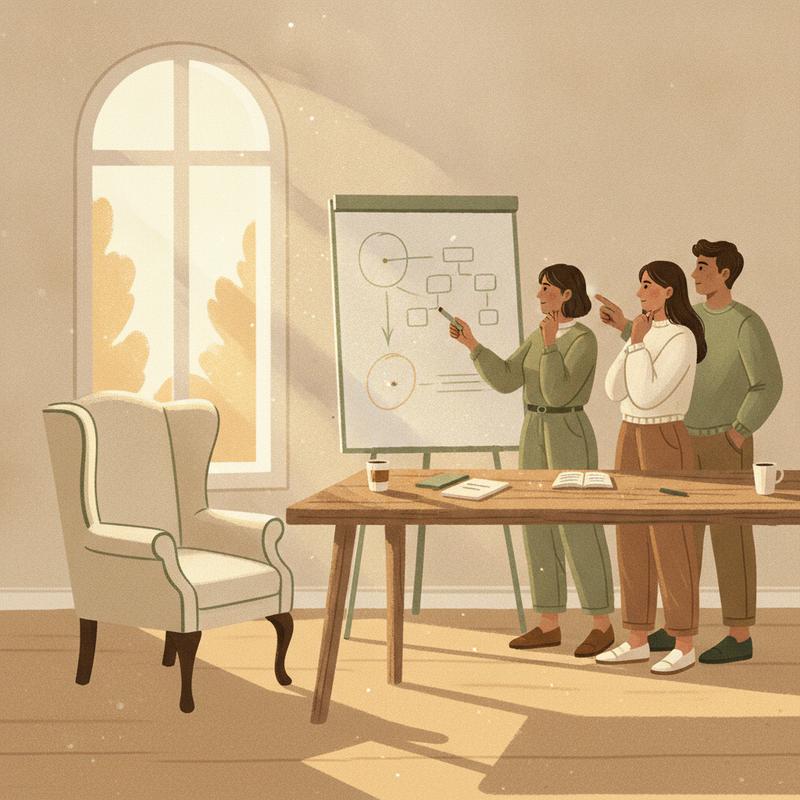
Being needed feels like being valued, and giving it away feels like disappearing. I have watched capable leaders choose exhaustion over the feeling for years on end. I did it myself, and I have written about the same reflex from other angles, in Don't Hoard the Power, Let People Decide and From Doing Everything to Enabling Others. It keeps coming back because it is never solved once.
Your worth as a leader is not the volume of decisions running through you. It is the quality of decisions being made without you.
So here is the question I ask myself now, and I will hand it to you. If you vanished for two weeks tomorrow, no phone, no laptop... what stops? Write the list. Then work out how many of those things stopped because your team lacks skill, and how many stopped because you never let go of the wheel.
The first list is a training problem. The second one is you.