I spent years believing my job was to have answers.
The Army reinforced it. When your platoon is under stress, they need direction. Someone has to know what to do. In the military, the leader steps forward and tells people.
So I did. For years, I told people.
When I moved into tech leadership, I brought the same instinct. Someone asks a question, I answer it. Someone raises a problem, I solve it. Someone runs into a roadblock, I clear it. Fast. Decisive. Efficient.
I did not see what I was doing. I was creating a bottleneck... and training everyone around me to wait for the bottleneck to clear.
Looking back, I was spectacular at removing my team's ability to think.
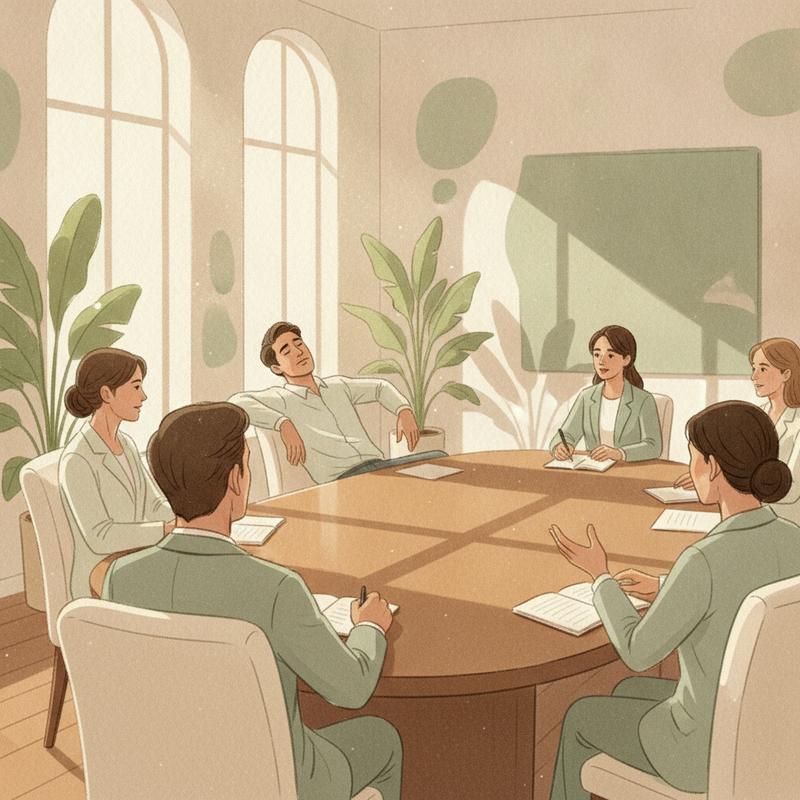
Four Colours, One Superpower
Thomas Erikson's book Surrounded by Idiots maps human behaviour into four colour types. Red: decisive, results-driven, impatient. Yellow: enthusiastic, social, big-picture. Blue: analytical, precise, detail-obsessed. Green: patient, caring, the best listener in the room.
Most leaders skew Red or Yellow. They talk first and think of questions later. They fill silence because silence feels like failure. In their experience, silence means the meeting has stalled and someone needs to rescue it.
Green is different.
Green personalities listen first. They ask open questions. They wait. They let the other person reach the end of a thought before forming any response. They don't perform attention... they pay it.
Erikson makes one observation I keep returning to: if you're unsure how to read someone, go Green. Shut up. Ask a question. Then hear the answer.
He says this works with every personality type. Reds respect it because you're not filling their time with noise. Yellows love it because it gives them space to think out loud. Blues need it because they're always three steps ahead and they want someone keeping up. Greens light up when they find a leader who genuinely listens.
I am not a natural Green. Ask anyone who has worked with me. I'm a talker. I have opinions. I am entirely willing to share them. But going Green deliberately... treating it as a skill rather than a personality trait... turned out to be one of the most effective shifts I've made as a leader.
The Numbers Are Damning
This is not a soft topic.
Research from 2025 shows 86% of employees feel they are not heard fairly or equally at work. 63% say their voice has been ignored by their employer or manager at some point. Meanwhile, 64% of HR professionals name active listening as the top leadership skill they look for... and only 2% of the population has mastered it.
Two percent.
The people doing this well are nearly invisible because the skill looks like nothing from the outside. They're sitting there, asking questions, letting you talk. They don't appear to be doing anything. What they're doing is building more trust per minute than any speech or strategy delivers.
Managers trained in active listening see 30% higher employee satisfaction. Teams led by strong listeners have 20% lower turnover. 79% of employees who feel heard report higher motivation.
These aren't philosophical numbers. They show up in retention, in output quality, in how often your team brings problems to you before those problems become crises.
What Going Green Looks Like in Practice
Going Green is not passive. It's not nodding along while composing your response.
It's three specific things.
Ask open questions. Not "is everything okay?" but "what's getting in your way this week?" Not "do you agree?" but "what am I missing?" The phrasing matters. Closed questions give people permission to say "fine" and move on. Open questions require them to think and respond.
Tolerate silence. When you ask a question and the room goes quiet, resist the urge to fill it. The person is thinking. Let them. The silence belongs to them, not yours to rescue. Leaders who tolerate no silence almost always answer their own questions, which means they never learn anything from the conversation.
Reflect back before responding. Before offering your view, repeat what you heard. "So if I understood you correctly, the problem is..." This does two things. It shows the person they were heard... which is rarer than it should be. And it forces you to process what was said before reacting. You'd be surprised how often repeating something back changes what you want to say next.
None of this is complicated. All of it requires discipline. The instinct to respond fast, to look decisive, to fill space with answers... it's wired into most leaders. Going Green means fighting the instinct.

What I Had to Unlearn
For years, I thought quick answers were what made me useful.
They made me a crutch.
When I answered everything fast, my team stopped working through problems before bringing them to me. Why develop the muscle yourself when I would hand over the answer in five minutes?
Worse, I was often answering the wrong question.
There's a phrase I've heard from coaches and therapists: the presenting issue is rarely the real issue. In leadership, I've found this to be true more often than I'd like to admit. People come to you with the question they feel safe asking... not the one they need answered.
The question "should we rebuild this module?" was sometimes a signal of burnout dressed up as a technical debate. The question "what do you think about my career path?" was sometimes someone telling me they were about to start looking.
When you answer quickly, you address the surface question and miss the one underneath.
I noticed this when I deliberately slowed down. Not because anyone told me to... but because someone I respected sat through an entire one-on-one saying almost nothing, and I came out with my thinking reorganised. They had asked three questions. I'd done all the talking.
It was the most useful conversation I'd had in months.
The Rebellious Act
Going Green as a leader is a rebellion against the image of leadership.
Leaders are supposed to have answers. They're supposed to project confidence, forward motion, clarity. Sitting quietly and asking questions looks like uncertainty. Like you don't know what to do.
Most of the time, you do know. Going Green isn't about pretending otherwise. It's about making space for your team to get there themselves... because a team working through problems is more capable than a team waiting for your answers.
The leaders I've respected most in my career were the ones who made me feel heard. Not the ones with the best answers... the ones who asked the best questions. Not the ones who filled every room with noise, but the ones who made room for mine.
Going Green is the move most leaders never make because it feels like weakness. In practice, it builds more trust than almost anything else you will do.
Try This Week
Pick one meeting where you'd normally lead. Set one rule: don't offer an answer until you've asked at least two questions.
See what comes up.
Erikson is right... going Green works regardless of who's in the room. What changes is what people bring to you when they trust you're going to listen. And eventually, what they're willing to work out themselves before they even need you.
The most effective thing a leader says is sometimes nothing.