The meeting where everybody agreed
I sat in a room once where every single person nodded.
The plan went up on the screen. I asked for objections. Silence. I asked again, because silence makes me twitchy. One person said "sounds good." Another said "sure, whatever you think." We closed the meeting eight minutes early and I walked out feeling like a leadership genius.
Three weeks later, nothing had moved. Not one ticket. Not one conversation with the other team. The work sat exactly where we left it, and when I asked why, I got shrugs and calendars and a vague reference to competing priorities.
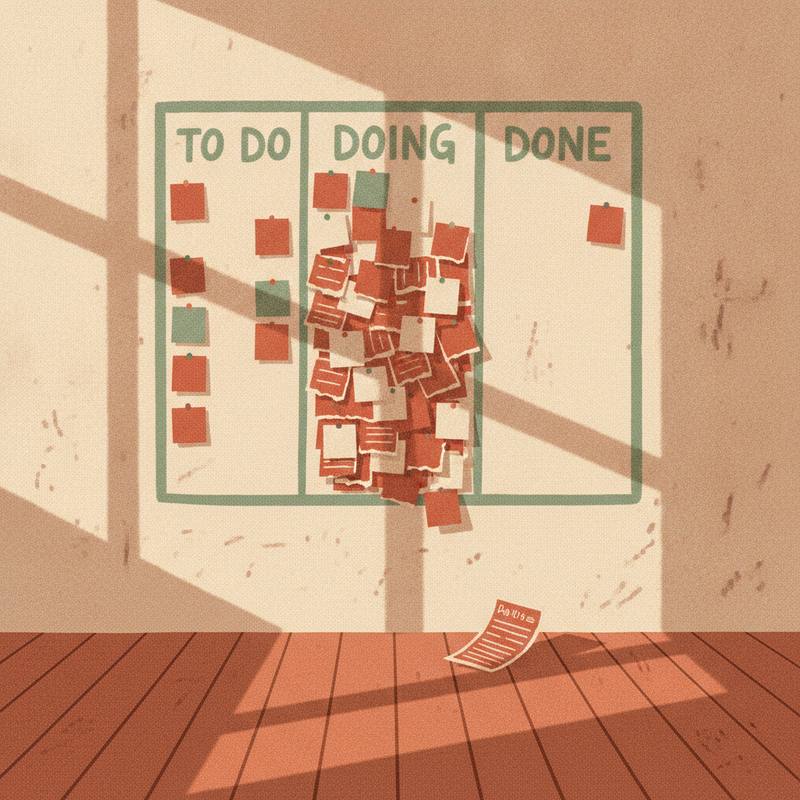
Nobody had lied to me. Nobody had argued with me either. They had done something worse. They had agreed out loud and disagreed with their feet.

Passive aggression is disagreement with the volume turned off
Here is what I got wrong for years. I treated passive aggression as a character flaw. Someone slow-walks a decision, sends the "as per my last email" reply, agrees in the room and complains in the hallway, and I filed them under difficult.
Difficult people exist. Most of the time, though, I was looking at a person with a real objection and no safe way to say it.
Passive aggression is what disagreement looks like when saying it straight feels expensive. Expensive means a bad performance review. Expensive means being labelled negative. Expensive means being the one person who spoke up last time and got flattened for it. People do the arithmetic in about half a second, then they nod.
Then they go back to their desk and express the objection in the only currency left to them. Delay. Silence. The literal reading of an instruction they know is wrong. Cc'ing your boss on a message with no reason to exist.
None of it is subtle, and all of it is deniable. Deniability is the whole design.

It is more common than your gut says, and more expensive
I went looking for numbers, because my own experience is a sample size of one grumpy engineering leader.
Research from WorkNest, covering more than 1,000 organisations, found 30% of employers reporting passive-aggressive behaviour as a live problem. Persistent negativity or damaging conduct came in at 59%. Employees undermining managers or colleagues, 35%.
The number stopping me cold was a different one. In the same research, 24% of employers said their managers rarely address toxic conduct at all in the first place.
So a quarter of the time, the behaviour gets seen and skipped.
On cost, the widely cited figure comes from CPP Global's 2008 Human Capital Report, which found US employees spending an average of 2.8 hours a week dealing with conflict. Roughly $359 billion in paid hours. Nearly three hours a week, per person, spent on friction rather than work.
Some of those hours are honest arguments, and honest arguments earn their keep. Most of the hours I have watched burn were not arguments. They were people managing around a decision nobody felt safe rejecting.
The blame reflex makes it worse
My first instinct was always to name it. Call it out. Be direct about the indirectness. "You said yes in the meeting and then did nothing, so what is going on?"
It feels strong. It lands like an accusation, because it is one.
Watch what happens next. The person denies it, and they are not even lying, since every individual piece of evidence has an innocent explanation. The delay was capacity. The email was clarity. The shrug was tiredness. You are left holding a pattern you cannot prove, and they are left knowing your response to hidden resistance is a confrontation.
The WorkNest research puts a hard edge on this. Only 6% of employers reported a permanent improvement in behaviour after challenging it. 45% saw people change for a while and then revert. And 19% ended up with a grievance filed against them for having raised it.
Six percent. One in sixteen. Whatever most of us are doing when we confront this stuff, it is not working.

Curiosity gets the objection out of hiding
The shift for me came from a simple reframe I keep coming back to, and it belongs to executive coach Grace Judson: address hidden resistance with curiosity instead of blame.
Blame asks "why are you being like this." Curiosity asks "what do you know about this decision I do not."
Second question gets answers. Here is roughly how I run it now.
Go one to one, and go soon
Never in the room. Never in the group chat. The whole reason the objection went underground is a fear of public cost, so raising it publicly proves the fear correct.
Describe the behaviour, not the motive
"The migration work has not started, and I want to understand the blockers." Not "you clearly have a problem with this plan." First version is a fact and invites a fact back. Second version is a diagnosis of their inner life, and you are not qualified to make it.
Ask the question I stole from coaching
"What is the worst thing about this for you?"
It is a strange question to say out loud. It works because it grants permission for a real answer. I have had people tell me the plan doubles their on-call load, or the deadline lands in the middle of their kid's exams, or they told the previous manager the same thing and got ignored.
Every one of those is useful. None of them were coming out in the meeting.
Shut up afterwards
Ask, then wait. The silence after a good question is uncomfortable and it is doing the work. I have talked over more honest answers than I want to admit.
Change something, or explain why not
This is the part most of us skip, and skipping it poisons the well for a year. If someone hands you a real objection, either act on it or tell them plainly why the decision stands anyway. "You are right about the on-call load. We are going ahead, and here is what I will do about it." People live with decisions going against them. What they will not do is hand you another objection after the first one vanished into a void.
The uncomfortable bit
I have been the passive-aggressive one.
There was a stretch in my career where I disagreed with a direction hard enough to lose sleep over it, and I said nothing useful in the room. What I did instead was slow. I asked for clarifications I did not need. I met the letter of every request and the spirit of none of them. I was, in the most polite way available, sandbagging.
I was not a difficult person. I was a person with an objection and a boss who had made saying it expensive. Every time I had gone direct, the answer had been a lecture about attitude. So I stopped going direct.
The behaviour was mine and I own it. The conditions were not. Both things are true, and if you lead people, the conditions are your department.
What to do on Monday
Look at your last three decisions where the room agreed fast. Faster than the decision deserved.
Pick one. Find the person whose agreement was thinnest and ask them, one to one, what the worst part of it is for them.
You will hear something you did not know. Then the real question shows up. Are you going to do anything with it?