There is a man in every office who drops his voice half an octave when he wants the room to agree with him. He leans back. He lets the silence sit. He read somewhere the strongest wolf takes the pack by force, and he has been auditioning for the part ever since.
The wolf research says he is playing a character who was never real.
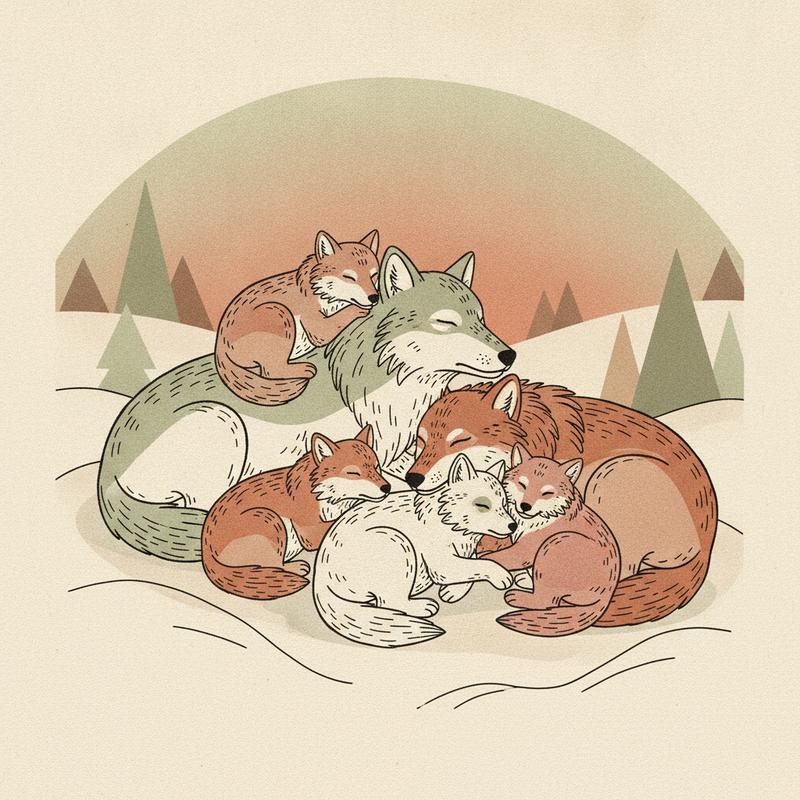
The alpha wolf was an accident in a pen
The idea comes from studies of captive wolves in the middle of the last century. Researchers took unrelated adult animals, put them in an enclosure, and wrote down what happened. What happened was snapping, posturing and a pecking order. Out came the word alpha, and out came fifty years of men repeating it at each other in bars and boardrooms.
Wild wolves do none of it. L. David Mech, a senior research scientist at the U.S. Geological Survey who used the alpha language himself before dropping it, has spent decades watching real packs. He told Scientific American the captive setup produced "the animal equivalent of what might happen in a human prison," and not the way wolves live when left alone. A wild pack is a family. A breeding pair, plus their pups from the last two or three seasons, six to ten animals in total. Mech's multi-year study of one pack on Ellesmere Island, published in the Canadian Journal of Zoology in 1999, found no bloody duels for the top slot. Parents feed the young first when food runs short. Grown offspring leave to start families of their own instead of fighting dad for his job.
Mech's line about it is the one I keep coming back to: "What would be the value of calling a human father the alpha male? He's just the father of the family."
So the whole model, the one your boss built his personality on, is a description of animals under stress in a cage. Business Insider ran the same conclusion under the headline There's No Such Thing As an Alpha Male back in 2016. Nobody told the guy with the voice.
I got taught the voice, and I used it
I came up through the U.S. Army. The command voice is a real skill and it works exactly where it belongs, which is a place with mortal risk, no time, and a chain of people trained to move on the word. Nobody debates a fire order. Nobody workshops it.
I carried the voice into tech leadership, because it had worked before and because it felt like competence. Deep tone, flat certainty, an answer for everything. If someone asked me a question with no good answer, I gave a confident one anyway and worked out the truth later.
It bought me obedience. It never once bought me information.
Here is what nobody warns you about. A team reads certainty as a closed door. Ask a room full of engineers to challenge a decision you announced in your armour voice and you get a polite pause and five people looking at the table. They have all seen what happens to the first person who speaks. So they let you walk into the wall, and afterwards they tell each other in the kitchen they saw it coming three weeks out.
My survey work backs up how common this is. Of everyone who answered, 99.5% said they had lived under one or more types of bad boss. Not a rare defect. The default experience of working life, and most of those bosses thought of themselves as strong.
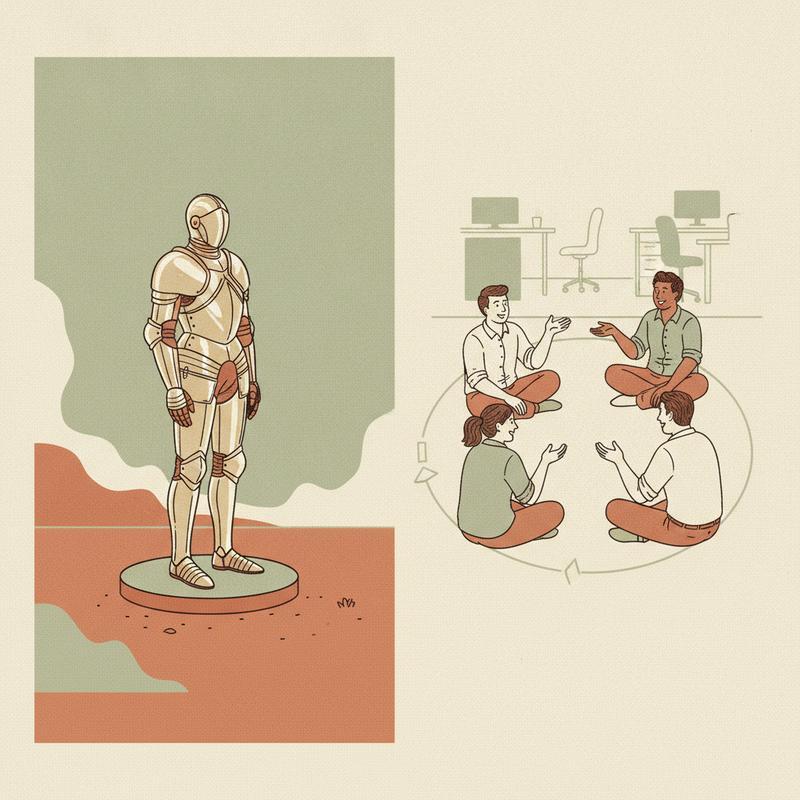
The three worst words a strong leader learns to say
The turn for me came in a meeting where I had no idea what the right call was. Old me would have picked one and sold it with the voice. Instead I said it out loud. "I don't know. Someone in this room knows more about this than I do."
The silence lasted about four seconds and felt like a month.
Then a quiet engineer who had said nothing in six weeks of meetings started talking. He had the shape of the answer. He had been sitting on it, because in the room I had built, offering it would have looked like a correction of the boss.
Nothing about my authority fell over. What fell over was the performance, and the performance had been costing me every good idea in the building.
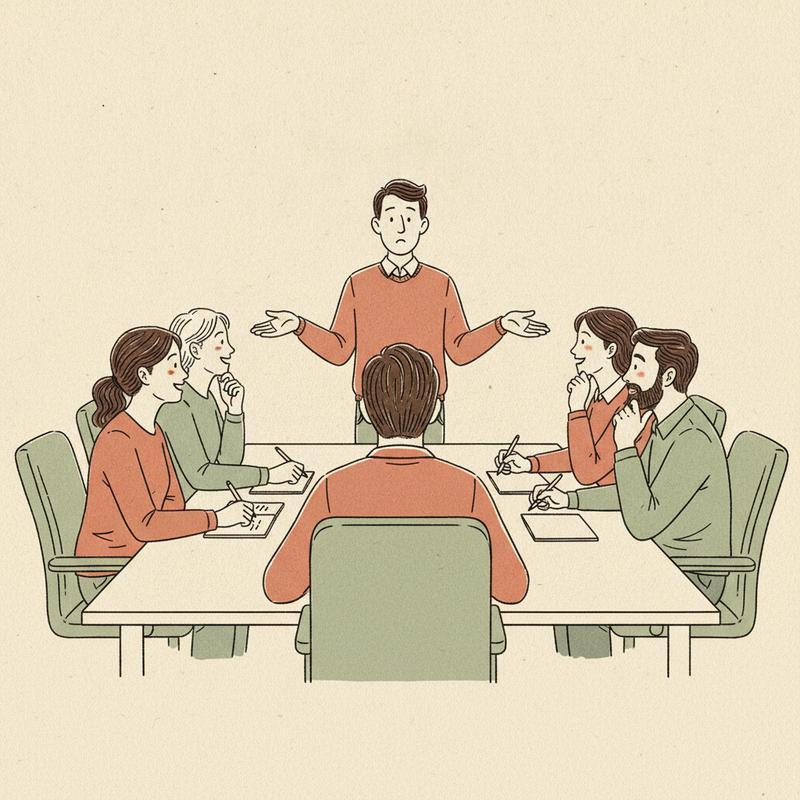
Google spent years and millions arriving at the same place
This is not a soft preference of mine. Google ran a research project called Aristotle across its own teams to find what separates the high performers from the rest. It went in expecting the answer to be the mix of people. Star engineers, seniority, the right personality blend.
The answer was none of those. Google's own write-up of the work puts psychological safety at the top of the list, above dependability, structure, meaning and impact. Psychological safety means people take a risk in front of each other without fearing punishment for it. Speak up, disagree, admit an error, ask the question everyone thinks is dumb.
Who sets whether a team has it? The person with the most status in the room. You. Every time you meet an admission of doubt with a flicker of contempt, you teach eight people to stop bringing you information. Every time you go first with your own doubt, you buy a little more of it back.
The alpha act and psychological safety cannot occupy the same room. Pick one.
Vulnerability with boundaries, not a therapy session
The pushback I get is always the same. Nobody wants a leader who weeps in the all-hands.
Correct. Nobody does. Brené Brown, talking to organisational psychologist Adam Grant on the TED WorkLife podcast, put it in one sentence: "Vulnerability minus boundaries is not vulnerability." The test she offers is whether you are sharing to move the work and the relationship forward, or to offload something onto people who did not sign up to carry it.
In practice, useful vulnerability at work is narrow and specific:
- "I got this wrong last quarter, and here is what I misread."
- "I don't know. Who does?"
- "I'm out of my depth on the data side. Walk me through it."
- "I'm worried about this deadline, and I want to hear the case against my worry."
Notice how none of it is confessional. All of it is about the work. It hands the room permission to be honest, and it costs you nothing except the costume.
The people hiding what they already do
Watching Reddit last week, the loudest argument was not about whether AI output is any good. It was about admission. Dr. Dre said in a New York Times interview he uses AI in his production work, and added the part with teeth: plenty of other producers use it and do not want to admit it. His thread drew far more argument per upvote than any of the anti-AI posts around it.
The same shape shows up everywhere. People will hide a tool, a doubt, a gap in their knowledge, not because hiding helps the work, but because admitting looks weak in front of whoever holds the status. The instinct is expensive, and leaders install it.
Try this in your next meeting
Say "I don't know" once, out loud, where you mean it. Then shut up long enough for someone to fill the gap.
The wolves stopped being alphas the moment we watched them properly. Turned out they were somebody's parents, feeding the young first, and their pack held together by care rather than teeth.
If a real wolf would not perform the alpha act, what exactly are you performing it for?