I asked Roland Butcher a cricket question on our podcast, and he gave me a career answer.
Roland was the first black cricketer to represent England. He played Test matches in 1980 and 1981, back when the long form of the game ruled. Four days for a county championship match. Five days between international sides. Patience, strategy, and the nerve to sit at the crease for hours without giving your wicket away.
Then the game changed. Today he coaches a game where the fastest format takes about three hours. He compared it to a baseball game, which helped this American more than he knew.
I wanted to know how a player raised on five-day patience copes with a three-hour slog. His answer has stuck with me for weeks.

The best players play both
Here is what Roland said, and I'll quote him because he said it better than I would:
"The players who are good at the longer formula game are also the best players at the shorter formula game because they have the patience, right, they have the strategy, et cetera, et cetera, from the longer game to adapt."
And the flip side. The player who only ever learned the short form? In Roland's words, "he's never developed those skills." Hit or miss.
Sit with this for a second. The long-form player isn't the dinosaur in his story. He's the one with the edge. Patience and strategy don't disappear when the game speeds up. They become the foundation the fast stuff sits on.
I'm not sure about this part: Roland says the statistics bear him out across the best players. I haven't run the numbers across formats myself, so treat it as an experienced coach's read of the game rather than a study.
The traditionalists in the pavilion
Roland didn't stop there. He told me about friends of his, inside cricket and outside it, who refuse to accept the new game.
"They're traditionalists. This is all they're interested in. This is how it should be done. And this new game, it is not a game."
I know these people. I've worked with them. On a bad day, I've been one.
Twenty20 didn't arrive by accident. According to Wikipedia's history of the format, the England and Wales Cricket Board went looking for a new competition after the Benson and Hedges Cup ended in 2002, with crowds dwindling at longer matches like the County Championship. The county chairmen voted 11 to 7 to adopt it. The first official matches took place on 13 June 2003.
Seven chairmen said no. A year later, the first Twenty20 match at Lord's drew 27,509 people, the biggest crowd for a county game at the ground, outside a one-day final, since 1953.
I don't blame those seven. Change asks you to put down something you love. The long game is what they grew up with. It's what they understood. Saying no felt like protecting the sport.
But the fans had already voted with their feet. The question was never whether the game would change. The question was who would still be useful once it did.
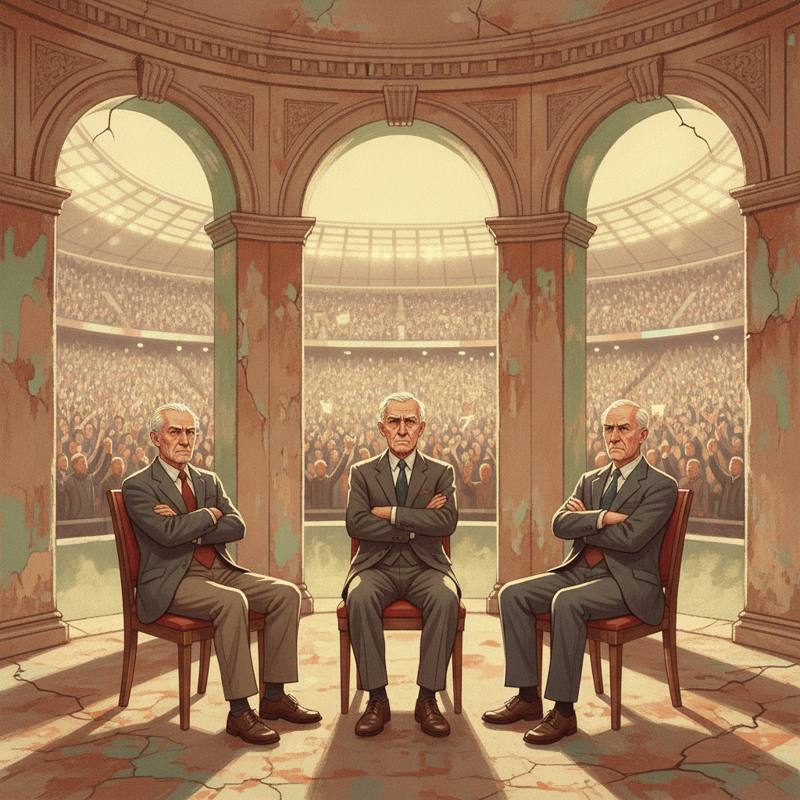
Your long game is worth more than you think
Swap cricket for your job and the pattern holds.
Every field gets its Twenty20 moment. A new tool, a new process, a new generation who wants to work differently. The people who've spent twenty or thirty years mastering the long form face a choice. Fold your arms in the pavilion, or walk out and play the new format with everything the old one taught you.
I've spent decades in the Army, in engineering, and on stages. Right now my own industry is in the middle of its biggest format change I've seen, with AI tools rewriting how we build software. I notice the pull in myself. The urge to say "this isn't real engineering." The urge to defend the five-day game.
Here's what stops me.
Researchers Erik Brynjolfsson, Danielle Li and Lindsey Raymond studied 5,179 customer support agents as an AI assistant rolled out. Productivity rose 14% on average. Novice and low-skilled workers improved by 34%. The most experienced agents barely moved.
You might read this as bad news for the veterans. Look closer at why. The authors found suggestive evidence the AI model spreads the best practices of the most able workers and helps newer people move down the experience curve faster.
In other words, the tool bottled the long-form player's patience and strategy and handed it to the newcomers. The experience didn't stop mattering. It became the thing everyone else learns from.
So the veteran has two options. Refuse the tool and watch it copy your knowledge without you. Or step in and shape what it copies.
Adapting isn't abandoning
The traditionalists get one thing wrong. They think adapting means throwing away what they know. Roland showed me the opposite.
He told me he's always believed there's no one way. As a coach, he works with young players who only want the short game and older players who love the long one. He doesn't pick a side. He coaches both, because the game now has both.
He also pointed out where the rewards are heading. Young players see the rewards in the short game, so the short game is where they want to play. A coach who ignores this loses the next generation. A coach who embraces it, and brings the long-form discipline along, builds players who win in any format.
This is the move. You don't stop being a Test player. You become a Test player who also plays the short stuff, and plays it better than the specialists because you know when to be patient.

What this looks like on a Monday
If you're a leader with years behind you, here's how I'd play it.
Play the new format before you judge it. Don't critique a tool you haven't used in anger. Spend a week with it on real work. You'll find the gaps fast, and your critique will carry weight because you earned it.
Name the long-form skills your team needs. Patience, judgement, knowing which risks to take. These don't show up on a dashboard. Say them out loud so younger people know what to learn from you.
Coach both sides. Some of your people love the old ways. Some only know the new ones. Roland doesn't force either group to switch. He helps both get better. Do the same.
Watch for your own folded arms. When you hear yourself say "this isn't how it should be done," stop. Ask whether you're defending quality or defending comfort. I've written before about how tradition isn't a reason, and how the best leaders aren't great in a fixed way, they adapt. This is the same lesson from a cricket pitch.
The pavilion is comfortable
Roland's book is called Breaking Barriers, and his work lives at rolandbutcher.co.uk. He broke one of the biggest barriers in English cricket. Hearing him talk about change, I didn't hear a man who tolerates new things. I heard a man who expects them.
The traditionalists will tell you the new game isn't a game. They'll sit in the pavilion with their arms folded while the crowd goes somewhere else.
You've spent years building patience and strategy. Those skills are your edge in the new format, not your excuse to skip it.
So which are you right now? The player walking out to bat, or the one in the pavilion explaining why the game went wrong?