You want a culture of respect. You wrote it on the wall. You put it in the onboarding deck. You said it at the all-hands.
Then on Saturday night you posted something snide about a competitor, or a politician, or a customer who annoyed you. Twenty minutes later, three people on your team had seen it.
Which message do you think they kept?
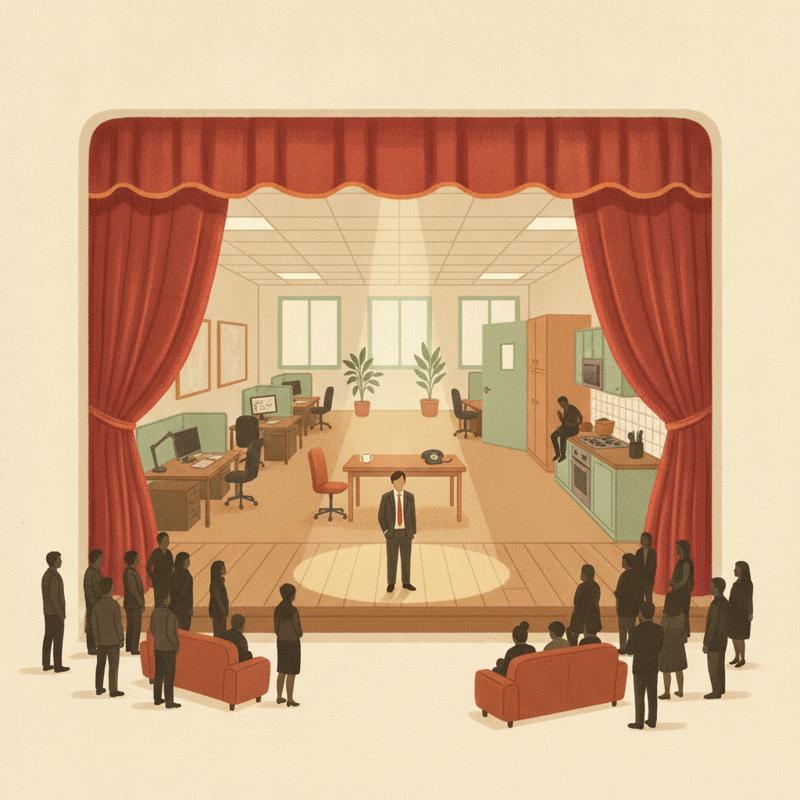
Grace Judson put this in one line when she joined us on Corey-osity Unleashed: you don't build culture by mandate, you build it by modeling. And the part most leaders miss... your social media behavior is your leadership behavior. There is no off-stage.
I've been chewing on her idea for weeks. I think she's right, and I think most of us act as if she's wrong.
Your Team Copies What You Do, Not What You Say
Here is the uncomfortable bit. Your values statement is the weakest signal you send.
Your team watches what you reward, what you tolerate, and how you treat people when you think it doesn't count. Then they copy it.
This isn't a hunch. Researchers have a name for it: the trickle-down effect. In a 2012 study in Personnel Psychology, Mawritz and colleagues looked at three levels of hierarchy... managers, supervisors, and employees. Abusive behavior by managers went with abusive behavior by the supervisors under them. And it didn't stop there. It linked to worse interpersonal behavior in work groups two levels below the original manager.
Two levels. People who might never have spoken to the manager at the top still picked up the habit.
The authors draw on social learning theory to explain it. People learn how to behave by watching the people above them. Nobody hands out a memo saying "be rude to each other now." They don't need to. The example does the work.
The good news runs the same direction. If bad behavior flows down, so does decent behavior. Every choice you make in public becomes a lesson someone below you is taking notes on.
The Stage Got Bigger
When I started out, "public" meant the office. Meetings. The corridor. Drinks after work, if you were unlucky.
Now public means everywhere.
Your LinkedIn comments. Your replies on X or Bluesky or Threads. The photo from the conference after-party. The rant you deleted after an hour (somebody took a screenshot). Your team reads all of it. So do the people you want to hire.
A CareerBuilder survey run by The Harris Poll in 2018 asked more than 1,000 hiring managers and HR professionals about this. Seventy percent of employers said they use social networking sites to research job candidates. Of those, 57 percent had found something online which caused them not to hire.
The same survey found 48 percent of employers use social sites to research their current employees. A third had found content online which led them to reprimand or fire someone.
Read those numbers again, and flip them around.
If companies check their people's feeds this closely, what makes you think your people aren't checking yours?
They are. Your direct reports look you up before their first day. Candidates look you up before the interview. The quiet engineer who never speaks in meetings has read every comment you've left on every post this year.

"It's My Personal Account" Doesn't Work
I hear this one a lot. "My personal account is personal. My views are my own."
I get the instinct. You're a person. You have opinions. You want somewhere to be yourself.
But your team doesn't keep two versions of you in their heads. There's one of you. When you mock someone online, they don't file it under "weekend Ken." They file it under "how the boss treats people he disagrees with."
And then they make a quiet calculation. If I disagree with him in a meeting, will he do the same to me?
Every leader I've ever worked with believed they were consistent. Most of the bad ones were. They were consistently one way when the stakes felt high and another way when they thought nobody important was watching.
Your team is always watching. Your team is important.
What Modeling Looks Like in Practice
I'm not telling you to scrub your personality off the internet. Bland is its own problem. People trust leaders who show up as humans.
I'm telling you to post as if your team is reading. Because they are.
Here's what I try to hold myself to.
Run the Monday test
Before I post, I ask one question. Would I say this, in this tone, to my team on Monday morning?
If yes, post it. If I'd feel the need to explain it, or soften it, or hope nobody brings it up, I don't post it.
Argue the way you want your team to argue
You'll disagree with people online. Fine. Do it the way you'd want your engineers to disagree in a design review. Attack the idea, not the person. Ask a question before you assume. Admit when you got something wrong.
If your team watches you lose an argument well in public, they learn they're allowed to lose arguments too. It's how you get people who speak up.
Praise in public, on the record
Modeling cuts both ways. If you want a culture where people notice each other's work, notice it where everyone sees. Share your team's wins. Tag the person who did the work. Name what they did.
It costs you thirty seconds. It tells everyone reading what you value.
Own the slip
You'll get it wrong at some point. I have. You'll post something sharp while tired or angry.
Don't quietly delete it and hope. Say you got it wrong. A short, plain "I was out of line" teaches your team more about accountability than any workshop. I wrote about why one apology is only the start in One Apology Doesn't Rebuild Trust.

The Mandate Trap
When culture goes wrong, leaders reach for rules. A new code of conduct. A social media policy. A training module with a quiz at the end.
Some of those have a place. None of them fix the problem if the person at the top behaves differently from what the rules say.
I wrote before about how culture shows up in how fast bad news reaches you, and in what happens when someone cries at work. Both of those come down to the same thing. People decide what's safe by watching what you do, not by reading what you wrote.
My research found 99.5% of people have had at least one bad boss. I doubt most of those bosses set out to be bad. Plenty of them had nice values on the wall. They never noticed the gap between the poster and the person.
Your feed is part of the person.
I'm not sure about this part: I haven't found a study measuring how a leader's social media behavior affects their own team's behavior directly. The trickle-down research covers behavior at work, and the CareerBuilder numbers cover employers checking employees, not the other way round. I'm joining those dots myself.
Try This Week
Open your own profile. Scroll back three months. Read it as if you're a new hire who starts on Monday and reports to you.
What would the new hire learn about how you treat people? About what you find funny? About how you handle being wrong?
If you like the answer, keep going. If you don't, you've found the cheapest culture change program you'll ever run.
There is no off-stage. So what's your team learning from the show?
If you want more on how leaders shape the people around them, have a look at Step It Up HR.