You know the drive home. The meeting ended an hour ago, and you are still in it. You replay the moment somebody got talked over, or credit went to the wrong person, or a decision landed on a colleague who had no say in it. You saw it. You said nothing.
By the time you reach your front door, the story has changed. It is no longer "I stayed quiet." It is "I am the sort of person who stays quiet."
Those two sentences are different. The second one does the damage.

Advita said it out loud
Debra and I interviewed Advita Patel for Corey-osity Unleashed. Advita is a confidence coach and the author of Decoding Confidence. We were talking about integrity, and I asked her what it looks like when the right choice is not obvious and the pressure is on.
She told us fairness is one of her deepest values. Unfairness gets a reaction out of her every time. And then she said the part I keep coming back to.
There are rooms where someone with her characteristics does not get to interject. Not because she lacks the nerve. Because of the reaction she would receive, and the risk to her safety. So she has learned to come to terms with it. She works out the reason she stayed quiet in the moment, the X, Y and Z of it, and she names it.
When you know why you stayed silent, your confidence holds. When you don't know why, confidence "takes a tumble."
I have thought about it most days since.
The cost of speaking is not the same for everyone
Advita grew up a brown woman in a racist part of Manchester. I grew up a white guy in America and spent years in the US Army learning to speak up loud and early. When I interrupt a meeting, people tend to call it decisive.
This is not a hunch. The research backs it.
Victoria Brescoll at Yale looked at how much US senators spoke on the Senate floor. In her 2011 study, the more power a male senator held, the more he talked. For female senators, power made no difference to how much they spoke. Her experiments then showed why. Women held back because they expected backlash for talking too much. And a third study showed they were right. Women in power who talked more than others got rated worse, by men and women alike.
A second piece of work from 2018 tested speaking up at work. McClean, Martin, Emich and Woodruff ran a field study and an experiment on two kinds of voice: proposing a better way, and objecting to a problem. Men who proposed better ways gained the most status, and the most chance of being seen as a leader. Women who did the exact same thing did not get the same lift. The authors put it plainly. Whether talking pays off "depends how you do it and who you are."
So when Advita says she weighs the reaction before she speaks, she is not being timid. She is reading the room correctly. The room charges her more than it charges me.
Explaining is not excusing
There is a trap here, and I have fallen into it.
You stay quiet once for a good reason. Then you stay quiet again, and borrow the same reason without checking it. Before long "it wasn't safe" covers every awkward moment, including the ones where it was perfectly safe and you were tired, or wanted to be liked, or hoped somebody else would do it.
Advita's practice works because it is honest in both directions. Some silences have a real reason. Some have an excuse wearing the reason's coat. You only find out which by sitting down and asking.
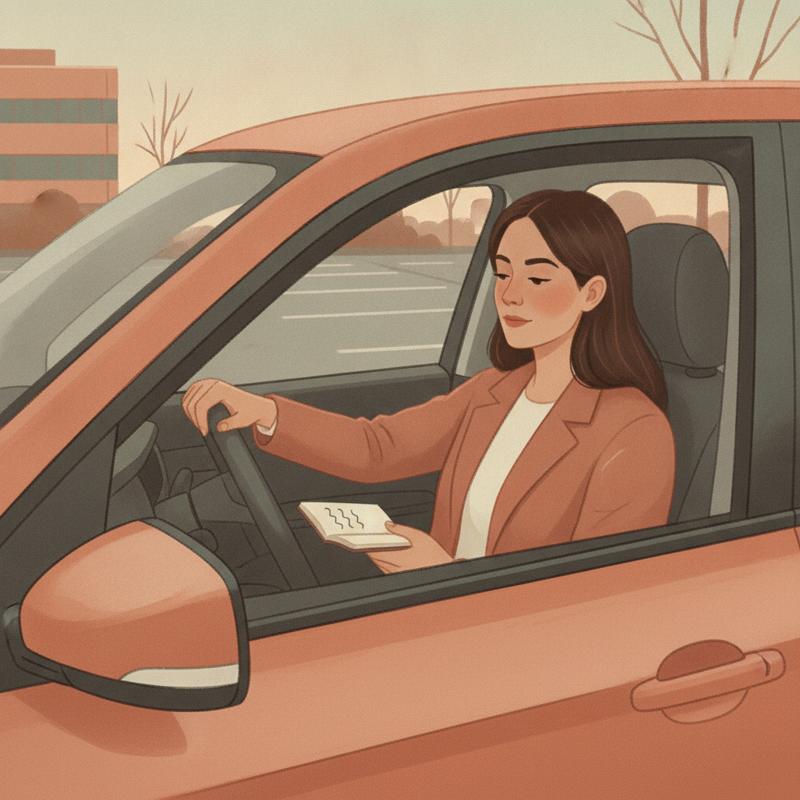
Here is the version I use now. It takes about two minutes in the car park.
Write the moment down
One line. What happened, who was there. Not the story you will tell later. The fact.
Name the real reason
Pick the true one. The power gap in the room. A boss who punishes dissent. Your visa, your mortgage, your probation period. Or... you didn't want the hassle. Be straight with yourself, because nobody else will check.
Decide whether it still stands
A real reason in the room does not always hold an hour later. You might not have been able to say it in front of twelve people. You might be able to say it to one person on Tuesday. A quiet word, an email, a question in a one-to-one. Silence in the moment does not have to mean silence forever.
Let it go if the reason was real
This is the bit people skip. If you were protecting yourself from a cost you shouldn't have to pay, you made a sensible call. You don't owe the meeting your career. Put the notebook away and drive home as the person you are, not the person the replay says you are.
If your voice is cheap, spend it
Now the uncomfortable part, and it is aimed at people who look like me.
If speaking up costs you less, you have less excuse for staying quiet. Every time I let something unfair slide in a room where I had the cheapest voice at the table, I left the bill for somebody who would pay more for it.
There is a lovely example of what to do instead. In 2016, the Washington Post's Juliet Eilperin reported on women in the Obama White House. They kept getting ignored in meetings, so they started a habit they called amplification. When a woman made a key point, another woman repeated it and named who said it first. The men in the room had to notice, and couldn't claim the idea as their own. According to the women Eilperin spoke to, Obama noticed too, and began calling more often on women and junior aides.

Amplification costs me nothing. "I want to go back to what Advita said, I think she's right." Eleven words. No backlash, because I'm the one saying them. The credit lands where it belongs.
The same goes for the unfair moment Advita won't risk calling out. If I see it too, it's mine to call. Not to rescue anybody. Because the person with the cheapest voice should do the talking when talk is needed. Anything else is me pocketing the discount.
I wrote before about why "speak up or get out" is advice for people with savings, and about what silence does to you over time. Money is one reason the price of speaking varies. Who you are in the room is another. Advita gave me words for the second one.
I'm not sure about this part: both studies above measured gender. I have not found equally strong published data on how race and gender combine to change the cost of speaking up at work, so I am going on Advita's account and what I have watched, not a number.
For the leaders reading this
If you run the meeting, the silence is information. When the same people go quiet every week, don't assume they have nothing to say. Assume they have priced it, and the price is too high.
Ask them afterwards, one to one. Credit ideas by name, out loud, every time. Watch who gets interrupted and stop it the first time, not the third. In our research at Step It Up HR, 99.5% of people told us they'd had one or more bad bosses. Plenty of those bosses never shouted at anyone. They let the room be unfair and called it neutral.
So, which silence was yours?
Think about the last moment you stayed quiet when something wasn't fair.
Do you know the real reason? Write it down. If it was a good reason, forgive yourself and move on with your confidence intact.
And if you were the cheapest voice in the room... who did you leave to pay?