I reach for my phone the way a smoker reaches for a cigarette. I admitted this here once before, in The Phone Isn't the Problem. You Are. Back then I wrote about conversation, and how the phone steals time from the people in the room.
I missed a second problem hiding behind the first one.
The phone steals time from me too. From the version of me who would have to sit still and think.
Advita Patel put words to this, and I haven't been able to shake them.
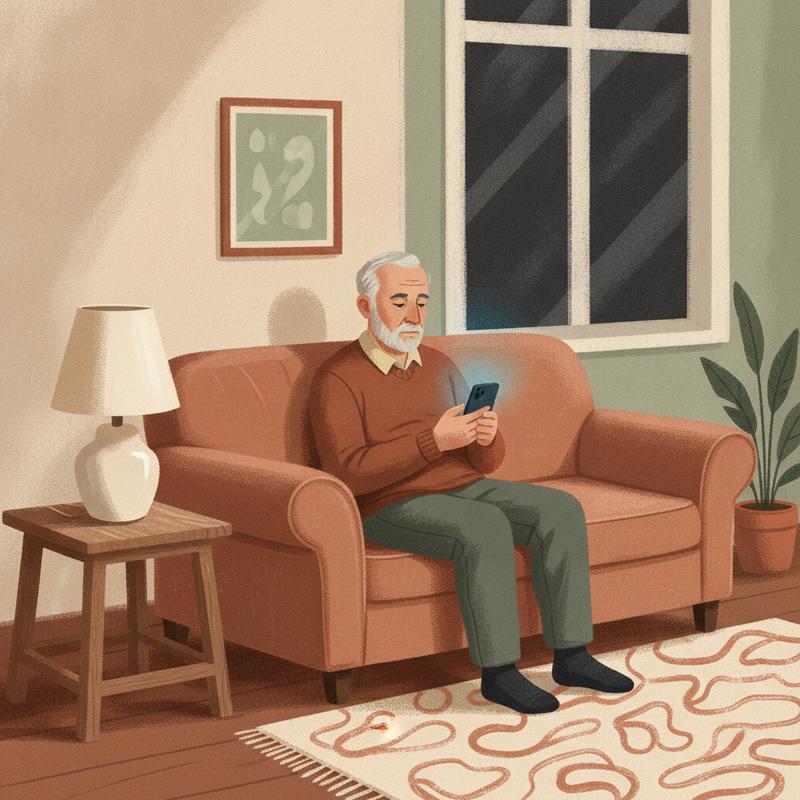
Filling the Space So You Don't Have to Look
When Debra and I talked with Advita for Corey-osity Unleashed, she described a stretch of her life when she kept her brain full on purpose. Every gap got filled. The content didn't matter much. An empty mind left room to think about herself, and she didn't want to go there.
Advita is a confidence strategist and the author of Decoding Confidence. I've written about her energy audit and her refusal to use the word weakness. She thinks harder about the inside of her own head than most people I know. And she still fell into this.
So did I. My guess is you did too.
People Would Rather Get Shocked
In 2014, Timothy Wilson at the University of Virginia and Daniel Gilbert at Harvard published eleven experiments in Science about the disengaged mind. They asked people to sit alone and think for 6 to 15 minutes. No phone. No book. No sleeping.
People didn't enjoy it. According to the Boston Globe's write-up, they rated it about a 5 on a scale of 0 to 9. At home it went worse, and nearly a third admitted they cheated with their phones or music.
Then came the experiment everyone remembers. Volunteers felt a mild electric shock first, and most said they'd pay money to avoid feeling it again. Then the researchers left them alone in a room for 15 minutes with a button to shock themselves.
Among the 42 people who said they'd pay to avoid the shock, two-thirds of the men pressed the button. A quarter of the women did too. One person pressed it 190 times.
Read it again. People who would pay to avoid pain chose pain over their own company.
Your phone is a painless version of the button. You press it a hundred times a day and it doesn't even sting.
Busy Is the Same Button
The phone takes the blame because you see it in someone's hand. Work does the same job, and gets praised for it.
I've spent a long career in tech leadership, and I know how good a full calendar feels. Back-to-back meetings look like commitment. Email at night looks like dedication. Nobody questions it. Your boss thanks you for it.
And it keeps the hard questions out of the room as well as any screen does.
A packed calendar is the respectable way to avoid yourself. I wrote about the other side of this in You're Not Busy. You're Disorganized. Some busyness is a planning problem. Some of it is a hiding problem.
Instant Gratification Sends a Long Bill
Every scroll pays out now. A message, a headline, a small hit. The cost shows up years later.
Researchers have studied the shape of this. In 1994 Thomas Gilovich and Victoria Medvec reported a pattern in regret. In the short term, people regret what they did. In the long term, they regret what they didn't do.
A 2022 replication in Collabra: Psychology with 988 participants found support for the pattern, with weaker effects than the original. One of the four replicated studies didn't hold up. So hold it loosely. The direction still matches what I hear from people my age.
The short game rewards distraction. The long game punishes it.

The Question Advita Asked Instead
Advita's turning point was one question. What would she regret at 100?
Not at the end of the quarter. Not next week. At 100, looking back.
Bronnie Ware worked for years as a palliative caregiver, looking after patients in the last 12 weeks of their lives. She wrote down what they regretted, and the Guardian covered her list before it became the book The Top Five Regrets of the Dying.
The most common one: "I wish I'd had the courage to live a life true to myself, not the life others expected of me."
The second: "I wish I hadn't worked so hard." Ware said this one came from every male patient she nursed.
The rest of the list... the courage to express feelings, staying in touch with friends, letting yourself be happier. Nobody on it wished for more hours staying busy. Every item is something they put off.
Ware's list comes from one nurse's observations. It isn't a controlled study. I trust it anyway, because it lines up with the long-run regret research, and because it matches the quiet answers I get when I ask myself the same question.
Why the Question Works
Thinking about yourself feels like a threat. It's open-ended. It asks what's wrong, what's missing, where you messed up. No wonder people reach for the button.
The 100 question has edges. It has a viewpoint and an end point. You aren't asked to judge yourself today. You're asked to look back from a calm place, a long way off, and notice the gaps.
It also turns the phone from a reflex into a trade. Thirty minutes of scrolling tonight isn't a crime. Held up against "what would I regret at 100?" it becomes a choice with a price on it. And you get to decide whether the price is worth paying.
I'm in my sixties. 100 sits closer to me than it does to most people reading this. The question doesn't scare me. Not asking it does.

Try This for One Week
- Ask the question once a day. Tie it to something you already do... the kettle, the commute, the walk to the car. What would I regret at 100? One answer. No essay.
- Leave one gap empty. One line at the store, one wait, one walk with no phone and no podcast. Notice what shows up. If it feels uncomfortable, good. It's the stuff you've been dodging.
- Act on one answer. Call the friend. Say the thing. Book the day off. Regret about inaction only shrinks when you act.
- Watch for the button. Each time you reach for the phone, ask what you were about to think about. The dodges will teach you more than the answers.
The Bill Arrives Either Way
Advita filled her brain to avoid looking at herself. I fill mine with headlines and messages and a full calendar. You've got your own version.
The scroll pays out now. The regret pays out later, with interest.
So ask it tonight, before you pick up the phone. What would you regret at 100?
Then put the phone down and sit with the answer. All 15 minutes of it. No button.