I spent six weeks making one decision.
Six weeks of chewing on it in the shower. Arguing with myself on dog walks. Sketching team structures on the back of a receipt in a coffee shop. Killing three versions before the fourth one held up.
Then I stood in front of the team and explained it in four minutes.
"Any questions?"
Silence. Some nodding. One person asked about desk moves.
I walked back to my desk thinking the meeting went well. It went badly. I had finished a conversation. They had not started one.
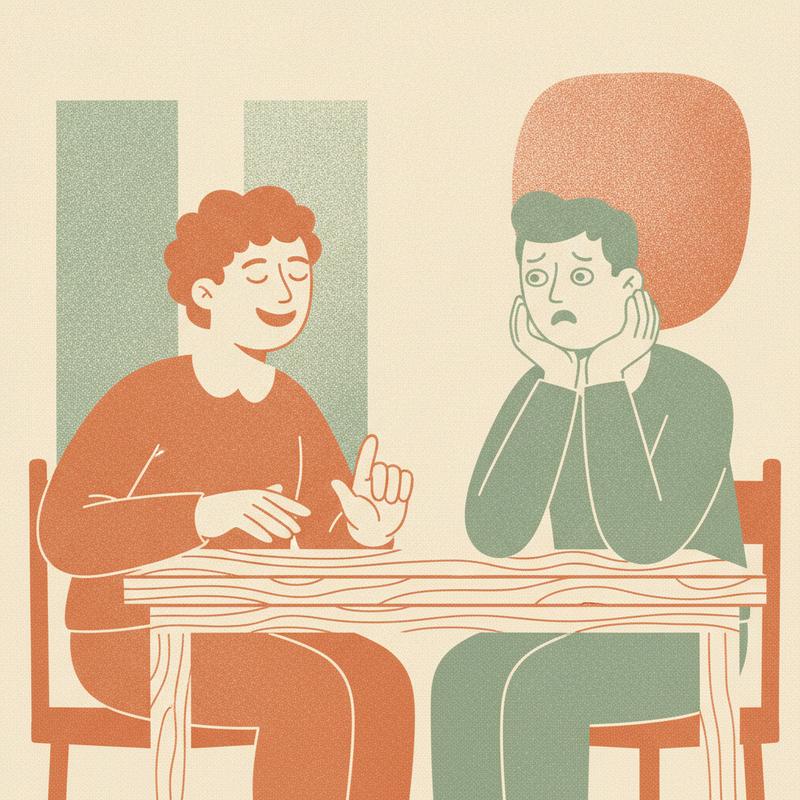
The tapping test
In 1990, a Stanford graduate student named Elizabeth Newton ran an experiment so simple it hurts.
She split people into tappers and listeners. Tappers picked a song everybody knows... Happy Birthday, Jingle Bells... and tapped the rhythm out on a table. Listeners guessed the tune.
Before the guessing started, Newton asked the tappers to predict their hit rate. They said about half, with estimates running from 10% up to 95%.
The listeners got 3 songs right out of 120. Two and a half percent.
Here is the part worth sitting with. The tappers were not stupid and the listeners were not deaf. Inside the tapper's skull, a full orchestra plays. Horns, drums, the words, the key change. Outside, the listener hears a finger going bump bump bump on a table.
The tapper hears music. The listener hears Morse code.
Economists gave this a name in 1989. The curse of knowledge, coined by Colin Camerer, George Loewenstein and Martin Weber. Once you know a thing, you lose the ability to picture not knowing it.
Every leader I have worked with, myself included, taps at their team and wonders why nobody hums along.
Six weeks versus four minutes
Look again at my reorg meeting.
By the time I opened my mouth, I had lived inside the decision for a month and a half. I had already grieved the version we were not doing. I had already fought the objections... in my head, with an imaginary version of my team, and I won every round. Convenient.
My team walked into a room at 10am on a Tuesday. They got four minutes of conclusion with none of the road behind it.
They were not slow. They were new to it. I was the one behaving oddly, standing there expecting a room of people to arrive at a destination in four minutes after it took me six weeks of walking.
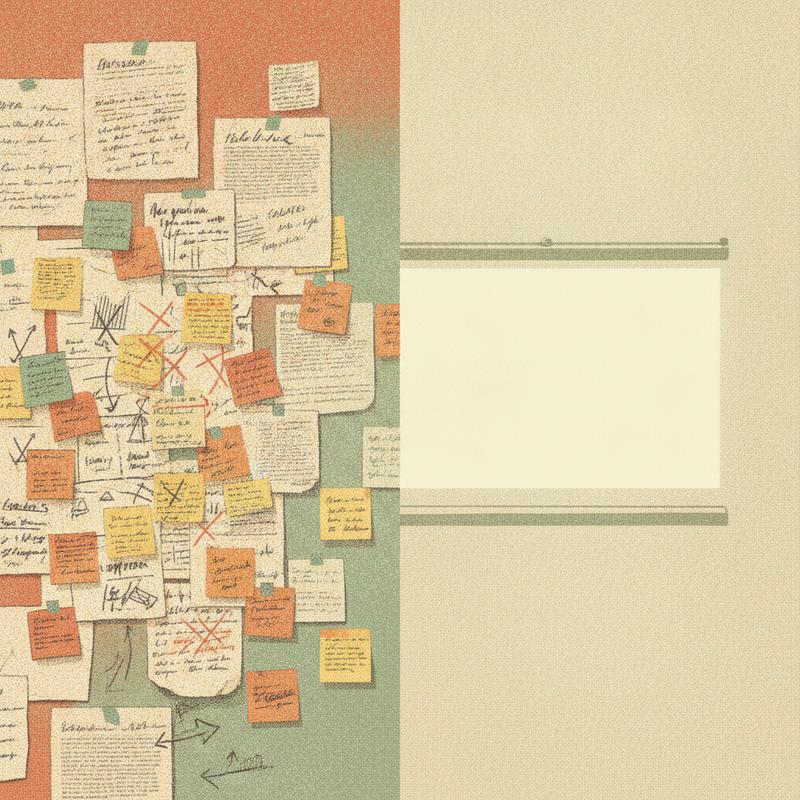
Worse, the silence felt like agreement. Silence is almost never agreement. Silence means people are still catching up, or they gave up catching up and decided to wait and see what happens.
I read the room wrong because I was reading my own head.
The receipts
This is not a quirk of one bad Tuesday. Gallup found only 22% of employees strongly agree the leaders in their organization have a clear direction, and only 41% strongly agree they know what their company stands for.
Read those numbers as a leadership scorecard, because they are one. Almost no organization sets out with an unclear direction. Every leadership team I have met believes they have said it. Loudly. Repeatedly. In a deck.
They have said it. They have not been heard. Those are different events, and only one of them shows up in the numbers.
Knowing about the bias will not save you
Here is the annoying bit.
The research says this bias resists the obvious fixes. Telling people about it does not shrink it. Asking them to think harder about the other person's view does not shrink it. Paying them does not shrink it either.
So reading this article will not fix your next all-hands. Sorry.
What works is mechanics. Habits with teeth, built into how you communicate, running whether you feel wise on the day or not. Here are the four I use.
1. Show the trail, not the conclusion
I now open with the wrong answers.
"Here are the three options I killed, and why." It costs ninety seconds and it hands the team the walk instead of the destination. People argue with a conclusion. People join a trail.
2. Say how long you sat with it
Out loud. "I have been turning this over since the second week of July."
It sounds like a small thing. It resets the clock in the room. It tells everyone their blankness is fair, and it gives them permission to need time as well.
3. Make them say it back
Not "any questions?" ... a dead phrase, and I have wasted years on it.
Try this instead: "Sanjay, tell me how you would explain this to your team on Monday."
It is uncomfortable the first few times. It is also the only reliable way to find out what landed, because the gap between my version and Sanjay's version is the exact size of the problem.

4. Treat the first telling as the announcement, not the understanding
The meeting where you announce something is not the meeting where people understand it. Those are two different meetings, sometimes weeks apart.
I write it in my calendar now. Announcement, then a follow-up, then a check-in with each lead. Same message, three shapes. It feels repetitive to me... which is the point. It feels new to them.
Jargon is tapping with extra steps
The same bias eats your onboarding.
You say "we'll run it past the CAB after the RFC lands" and you hear a clean sentence. Your new hire hears an adult in a cartoon going wah wah wah. They will not stop you, because stopping you means admitting they are lost in week two in front of people they want to impress.
I ran into this in the Army long before I ran into it in tech. Acronyms are a fence. Whoever is inside the fence stops noticing the fence exists.
So I ask new starters to keep a list of every word we use they do not know, and to send it to me at the end of week one. No shame in it, and no need to ask in front of anybody. Those lists have taught me more about our communication than any survey. It is also short-lived, because after about a month they stop noticing the fence too.

The bit I keep relearning
I have written before about not knowing being a superpower if you admit it, and about being the bottleneck while calling it leadership. This one sits in the same family.
The higher you go, the more you know, and the more expensive your knowing gets for everybody around you. Expertise buys you speed and charges you empathy. Nobody warns you about the invoice.
The good news is small. You do not need to know less. You need to remember what it felt like to not know, for about ninety seconds, before you open your mouth.
So think about the last big thing you announced. How long had you been living with it before your team heard the first word of it?
If the answer is weeks, and you gave them minutes, you were not communicating. You were tapping.