A new participant joined thousands of work calls this month. It never gets tired, never misses a word, and never forgets.
On November 12, Anthropic announced Claude Meetings, a beta for Team and Enterprise plans. You add Claude to a Google Meet call. It shows up as a visible participant, takes the notes, answers questions, and builds documents while people are still talking. After the call, the notes, action items and full transcript sit on a meeting page in Claude.
I use AI tools every day. I build with them. I'm not here to tell you to ban the bot.
I'm here to ask a different question. When the bot joins the call, who stops talking?

A transcript changes the meeting it records
We treat a transcript like a camera pointed at the room. A neutral record of what happened.
It isn't neutral. The record changes the room.
The best evidence I know comes from the US Federal Reserve. In 1993, the Federal Open Market Committee decided to start releasing transcripts of its meetings. From then on, every word a member said would one day become public.
Economists Ellen Meade and David Stasavage studied what happened next. Their paper, Publicity of Debate and the Incentive to Dissent, tested whether publishing the transcripts changed members' willingness to disagree. They found evidence it did. Once the words went on the record, members grew more reluctant to voice dissent.
A later study by Stephen Hansen, Michael McMahon and Andrea Prat used computational linguistics on the same natural experiment. They found two effects. A discipline effect, where the record pushed members to perform better. And a conformity effect, where members fell in line. In their analysis, discipline won out on balance.
Read both results together. A record makes people work harder. It also makes them more careful about what they say out loud.
These were some of the most senior economists in the world, debating interest rates. Now think about a junior developer on a sprint retro, with a bot in the corner of the screen.
The bot doesn't know when the meeting ends
The second risk is more mundane. The bot keeps listening after the humans think the meeting is over.
Engineer Alex Bilzerian once joined a Zoom call with a venture capital firm. One of the investors had Otter.ai running. After the call, Otter emailed Bilzerian the transcript. It included the investors' private conversation after he logged off. According to his account to The Washington Post, they discussed their firm's "strategic failures and cooked metrics." He killed the deal.
Other people replied with their own stories. One described a grant meeting where a few colleagues stayed behind to talk privately. The recording kept running and went out to everyone.
Then the lawyers arrived. In August 2025, Justin Brewer filed a class action against Otter.ai in federal court in California. The suit claims Otter recorded people who never subscribed and never gave consent, and used those conversations to train its speech models. It's an allegation, not a verdict.
I'm not sure about this part: I haven't found a ruling in the case as of November 2026, so I'm treating it as open.
Your team doesn't need to know the case number. They know the story. Every person on your next call has heard some version of "the bot sent it to everyone." They adjust.

The parking lot gets busier
Here's what I think happens in most teams. Nobody complains about the bot. Nobody refuses it. They smile, nod and say less.
The honest conversation doesn't disappear. It moves. It goes to the private Slack DM, the walk to the car, the call after the call. The parking lot meeting gets longer while the real meeting gets shorter.
Leaders miss this, because the official meeting looks fine. The notes are tidy. The action items are clear. Nobody disagreed. The leader reads the summary and concludes the team is aligned.
The team isn't aligned. The team is careful.
My research found 99.5% of people have had one or more types of bad boss. Most of the people on your calls have watched someone get punished for something they said out loud. A searchable, permanent, word-for-word record of every meeting is a gift to the boss who wants receipts. Your people know this, even if you would never use it against them.
Accountability and safety both need a home
I'm not arguing against records. The Fed research shows the upside. Disciplined people, clear decisions, follow-through on action items. Anyone who has left a meeting where five people heard five different decisions knows the cost of no record at all.
The answer isn't "record everything" or "record nothing." The answer is to decide which meetings are for deciding, and which meetings are for thinking.
Decision meetings benefit from a record. Status updates, planning sessions, customer calls where the action items matter. Let the bot take the notes.
Thinking meetings need air. Retros. One-to-ones. Brainstorms. Any conversation where you want someone to say "I think this plan is wrong" or "I messed up last week." Those words come out slower when a machine is writing them down.
I wrote about the gap between attendance and attention in Being in the Room Isn't Listening. A bot in the room raises the stakes on the gap. It hears every word and understands none of the silence.
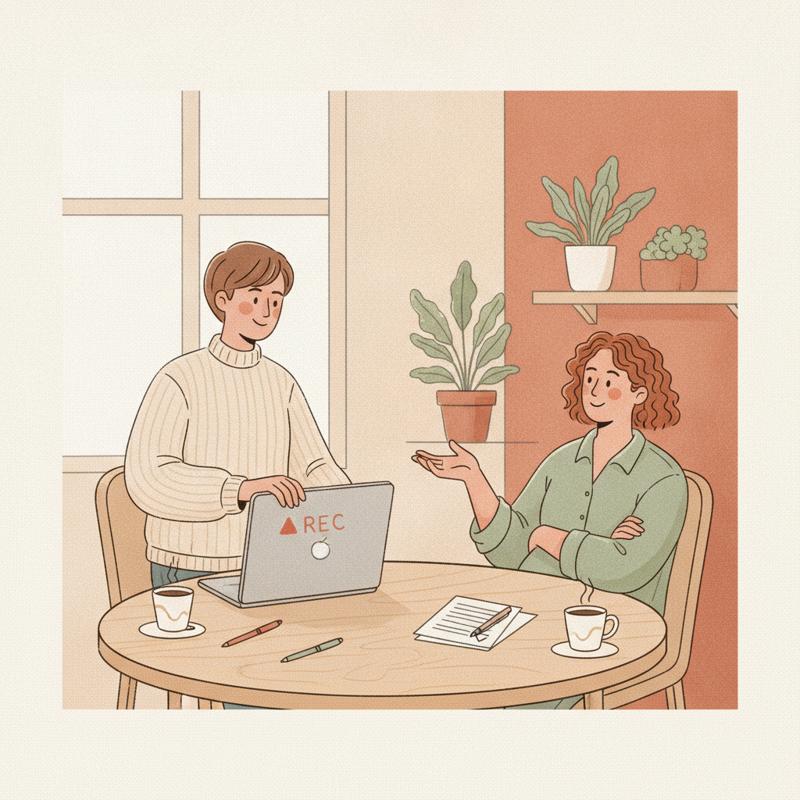
What I'd do before switching it on
If you lead a team, you'll face this choice soon, if you haven't already. Here's my list.
Say it out loud, every time. "The bot is on for this one. Here's why." Don't let people find out from a tile in the corner of the screen.
Name the no-bot meetings. Write it down. One-to-ones and retros are bot-free unless the person asks otherwise. Make it a rule, not a mood. Put it in the team's working agreement, next to your core hours and your on-call schedule.
Ask before you add it. Ask the people on the call, not only the meeting owner. If one person says no, respect it without a debate.
Know where the transcript goes. Who sees it? How long does it live? Will HR pull it in a dispute? If you don't know, find out before you switch it on. Your team will ask.
End the meeting on purpose. Stop the bot before the goodbyes. The Bilzerian story happened because nobody stopped the recording.
Watch for the quiet. If your retros got shorter and politer after the bot arrived, the bot didn't improve your team. It drove the honest part somewhere else.
Honest feedback is fragile
I care about this because honest feedback is the thing I've spent years trying to protect. It's the reason we built Step Up 2 BAT, with anonymous feedback and combined scores so no leader ever sees who said what. People tell the truth when the truth won't follow them home.
A meeting bot doesn't make you a bad boss. A meeting bot makes everything you say permanent. Your team will decide how much truth to put into a permanent record based on one thing... how safe they feel with you.
So before you add a new participant to the call, ask yourself. If your team knew nobody was listening, what would they say? And why aren't they saying it now?