Every sprint review I ever ran ended the same way. "Great job, everyone." Same nod, same words, same five seconds for all eight people in the room.
Equal. Tidy. Worth nothing.
I did it for years and told myself I was being fair. I was being lazy.

Equal praise is the cheapest thing a manager hands out
Blanket praise demands no thought. You do not have to know who chased the flaky test suite until 11pm on Thursday. You do not have to know who sat with the new hire after their first outage and talked them down. You do not have to know who rewrote the deploy script so nobody performs the Friday ritual any more.
You say "great job, everyone" and you have discharged your duty.
Your team knows the difference. They know who carried the sprint and who watched it happen. When you flatten all of it into one sentence, you tell the person who carried it: I was not paying attention, and I am fine with not paying attention.
Gallup found only about 1 in 3 US workers strongly agree they got recognition or praise for good work in the past seven days. The same research found employees without adequate recognition are twice as likely to quit inside a year. Two out of three engineers on your floor are getting the sprint-review nod and nothing else.
Fair and equal are not the same word
Equal means everyone gets the same thing. Fair means everyone gets what their contribution earned.
Those two ideas collide every time a team ships something. One person did the hard architectural thinking six weeks ago. One person wrote most of the code. One person spent the sprint in meetings absorbing scope changes so the other two never saw them. One person did their tickets and clocked off, which is a legitimate way to hold a job.
Hand all four the same "great job" and you have told a specific lie about a specific set of facts. Worse, you have taught the room the exact price of effort: zero.
Engineers are pattern matchers by trade. Give them a reward function with no signal in it and they optimize for the thing with signal instead. Usually visible output. Usually ticket count. Usually whatever the promotion doc measures.
Your scoreboard counts only the work it renders
Here is where recognition stops being an HR concern and becomes an engineering one.
Tanya Reilly named the problem in Being Glue: the onboarding, the unblocking, the note-taking, the design review comment saving three weeks of rework. Teams die without it. Promotion committees do not see it. Her line lands hard... while glue work makes teams successful, people are not always rewarded for doing it.
She also cites research showing women volunteer for non-promotable work 48% more often than men, and get assigned it at 44% higher rates.
Read those two facts together and equal recognition stops looking neutral. If your praise is uniform while your work distribution is skewed, uniform praise locks the skew in place. The person doing the invisible half of the delivery gets the same nod as the person whose commits show up in the dashboard. One of them has evidence at review time. One of them has goodwill.
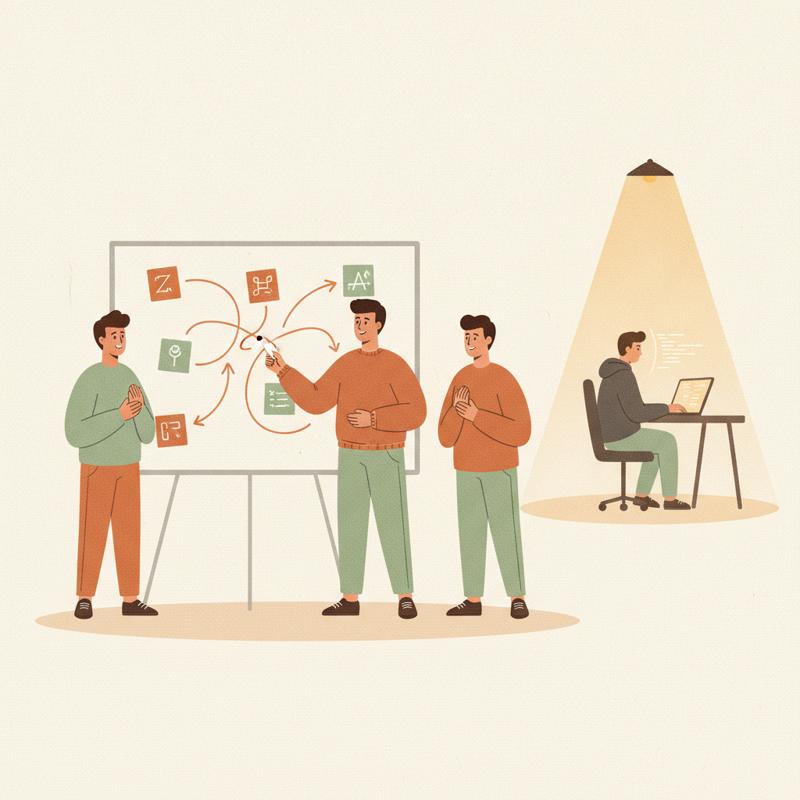
I have sat in calibration meetings where a strong engineer got talked past because nobody in the room had a story about them. Not because they underperformed. Because their contribution left no artifact. The manager who owed them a story had spent the year saying "great job, everyone".
Almost nobody has been asked how they want to be recognized
Gallup's work on generational differences in recognition turned up the statistic I find hardest to defend as a leader: only 10% of employees have ever been asked by anyone at work how they like to be recognized.
Ten percent. On something we all claim to care about.
The same research found Gen Z and younger millennials are 73% more likely than baby boomers to want recognition at least a few times a month. Some people want the all-hands shout-out. Some people would rather eat glass. I have a colleague who found public praise so uncomfortable he started hiding good work to avoid it, which is the opposite of the intended outcome.
Uniform recognition assumes one preference across an entire team. You would never ship a product on an assumption this thin. You survey users. You run the interviews. Then you walk into your one-to-ones and guess.
What equitable recognition looks like on a real team
None of this needs a platform, a points economy, or a badge system. Four habits do most of the work.
Name the work, not the vibe
"Great attitude this sprint" is noise. "You caught the N+1 in the billing query during review, which saved us a production incident on the busiest week of the quarter" is a fact with a shape. Specific recognition doubles as training, because the rest of the team learns which behavior counts.
Weight for invisibility
If a contribution left no artifact, your words are the only artifact. The mentoring, the incident write-up nobody asked for, the API design doc arguing someone out of a bad choice... those need naming precisely because the dashboard missed them.
Ask, once, in a one-to-one
"When you do something good, how do you want me to handle it? Public, private, in writing, in your review?" One question, thirty seconds, and you leave the 90% behind forever.

Put it where it pays
Slack praise evaporates in a week. Write the specific contribution into the review notes the day it happens. Recognition with no route to money or advancement reads as flattery, and engineers price flattery correctly.
Gallup's data adds one more nudge on who should be doing this. The recognition people remember most came from their manager at 28%, and from a senior leader or CEO at 24%. Peer recognition mattered to 9%. Peer-to-peer tools are fine, and they do not let you off the hook.
"Won't unequal praise look like favoritism?"
It will, if you do it badly.
Favoritism rewards proximity. The person in your standup, in your time zone, at your lunch table, who reminds you of yourself. Equity rewards contribution, then corrects for how visible each contribution happened to be.
The difference between them is stated criteria. Say out loud what earns recognition on your team, apply it to the quiet contributor and the loud one with equal rigor, and check yourself once a quarter by listing who you praised and what for. If the same two names own the list, your criteria are decoration.
This audit is uncomfortable. It is also the entire job. My research into bad bosses found 99.5% of respondents reported one or more types of bad boss in their working life. Few of those bosses were villains. Most were distracted people running on defaults, handing out equal nothing and calling it fairness. I have been this boss. Awareness of it came late.
The uncomfortable version of the question
Pull up your last two sprints. Write down every person on the team and one specific thing they did, in one sentence, without opening a ticket board.
Any name you leave blank is a name your recognition is failing. Not because they did nothing. Because you were not looking.
Who on your team has been carrying the invisible half of your delivery, and when did you last say their name out loud?
If you want a structured way to see what your team is experiencing rather than guessing, I built a 360-degree feedback tool at Step It Up HR for exactly this problem.