Ask a room full of managers to raise a hand if they have integrity. Every hand goes up. Every single one.
Now ask a different question. Think about the last time a deadline, a boss, or a bonus leaned on you. How close did your decision sit to the values you raised your hand for?
The hands come down slower. Some stay in laps.
Advita Patel put this gap in a few words: everyone thinks they have integrity. I agree with her. And I think the gap between what we believe about ourselves and what we do under pressure is one of the least discussed problems in leadership.
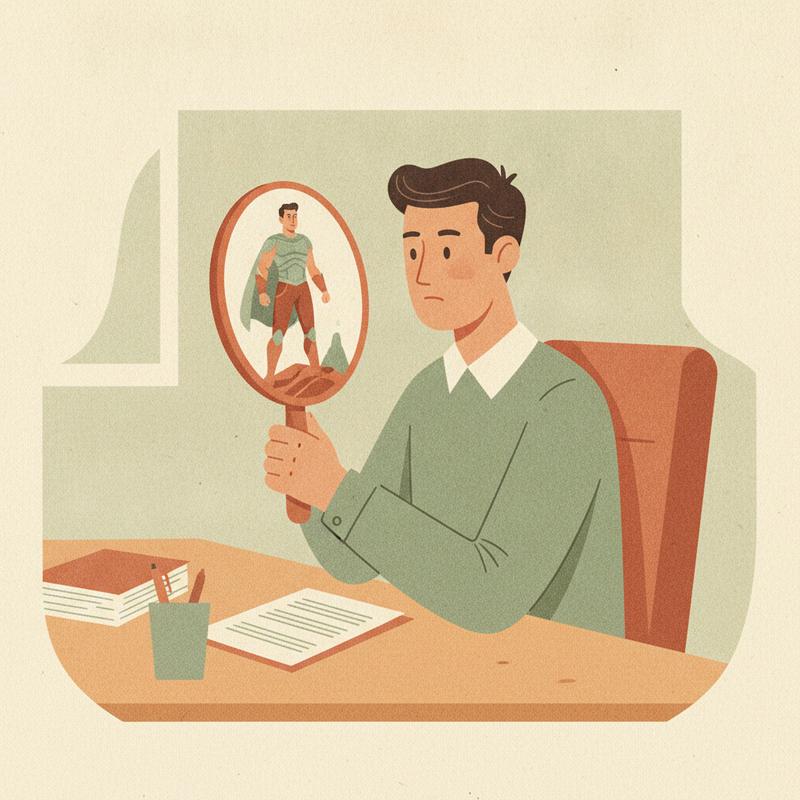
You Rate Yourself Higher Than You Deserve
Here is the uncomfortable part. You are not a neutral judge of your own character. Neither am I.
In 2017, researchers Ben Tappin and Ryan McKay asked 270 people to rate themselves and the average person on traits covering morality, agency, and sociability. Their finding, published in Social Psychological and Personality Science, was blunt: "virtually all individuals irrationally inflated their moral qualities." The inflation was bigger for morality than for any other trait they measured. People overrate their own goodness more than they overrate their own competence or likability.
Read the next line twice. This inflated sense of moral superiority had no link to self-esteem. Confident people don't have it more than anxious people. Almost everyone carries it.
So when you tell yourself "I would never fudge those numbers," you say it with the same certainty as the person who did.
Your Predictions About Yourself Are Wrong. Your Predictions About Others Are Right.
Cornell psychologists Nicholas Epley and David Dunning tested this with real money and real flowers.
Before a campus charity drive, they asked students whether they would buy daffodils to support the American Cancer Society. According to the Cornell Chronicle's write-up of the study, more than eight out of ten students said they would buy. Those same students predicted 56 percent of their peers would buy.
The real number was 43 percent.
In a second experiment, students said they would donate roughly half of their $5 participation fee to charity. They guessed their peers would give about $1.80. When the moment came, the average donation was $1.53.
Look at what happened. The students were cynical and accurate about other people. They were generous and wrong about themselves. The full paper, Feeling "Holier Than Thou", found people ignore base rates when predicting their own behavior, but use those base rates when predicting everyone else's.
Your gut says you're the exception. The data says you're the average.
Pressure Is the Test. Everything Else Is a Rehearsal.
Values are easy on a quiet Tuesday. Nobody's integrity gets tested in the values workshop with the pastries and the sticky notes. It gets tested at 6pm on the last day of the quarter.
The most famous proof comes from 1973. John Darley and Daniel Batson sent students from Princeton Theological Seminary across campus to give a talk. Some were told they had plenty of time. Some were told to head over now. Some were told they were already late. On the way, each student passed a man slumped in a doorway, clearly in distress.
As Psychology Today summarizes the results, 63 percent of the students with time to spare stopped to help. Among the on-time group, 45 percent stopped. Among the students who thought they were late, 10 percent stopped.
Some of these students were on their way to give a talk about the Good Samaritan. The topic made no difference. Hurry did.
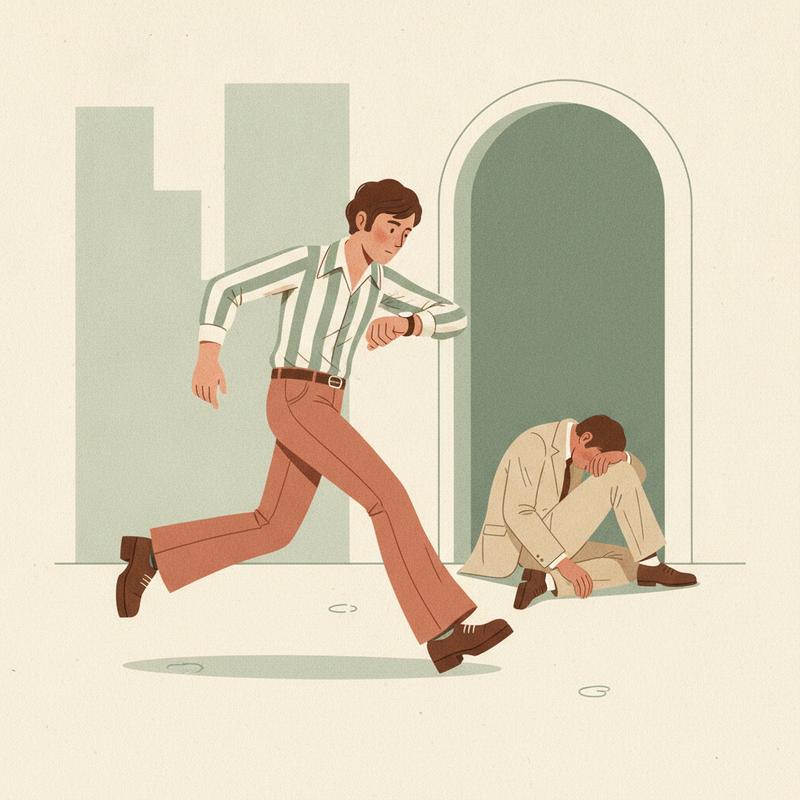
These weren't bad people. They were trainee ministers. They would have raised their hands in my imaginary room faster than anyone. And a ticking clock beat their values nine times out of ten.
The Workplace Adds Plenty of Clock
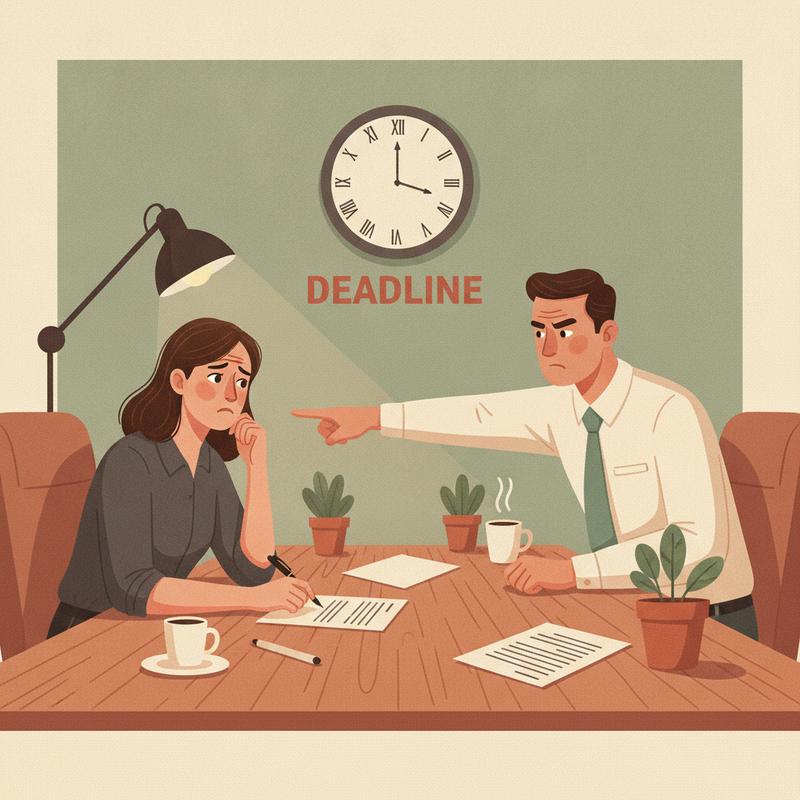
If a few minutes of hurry bends the behavior of seminary students, think about what a quarterly target does to a sales team.
The Ethics & Compliance Initiative runs one of the largest workplace ethics surveys in the world. Its 2023 Global Business Ethics Survey covered more than 70,000 employees in 42 countries. As NAVEX reports from the findings, 28 percent of respondents felt pressure to compromise standards. 65 percent had observed misconduct. Of the people who reported misconduct, 46 percent said they experienced retaliation.
Put those numbers next to each other. More than a quarter of workers feel pushed to bend the rules. Almost two thirds see rules bent. And nearly half of the people who speak up get punished for it.
Nobody in those organizations thinks of themselves as the villain. Every one of them would raise a hand.
What I Learned From Wearing a Uniform
The US Army gave me seven values: Loyalty, Duty, Respect, Selfless Service, Honor, Integrity, and Personal Courage. I memorized them. I recited them tired, cold, and hungry.
Reciting them was never the hard part. The Army knew it too, which is why it trains soldiers under stress instead of in a classroom. You don't learn how you'll behave under pressure by thinking about pressure. You learn it by meeting pressure, many times, and looking honestly at what you did.
I carried the lesson into civilian life, through banks and startups and engineering teams. The best leaders I worked with never claimed perfect integrity. They talked about the times they fell short. The worst leaders I worked with never admitted a single lapse. Those were the ones I trusted least.
My own research found 99.5 percent of people have had one or more types of bad boss. I promise you almost none of those bosses saw themselves in the number. They all believed in their own integrity. Their teams told a different story.
Stop Asking "Do I Have Integrity?"
The question is useless. Your brain has already answered "yes," and the research says your brain is biased.
Ask better questions instead.
Look at your record, not your intentions
Think of three decisions you made under real pressure in the last year. Write them down. Next to each, write the value you claim to hold. Measure the distance honestly. Epley and Dunning showed you predict other people well. So judge your past self the way you'd judge a colleague.
Decide before the pressure arrives
The seminary students had no plan for a stranger in a doorway. You know your pressure points. The end-of-quarter number. The client who wants a corner cut. The boss who wants the bad news softened. Write down your line now, while you're calm, and tell someone about it.
Slow down your hurry
In the Good Samaritan study, hurry decided who stopped. When you feel rushed on a decision with ethical weight, buy ten minutes. A short delay costs little. A compromised decision costs a lot more.
Make it safe to call you out
If 46 percent of reporters face retaliation, your people have learned to stay quiet. Ask your team to name a time you missed your own standard. Thank the first person who answers. Then change something. This is what builds the self-awareness I talk about in the Behavior Awareness Tool, because other people see your gaps long before you do.
The Hand Still Goes Up
I'll raise my hand in the room too. I want to believe I have integrity. You want to believe it about yourself.
The difference between a leader with integrity and a leader who only believes it lives in one habit. The first one keeps checking. The second one stopped checking a long time ago, because the answer felt obvious.
So here's my challenge for this week. Pick one decision you made under pressure. Ask one person you trust how it looked from where they stood. Then listen, without defending yourself.
What would you find out?