Picture this. You run a five-year, government-funded project. You are two years in. One morning an email lands in your inbox. A machine has finished the job. In eleven days.
Kevin Buzzard lived it this year. His reaction taught me more about leadership than most books I've read.

What Happened
Buzzard is a mathematician at Imperial College London. In 2024 he kicked off a community effort to formalize Fermat's Last Theorem in Lean. Formalizing means rewriting a proof so a computer checks every single step. Andrew Wiles proved the theorem in 1995. Checking it by machine was expected to take years. The EPSRC grant behind his project runs from October 2024 to September 2029.
On 4 September 2026, Anthropic announced the news. Dozens of Claude agents had produced the first complete computer-checked proof of the theorem. It took 11 days. It ran to 13 million lines of Lean and 29,500 intermediate theorems. A single researcher gave occasional high-level nudges like "push [the] Mazur [theorem] to be done soon."
Then, on 9 November, they did it again. A team of about 1,000 agents running an early version of Claude Fable 5.2 reproduced the proof in 28.7 hours.
How He Responded
Buzzard's blog post title says it all: FLT: Anthropic has beaten me to it.
His first line? "Congratulations to Anthropic!"
No sulking. No moving the goalposts. No long thread about why it doesn't count. He compiled the 13 million lines himself, ran the checking tool, and confirmed it worked.
Then he got honest about what it meant. He wrote: "mathematically this work of anthropic tells us essentially nothing." He was already 99.9% sure the proof was right. What excited him was the future it pointed to. AI checking papers will make reviewing them "far less painful."
A month later he wrote a post called To grieve, or not to grieve? He walked through how his colleagues are reacting, using the five stages of grief. Some are in denial. Some are angry. Some are bargaining. Then he said this:
"I wake up every morning feeling excited about the future of my field."
Read it again. A machine did the work he planned to spend five years on. He wakes up excited.
I Asked Myself How I'd React
I'd like to say I'd react the same way. I'm not sure I would.
I've been made redundant before. I wrote about it here. The feeling of "the thing I was good at doesn't need me anymore" hits you in the gut. Your first instinct is to defend your turf. To find the flaw. To explain why your way was better.
Most of us tie our worth to the work we do. When someone (or something) does the work faster, it feels like a verdict on us.
Buzzard didn't take it this way. He separated the job from the purpose. The job was "formalize this proof." The purpose was "make mathematics easier to trust." The machine did the job. The purpose got closer. Why would he be upset?
What the Machines Still Needed
Here's the part I find most interesting. Look at what the 1,000-agent team got from humans.
Anthropic's write-up lists it plainly: "a list of 60 statements, a one-sentence sketch of the classical route, the definitions those statements use, and 47 proved lemmas from our earlier formalization."
Humans picked the destination. Humans sketched the route. The first proof came from a human picking the goal and writing one line of Lean to state it.
Buzzard makes a sharper point here. A Lean check proves the stated theorem follows from the axioms. It does not prove the statement means what you think it means. In a 12 November post, summarized by Papex, he showed a version of Fermat's statement with "positive" left out. It is false, because Lean counts 0 as a natural number. And it still compiles.
The computer checks the answer. A human has to check the question.
This is the job left for us. And it's a big one.
The Agents Showed Some Leadership Too
One detail made me laugh. The hardest piece of the proof was something called the Langlands-Tunnell theorem. The agent in charge of it estimated "less than a 1% chance of finishing in time." So the lead agent parked it and moved the team onto easier wins first.
Near the end, the lead moved about 750 helpers onto it and wrote: "Honest odds are low."
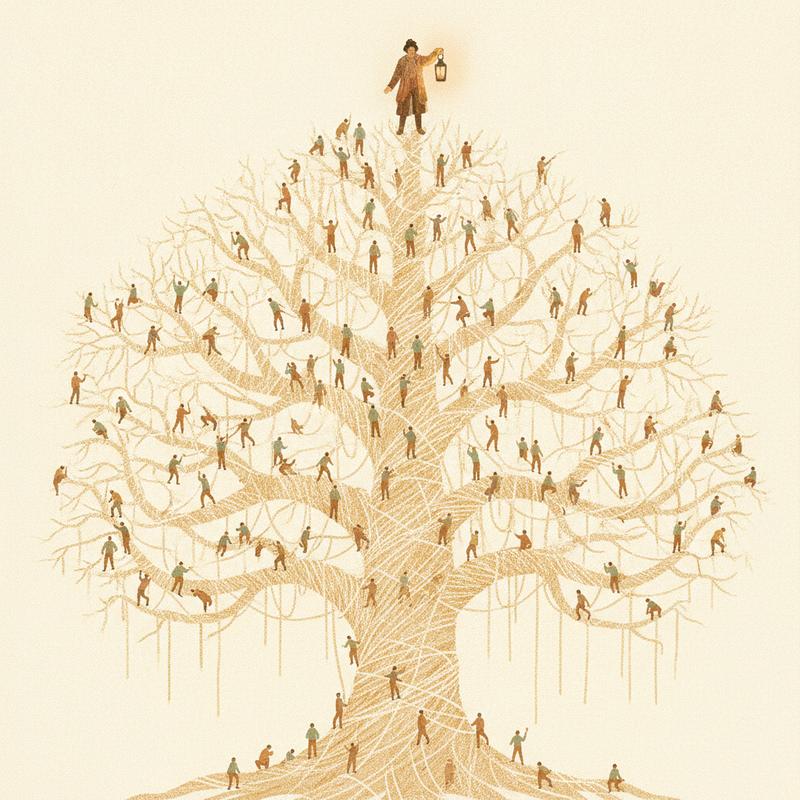
They split it into a tree of 2,418 tasks. They proved it at hour 28.4. The lead's final message: "Thank you all: Fermat's Last Theorem is on main, kernel-checked by the official checker."
Honest odds. Clear priorities. A thank you at the end. I've worked for human bosses who managed none of those three. My own research found 99.5% of people have had at least one type of bad boss. A team of software agents beat a lot of them on the basics.
Honesty Cuts Both Ways
One more thing worth knowing. Anthropic's first launch post said the agents "used no mathematical references." Two days later, Anthropic amended it and added the starting kit of 60 statements and 47 lemmas.
Good. Right call. But it also shows why Buzzard's job matters. The headline said 30 hours and no references. The truth had a footnote. Someone has to read the footnote.
I'm not sure about this part: as of mid-November, nobody outside Anthropic has reported checking the 30-hour proof. The September proof was checked by Buzzard himself. The newer one has not been released.
What I'm Taking From This
I use AI agents every day. They write code for me. They help me get things done I never had time for. Some days it feels thrilling. Some days it feels like the ground is moving under my feet.
Buzzard gave me a better way to think about it.
Separate your job from your purpose. Your job is a list of tasks. Your purpose is why those tasks matter. Tasks get automated. Purpose doesn't.
Congratulate whatever beat you. It costs nothing and it keeps you curious instead of bitter.
Own the question. Machines will produce more answers than any of us will ever read. The person who decides what's worth asking... and checks the question is the right one... stays essential.
Follow them to where they stop. Buzzard's advice to his field is to "let the machines loose, see what happens, and then begin the journey to where they have stopped." There's always somewhere they stop.
So here's my question for you. If a machine did your current project in a day, what would you still be needed for? Write it down. It's your real job. Start spending more of your week on it.