
I spent years in the Army before I ever ran a team in tech. The Army taught me plenty about command. It took me a lot longer to learn the other half: the best leaders I served under weren't the loudest ones in the room. They were the ones who knew your name, knew your kid's name, and noticed when you were off your game before you said a word.
I carried this lesson into every job since. Put people first. Listen before you decide. Trust your team enough to let them own the outcome, not only the task.
And I still get asked, in one form or another, why I "waste time" on it.
The default setting is still command and control
Here's what surprised me. I assumed by now, decades into a workplace obsessed with engagement scores and culture decks, people-first leadership would be the norm. It isn't. It's still the exception people point at and ask about, like it's a trick.
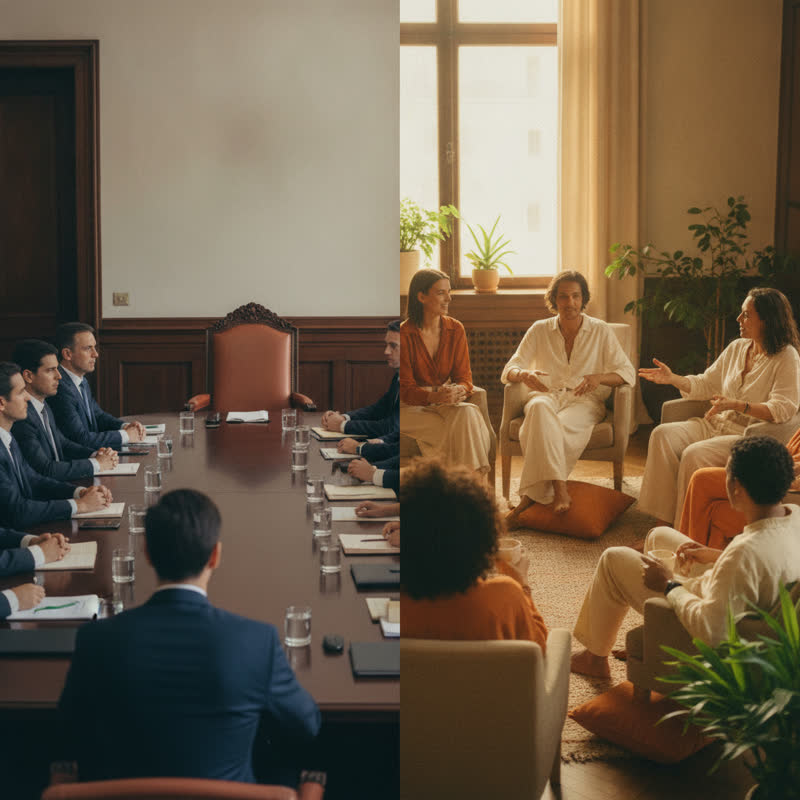
Command and control is the default because it's easy to measure and easy to fake. You'll watch someone bark orders and call it decisive. You won't watch someone build trust in a single meeting. Trust shows up in the data six months later, in who stayed, who spoke up, who caught the mistake before it became a disaster. By then nobody's connecting the dots back to the quiet way you led.
There's real research behind why the loud version keeps winning. Dr. Tomas Chamorro-Premuzic, a business psychology professor at Columbia, put it bluntly in a McKinsey Talks Talent interview: the typical high-EQ manager is "probably quite boring, quite bland, and predictable." They make rational decisions, don't crave the spotlight, and put the team first. Meanwhile the bombastic, low-EQ boss creates chaos and gets remembered as a force of nature.
We built organizations rewarding the force of nature and quietly sidelining the person doing the real work of leadership.
The 99.5% problem
I've done my own research on this, not only read someone else's. When I surveyed people about their history with bosses, 99.5% said they'd had at least one bad one. Not "a difficult one." A bad one. Not a rounding error. Nearly everybody.
Sit with this number for a second. Nearly every person you know has been managed badly at some point, badly enough to remember it and say so on a survey. And yet the leadership style producing this outcome is still the one getting promoted fastest, funded first, and taught in more MBA programs than the alternative.
Not an accident. A system optimizing for the wrong signal.
What people are asking for
I keep hearing employees today want more money, more flexibility, more perks. Sure, they'll take those. But when Gallup asked people what they need from leaders, the top answer wasn't compensation. It was hope. According to Gallup's research covered by HR Dive, employees look for four things from leaders above everything else: hope, trust, compassion, and stability. Hope came out on top. Trust was defined plainly, as honesty, respect, and integrity.
None of it requires a bigger budget. It requires a leader who shows up, tells the truth, and treats the people in front of them like adults with something to offer. The whole job description of people-first leadership. It shouldn't be radical. It's the bare minimum, dressed up as a bold move because so few leaders do it.
Why it still feels like rebellion
Every time I choose to sit down with someone instead of sending a directive, I feel the old military instinct pushing back. Tell them what to do. It's faster. And it is faster, in the short run, the same way skipping a workout is faster than doing one. You save the ten minutes today and pay for it for months.
People-first leadership feels like rebellion because it asks you to give up the fastest, most visible version of authority in exchange for a slower, less visible kind of trust. Nobody claps when you spend an extra fifteen minutes making sure someone understood the assignment instead of nodding along. Nobody writes a case study about the crisis which never happened because you built enough trust for your team to flag the problem before it became one.
I've written before about how this plays out with bad bosses over on Step It Up HR. The pattern is always the same. The command-and-control leader gets credit for the fires they put out. The people-first leader rarely gets credit for the fires which never started.

I'm keeping the rebellion going
I'm not interested in being the leader who's fun to tell stories about at the bar. I'd rather be the one whose team stuck around, spoke up, and did their best work because they trusted the person asking them to.
If it still counts as rebellious in 2026, fine. I'll take it. Somebody has to be the boring, predictable, people-first leader in the room, the one still there answering for their decisions long after the loud ones moved on to their next audience.
Nearly everyone has had a bad boss. Almost nobody names hope and trust as luxuries. So why do we still treat decent leadership like the exception instead of the standard?