"Stay positive."
I've said those two words to teams more times than I want to count. Deadline slipping? Stay positive. Budget cut? Let's focus on the good news. Someone tells me they're drowning? Chin up, we'll get through it.
I thought I was leading. Most of the time I was shutting people up.
Where This Came From
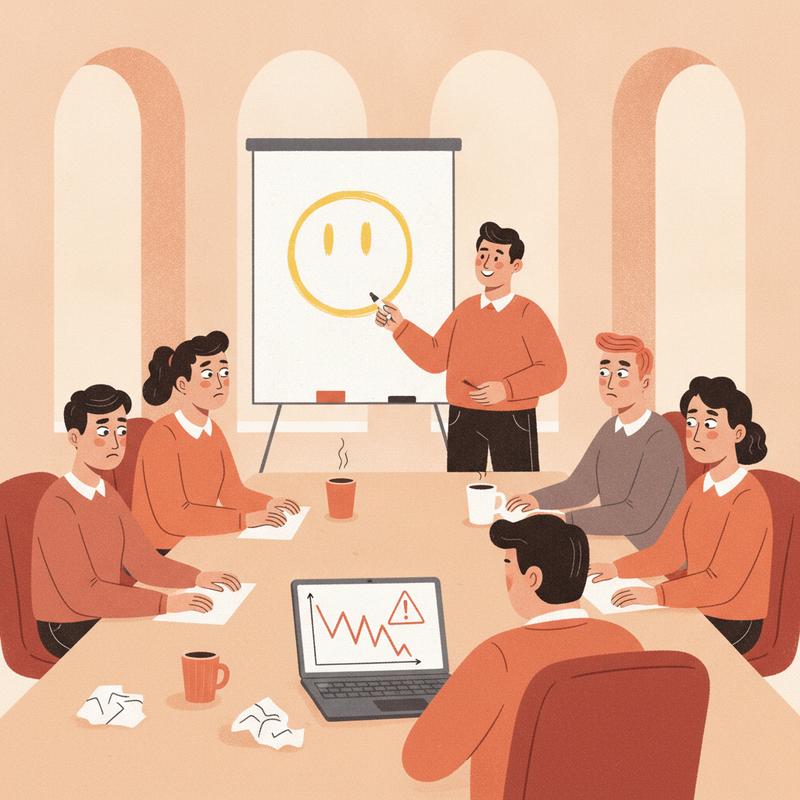
Ian Pettigrew said something on my podcast, Corey-osity Unleashed, which has stuck with me ever since. We were talking about hope. He drew a hard line between hope and the relentless cheerfulness some leaders mistake for it. He called the second one what it is... toxic positivity.
His point was simple. Forced positivity does three things to a team:
- It tells people their feelings are wrong.
- It cuts off the bad news you need to hear.
- It pushes people to fake it.
I recognised all three in my own habits. None of them felt like bad leadership at the time. They felt like keeping morale up.
Your Best Strength Has a Dark Side
Ian pointed me toward research on character strengths. Most of us treat a strength as something you want more of. More kindness, more courage, more optimism. Where's the harm?
Pavel Freidlin, Hadassah Littman-Ovadia and Ryan Niemiec tested the idea. In a 2017 study of 238 adults, they measured three ways of using character strengths: underuse, overuse and optimal use. Optimal use went with positive outcomes. Underuse and overuse both went with negative ones.
Too much of a good thing is still too much. I think positivity works the same way. Used well, it lifts a room. Overused, it turns into a gag order.
What Happens When People Fake It
Psychologists have a name for putting on a face you don't feel. They call it surface acting.
Ute Hülsheger and Anna Schewe pulled together three decades of research on emotional labour, 95 independent studies in all. Surface acting showed substantial links with impaired well-being and worse job attitudes, plus a small negative link with performance. Deep acting, where people work to feel the emotion rather than fake it, showed only weak links with poor well-being.
Think about what "keep smiling" asks of a stressed engineer. I wasn't lifting their mood. I was handing them a second job. Do the work, and also perform being fine while you do it.
The second job never shows up on a timesheet. It shows up in sick days, short tempers and resignation letters.

Feeling Bad About Feeling Bad
The damage goes deeper than the office.
A UC Berkeley team including Brett Ford and Iris Mauss tested the link between emotional acceptance and psychological health in more than 1,300 adults. They asked people how strongly they agreed with statements like "I tell myself I shouldn't be feeling the way I'm feeling." The people who didn't feel bad about feeling bad showed higher well-being.
In one part of the research, more than 200 people journaled about their toughest experiences for two weeks. Six months later, the ones who habitually avoided negative emotions reported more mood disorder symptoms.
Mauss's group came back to the theme in 2024. Their newer study found wanting to be happy didn't predict well-being. Being concerned about your level of happiness did... and it went with less satisfaction with life and more symptoms of depression.
Read those two findings side by side. Pressure to feel good makes people feel worse. And "stay positive" from the boss is pressure, whether you mean it to be or not.
Why Leaders Reach for It
I don't think most managers use forced positivity out of cruelty. I didn't. I used it because I was scared.
When a team member says "I'm not coping," the honest answer often starts with "I don't know how to fix this yet." Saying so feels like weakness. "Stay positive" feels like strength. It closes the conversation fast, and the leader gets to walk away feeling helpful.
There's a second reason. Many of us earned our promotions by being the calm one in the room. We learned to hold it together, and somewhere along the way we started asking everyone else to hold it together as well. What worked as a personal coping habit turned into a team rule nobody wrote down.
The trouble is, a team rule nobody wrote down is the hardest kind to challenge. Nobody gets to vote on it. People feel it in the silence after they raise a concern, and they adjust.
The Bad News Stops Coming
Here's the part which should worry any leader.
When positivity becomes the rule, the messenger becomes the problem. Raise a risk and you're "being negative." Say the date won't hold and you're "not a team player." People learn fast. They stop telling you.
Picture a project where every status report glows green, right up until the week it collapses. Nobody lied, exactly. They learned which answers the boss wanted to hear, and they gave them.
In my own research, 99.5% of people said they'd had one or more types of bad boss. I'd bet a fair few of those bosses thought they were being upbeat and supportive. From the other side of the desk, it felt like nobody was listening.
What I Do Instead
The fix isn't gloom. A leader who only talks about problems wears a team down too. The goal is honesty first, then hope.
Name it before you fix it
When someone brings you a problem, say what you hear. "This sounds stressful." "You're worried about the date." It takes ten seconds. It tells them the feeling is allowed in the room.
Ask for the bad news
Put it on the agenda. "What's worrying you this week?" Then thank people for the answer, even when it stings. Especially when it stings.
Swap "stay positive" for "what do we do next?"
Positivity without a plan is wallpaper. Hope comes with a next step. I wrote about the difference in I Confused Hope With Optimism for Years.
Go first
Tell your team when you're worried. Say it plainly, then say what you're doing about it. If the boss is allowed a bad day, everyone else is too.

Positivity Isn't the Enemy
I still believe in optimism. I still want teams walking out of hard meetings with energy and a plan. I haven't stopped looking on the bright side.
What changed is the order. I look at the problem first. I let people be worried, frustrated or tired out loud. Then we look for the bright side together, and it means something because we earned it.
Next time someone on your team tells you things aren't OK, don't reach for the silver lining. Ask one more question.
What would change on your team if people knew they were allowed to not be fine?