Look at your leadership bookshelf. Pick the one you finished most recently. Now, without opening it, tell me three things you took from it and put to use.
Most people go quiet at this point. I did too, for years. I read the book, I nodded along, I felt smarter for a week, and then the whole thing dissolved. What stayed behind was a vague fondness for the author and a title I would mention at dinner parties.
This is not learning. It is book tourism.
Your brain is not on your side here
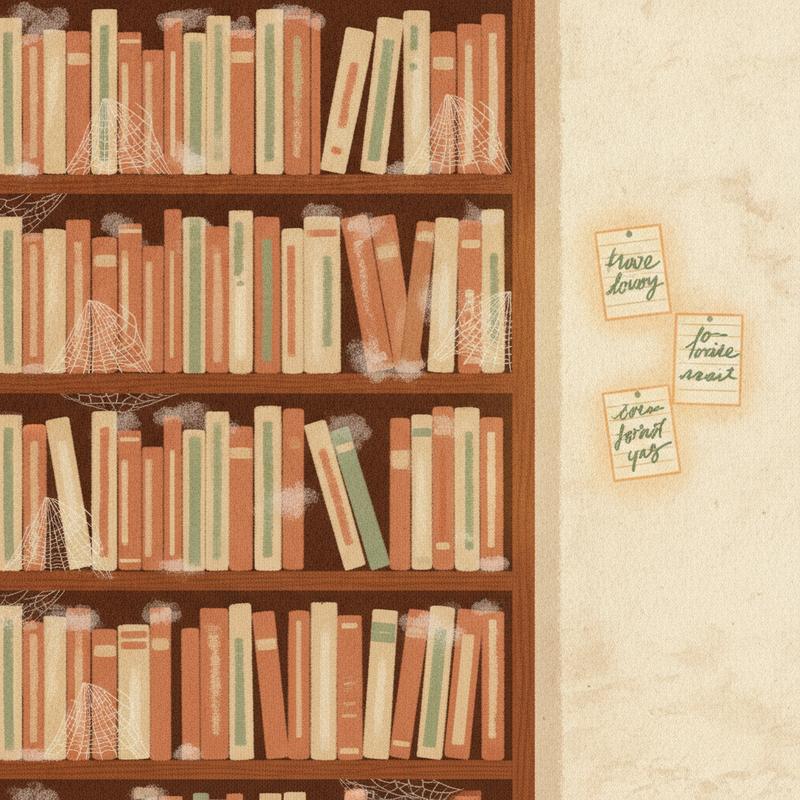
There is a reason the book fades. Jaap Murre and Joeri Dros at the University of Amsterdam replicated Ebbinghaus's forgetting curve and published the results in PLOS ONE in 2015. Their savings scores tracked the original almost exactly. After one hour, roughly half the material was gone. After a day, retention sat near 30 percent. After 31 days, about 4 percent.
Four percent. Of deliberately memorized material, by a subject working hard at it.
Now think about a 300-page business book skimmed on a train with one eye on your inbox. Whatever you believe you absorbed, the number is smaller.
So the question stops being "which book should I read next?" and becomes "what survives the month?"
The rule: three gems. No more. No less.
Here is the rule I use now. Every leadership book earns its place on my shelf by giving me three gems. Three specific, usable ideas I write down and put into practice. Three, not thirty.
The number matters in both directions.
Fewer than three and the book has not earned the hours. One decent idea wrapped in 280 pages of anecdote is a blog post wearing a hardback costume. Plenty of business books are exactly this. Take the one idea, thank the author, move on.
More than three and you are lying to yourself. I have watched people leave a book with seventeen highlighted passages and a fresh identity. Two weeks later, nothing in their week has changed. Highlighting feels like progress. It is decoration.
Three forces a choice. Choosing is where the learning lives. When you sit down to pick your three, you have to rank ideas against each other, weigh them against your own situation, and reject good material because better material exists. The choosing sticks. Passive reading does not.

How to pull the gems out
I keep this stupidly simple.
Write them by hand, on one card
One index card per book. Title at the top, date, three lines. My whole leadership library compresses into a small stack of cards. When I want the thinking from a book I read four years ago, I read the card, not the book.
Phrase each gem as an action, not a concept
"Psychological safety matters" is a concept. It changes nothing on Monday. "Ask the quietest person in the room for their view before I give mine" is a gem. It has a time, a place, and a behavior attached.
Unable to picture yourself doing it this week? Rewrite it until you are... or admit it is not a gem.
Use one gem within seven days
Pick one of the three and put it into your next week. Deliberately. In a real meeting, with real people. This is the step almost everyone skips, and it is the only step doing any work.
Roediger and Karpicke showed in their 2006 study, Test-Enhanced Learning, how retrieval beats restudying for long-term retention. Students who tested themselves outperformed students who read the material again, even though rereading felt more productive at the time. Rereading your highlights is the weaker option. Pulling the idea out of your head and using it is the stronger one.
Your team is your retention test.
Say the gem out loud to someone
Teach it, badly, to a colleague over coffee. Explaining an idea exposes the parts you never understood. Every gem I have kept for years is one I taught to somebody else inside two weeks.
What this does to your reading
The rule changed how I read, and how much I read.
I abandon books faster. If 80 pages produce nothing worth writing on a card, the book is not for me at this point in my life. No guilt, no finishing out of duty. Somebody else needs it more.
I reread far less. My cards carry the load.
I read outside leadership more. Once you hunt for three usable ideas rather than comprehensive coverage, history, biography and even fiction start out-yielding the airport business shelf. Some of my best gems came from books with no management content whatsoever.
And I stopped confusing volume with growth. Nobody has ever become a better boss by reading forty books. People become better bosses by changing three behaviors and holding them.
Do it as a team
The version I like best is collective.
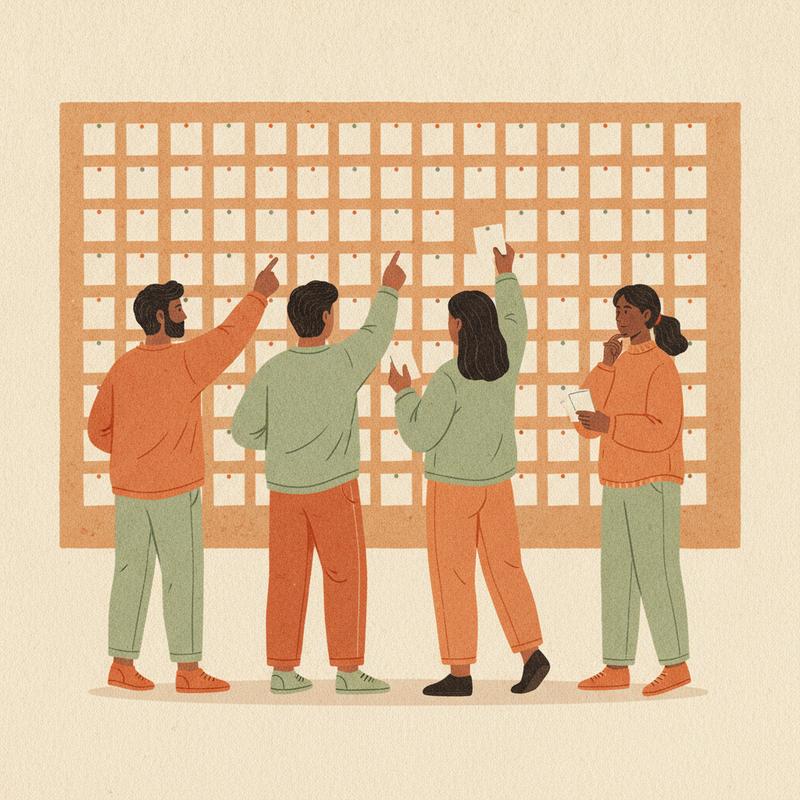
Each person on the team reads whatever they want. Once a month, one of them stands up for five minutes and gives their three gems from the last book. Not a summary. Not a slide deck. Three ideas and how they used one.
Five minutes. Three ideas. Then back to work.
Do this for a year and the team has traded three dozen usable ideas, every one filtered by somebody who applied it in real life. Set the value of those against the leadership training budget you spent last year, then set the costs side by side.
The cards go on a wall. New starters read the wall and inherit years of thinking in ten minutes.
The uncomfortable bit
If you look back over the last five leadership books you read and you struggle to name three gems from any of them, the problem is not your memory. It is the reading habit. You were consuming, not learning, and the industry is happy to keep selling into the gap.
I am not against leadership books. I write about this stuff constantly and read plenty of them, and I make my living helping bosses get better at Step It Up HR. My argument is with the ritual of reading as a substitute for changing.
A book you read and forgot cost you eight hours. A book you mined for three gems and applied one of them pays you back for years.
Start tonight
Take the book on your bedside table. Open a blank card. Write the title, the date, and three lines you would defend to a skeptical colleague.
If you struggle to reach three, you have learned something about the book. If you fly past three, you have learned something about your own judgement, and it is time to pick the best ones.
Then choose one, and use it before Friday.
What three gems would you write down from the last book you finished?