Back in grad school, a researcher named Will Felps hired an actor to ruin meetings.
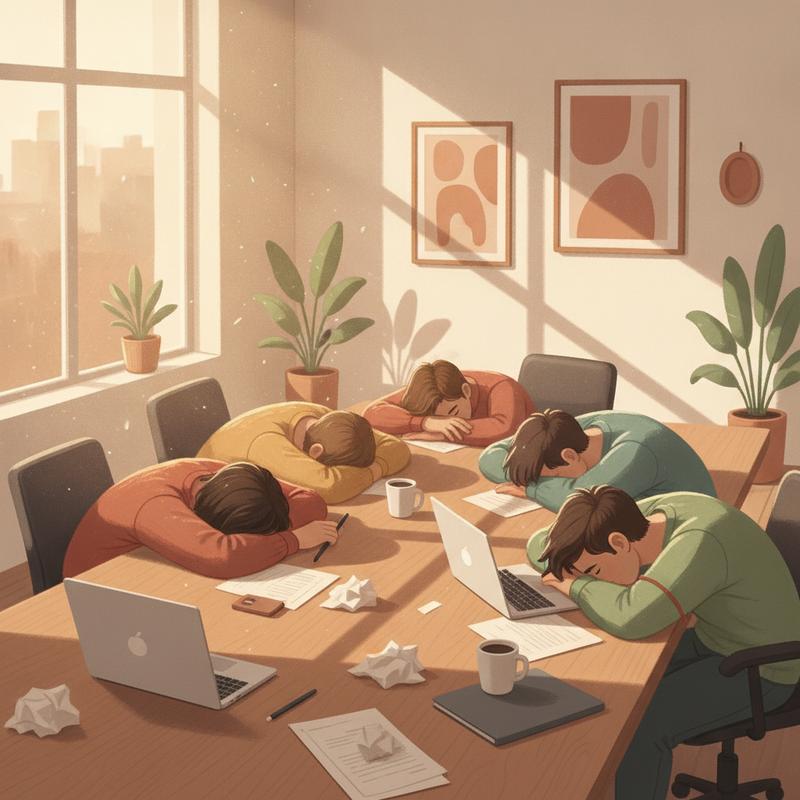
He put college students into teams of four. Three real students, plus the actor, a student called Nick, working undercover. Each team got about 45 minutes on a management exercise, with a $100-per-person prize for the best score. Then Nick played one of three parts. The slacker leaned back, put his feet up, texted a friend and pulled out a sandwich. The depressive put his head on the table. The jerk waited for someone to offer an idea and said, "Are you kidding me?"
Felps told the story to Ira Glass on This American Life, episode 370, "Ruining It for the Rest of Us". Across dozens of trials, teams with Nick in bad-apple mode performed 30% to 40% worse than teams without him. Smart, talented, likeable people in those groups made no difference. The full study, Felps, Mitchell and Byington's "How, When, and Why Bad Apples Spoil the Barrel", runs to nearly 50 pages in Research in Organizational Behavior.

I've had this research on my mind since my conversation with Claude Silver, Chief Heart Officer at VaynerX, on Corey-osity Unleashed. One idea from our chat keeps coming back to me. Your culture is only as strong as your weakest EQ. If you tolerate jerks, your values aren't values. They're vibes.
The Copying Scared Me More Than the Numbers
A 30% to 40% drop is bad. The copying is worse.
Felps videotaped every session. When Nick played the jerk, the other students started getting abrasive too. Felps said they did it to each other, not only to Nick. He called it a spillover effect. When Nick slacked, someone else in the group would eventually declare the task unimportant, and the team would fill in any old answers and leave. When Nick played the depressive, the group started out sitting up straight and ended with their heads on the desk, like him.
Ira Glass pointed out the conventional wisdom runs the other way. Groups shape individuals. Decades of conformity research says so. In Felps's lab, one person reshaped three in under an hour.
Here's the detail I keep coming back to. The students laughed at Nick's jokes, even the ones at someone else's expense. Afterwards, Felps asked whether they'd work with him again. They said definitely not. They hated it.
This is tolerance from the inside. You laugh along in the room. You resent it on the drive home. And everyone watching learns the joke was fine.
Then I Asked Myself the Awkward Question
Ira Glass said everyone in his office who heard the interview started wondering whether they were the bad apple. He asked Felps the same question. Felps said yes, he'd become sensitive to it, and admitted, "I used to tease a lot more." He'd thought the teasing built camaraderie. Watching the tapes changed his mind.
I read his answer and asked myself the same thing. How many times have I been the one making the joke in a meeting and taken the laughter as agreement? I don't have a clean answer. I suspect most leaders don't.
Why We Keep Them Around
Here's the uncomfortable bit. Jerks often deliver.
Michael Housman and Dylan Minor studied over 50,000 workers across 11 firms for their Harvard Business School working paper, Toxic Workers. They found toxic workers "much more productive than the average worker." Their own explanation for why such people stick around: the output.
Then they put a price on it. Avoiding one toxic worker saved a firm about $12,489 in turnover costs alone, and they called the figure a lower bound. Replacing an average worker with a top 1% superstar was worth $5,303. Getting rid of the problem beat hiring the star by more than two to one.
I'm not sure about this part: Housman and Minor counted people fired for misconduct as "toxic", so their numbers cover serious cases. The everyday jerk who sneers in meetings sits below the line, and I haven't found a study putting a dollar figure on the everyday version.
So the output gives you cover. "He's difficult, but he ships." "She's sharp, people need to toughen up." Your team hears something else. They hear the price of your values, and it's lower than their quarterly numbers.
A Bad Day Isn't a Pattern
When I asked Claude what emotional intelligence looks like across a company the size of VaynerX, she didn't describe a culture of saints. She described people learning to regulate their emotions "so you don't scream at people all day." Then she added the bit I love. If you do lose it, you learn to own it. Her version: "I was having a shitty day," followed by an apology.
Everyone has a bad day. I've had plenty. The jerk is the person who never repairs. No apology. No change. Same behaviour next week, aimed at the same quiet person. Your values live in the gap between those two people, and you decide what happens there.
My research found 99.5% of people have had one or more types of bad boss. Sit with the number for a second. Sometimes the bad apple isn't the new hire with his feet on the table. Sometimes the bad apple signs the reviews. I wrote about why toxic bosses aren't the villains we make them out to be, and the same logic applies here. Most jerks don't think of themselves as jerks. They think of themselves as honest.
What the Diplomat's Son Did
One group in Felps's study beat Nick. With the jerk sitting right there, they performed well.
Felps traced it to one student. He asked questions. He drew in every team member and defused conflict before it took hold. Felps found out later the student's father was a diplomat.

One group. One lab. 45 minutes. I won't oversell it, and Ira Glass flagged the same limit on air. Real teams work together for years, not 45 minutes. Still, it matches what Claude described at VaynerX. They talk about behaviours in recruitment, in orientation and in onboarding, so people know the deal before they sit down at the table.
The diplomat's son had no authority over anyone. He changed the room with questions. You have authority. Here's what I'd do with it:
- Ask questions in the room. Bring the quiet people in before the sneer lands. Make every voice part of the work, so no single voice dominates it.
- Name the behaviour in private, the same day. Describe what they said and what it did to the room. Leave their personality out of it.
- Watch for repair. A bad day plus an apology is a person. The same thing every week is a pattern.
- Stop laughing. Your laugh tells the room the joke was acceptable. Silence from the boss says something too.
- Decide. If the pattern holds after you've named it, move them, whatever their numbers say. Housman and Minor did the maths for you.
Your Team Already Knows
Your people know who the jerk is. They knew before you did. What they're waiting to find out is whether your values hold when keeping them costs you something.
Values on a wall cost nothing. Values you enforce on your best performer cost a lot. Only the second kind counts.
So who's the person you've stopped noticing because the output keeps coming? And when did you last ask whether it's you?