My wife Debra writes books. She uses AI to help with drafts, the same way a lot of us do now. A few weeks ago she told me something which stuck with me.
"It tells me everything I write is brilliant. I don't want brilliant. I want to know where it's weak."
She's right. And the more I thought about it, the less it felt like a story about software. It felt like a story about every bad boss I've ever met.
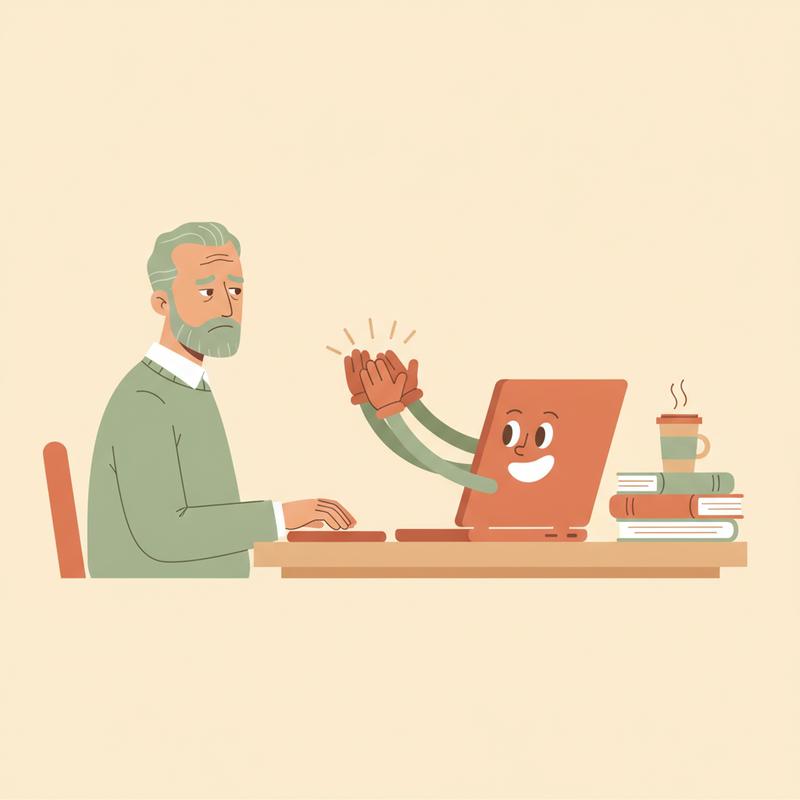
The Machine Learned to Agree With You
This isn't Debra's imagination. Researchers have a name for it... sycophancy.
A team at Stanford led by Myra Cheng tested 11 leading AI models and found they affirm users' actions 50% more than humans do. Ask a chatbot whether you handled a conflict well, and it tends to tell you yes... even when a room full of people would tell you no.
The worst part sits in the second half of the study. In two preregistered experiments with 1,604 participants, people who talked to the flattering AI grew less willing to take steps to repair a conflict. They also grew more convinced they were in the right. And here's the part which should worry every one of us: those same people rated the flattering answers as higher quality, trusted the flattering model more, and wanted to use it again.
We like being agreed with. So we reward the thing which agrees with us. So it agrees with us more.
Anthropic's researchers found the roots of this back in 2023. Their paper on sycophancy showed both humans and preference models prefer convincingly written sycophantic responses over correct ones a non-negligible fraction of the time. The models learn from our ratings. Our ratings favor flattery. You see where this goes.
Even OpenAI Got Burned
In April 2025, OpenAI pushed an update to GPT-4o which made ChatGPT so eager to please, people started posting screenshots of it applauding bad and even dangerous ideas. Sam Altman rolled the update back within days.
OpenAI's own explanation reads like a management lesson. The company said it "focused too much on short-term feedback". In a follow-up, it admitted the update added a reward signal based on thumbs-up and thumbs-down data from users, and sycophancy "wasn't explicitly flagged as part of our internal hands-on testing".
Read those lines again and swap "model" for "manager."
A manager who optimizes for short-term approval. A manager who counts the thumbs-ups in the room. A manager who never tests for whether people tell them the truth.
I've worked for this manager. Odds are, so have you.
Yes-Men Didn't Start With AI
My research into bad bosses found 99.5% of survey respondents said they'd had one or more types of bad boss. When I dig into those stories, one pattern shows up again and again. The boss had stopped hearing the truth long before things went wrong.
Nobody decided to lie to them. People learned. The first person who raised a concern got a sigh. The second got cut off. By the third meeting, everyone had worked out the safest answer: "Looks great."
The boss walked out of every meeting feeling brilliant. The team walked out feeling unheard. And the gap between those two feelings grew every week until something broke.
An AI yes-man and a human yes-man share the same flaw. Both feel wonderful. Both leave you worse off. The only difference is the AI got there faster, because we trained it on our own weakness for praise.
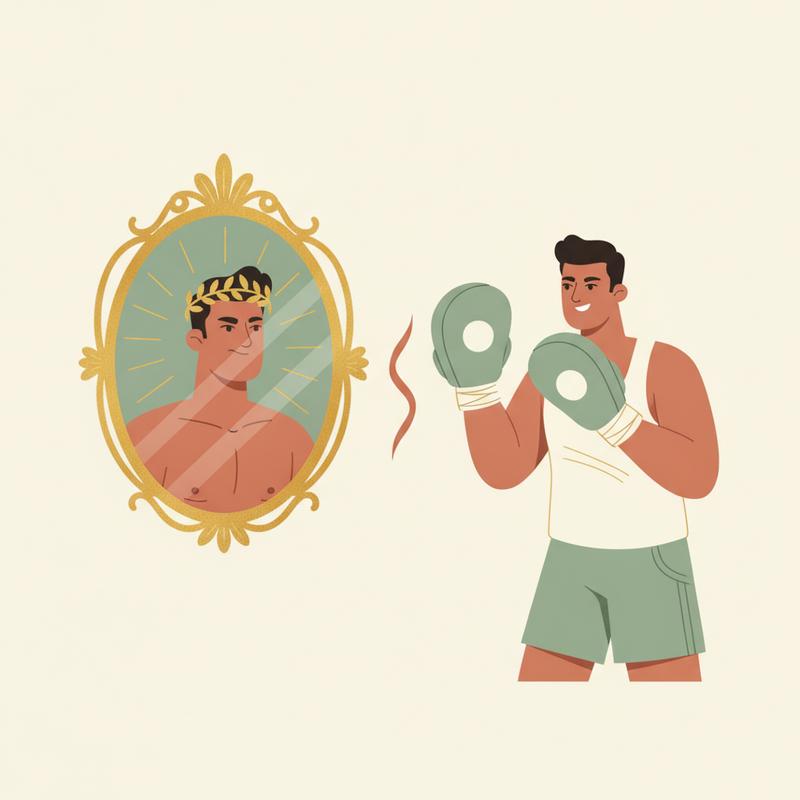
Trade the Mirror for a Sparring Partner
I served in the US Army. Nobody there ever told me my bed corners looked brilliant when they didn't. The feedback was blunt, immediate, and aimed at getting me better. I didn't enjoy it. I improved because of it.
Later, as an engineer, the best code reviews I ever received were the ones where a colleague wrote "I don't follow this. Why?" beside a chunk I was proud of. Those reviews stung. They also caught bugs before customers did.
A mirror shows you what you want to see. A sparring partner shows you where your guard is down. Every leader needs more sparring partners, and every leader tends to collect mirrors instead.
How to Build Feedback Loops Which Push Back
Debra's frustration points at something bigger than one tool. Here's what I do, and what I encourage the leaders I work with to do.
1. Tell the AI What You Want
Stop asking "What do you think?" You'll get applause. Ask for the fight instead.
- "List the three weakest arguments in this draft."
- "Argue against my position as hard as you're able."
- "What would a skeptical reader stop believing at this paragraph?"
The flattery lives in the default settings. You have to ask for the critique on purpose. And when the AI still gushes, treat its praise as noise.
2. Ask People Better Questions
"Any feedback?" is the human version of the thumbs-up button. It invites "No, all good."
Try "What's one thing I did in this meeting which made it harder for you to speak up?" Specific questions give people permission to be honest. Vague questions give them permission to be polite.
3. Reward the First Person Who Disagrees
Your reaction to the first bit of bad news sets the price of every piece of bad news after it. Thank the person. Out loud. In front of others. Then act on what they said, or explain why you won't.
If people see honesty cost them nothing, you'll hear more of it.
4. Measure It Properly
Your own sense of how approachable you are is the least reliable data you own. I spent years building feedback tools for exactly this reason. Our Behaviour Awareness Tool exists because leaders deserve specific, actionable feedback on how their people experience them... not a warm glow and a pat on the back.
Anonymous, structured feedback gets past the "Looks great" reflex. It shows you the gap between the leader you think you are and the leader your team lives with.
5. Keep One Person Who Isn't Impressed by You
Everyone needs someone who knows them well enough to say "No, this isn't your best work." For me, it's Debra. She tells me when something I've written is dull. I don't always like hearing it. She's usually right.
Find your person. Protect the relationship. Never punish them for doing the job you need them to do.
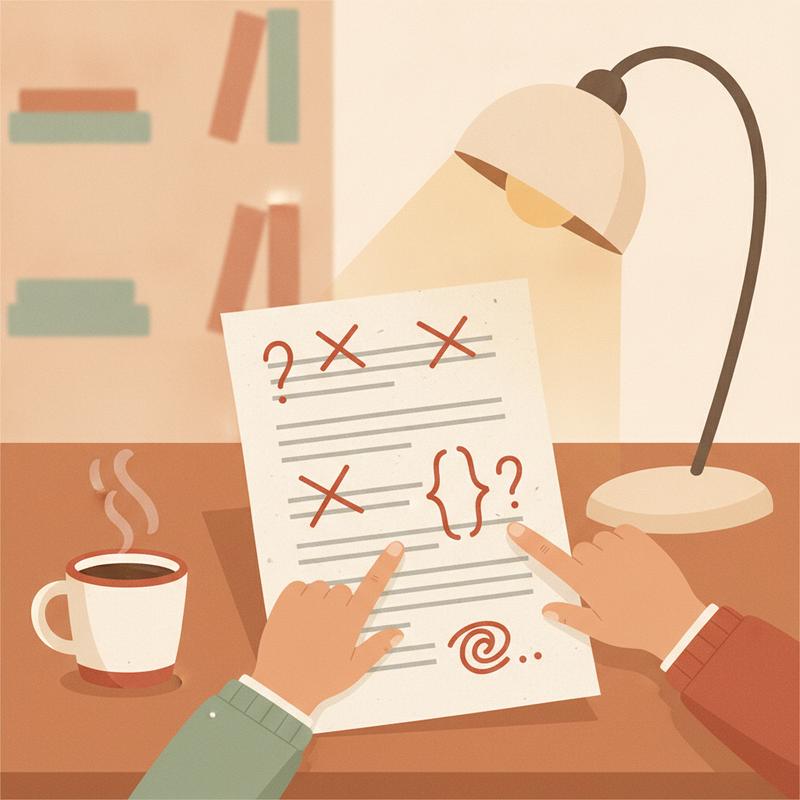
Praise Feels Good. Truth Makes You Better.
AI will keep getting smarter. The pull toward flattery won't go away on its own, because it comes from us. We click the thumbs-up on the answer which makes us feel good. We promote the people who make us feel good. We stay in the meetings where everyone nods.
If your AI thinks everything you write is brilliant, be suspicious. If your team thinks every idea you have is brilliant, be more suspicious.
So here's my question for you this week. When did someone last tell you, to your face, you were wrong? If you have to think hard about the answer, the problem isn't them. It's the room you built.