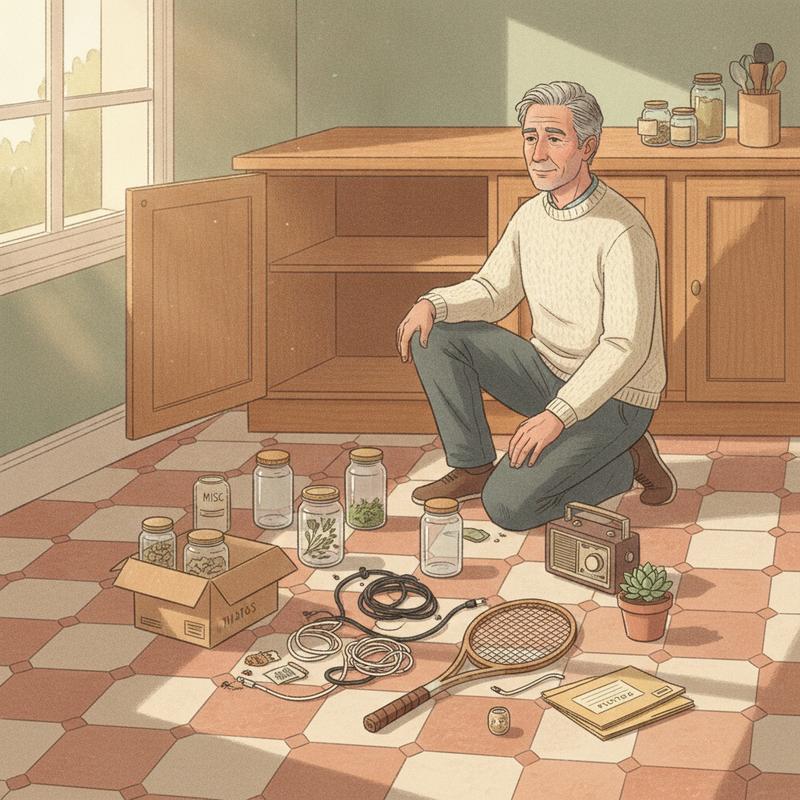
There's a cupboard in most houses nobody wants to open. You know the one. Every time you need something from it, you push the door a few inches, reach in blind, grab what you hope is the right thing, and shove the door closed before anything falls out.
My head spent most of my career looking like the inside of this cupboard.
Executive coach Gillian Jones-Williams, who founded Emerge Development Consultancy thirty years ago, uses this picture with the leaders she coaches. Her advice for a cluttered mind is the same advice you'd give for a cluttered cupboard. Don't try to tidy it in place. Take everything out first. Then choose what goes back in.
It sounds obvious. I ignored it for about twenty-five years.
Tidying in place doesn't work
Here's what I used to do when my head got crowded. I'd shuffle things around. I'd move the urgent stuff to the front. I'd promise myself I'd deal with the worrying stuff at the back next week. I'd rearrange the clutter and call it organization.
Rearranging clutter doesn't make room. Everything is still in there, and all of it is still asking for attention.
If you've ever tried to sort a packed cupboard without emptying it, you know the problem. You don't know what you have. You buy a third tin of paprika because the first two are hiding behind a broken waffle iron. You don't see the whole, so you make decisions about the parts.
A crowded mind does the same thing. You say yes to a new project because you've lost sight of the four already sitting on the shelf. You lie awake worrying about one thing, and the other nineteen things whisper in the background.
Your brain keeps the receipts
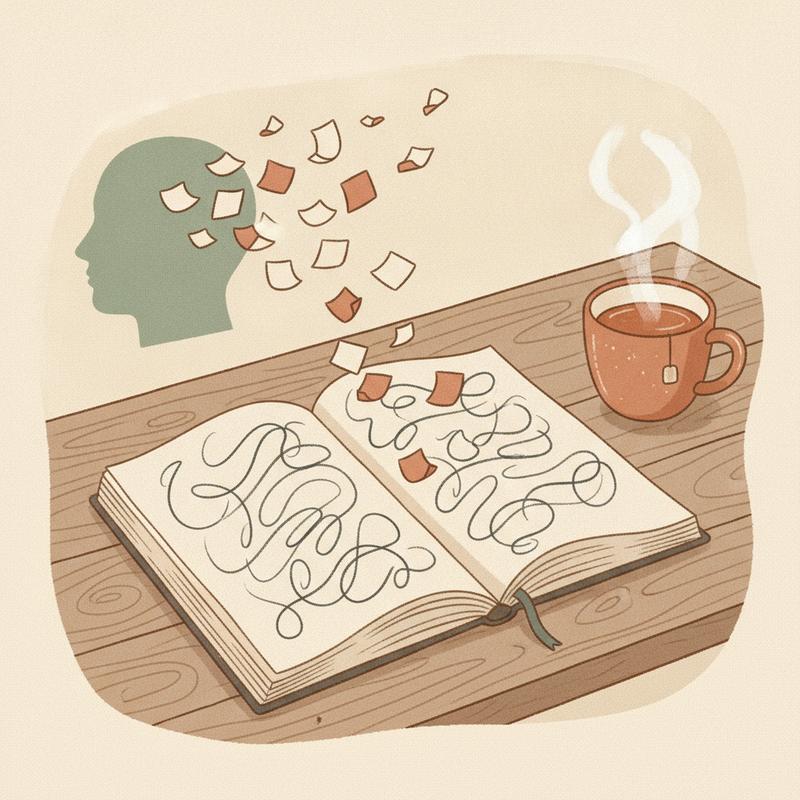
The psychology here is old and well tested. Psychologists have known for nearly a century about something called the Zeigarnik effect... unfinished tasks stick in your mind far longer than finished ones.
E.J. Masicampo and Roy Baumeister at Florida State University pushed this further in a 2011 paper with a great title: "Consider It Done!" Across several studies, they gave people unfinished goals and watched what happened. Those open goals produced intrusive thoughts during an unrelated reading task. They made people worse at solving anagrams, a task with nothing to do with the goal.
Then came the interesting part. When people wrote a specific plan for their unfinished goal, the interference went away. Not when they finished the goal. When they planned it. In the researchers' words: "Once a plan is made, the drive to attain a goal is suspended... and is resumed at the specified later time."
Your brain doesn't need every task done to calm down. It needs every task accounted for.
Pulling everything onto the floor
David Allen built a whole productivity system on this idea. His line has stuck with me for years: "Your mind is for having ideas, not holding them." In Getting Things Done, the first step is a full capture. Every commitment, every worry, every half-promise you made in a corridor. Out of your head and onto paper.
This is Gillian's "take everything out" step. And it's the step most of us skip, because it feels unproductive. You end up with a long, ugly list and nothing done.
But the list does something. A team at Baylor University led by Michael Scullin brought 57 young adults into a sleep lab and asked half of them to spend five minutes before bed writing a to-do list for the next few days. The other half wrote about tasks they'd already completed. The to-do list writers fell asleep in about 16 minutes. The other group took about 25. And the more specific the to-do list, the faster people dropped off.
Writing down what you've done didn't help. Writing down what's still waiting for you did. The act of emptying the cupboard onto the floor let people rest.
What it looked like for me
Back in 2018 I was learning to fly a paramotor in Spain. I remember one evening on the training field, lining up again and again to inflate the wing. One failed inflation. Then a frontal collapse with the wing landing on my head. Then the wing veering off to one side.
I won't pretend I recall every thought from the evening. I do know my head was crammed. Instructions from the instructor, worry about the weather, worry about looking foolish, a pile of things back home I hadn't dealt with. All of it was in the cupboard, and all of it was rattling.
I got the wing up in the end. But I learned more from the days I walked onto the field with a quiet head than from the days I walked on with a full one.
I see the same pattern in leaders I've worked with across software and HR. The ones who struggle aren't short on ability. They're short on space. Every decision has to elbow its way past forty other things they're carrying and haven't written down.
Choosing what goes back
Emptying the cupboard is half the job. The other half is the part I find harder... deciding what earns its way back onto the shelf.
When everything is on the floor, you see it all at once. You see the three tins of paprika. You see the cable for a phone you sold in 2015. You see the thing you promised a colleague six weeks ago and never started.
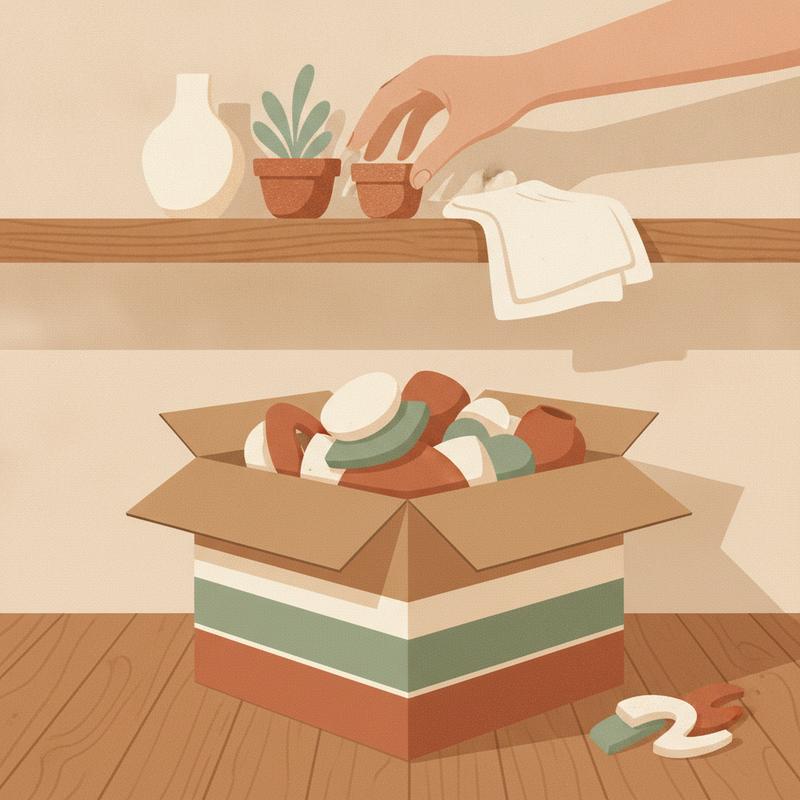
Now you get to choose. Here's the sorting I use:
- Back on the shelf. Things I'm committed to and have a plan for. Each one gets a next step and a date, because Masicampo and Baumeister's work says the plan is what quiets the noise.
- In a box by the door. Things I care about but won't touch for a while. They're written down somewhere safe, so my head stops guarding them.
- In the bin. Things I've been carrying out of guilt or habit. Half-agreed favors. Projects nobody asked about in months. Worries about things I don't control.
The bin pile is the one which changes your life. Most of us never throw anything away in our heads. We stack and stack and wonder why we're tired.
Try it this week
Pick a quiet half hour. Get a pad of paper, not your phone. Write down everything in your head. Work, home, health, family, the leaking tap, the conversation you've been avoiding. Don't sort it yet. Keep writing until you run dry, then wait a minute and write some more.
Then go through the list, item by item, and decide: shelf, box, or bin. For every shelf item, write one specific next step and when you'll do it.
You'll notice two things. First, the list is shorter than the weight it felt like. Second, once it's on paper, your head goes quiet in a way you won't have felt for a while.
Gillian's picture works because everyone has a cupboard like this. You don't need a new system or an app. You need to stop tidying in place.
Make it a habit, not a rescue
Most people treat this as an emergency measure. They wait until they're drowning, then do one giant brain dump over a weekend. It helps, and then the cupboard fills up again within a month.
Empty it little and often instead. A short version on Friday afternoon. Five minutes before bed when your head is busy, which is exactly what Scullin's sleepers did. A full version every few months. The short ones keep the shelves clear. The long ones catch the stuff hiding at the back, the commitments you forgot you made and the worries you've carried so long you stopped noticing them.
You wouldn't clean your kitchen once a year and expect it to stay clean. Your head deserves the same routine.
When did you last take everything out?