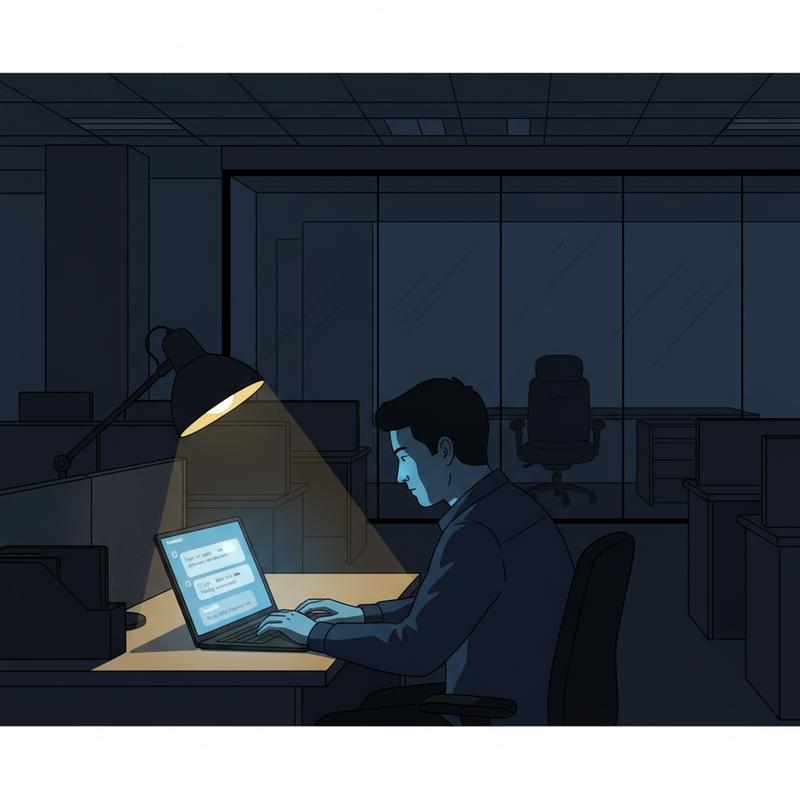
It's 11pm. One of your best people sits at the kitchen table, laptop open, typing out their work anxieties... to a chatbot.
Not to you. Not to HR. To ChatGPT.
The chatbot listened. For twenty minutes. It reflected back their fears about the restructure, validated their concerns about the new manager, and helped them make sense of why they've been dreading Monday mornings.
And your employee felt, for the first time in weeks, heard.
This is not a story about AI. This is a story about you.
The Data Is Already In
More than one in three adults (37%) have used an AI chatbot to support their mental health or wellbeing, according to Mental Health UK. And 66% of them are not using specialised mental health apps. They're using ChatGPT, Claude, or Meta AI. The same tools they use to write emails and summarise documents.
Meanwhile, only 24% of employees feel psychologically safe at work, according to research from Achievers. Three-quarters of your team do not feel safe enough to say what is going on.
Gallup's 2026 State of the Global Workplace report found only 20% of employees worldwide were actively engaged in 2025. Eight in ten people showing up to do the bare minimum, or actively working against you.
Run those numbers together. Most of your employees are disengaged. Most do not feel safe speaking up. And a growing number are turning to AI to process feelings they will not bring to you.
This is not an AI problem. This is a trust problem. And the data has been building for years.
An Open Door Means Nothing Without Safety
Every manager I've met claims an open door policy. I've said it myself.
It means nothing.
An open door is worthless if walking through it feels dangerous. If speaking up means getting labelled a troublemaker. If showing vulnerability means getting passed over for the next promotion. If asking for help gets filed away as a performance concern. If the last person who raised a difficult issue got frozen out, quietly reassigned, or managed out within six months.
Your employees are watching what happens to the people who tell the truth. They draw their conclusions fast.
Forbes stated it plainly: "If your employees feel more comfortable confiding in a chatbot than talking to you, that's a trust issue."
Not an AI issue. A trust issue. Your trust issue.
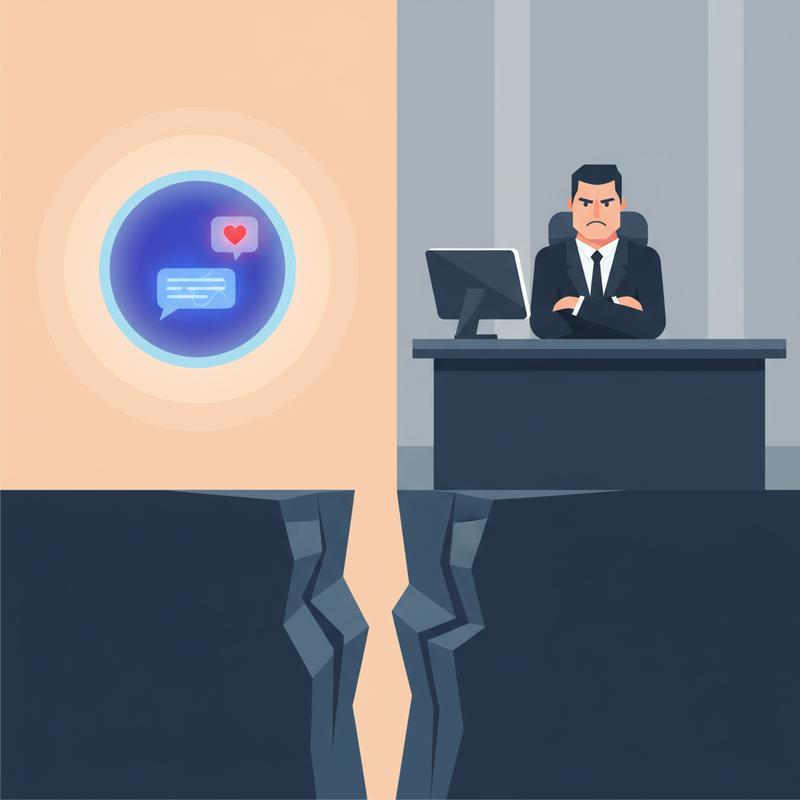
Why the Chatbot Wins
Three reasons. None of them flatter you.
No judgment. No matter what you type, the chatbot does not raise an eyebrow, mention it in your next one-on-one, bring it up six months later when you go for a pay rise, or share it with someone else. Everything stays between you and the model. No political consequences.
No stake in the outcome. When your manager hears something uncomfortable, they have skin in the game. Their own reputation, their metrics, their relationship with their boss. They might need to act, escalate, or explain. The chatbot processes information without any of this. It has no career to protect.
Availability. At 11pm when anxiety peaks, the chatbot is there. Your manager is not. And even when your manager is physically present, they are often emotionally unavailable... rushed, distracted, managing upward. The chatbot is infinitely patient.
None of this means AI is the right place for employees to work through mental health concerns. These are general-purpose tools with no clinical training, no accountability, and no real relationship with the person typing. The risks are significant. An AI gives people the feeling of being heard without the reality of being supported.
But employees are going there anyway. And the question worth sitting with is: why?
What the Chatbot Is Telling You
The chatbot is a symptom detector. When your people turn to it for emotional support, it is telling you something specific.
It is telling you your one-on-ones are not safe. Your people are performing "fine" in those conversations while saving the real stuff for a machine.
It is telling you your culture punishes honesty. Somewhere along the way, enough people saw what happened when someone spoke up, and the lesson landed.
It is telling you your feedback systems are theatre. You run engagement surveys. You share the scores. You say "thank you for the feedback." And nothing changes. People notice.
John Cutler wrote something worth reading: trust precedes clarity. When trust is absent, people optimise for looking good rather than being honest. They tell you what you want to hear. They fill in surveys with safe answers. They say nothing is wrong.
And then they leave. Or worse, they stay. Disengaged, checked out, carrying their real thoughts to a chatbot instead.
The trust deficit does not appear overnight. It builds over months. An idea dismissed in a meeting. A concern brushed off. A "thanks for raising this" with no follow-up. A manager who asks how you're doing and does not wait for the answer.
What Real Trust Looks Like
Not Wellbeing Wednesday. Not free fruit in the breakroom. Not an employee assistance programme nobody uses because using it feels like a flag on your record.
Real trust grows from consistency. A manager who asks hard questions and sits with the discomfort of the answer. A leader who admits a mistake in front of the team. A culture where the person who flags a problem gets thanked rather than managed out.
Here is what I have found matters most:
Follow up on what people tell you. If someone mentions struggling with workload, you say you'll talk about it and then never do. They remember. You go into the "not safe to talk to" file permanently. The bar for trust is high. The bar for losing it is low.
React to bad news without punishing the messenger. If someone brings you a problem and your first response is "why didn't you flag this sooner," you've closed the channel permanently. Your job is to make it easier to bring problems to you, not to make people regret doing it. Say: "I'm glad you told me. Let's work out what to do."
Be honest about your limits. "I hear you, I'm going to take this to my boss, and I'll tell you what happens" lands far better than "I'll sort it out" with no follow-through. People respect honesty about limits far more than false confidence. Leaders who pretend to have more control than they do get found out. Leaders who are transparent about constraints get trusted.
Ask the question nobody asks. "What would make your job meaningfully better?" Not the answer-fishing version where you already know what you want them to say. The version where you write down the answer, read it back, and then do something about it.

The Question Worth Asking
At Step It Up HR, we work with organisations on building feedback cultures where people tell the truth. Most companies have feedback systems designed to make leaders feel good, not to surface what is happening on the ground.
The question is not "do we have a feedback process?" It is: "Would my team tell me if something was seriously wrong?"
If you're not sure of the answer, you have your answer.
The chatbot your employee talked to at 11pm is not the problem. It is the evidence. It filled a gap you left open, and it did so with no politics, no judgment, and infinite patience.
What you offer is irreplaceable: real relationship, real consequence, real support. But only if people trust you enough to access it.
Close the gap yourself. No app will do it for you.